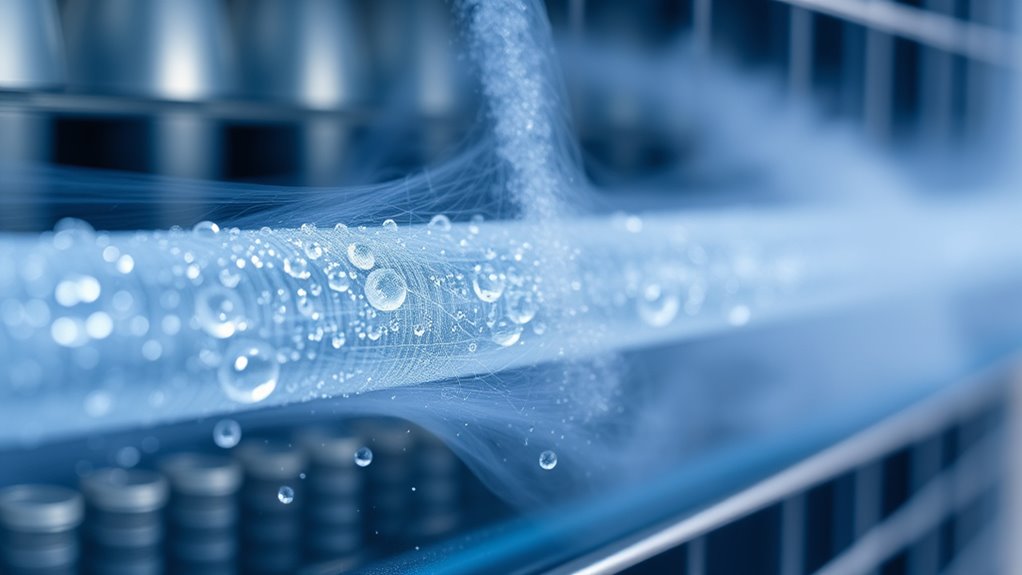
In a heat pump, evaporation and condensation are key to transferring heat efficiently. You start with low-pressure refrigerant in the evaporator, where it absorbs heat from outside or ground, turning into vapor. The vapor then gets compressed, raising its temperature, and condenses in the indoor coil, releasing heat into your space. Managing these phase changes through pressure control is essential for smooth operation. If you want to understand how these processes work together, keep exploring the details.
Key Takeaways
- Evaporation in heat pumps occurs when low-pressure refrigerant absorbs heat and changes from liquid to vapor in the evaporator coil.
- Condensation happens when high-pressure vapor releases heat and transitions back to liquid in the condenser coil.
- Managing refrigerant pressure and temperature controls the phase changes critical for efficient heat transfer.
- These phase changes enable heat absorption from the environment and heat release into the indoor space.
- Proper cycle operation relies on the continuous evaporation and condensation processes within the refrigerant loop.
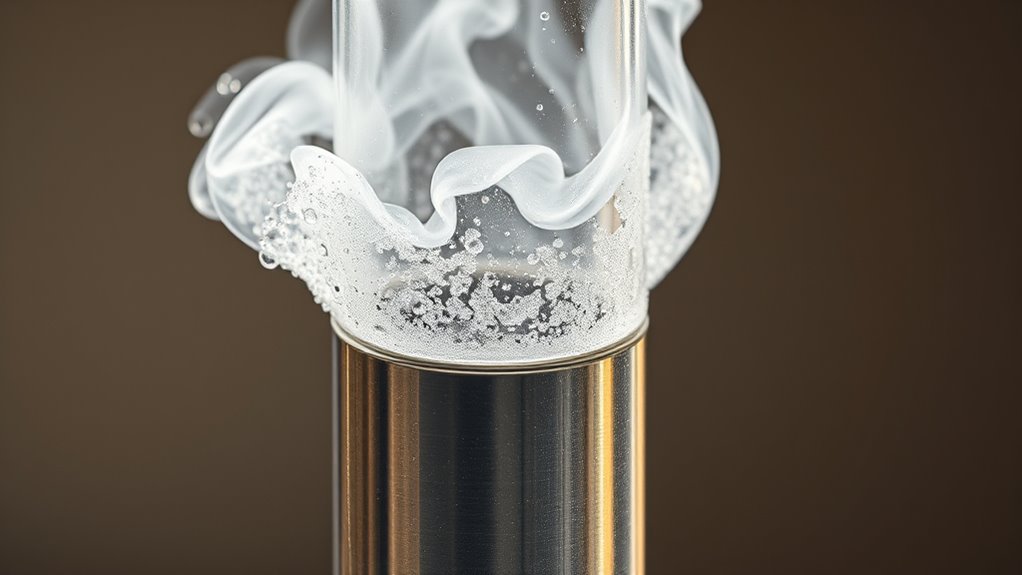
Heat pumps rely on the fundamental processes of evaporation and condensation to transfer heat efficiently. At the core of this process is the refrigerant cycle, which involves a series of phase changes that move heat from one location to another. You can think of it as a continuous loop where the refrigerant absorbs heat when it changes state and releases it when it returns to its original form. This cycle enables heat pumps to provide both heating and cooling by manipulating the refrigerant’s phase change in response to temperature differences.
In the evaporator coil, the refrigerant starts as a low-pressure, cold liquid. As it absorbs heat from the surrounding environment—whether from outside air or the ground—it undergoes evaporation. During this phase change, the refrigerant transforms from a liquid into a vapor. This process is highly effective because it allows the refrigerant to pick up significant amounts of heat even at low temperatures. You might notice that the refrigerant’s pressure remains relatively low during this stage, which is essential for maintaining the phase change without requiring excessive energy input. The vapor then moves to the compressor, where it’s compressed to a higher pressure and temperature.
Next, the high-pressure refrigerant flows into the condenser coil, where it releases heat to the indoor space. Here, the refrigerant undergoes condensation, transforming from a vapor back into a liquid. As it releases heat, it cools down and condenses, returning to its liquid state. This phase change is vital because it allows the refrigerant to transfer heat efficiently into your home or building. Additionally, the use of filtration systems like HEPA filters can improve indoor air quality during operation. The process continues as the refrigerant flows through an expansion valve that reduces its pressure, preparing it for the cycle to start again at the evaporator.
Understanding the refrigerant cycle and the phase change it involves helps you appreciate how heat pumps operate with such efficiency. The key is the refrigerant’s ability to absorb heat during evaporation and release it during condensation, which is made possible by carefully controlling pressure and temperature throughout the cycle. This cycle is what allows heat pumps to work effectively in various climates, providing a sustainable and energy-efficient way to heat and cool spaces. By grasping these fundamental processes, you gain insight into how heat pumps leverage the principles of evaporation and condensation to deliver comfort year-round.
Frequently Asked Questions
How Does Refrigerant Type Affect Evaporation and Condensation?
Your choice of refrigerant affects evaporation and condensation because different refrigerant properties influence phase change dynamics. Some refrigerants have lower boiling points, making evaporation easier at lower temperatures, while others condense at higher pressures. This impacts efficiency and system design. By selecting a refrigerant suited to your heat pump’s operating conditions, you guarantee ideal phase change performance, improving energy transfer and overall system reliability.
What Maintenance Steps Optimize Heat Pump Efficiency Related to Phase Changes?
To optimize your heat pump’s efficiency during phase changes, regularly check for refrigerant leaks and address them promptly. Keep the system clean by cleaning or replacing filters, coils, and vents to ensure smooth evaporation and condensation. Maintaining proper refrigerant levels is essential; too little reduces efficiency, while leaks can cause system strain. Consistent maintenance helps your heat pump operate effectively, saving energy and extending its lifespan.
How Do Ambient Temperature Variations Impact Evaporation and Condensation?
A stitch in time saves nine, and understanding how ambient temperature impacts your heat pump is key. When temperatures fluctuate, they affect the phase change during evaporation and condensation. Warmer air enhances evaporation efficiency, while colder air promotes condensation. You’ll notice your system works harder or less efficiently depending on these temperature shifts, so keeping an eye on ambient conditions helps optimize performance and energy use.
Can Improper Evaporation or Condensation Cause System Failures?
Yes, improper evaporation or condensation can cause system failures. If you experience system leaks, refrigerant may escape, leading to inadequate evaporation or condensation. This results in reduced efficiency and potential damage to components. Refrigerant contamination from leaks or improper handling can also disrupt the cycle, causing malfunctions or compressor failure. Regular maintenance helps prevent these issues, ensuring your heat pump operates smoothly and avoids costly repairs.
What Are the Signs of Inefficient Phase Change in Heat Pumps?
You’ll notice that inefficient phase change often shows as frost buildup on your heat pump’s coils—this can indicate refrigerant leakage or improper evaporation. If the system struggles to transfer heat, expect reduced efficiency and inconsistent heating or cooling. Additionally, you might see increased energy bills or strange noises. These signs point to your system’s phase change not happening properly, risking further damage if not addressed quickly.
Conclusion
Just as the dance of day and night sustains life, evaporation and condensation keep your heat pump running smoothly. By understanding these processes, you harness nature’s own secrets to warmth and coolness. Remember, mastering these principles is like holding the keys to a hidden kingdom—where energy flows seamlessly, and comfort is always within reach. Embrace this knowledge, and you’ll release the true power of your heat pump, just as dawn release a new day.