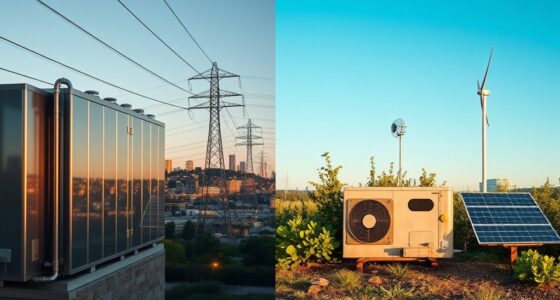
The economics of renewable energy and heat pump integration show that upfront costs can be offset by long-term savings, especially when combined with government incentives like subsidies or tax credits. These systems offer more predictable energy prices and reduce dependence on fossil fuels, making them financially viable over time. By analyzing initial investments against future savings and environmental benefits, you can make smarter decisions. Keep exploring to understand how to maximize these economic advantages for your project.

Get backup power and energy gear delivered free with Prime
- Fast, free delivery on millions of items
- Prime Video, Amazon Music and more included
- Member-only deals all year
Key Takeaways
- Conducting cost-benefit analyses of renewable energy systems with heat pumps helps determine financial viability and long-term savings.
- Investment incentives like subsidies and tax credits enhance economic feasibility by reducing upfront costs.
- Pairing renewable sources with heat pumps lowers operational expenses through efficient heat extraction and renewable energy use.
- Renewable energy prices are generally more stable and predictable, supporting better financial planning and risk management.
- Comprehensive economic assessments consider initial investments, incentives, operational savings, and environmental benefits for informed decisions.
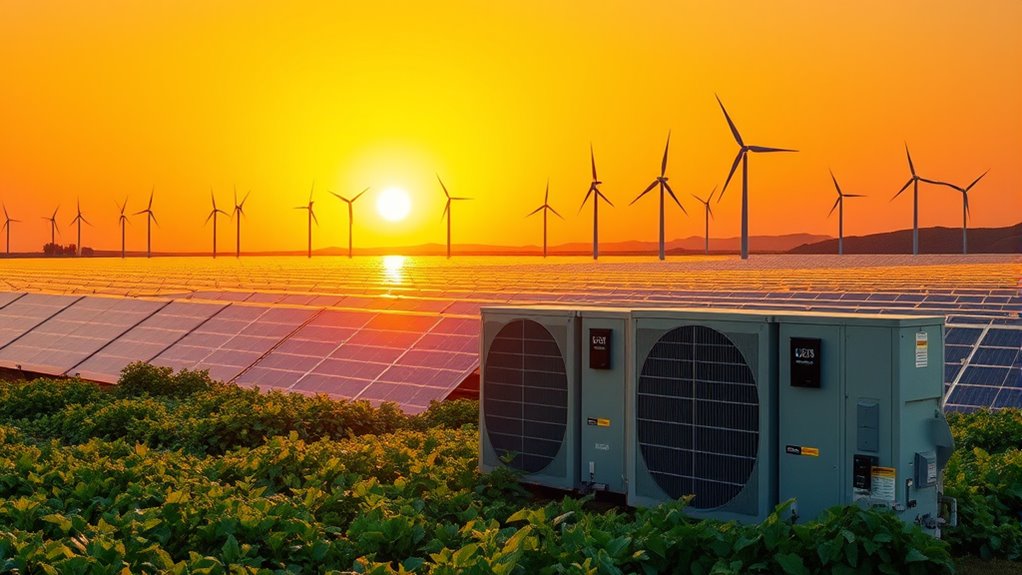
What makes renewable energy economics so crucial today? It’s the critical role they play in shaping a sustainable future while making economic sense. When considering the integration of renewable energy and heat pumps, understanding the financial implications becomes essential. You need to evaluate how the initial investments compare to long-term savings, which is where a thorough cost benefit analysis comes into play. This process helps you determine whether the upfront costs of installing solar panels or wind turbines paired with heat pumps are justified by future energy savings and environmental benefits. It’s about weighing the immediate expenditure against the ongoing reductions in energy bills and potential revenue from incentives.
Investment incentives are also key drivers that can influence your decision-making process. Many governments and local authorities offer subsidies, tax credits, or grants designed to lower the financial barrier for adopting renewable energy systems. These incentives can greatly improve the economics of installing heat pumps alongside renewable sources, making projects more attractive and financially feasible. By taking advantage of these programs, you reduce the payback period and increase your return on investment, which is essential if you’re looking to maximize economic efficiency.
Government incentives boost renewable investments, shorten payback periods, and maximize financial efficiency.
Moreover, the integration of renewable energy and heat pumps involves understanding how these systems interact economically. Heat pumps, which extract heat from the environment, are highly efficient and can drastically reduce your reliance on fossil fuels. When paired with renewable energy sources, the operational costs decrease further because you’re leveraging free, renewable resources rather than paying for conventional energy. This synergy enhances the overall cost-effectiveness of the system, reinforcing the importance of conducting detailed financial analyses before deployment.
You should also consider the long-term stability of energy prices. Renewable energy prices tend to be more predictable and less volatile than fossil fuels, providing greater financial certainty over time. This stability can be factored into your cost benefit analysis, helping you project future savings and determine the financial sustainability of your investment. Additionally, government policies often support renewable energy adoption, which can further influence the economic viability through ongoing incentives or future regulatory changes. Understanding the costs and benefits of such investments ensures a well-rounded approach to decision-making.
In essence, the economics of renewable energy and heat pump integration hinge on carefully balancing initial costs with long-term benefits. By thoroughly analyzing costs, potential savings, and available incentives, you position yourself to make smarter, more sustainable investment choices. This strategic approach not only benefits your wallet but also promotes environmental responsibility, making renewable energy a compelling and economically sound option today.
Frequently Asked Questions
How Do Heat Pumps Impact Overall Energy Grid Stability?
Heat pumps can positively impact grid stability by aiding in grid balancing and demand response. When you use a heat pump, it shifts energy demand to off-peak times, reducing stress on the grid during peak hours. This flexibility helps prevent overloads and maintains reliability. By integrating heat pumps, you support a more resilient energy system, making it easier to manage renewable energy fluctuations and ensuring consistent power supply.
What Are the Long-Term Economic Benefits of Integrating Renewables and Heat Pumps?
Think of integrating renewables and heat pumps as planting a tree whose shade keeps growing. Long-term, you’ll enjoy significant cost savings on energy bills and quicker investment returns. As renewables become more affordable and efficient, your reliance on fossil fuels drops, boosting economic resilience. Over time, this sustainable approach not only saves money but also helps you contribute to a cleaner environment, making your energy future brighter and more secure.
How Do Government Policies Influence Renewable Energy and Heat Pump Adoption?
Government policies heavily influence renewable energy and heat pump adoption by offering policy incentives that make investments more attractive. Subsidy effects lower upfront costs, encouraging you to choose renewable options. When policies are clear and supportive, you’re more likely to adopt these technologies, knowing you’ll benefit from long-term savings and environmental impact. These incentives create a favorable environment, accelerating the progression to sustainable energy solutions and making cleaner choices accessible and appealing.
What Are the Hidden Costs Associated With Renewable Energy Storage?
You should be aware of hidden costs linked to renewable energy storage, such as high maintenance and degradation over time. Storage challenges include the need for specialized equipment and potential environmental impacts from battery disposal. These hidden costs can add up, making storage solutions more expensive than initially expected. So, while renewable energy is beneficial, you need to contemplate these hidden costs and storage challenges to make informed decisions.
How Can Economic Models Predict Future Renewable Energy Market Trends?
You can predict future renewable energy market trends by utilizing advanced economic models that blend market forecasting with policy modeling. Imagine peering into a crystal ball, where data-driven insights reveal shifts in supply, demand, and regulations. These models analyze historical patterns, technological advancements, and policy impacts, giving you a clearer picture of upcoming opportunities and challenges. This proactive approach helps you make smarter decisions in a rapidly evolving green energy landscape.
Conclusion
You now see how integrating heat pumps with renewable energy can substantially cut costs—up to 40% on energy bills in some cases. With over 70% of global electricity expected to come from renewables by 2050, embracing these technologies isn’t just smart; it’s essential. By investing now, you’re helping to lower emissions while saving money. The future of affordable, sustainable heating is within your reach—making a real difference for your wallet and the planet.
Halloween Picks
halloween
As an affiliate, we earn on qualifying purchases.