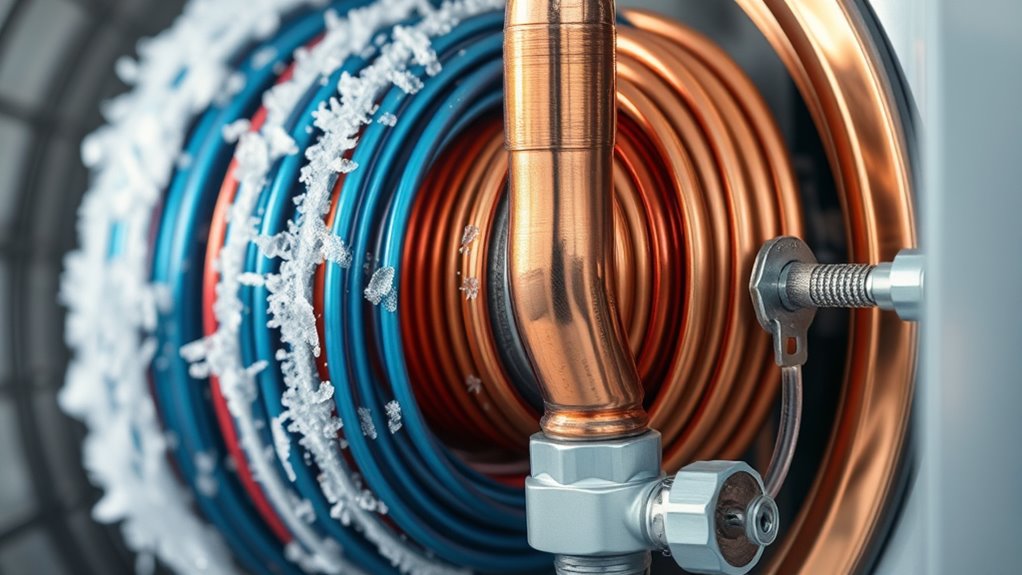

In a heat pump, you start with the compressor, which compresses cool, low-pressure vapor into hot, high-pressure gas. This gas moves to the condenser, where it releases heat and condenses into high-pressure liquid. The liquid then passes through an expansion device, dropping in pressure and temperature, before entering the evaporator coil. Here, it absorbs heat and turns into low-pressure vapor again, completing the cycle. Understanding these steps helps you see how heat pumps work efficiently.
Key Takeaways
- The compressor increases refrigerant pressure and temperature, converting vapor into a hot, dense state for heat transfer.
- The condenser coil releases heat, condensing high-pressure refrigerant into a liquid to prepare for expansion.
- The expansion device reduces pressure and temperature, turning high-pressure liquid into cold, low-pressure refrigerant.
- The evaporator coil absorbs heat from the environment, vaporizing refrigerant to facilitate heat transfer.
- The cycle repeats continuously, with each component working together to transfer heat efficiently in heating or cooling modes.
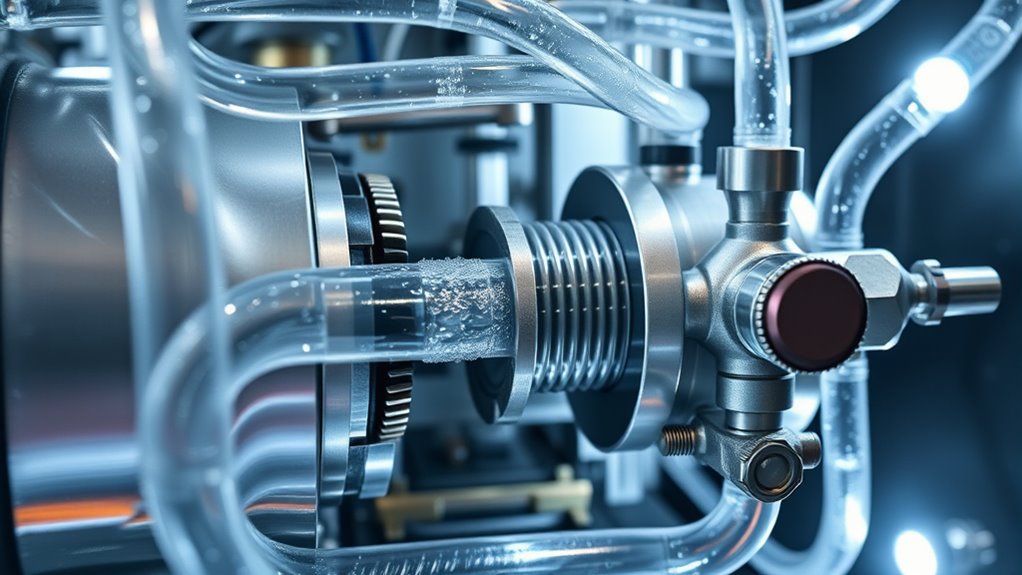
Have you ever wondered how heat pumps transfer warmth from one place to another? It all comes down to the refrigeration cycle, which is cleverly designed to move heat efficiently. At the heart of this cycle is the compressor, a essential component responsible for the compressor operation. The compressor takes in low-pressure, cool refrigerant vapor from the evaporator and compresses it, raising its pressure and temperature considerably. This increase in pressure causes the refrigerant to become hot and dense, setting the stage for heat transfer. As the hot, high-pressure refrigerant exits the compressor, it flows into the condenser coil, where it releases heat to the surroundings or indoor space, depending on whether you’re heating or cooling.
Once the refrigerant has released its heat, it begins to cool down and condense into a high-pressure liquid. But before it can continue circulating through the cycle, it needs to undergo an expansion process. This is where the expansion valve or expansion device comes into play. It acts as a throttling device, reducing the pressure of the refrigerant suddenly and efficiently. During this expansion process, the high-pressure liquid refrigerant drops in pressure and temperature, transforming into a cold, low-pressure mixture of liquid and vapor. This cold refrigerant then enters the evaporator coil, ready to absorb heat from the environment or indoor air, completing the cycle.
The expansion process reduces refrigerant pressure, enabling heat absorption in the evaporator coil.
The cycle repeats as the refrigerant absorbs heat in the evaporator, turning it into low-pressure vapor again. This vapor is then drawn into the compressor, and the process starts anew. The compressor operation is essential because it maintains the flow of refrigerant and guarantees the cycle runs smoothly. Without it, the refrigerant wouldn’t be compressed to the necessary pressure to transfer heat effectively. Proper system design enhances overall efficiency and performance of heat pumps. The expansion process, on the other hand, is indispensable for creating the temperature difference needed for heat absorption. By lowering the pressure and temperature of the refrigerant, it becomes capable of picking up heat from cooler sources, even in cold weather.
Understanding these key steps—the compressor operation and expansion process—helps you grasp how heat pumps can efficiently transfer heat across different environments. They work seamlessly to either heat your home or cool it down, depending on your needs, by continuously cycling refrigerant through these stages. This cycle’s precision and efficiency make heat pumps a reliable, eco-friendly option for climate control, with the compressor and expansion process playing starring roles in making it all happen.

ALORAIR Whole House Dehumidifier, 90 PPD Commercial Grade Whole Home Dehumidifiers for Garages, Water Damage Restoration, 2300 Sq.Ft dehumidifiers for Crawl Space
Energy Efficient Whole House Dehumidifier: 90 pints per day at AHAM condition, 70 Pint at DOE, up to...
As an affiliate, we earn on qualifying purchases.
Frequently Asked Questions
How Does Refrigerant Choice Affect System Efficiency?
Choosing the right refrigerant types considerably impacts your heat pump’s efficiency. Some refrigerants have better thermodynamic properties, meaning they transfer heat more effectively, which boosts efficiency impact. Modern refrigerants like R-410A or R-32 are designed for higher performance and lower environmental impact. By selecting a ideal refrigerant, you help your system operate smoothly, save energy, and reduce costs over time. Always consider compatibility and environmental regulations when making your choice.
What Are Common Causes of Heat Pump Failure?
You might experience heat pump failure due to refrigerant leaks or compressor wear. Refrigerant leaks reduce efficiency and can cause the system to overwork, leading to further damage. Compressor wear, often from age or lack of maintenance, results in poor performance or complete breakdown. Regular inspections and timely repairs help prevent these issues. Keep an eye on system sounds and performance to catch problems early and extend your heat pump’s lifespan.
How Does Ambient Temperature Impact Heat Pump Performance?
Ambient temperature substantially impacts your heat pump’s efficiency. When the outdoor temperature drops, the heat pump struggles to extract heat, reducing its efficiency and increasing energy use. Conversely, higher ambient temperatures allow the heat pump to operate more effectively, providing better heating performance. To optimize performance, it’s essential to take into account local climate conditions, as extreme temperatures can cause your heat pump to work harder and potentially wear out faster.
Can Heat Pumps Operate Effectively in Extremely Cold Climates?
Absolutely, heat pumps can work well in cold climates, but they face frosty challenges. When temperatures plummet, a defrost cycle kicks in to prevent ice buildup, ensuring efficiency. Additionally, auxiliary heating provides backup warmth when the heat pump struggles to extract heat from the cold air. With these features, modern heat pumps stay steadfast even in severely cold conditions, keeping your home warm and cozy.
What Maintenance Is Required for Optimal Heat Pump Operation?
To keep your heat pump running smoothly, you should regularly check and replace filters to guarantee proper airflow. Also, monitor refrigerant levels and top them off if needed, as low refrigerant can reduce efficiency. Schedule annual professional maintenance to inspect for leaks, clean coils, and verify system performance. These simple steps help maintain ideal operation, extend the lifespan of your heat pump, and keep your home consistently comfortable.

5000 Sq.Ft Energy Star Most Efficient 2024 Dehumidifier,DECIUU Max 100 Pint Dehumidifier for Basement with Drain Hose,Intelligent Humidity Control for Home Bathroom Garage Bedroom
Most Efficient 2024 Energy Star Dehumidifier: Tired of battling stubborn humidity? Our ENERGY STAR certified dehumidifier removes 70...
As an affiliate, we earn on qualifying purchases.
Conclusion
Now that you understand the refrigeration cycle in heat pumps, you see how it’s both simple and complex. It’s like a well-choreographed dance — moving heat efficiently while seemingly effortless. This cycle keeps your home warm in winter and cool in summer, yet behind the scenes, it’s a fascinating interplay of pressurized gases and clever technology. So, next time you adjust your thermostat, remember the incredible cycle making it all possible.

CADPXS Crawl Space Dehumidifier with Pump and Drain Hose, 80 Pint Crawlspace Dehumidifier for Commercial, Basement, Water Damage Use, Auto Defrost, Memory Start, cETL Certified, Up to 1000 Sq Ft
80 PINTS COMMERCIAL DEHUMIDIFIER: Control excess moisture efficiently with the CADPXS 80-pint crawl space dehumidifier with pump. Designed...
As an affiliate, we earn on qualifying purchases.

Airzentti 155 Pints Commercial Dehumidifier for Basement with Pump and Drain Hose, Large Space Dehumidifier for Crawl Space, Attic, Garage, Home, Industrial, Water Damage, Auto Defrost, Energy Star
[Commercial Grade Dehumidifier] This Airzentti crawl space dehumidifier with large capacity removes moisture from basement, attic, large room...
As an affiliate, we earn on qualifying purchases.