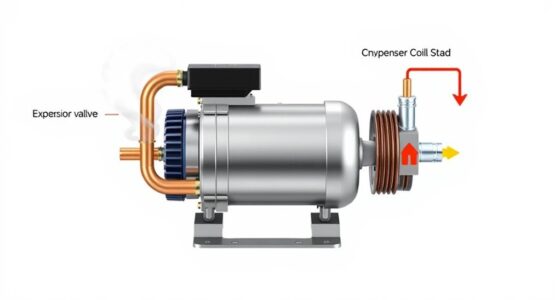
Low-GWP refrigerants are changing the industry by making cooling solutions more environmentally friendly and compliant with strict regulations. They emit fewer greenhouse gases, helping you reduce your carbon footprint and stay ahead of legal standards like the Kigali Amendment. Many of these refrigerants are compatible with existing systems, minimizing disruptions. By adopting them, you demonstrate leadership and commitment to sustainability. To see how these innovations could impact your operation, there’s more to explore.

Get backup power and energy gear delivered free with Prime
- Fast, free delivery on millions of items
- Prime Video, Amazon Music and more included
- Member-only deals all year
Key Takeaways
- They enable compliance with stricter environmental regulations like the Kigali Amendment.
- Many are compatible with existing systems, reducing retrofit costs and downtime.
- Adoption enhances corporate sustainability image and industry leadership.
- They significantly lower greenhouse gas emissions, supporting eco-friendly cooling solutions.
- Proper safety measures and training are essential due to varying properties like flammability.

As environmental concerns grow, low-GWP (Global Warming Potential) refrigerants are transforming the industry by offering eco-friendlier alternatives to traditional cooling solutions. You’re likely aware that refrigerants like R-134a and R-404A have long been staples in various applications, but their high GWP contributes significantly to climate change. Switching to low-GWP options isn’t just a trend; it’s a strategic move that aligns your operations with modern environmental standards. By adopting these refrigerants, you reduce your overall environmental impact, which can enhance your company’s reputation and sustainability efforts. These eco-friendly alternatives emit fewer greenhouse gases, making your cooling systems more responsible in the face of global warming.
Low-GWP refrigerants help reduce environmental impact and support sustainable cooling solutions.
Regulatory compliance is another critical driver for this shift. Governments and international bodies are tightening regulations on refrigerants with high GWP due to their contribution to climate change. You need to stay ahead of these legal requirements to avoid penalties or costly retrofits down the line. Moving to low-GWP refrigerants helps guarantee your equipment adheres to current and future standards, such as those set by the Kigali Amendment or national regulations like the U.S. EPA’s SNAP program. It’s not just about avoiding sanctions; it’s about proactively aligning your business with evolving legal frameworks to secure long-term operational stability.
Moreover, these refrigerants are often compatible with existing systems, allowing you to retrofit or upgrade without complete overhauls. This flexibility means you can meet regulatory demands while minimizing downtime and additional expenses. As you implement low-GWP refrigerants, you also position yourself as an industry leader committed to sustainability. Customers and partners increasingly prefer to work with environmentally responsible companies, so this shift can boost your market image.
Additionally, understanding the properties of low-GWP refrigerants such as flammability or pressure levels and making certain safety measures are in place is essential for safe operation. Proper training and system adjustments are necessary to maximize efficiency and safety. This proactive approach not only helps you stay compliant but also demonstrates your commitment to responsible environmental stewardship. As regulations become more stringent, staying informed and prepared becomes crucial, and adopting low-GWP refrigerants is a key step in that direction.
Frequently Asked Questions
Are Low-Gwp Refrigerants More Cost-Effective Long-Term?
Yes, low-GWP refrigerants can be more cost-effective long-term. While they may have higher initial investment costs, you benefit from significant energy savings and reduced environmental impact. Over time, the cost savings from lower energy bills and potential regulatory incentives outweigh the initial expenses. Plus, adopting these refrigerants future-proofs your system, helping you avoid costly penalties and upgrades, making them a smart, sustainable choice for your long-term operational costs.
How Do Low-Gwp Refrigerants Impact System Performance?
Ever wonder if low-GWP refrigerants affect your system’s performance? They generally maintain energy efficiency and reliable operation, often matching traditional refrigerants. Plus, they offer environmental benefits by reducing greenhouse gas emissions. While some initial adjustments might be needed, most systems adapt quickly, and you’ll benefit from a greener footprint. Isn’t protecting the environment as important as maintaining top system performance? Low-GWP refrigerants make both possible.
What Safety Concerns Exist With New Refrigerants?
You should be aware that safety concerns with new refrigerants include leak detection challenges and chemical stability issues. These refrigerants may require enhanced leak detection methods because they might be less easily detected or have different properties. Additionally, you need to contemplate their chemical stability over time, ensuring they don’t degrade or pose risks during operation. Proper training and equipment upgrades help you maintain safety with these innovative refrigerants.
Are There Any Compatibility Issues With Existing Equipment?
Imagine trying to fit a square peg into a round hole—welcome to equipment compatibility with new low-GWP refrigerants. You might face retrofit challenges, as some existing systems aren’t designed for these eco-friendly gases. You’ll need to assess whether your equipment can handle the new refrigerant’s properties or if upgrades are necessary. It’s a delicate dance of ensuring safety, efficiency, and avoiding costly surprises down the line.
How Quickly Will Regulations Adapt to Low-Gwp Refrigerants?
Regulations are gradually adapting to low-GWP refrigerants, but the regulatory timeline varies by region. You might see faster industry adaptation in areas with stringent environmental policies, while others could take longer. It’s essential to stay informed about local updates, as authorities are increasingly recognizing the importance of low-GWP alternatives. Your proactive approach will help guarantee compliance and smooth integration, aligning your practices with evolving standards and supporting industry-wide sustainability goals.
Conclusion
As you see, switching to low-GWP refrigerants is transforming the industry, making refrigeration more eco-friendly and sustainable. Did you know that these new refrigerants can reduce greenhouse gas emissions by up to 99%? That’s a huge step toward combating climate change. By adopting these innovative solutions, you’re part of a movement that not only protects the environment but also guarantees a more resilient and responsible future for everyone.
Halloween Picks
halloween
As an affiliate, we earn on qualifying purchases.