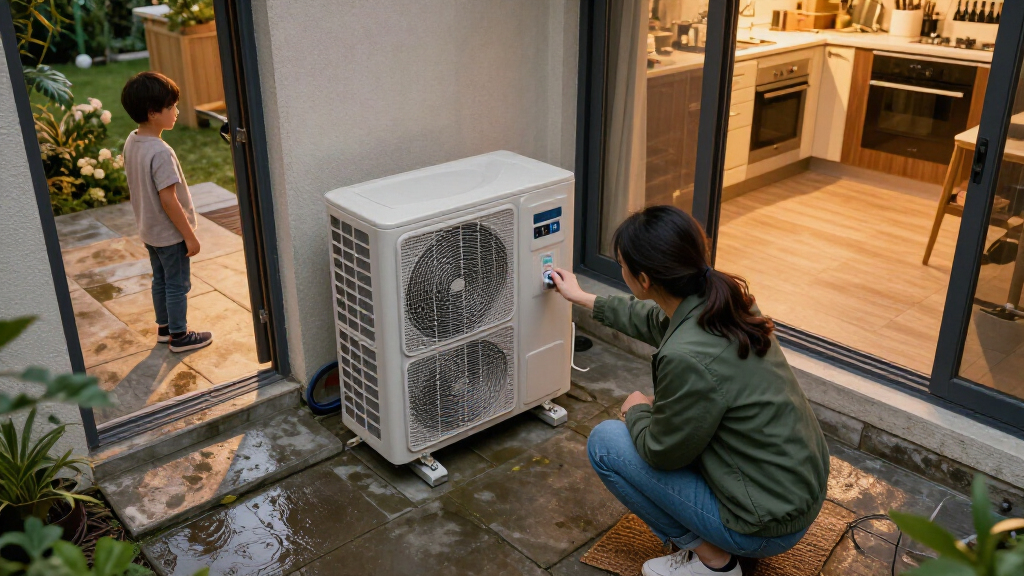
The best home heat pumps depend on your home’s layout, existing ducts, and whether you need space heating, cooling, or hot water. My best overall pick is the Goodman 3-Ton 15 SEER2 R-32 Heat Pump System, a balanced central option for homes suited to a ducted system. The Senville LETO 24,000 BTU Mini Split stands out for room-by-room comfort, while the COSTWAY 12,000 BTU Mini Split is a smaller, simpler fit for a single zone. The main tradeoffs are system type, capacity, installation requirements, and how much of the home you want to serve. Read on for the full breakdown and guidance on matching a system to your home.

Get backup power and energy gear delivered free with Prime
- Fast, free delivery on millions of items
- Prime Video, Amazon Music and more included
- Member-only deals all year
Key Takeaways
- System type matters more than a headline efficiency figure: ducted systems serve connected rooms, while mini splits target specific zones and avoid relying on existing ductwork.
- The Goodman 3-Ton 15 SEER2 R-32 system is my best overall choice because it offers a middle-ground central configuration without the size and scope of the 4-ton options.
- Mini splits fill a different need from central heat pumps: Senville’s 24,000 BTU LETO suits a larger zone, while COSTWAY’s 12,000 BTU model is aimed at a smaller space.
- Packaged units can simplify equipment placement but limit flexibility: the ACiQ 4-ton package and Goodman packaged models place key components together, so site conditions and capacity matching matter.
- The lineup includes a water heater, not just space-heating systems: the Rinnai REHP50 serves domestic hot water and should not be compared with heating-and-cooling heat pumps as a direct substitute.



| home heat pump | Efficiency | Voltage | Refrigerant | Capacity |
|---|---|---|---|---|
| ACiQ 4-Ton Packaged Heat Pump | 13.4 SEER2 | 208/230 V, single-phase, 60 Hz | R-32 | 4 tons |
| Rinnai REHP50 50-Gallon Electr | — | — | R134a | — |
| Goodman 2.5-Ton 14.3 SEER2 R-3 | 14.3 SEER2 | 240 V | R-32 | 2.5 tons |
| Senville 24,000 BTU Inverter C | Up to 20 SEER2 | 208/230 V | — | 2 tons |
| Senville LETO 24,000 BTU Mini | — | 208/230 V | R-454B | — |
| Goodman 2-Ton 15.2 SEER2 Heat | 15.2 SEER2 | 240 volts | R-32 | 2 tons |
| Goodman 3-Ton 14 SEER Heat Pum | 14 SEER | — | — | 3 tons |
| Ameristar 3-Ton 14 SEER Heat P | 14 SEER | 110 volts as listed | R-410A | 3 tons |
| Goodman 2-Ton 15.2 SEER2 R-32 | 15.2 SEER as listed | 230 V | R-32 | — |
| Goodman 3-Ton 15 SEER2 R-32 He | 15 SEER2 | 240 volts | R-32 | 3 tons |
| ACiQ 2.5-Ton 14.3 SEER2 Mobile | 14.3 SEER2; 7.8 HSPF2 | 208/230 V, single-phase, 60 Hz | R32 | 30,000 BTU/h (2.5 tons) |
| 3 Ton 15 SEER2 Central Heat Pu | 15 SEER2 | 208/230 V, single-phase | — | 36,000 BTU/h |
| COSTWAY 12,000 BTU Mini Split | 20 SEER2 | 115 V | R-32 | — |
| Goodman 4-Ton 15.2 SEER2 Multi | 15.2 SEER2 | 230 V | — | — |
More Details on Our Top Picks
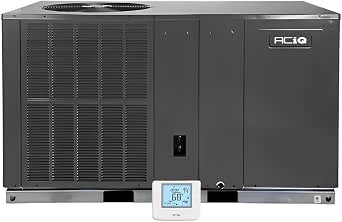
ACiQ 4-Ton Packaged Heat Pump System with 20 kW Heat Kit and Thermostat
I’d shortlist this 4-ton packaged system for a larger home or light commercial space where one outdoor cabinet can handle both heating and cooling. Its 48,000 BTU capacity and included 20 kW heat kit offer more scale and built-in backup than the Goodman 2.5-ton split system, which is better suited to smaller spaces and may need a separate heat kit in cold climates. The included thermostat also means fewer core components to source separately.
The tradeoff is a 13.4 SEER2 rating and fixed-speed compressor, which make it less efficiency-focused than the inverter-driven Senville systems. At 80 dB, it also calls for careful placement away from noise-sensitive areas. I’d factor in professional installation and online registration to qualify for the 10-year parts warranty.
Pros:- Combines heating and cooling in one packaged unit.
- Includes a 20 kW backup heat kit and thermostat.
- Galvanized steel cabinet includes coil protection.
- Offers a 10-year limited parts warranty with technician installation and online registration.
Cons:- The 80 dB noise rating may make placement near living areas undesirable.
- No inverter operation, unlike the Senville inverter systems.
- Warranty coverage depends on technician installation and online registration.
Best for: Owners of larger homes or light commercial spaces who want a packaged heating-and-cooling system with a substantial backup heat kit included.
Not ideal for: Buyers prioritizing quiet operation, inverter efficiency, or a compact installation; the cabinet is large and rated at 80 dB.
- Capacity:4 tons
- Cooling capacity:48,000 BTU
- Efficiency:13.4 SEER2
- Refrigerant:R-32
- Backup heat kit:20 kW
- Voltage:208/230 V, single-phase, 60 Hz
- Noise level:80 dB
- Dimensions:34 in D × 66 in W × 35 in H
- Warranty:10-year limited parts warranty with technician installation and online registration
Our verdict“Choose this ACiQ when you need a high-capacity packaged system with backup heat included and can accommodate its noise and installation requirements.”
Rinnai REHP50 50-Gallon Electric Heat Pump Water Heater
This Rinnai is a heat pump water heater, not a home space-heating system, so I’d choose it to cut the energy demand of domestic hot water rather than to heat rooms. Its 3.75 UEF and first-hour delivery of up to 73 gallons make it a strong fit for households with regular hot-water demand. The glass-lined 50-gallon tank and 10-year residential tank-and-parts warranty also give it a different job from the central systems in this roundup, such as the Goodman 2.5-ton split system.
That efficiency comes with installation constraints: the unit weighs 212 pounds and needs a 240-volt, 30-amp electrical supply. Demand-response capability can help shift operation during peak periods, but buyers must have a suitable location and electrical service. I’d skip it if the goal is one appliance for both space heating and cooling.
Pros:- 3.75 UEF heat-pump operation uses ambient air to heat water.
- Delivers up to 73 gallons in the first hour.
- Demand-response capability can support reduced use during peak periods.
- Includes a 10-year residential tank-and-parts warranty.
Cons:- At 212 pounds, delivery and installation can be demanding.
- Requires a 240-volt, 30-amp electrical supply.
- Heats water only; it does not replace a space-heating and cooling system.
Best for: Homeowners replacing an electric storage water heater who have 240-volt, 30-amp service and want heat-pump efficiency for domestic hot water.
Not ideal for: Shoppers seeking a heat pump for room heating and cooling, or households without the electrical capacity and installation access for a 212-pound tank.
- Tank capacity:50 gallons
- First-hour delivery:Up to 73 gallons
- Uniform Energy Factor:3.75 UEF
- Electrical requirement:240 V, 30 A
- Refrigerant:R134a
- Tank material:Glass-lined steel
- Dimensions:22 in W × 66.81 in H
- Weight:212 lb
- Residential warranty:10 years on tank and parts; 1 year on labor
Our verdict“Pick the Rinnai for efficient household hot water, not as a substitute for the space-heating systems elsewhere in this roundup.”
Goodman 2.5-Ton 14.3 SEER2 R-32 Heat Pump Split System with Air Handler and Thermostat
I’d put this Goodman on the shortlist for a homeowner replacing a conventional ducted system who needs flexibility in where the air handler can sit. The 2.5-ton split-system setup includes both the outdoor unit and a multi-position air handler, plus a digital thermostat. Its 9-speed ECM blower can adjust airflow across operating needs, while upflow and horizontal configurations help it fit more utility-room and attic layouts than a packaged cabinet such as the ACiQ 4-ton.
At 14.3 SEER2, it is a practical central-system option rather than an efficiency leader; the inverter-driven Senville systems offer a different efficiency and control approach. Cold-climate buyers should also plan for a heat kit, and a downflow installation requires a separately sold kit. The 10-year parts warranty has conditions: qualified installation and registration within 60 days.
Pros:- Includes an outdoor unit, multi-position air handler, and thermostat.
- 9-speed ECM blower supports adaptable airflow.
- Air handler allows upflow or horizontal-right and horizontal-left installation.
- Uses R-32 refrigerant and carries a 10-year parts warranty with required installation and registration.
Cons:- A heat kit may be needed for cold-climate operation.
- Downflow installation kit and other accessories are sold separately.
- Its non-inverter design is less suited to buyers seeking inverter-based operation.
Best for: Homeowners replacing a ducted heat pump who need an included air handler that can be installed upflow or horizontally.
Not ideal for: Buyers who need a complete cold-climate backup-heat package, a downflow setup without extra parts, or inverter operation.
- Capacity:2.5 tons
- Efficiency:14.3 SEER2
- Refrigerant:R-32
- System type:Split system
- Voltage:240 V
- Blower motor:9-speed ECM
- Installation configurations:Upflow, horizontal right, or horizontal left
- Included accessory:Digital heat pump thermostat
- Warranty:10-year parts warranty with qualified installation and registration within 60 days
Our verdict“Choose this Goodman for a ducted replacement where air-handler placement flexibility matters more than inverter operation or included cold-weather backup heat.”
Senville 24,000 BTU Inverter Central Air Conditioner and Heat Pump System
This Senville stands apart from the fixed-speed ACiQ packaged unit with inverter operation and up to 20 SEER2 efficiency. For a home suited to its 2-ton capacity, that combination offers a more efficiency-focused central heating-and-cooling option, while the ACiQ is better matched to larger spaces and includes a substantial backup heat kit. The Senville’s air handler supports vertical or horizontal installation, adding useful layout flexibility for a split system.
Its stated heating range extends to -4°F, but buyers in colder regions should confirm that this capacity and operating range fit their climate and backup-heat plan. The 302-pound weight can complicate delivery and installation, and the 208/230-volt supply must be available. Compared with the ductless Senville LETO, this is the central-system choice, not a room-by-room mini split.
Pros:- Inverter operation and up to 20 SEER2 efficiency.
- Provides both heating and cooling in a central split system.
- Heating is specified down to -4°F.
- Indoor noise is listed as low as 38 dB, with vertical or horizontal air-handler installation.
Cons:- The 302-pound system may make handling and installation more difficult.
- Requires a 208/230-volt electrical supply.
- Its 2-ton capacity may not suit larger homes or higher heating loads.
Best for: Homeowners seeking an inverter-driven, ducted 2-ton system with heating and cooling and a stated low-temperature heating limit of -4°F.
Not ideal for: Buyers with larger heating loads, limited installation access for a 302-pound system, or no suitable 208/230-volt supply.
- Capacity:2 tons
- Heating and cooling capacity:24,000 BTU
- Efficiency:Up to 20 SEER2
- System type:Split system
- Inverter:Yes
- Minimum heating temperature:-4°F
- Voltage:208/230 V
- Indoor noise:As low as 38 dB
- Warranty:10 years on compressor; 5 years on parts
Our verdict“Choose this Senville over the fixed-speed ACiQ when your home suits a 2-ton central system and inverter operation is a priority.”
Senville LETO 24,000 BTU Mini Split Air Conditioner and Heat Pump
I’d choose the Senville LETO for a room, addition, or other area where extending central ductwork is impractical. This 24,000 BTU ductless system covers heating, cooling, dehumidifying, and air circulation, with inverter operation and app or Alexa control. Unlike the central Senville 24,000 BTU system, the LETO is built around a ductless indoor unit, so it suits a dedicated zone rather than a home-wide ducted setup. Its included 16-foot line set and installation kit provide some of the core components for installation.
There are limits: the listed heating range reaches down to 5°F, warmer than the central Senville’s stated -4°F minimum, so it may be a weaker fit for colder climates. Professional installation is required, labor is not covered by the warranty, and the parts warranty is one year. At 34 dB, its noise rating is also higher than the central Senville’s stated indoor minimum of 38 dB only by specification context not directly comparable across systems; placement and unit type differ.
Pros:- Provides heating, cooling, dehumidifying, and air-circulation modes.
- Inverter operation supports variable temperature adjustment.
- Offers app and Alexa controls.
- Package includes indoor and outdoor units, remote, installation kit, and 16-foot line set.
Cons:- Professional installation is required.
- Listed heating operation only reaches down to 5°F, compared with -4°F for the central Senville.
- Warranty covers one year of parts and five years on the compressor, with labor excluded.
Best for: Owners of an addition, large room, or separate zone who want ductless heating and cooling with app or Alexa controls.
Not ideal for: Buyers who need one ducted system for the whole home, live where winter temperatures regularly fall below 5°F, or want labor covered by the warranty.
- Heating and cooling capacity:24,000 BTU
- Voltage:208/230 V
- Wattage:2,500 W
- Noise level:34 dB
- Refrigerant:R-454B
- Heating operating temperature:Down to 5°F (-15°C)
- Operating modes:Cooling, heating, dehumidifying, and air circulation
- Line set length:16 ft
- Warranty:1 year on parts; 5 years on compressor
Our verdict“Pick the LETO for a ductless, separately controlled zone in a climate compatible with its 5°F heating limit.”
Goodman 2-Ton 15.2 SEER2 Heat Pump System with Multi-Position Air Handler
I’d shortlist this 2-ton split system for a smaller home or a defined zone where a larger system could be more capacity than needed. Its 24,000 BTU cooling capacity, 15.2 SEER2 efficiency, and R-32 refrigerant make it a more efficiency-focused choice than the 3-ton Goodman package unit, though that packaged model bundles a thermostat and installation accessories. The multi-position air handler gives an installer more flexibility in how the indoor unit is placed, but sizing and duct compatibility still need professional review. This is a single-stage, non-inverter system, so it lacks the output modulation found in inverter options. Cold-climate buyers should account for a separately sold heat kit, and the 10-year parts warranty depends on qualified installation and timely registration.
Pros:- Provides both heating and cooling in one split system
- 15.2 SEER2 efficiency and R-32 refrigerant
- Multi-position air handler supports different installation layouts
- 10-year parts warranty is available with qualifying installation and registration
Cons:- Heat kit may be needed in cold climates and is sold separately
- Thermostat and other accessories are not included
- Single-stage operation does not offer inverter output modulation
Best for: Owners of smaller detached homes or additions who need a professionally installed, ducted heating and cooling system with a 2-ton capacity.
Not ideal for: Buyers in colder climates who want a complete setup with a heat kit included, or households seeking inverter-based output modulation.
- Capacity:2 tons
- Cooling capacity:24,000 BTU
- Efficiency:15.2 SEER2
- Refrigerant:R-32
- System type:Split system
- Compressor:Scroll, single stage
- Voltage:240 volts
- Warranty:10 years on parts with qualified installation and online registration within 60 days
Our verdict“Choose this Goodman when a 2-ton ducted system and flexible air-handler placement matter more than bundled accessories or inverter operation.”
Goodman 3-Ton 14 SEER Heat Pump Package Unit with Programmable Thermostat and Equipment Pad
This Goodman’s case for the list is bundled installation equipment: it includes a programmable thermostat, square-to-round adapters, and a plastic equipment pad alongside the 3-ton packaged heat pump. Compared with the split-system Goodman 3-ton 15 SEER2 model, this package offers more included setup components, while the split model has a higher stated efficiency and separates the indoor air handler from the outdoor unit. The packaged format can suit a home designed for a single exterior unit, but it isn’t a shortcut around checking ductwork, electrical requirements, or site preparation. The included heat strip is listed as 5 kW unless another option is specified, and the heater is described as being supplied without a breaker. I’d confirm the exact heat-strip configuration and required electrical components before ordering.
Pros:- Packaged heat pump combines system components in one unit
- Includes a programmable thermostat
- Includes square-to-round adapters and a plastic equipment pad
- 3-ton capacity suits homes needing more output than a 2-ton system
Cons:- 14 SEER rating is below the listed efficiency of the Goodman 3-ton 15 SEER2 split system
- Ships with a 5 kW heat strip unless another size is specified
- Heater is listed without a breaker, so electrical requirements need confirmation
Best for: Homeowners replacing or installing a packaged unit who want a thermostat, equipment pad, and duct adapters included with the system.
Not ideal for: Buyers who prioritize higher listed efficiency, need a split-system layout, or want certainty about the heater and breaker configuration without confirming options.
- Capacity:3 tons
- Efficiency:14 SEER
- System type:Packaged heat pump
- Model:GPH1436H41
- Included accessories:Programmable thermostat, square-to-round adapters, and plastic equipment pad
- Heat strip:Ships with 5 kW unless another option up to 10 kW is specified
Our verdict“Pick this model for a packaged-unit replacement where included accessories are useful and the heat-strip setup has been confirmed.”
Ameristar 3-Ton 14 SEER Heat Pump System with Condenser, Air Handler, and Heat Strip
The Ameristar stands apart from the Goodman split systems here by listing a heat strip with the condenser and air handler, which may reduce the number of major system components a buyer must source separately. Its 3-ton capacity puts it closer to the Goodman 3-ton 15 SEER2 system than to the 2-ton Goodmans, but its stated 14 SEER efficiency is lower than that Goodman’s 15 SEER2 rating. The listing also specifies R-410A refrigerant rather than R-32, a distinction buyers should discuss with an HVAC contractor when planning installation and future service. Product data identifies a 110-volt supply and 10 kW wattage, details worth verifying against the actual equipment and site requirements before purchase. The limited warranty is listed without further terms, so confirm coverage rather than assuming it matches Goodman’s stated parts warranty.
Pros:- Includes condenser, air handler, and heat strip
- 3-ton capacity for homes requiring more output than a 2-ton system
- Provides both heating and cooling
- Lists a rotary-scroll compressor
Cons:- 14 SEER rating is below the Goodman 3-ton 15 SEER2 system’s listed efficiency
- Uses R-410A refrigerant rather than R-32
- Limited warranty terms and listed electrical details should be verified before purchase
Best for: Homeowners seeking a 3-ton split system listing a condenser, air handler, and heat strip together, with an installer available to verify compatibility and electrical requirements.
Not ideal for: Buyers who want R-32 refrigerant, a clearly stated long-term parts warranty, or a higher listed efficiency than 14 SEER.
- Capacity:3 tons
- Efficiency:14 SEER
- System type:Split system
- Refrigerant:R-410A
- Compressor:Rotary-scroll
- Included components:Condenser, air handler, and heat strip
- Voltage:110 volts as listed
- Warranty:Limited; terms not specified in the provided product data
Our verdict“Consider this Ameristar if having a heat strip listed with the 3-ton system is a priority and your contractor confirms the specifications and warranty.”
Goodman 2-Ton 15.2 SEER2 R-32 Heat Pump System with Multi-Position Air Handler
This listing pairs the same GLZS4BA2410 condenser and AMST24BU1300 air handler found in the Goodman 2-ton 15.2 SEER2 system elsewhere in this roundup. Its appeal is the clearly stated split-system pairing, R-32 refrigerant, and multi-position air handler, making it a candidate for a smaller ducted home when a contractor confirms the system’s fit. Compared with the 3-ton Goodman 15 SEER2, it trades capacity for a smaller 24,000 BTU cooling rating; that difference matters more than the similar efficiency figures when matching equipment to the home. The data lists 15.2 SEER, while the related listing gives 15.2 SEER2, so I’d verify the exact rating and AHRI match before buying. A heat kit, thermostat, and other accessories are sold separately.
Pros:- Pairs a 2-ton condenser with a multi-position air handler
- Uses R-32 refrigerant
- Provides both heating and cooling
- 10-year parts warranty is available with qualifying installation and registration
Cons:- Heat kit, thermostat, and other accessories are sold separately
- Heat kit may be needed in cold climates
- Provided data lists 15.2 SEER, while the related system listing specifies 15.2 SEER2; verify the applicable rating
Best for: Homeowners replacing equipment in a smaller ducted home who want a 2-ton Goodman split system and can confirm model and efficiency details with an installer.
Not ideal for: Buyers needing 3-ton capacity, a heat kit or thermostat included, or a listing with no ambiguity between its stated efficiency figures.
- Cooling capacity:24,000 BTU
- Efficiency:15.2 SEER as listed
- Refrigerant:R-32
- System type:Split system
- Condenser model:GLZS4BA2410
- Air handler model:AMST24BU1300
- Voltage:230 V
- Warranty:10 years on parts with qualified installation and online registration within 60 days
Our verdict“This is a sensible 2-ton Goodman option for smaller ducted homes, provided the installer confirms the exact rating, accessories, and warranty requirements.”
Goodman 3-Ton 15 SEER2 R-32 Heat Pump System with Air Handler
For buyers who need more output than either 2-ton Goodman, this 3-ton split system pairs a 36,000 BTU heat pump with a multi-position air handler. Its 15 SEER2 rating and R-32 refrigerant make it a higher-capacity alternative to the 2-ton 15.2 SEER2 Goodman, while the smaller model may be a better fit where the home’s load does not call for 3 tons. Compared with the 3-ton Goodman packaged unit, this model uses a separate indoor air handler and lists a higher efficiency figure, but it does not bundle that unit’s thermostat, pad, or adapters. The system is substantial at 361 pounds, and linesets, thermostat, and accessories are sold separately. Cold-climate buyers also need to check compatibility: the listed heat kits are HKSC/HKSX series, not HKR series.
Pros:- 3-ton capacity and 36,000 BTU cooling power
- 15 SEER2 efficiency and R-32 refrigerant
- Includes both the heat pump and multi-position air handler
- 10-year limited parts warranty is available under the stated installation and registration requirements
Cons:- Lineset, thermostat, and other accessories are sold separately
- Compatible HKSC/HKSX heat kits are required; HKR series kits are not compatible
- Heavy equipment may require careful handling and installation planning
Best for: Owners of larger ducted homes whose contractor confirms a 3-ton load and who want an R-32 split system with an included air handler.
Not ideal for: Smaller homes that may be adequately served by a 2-ton unit, or buyers who need a packaged system or included thermostat and installation accessories.
- Capacity:3 tons
- Cooling capacity:36,000 BTU
- Efficiency:15 SEER2
- Refrigerant:R-32
- System type:Split system
- Voltage:240 volts
- Dimensions:35.5 × 35.5 × 35.75 inches
- Heat kit compatibility:HKSC/HKSX series; not HKR series
Our verdict“Choose this Goodman when a contractor specifies 3-ton capacity for a ducted home and you are prepared to source compatible accessories separately.”
ACiQ 2.5-Ton 14.3 SEER2 Mobile Home Heat Pump System with Evaporator Coil
I’d shortlist this ACiQ system for a mobile or manufactured home that needs a matched heating-and-cooling replacement. Its 30,000 BTU/h capacity and uncased A-coil with TXV suit installations built around that type of equipment, while the included refrigerant detection sensor adds a specific safety feature for its R32 refrigerant. Compared with the COSTWAY 12,000 BTU mini split, this is a central system intended to serve through ductwork, not a single room.
The tradeoff is its single-stage compressor: it cannot adjust output in smaller increments, so it offers less modulation than the COSTWAY’s inverter design. At 77 dB(A), the outdoor condenser is also a substantial sound source, and the 195-pound unit calls for proper site preparation. I’d choose it for a compatible mobile-home installation, not as a flexible, low-noise upgrade for an existing room.
Pros:- Designed for mobile and manufactured home installations
- Matched 2.5-ton condenser and uncased A-coil with TXV
- Provides both heating and cooling at 30,000 BTU/h
- Includes an R32 refrigerant detection sensor
Cons:- Single-stage compressor cannot modulate output like an inverter system
- 77 dB(A) condenser may be noticeable near outdoor living areas
- Requires installation of a new outdoor unit
Best for: Owners of mobile or manufactured homes replacing a compatible ducted heat-pump system with a matched condenser and uncased coil.
Not ideal for: Buyers seeking variable-speed comfort, a quiet outdoor unit, or an easy room-by-room installation; this requires a new condenser installation and is single-stage.
- Capacity:30,000 BTU/h (2.5 tons)
- Efficiency:14.3 SEER2; 7.8 HSPF2
- Compressor:Single-stage rotary
- Voltage:208/230 V, single-phase, 60 Hz
- Refrigerant:R32
- Noise level:77 dB(A)
- Evaporator coil:Uncased A-coil with TXV
- Condenser dimensions:29 × 29 × 39.5 in
Our verdict“Choose this ACiQ system when you need a matched, ducted heat pump built for a mobile or manufactured home and can accept single-stage operation.”
3 Ton 15 SEER2 Central Heat Pump System with 5 kW Heater
This system makes the most sense for a buyer who wants the core central-heating package together: a 36,000 BTU/h condenser, air handler, 5 kW heater, and thermostat. Its 15 SEER2 rating is a step above the ACiQ mobile-home system’s 14.3 SEER2, though the ACiQ is the more specifically suited option for manufactured-home installations. Here, the included air handler and controls make the package more straightforward to plan for a conventional ducted replacement.
I’d weigh the single-stage compressor against the COSTWAY mini split’s inverter operation: this central system is not designed to vary output as finely. The thermostat is non-programmable, so buyers wanting scheduled control may want a separate compatible control. Its 75 dBA condenser and heavy components also mean installation logistics matter. AHRI certification and ETL listing provide useful documentation, but do not remove the need for a qualified installation.
Pros:- Includes condenser, air handler, and non-programmable thermostat
- 5 kW heater provides electric auxiliary heat
- 15 SEER2 efficiency rating
- AHRI Certified and ETL Listed
Cons:- Single-stage compressor has no variable-output operation
- Included thermostat is non-programmable
- Condenser and air handler are heavy components that require installation planning
Best for: Homeowners replacing a ducted central system who want the condenser, air handler, 5 kW auxiliary heater, and basic thermostat in one package.
Not ideal for: Buyers who want inverter modulation, smart scheduling included, or a compact single-room system; this is a substantial central installation with a basic thermostat.
- Capacity:36,000 BTU/h
- Efficiency:15 SEER2
- Heater:5 kW
- Condenser refrigerant:R-32
- Condenser sound level:75 dBA
- Voltage:208/230 V, single-phase
- Thermostat:2 heat / 1 cool, non-programmable
- Certifications:AHRI Certified and ETL Listed
Our verdict“Pick this package for a ducted home replacement when having the air handler and auxiliary heater included matters more than inverter control.”
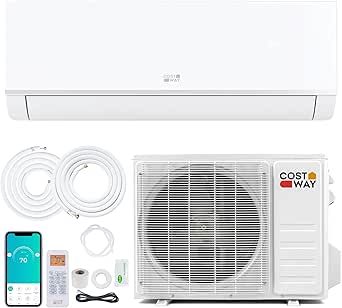
COSTWAY 12,000 BTU Mini Split Air Conditioner and Heater, 20 SEER2, 115V
For a bedroom, finished room, or other space that does not need a whole-home ducted system, I’d favor this COSTWAY mini split over the 3-ton central system. It supplies 12,000 BTU for areas listed up to 750 square feet, runs on 115 V, and pairs 20 SEER2 efficiency with inverter operation. That combination targets smaller-scale heating and cooling with finer output adjustment than the central system’s single-stage compressor.
Wi-Fi, Alexa and Google Assistant control, eight fan speeds, and operation as low as 28 dB add useful day-to-day flexibility. But this is not a substitute for a properly sized central heat pump: its stated coverage is limited, and professional installation is required. The included 5 m copper pipe kit helps define the package, but buyers still need an installer and a suitable mounting layout. I’d skip it if the goal is whole-home ducted heating.
Pros:- 20 SEER2 rating with inverter operation
- Wi-Fi app and Alexa or Google Assistant control
- Listed operating noise as low as 28 dB
- 115 V power and included 5 m copper connection pipe
Cons:- 12,000 BTU capacity is intended for a limited area, not whole-home service
- Professional installation is required
- Coverage depends on room layout and conditions, despite the stated 750-square-foot figure
Best for: Homeowners adding efficient heating and cooling to a well-sized room or open area up to 750 square feet, especially where 115 V power and app control are appealing.
Not ideal for: Buyers replacing a whole-home central system or seeking a do-it-yourself installation; this is a single-zone mini split that requires a professional technician.
- Cooling and heating capacity:12,000 BTU
- Efficiency:20 SEER2
- Voltage:115 V
- Wattage:1,120 W
- Refrigerant:R-32
- Listed floor area coverage:Up to 750 sq ft
- Noise level:As low as 28 dB
- Controls:Wi-Fi app, Alexa/Google Assistant, and remote
- Installation:Split system; professional installation required
Our verdict“Choose the COSTWAY for a quiet, app-controlled single-room upgrade, not as a replacement for a central ducted heat pump.”
Goodman 4-Ton 15.2 SEER2 Multi-Position Heat Pump Packaged Unit
The Goodman’s distinguishing case is its packaged, multi-position design, which can suit sites where the installer needs more than one placement configuration. At a listed 15.2 SEER2, it also has a higher stated efficiency rating than the 3-ton central system’s 15 SEER2. This is a different kind of choice from the COSTWAY mini split: Goodman is a larger packaged-unit option, while COSTWAY is a one-ton system aimed at a defined room.
I would not buy on the title’s “4-ton” wording alone. The supplied specifications list capacity as 3.8 tons, so that discrepancy should be confirmed with the seller and installer before sizing or comparing bids. The data provided also gives little detail beyond voltage, efficiency, and installation format, leaving fewer published points for judging system performance than the 3-ton system’s listed components and certifications. This pick fits buyers prioritizing installation flexibility who can verify the exact capacity.
Pros:- Packaged unit format combines equipment in one assembly
- Multi-position installation supports different site configurations
- 15.2 SEER2 stated efficiency
- 230 V operation
Cons:- Listed capacity is 3.8 tons, not the 4 tons stated in the title
- Provided product data lacks detail on components and heating capacity
- Packaged format may not suit homes designed for a split condenser and indoor air handler
Best for: Homeowners and installers seeking a packaged heat pump with multiple placement configurations and who can confirm the unit’s capacity against the home’s load.
Not ideal for: Buyers who need an unambiguous four-ton rating or detailed published component specifications before purchasing; the stated capacity is 3.8 tons despite the title.
- Model:GPHM54841
- Listed capacity:3.8 tons
- Efficiency:15.2 SEER2
- Installation type:Packaged
- Form factor:Packaged unit
- Installation positions:Multi-position
- Voltage:230 V
Our verdict“Consider this Goodman when packaged-unit placement flexibility is the priority, but verify its 3.8-ton listed capacity before selecting it.”

How We Picked
I ranked these options by how clearly their system type, capacity, and included components suit a recognizable home need. I weighed ducted split systems against packaged units and mini splits rather than treating their efficiency figures as directly interchangeable; a heat pump that does not fit a home’s layout or load is a poor match even if its specification looks appealing. I also looked at whether a listing includes an air handler, heat kit, thermostat, or other equipment that affects what a buyer still needs to plan for.
The ordering favors flexible, broadly applicable space-heating and cooling choices first, then more specialized configurations and the water-heating option. Within similar Goodman systems, differences in capacity, refrigerant, and stated efficiency help distinguish likely fits, but they do not establish real-world performance for a particular house. These are equipment comparisons, not installation assessments: proper sizing, electrical compatibility, local climate, duct condition, and qualified installation can change which option makes sense. I would confirm those details before selecting any model.
| home heat pump | Refrigerant | System type |
|---|---|---|
| ACiQ 4-Ton Packaged Heat Pump | R-32 | — |
| Rinnai REHP50 50-Gallon Electr | R134a | — |
| Goodman 2.5-Ton 14.3 SEER2 R-3 | R-32 | Split system |
| Senville 24,000 BTU Inverter C | — | Split system |
| Senville LETO 24,000 BTU Mini | R-454B | — |
| Goodman 2-Ton 15.2 SEER2 Heat | R-32 | Split system |
| Goodman 3-Ton 14 SEER Heat Pum | — | Packaged heat pump |
| Ameristar 3-Ton 14 SEER Heat P | R-410A | Split system |
| Goodman 2-Ton 15.2 SEER2 R-32 | R-32 | Split system |
| Goodman 3-Ton 15 SEER2 R-32 He | R-32 | Split system |
| ACiQ 2.5-Ton 14.3 SEER2 Mobile | R32 | — |
| 3 Ton 15 SEER2 Central Heat Pu | — | — |
| COSTWAY 12,000 BTU Mini Split | R-32 | — |
| Goodman 4-Ton 15.2 SEER2 Multi | — | — |
Factors to Consider When Choosing Best Home Heat Pumps
Before comparing model names, decide what the heat pump must serve and what parts of your home’s heating setup will stay in place. The right choice depends on the building as much as the equipment: a central system, packaged unit, mini split, and heat pump water heater solve different problems.
Match the system type to your home layout
A ducted split system uses an outdoor unit and indoor air handler to move conditioned air through ducts, which can suit a home with usable ductwork. A packaged unit keeps major heating and cooling components together outdoors, but it needs a suitable location and connection to the home’s air distribution. Mini splits serve one or more defined zones without conventional ducts, making them useful for additions, converted rooms, or homes where duct installation would be disruptive. Buyers sometimes choose by equipment label alone and overlook how air will reach bedrooms and closed-off rooms. Map the spaces you need to condition before deciding which format fits. A system that serves only one zone should not be treated as a whole-home replacement unless the rest of the home has another heating plan.
Size capacity from a load calculation, not square footage alone
Nominal tonnage and BTU capacity indicate scale, but they do not tell you whether a unit is correctly sized for your house. Insulation, window area, air leakage, ceiling height, layout, and local design temperatures all affect the heating and cooling load. Oversizing can lead to short cycling and uneven comfort, while undersizing may leave rooms struggling during extreme weather. A common mistake is to copy the capacity of an old system, which may have been poorly sized or installed under different conditions. Ask an HVAC professional to perform a room-by-room or whole-home load calculation before purchasing. Treat the capacities in this roundup as comparison points, not as a sizing recommendation for your address.
Read efficiency ratings in context
SEER2 describes cooling efficiency under standardized conditions; it does not by itself show how well a model heats during cold weather. The listings here include different rating levels and even a mini split with a stated 20 SEER2, but those figures should not be used as a complete operating-cost comparison across system types. Heating performance, climate, controls, installation quality, and how often the system runs also shape energy use. Look for heating data such as HSPF2 and low-temperature capacity when available, especially if winters are cold where you live. Check that the exact model configuration and matched indoor equipment are covered by the published ratings. Paying more for a higher cooling rating may not be the best use of money if your home has other major sources of energy waste.
Plan for backup heat and electrical requirements
Some listings include electric heat strips or a heat kit, while others may require additional backup heat planning. Backup resistance heat can help maintain comfort when a heat pump cannot meet the load, but frequent use can raise electricity consumption. Ask how the system will control auxiliary heat and whether the included kit matches the air handler and your climate needs. Electrical service, breaker capacity, wiring, and disconnect requirements can add work beyond the equipment purchase. Buyers can miss these costs by comparing only the components named in a listing. Have an installer verify the equipment schedule and electrical needs before ordering.
Check what is included and what installation still requires
A listing that names an air handler, thermostat, heat kit, coil, or pad may still omit materials and services needed for a complete installation. Refrigerant lines, electrical work, condensate drainage, duct changes, permits, and startup procedures depend on the system and home. Ask for a written scope showing which components are supplied, which are compatible, and which are extra. Packaged systems may reduce the number of separate indoor and outdoor equipment pieces, while split systems offer different placement options but require coordinated components. A low equipment cost can become a poor value if compatibility or installation details are discovered late. Use a qualified contractor to confirm the complete matched system before purchase.
Compare warranty support, service access, and long-term ownership
Heating and cooling equipment is a long-term home system, so parts availability and local service support matter alongside rated performance. Confirm the manufacturer’s warranty terms, registration rules, labor coverage, and any requirements tied to professional installation. Ask local contractors which brands and control systems they can readily service; a product that is difficult to maintain can create delays when a part fails. Filters, coil cleaning, outdoor-unit clearance, and condensate management also affect routine ownership. A premium configuration is more compelling when it brings a meaningful fit or service advantage for your home, not just a larger capacity. Keep the model and serial information, installation records, and maintenance schedule together after the system is commissioned.
Frequently Asked Questions
Can I replace my existing furnace and air conditioner with a heat pump without changing my ducts?
Sometimes, but the condition and design of the ducts matter as much as whether ducts are present. Leaks, undersized returns, poor insulation, or airflow restrictions can reduce comfort and performance with a new heat pump. Ask a contractor to inspect duct static pressure and airflow and to confirm that the new air handler can work with the existing distribution system. You may need duct repairs or balancing even if the ducts remain. If major duct changes are impractical, a mini split may be a better fit for selected rooms, though it may not serve the entire home by itself.
Should I choose a 2-ton, 2.5-ton, 3-ton, or 4-ton heat pump?
Do not select tonnage from the home’s square footage or from the capacity of the old equipment alone. A load calculation accounts for insulation, windows, air leakage, climate, layout, and room-by-room needs. A larger unit is not automatically safer: oversizing can cause short cycles and less even comfort, while a unit that is too small may struggle on the coldest or hottest days. Ask the installer to show the calculated load and explain how the selected model meets it. The tonnage options in this roundup are useful for comparison, not a substitute for that calculation.
Is a mini split a sensible choice if my home already has central ducts?
It can be, particularly when one room, addition, or upper floor has comfort problems that the central system does not address well. A mini split offers zone-specific control, but it adds another system to install and maintain rather than automatically replacing central heating and cooling. Consider whether the troublesome space can be corrected through duct balancing, air sealing, or insulation first. Also confirm where the indoor head can be placed and how condensate and refrigerant lines will be routed. For whole-home conditioning, compare the cost and practical reach of multiple zones against repairing or replacing the central system.
Does a heat pump need electric backup heat in a cold climate?
Not every home needs the same backup arrangement, and the answer depends on the heat pump’s cold-weather capacity, the home’s heat loss, and local winter conditions. Electric heat strips can provide supplemental heat, but using them often may increase electricity consumption. Some households retain a separate heating source or use a dual-fuel setup, depending on available equipment and local requirements. Ask the contractor to explain the system’s capacity at low outdoor temperatures and when auxiliary heat will operate. Confirm that any heat kit, wiring, and electrical service are matched to the chosen air handler.
Is the Rinnai REHP50 a replacement for a home heating heat pump?
No. The Rinnai REHP50 is a heat pump water heater designed to heat household water; it does not provide space heating or central air conditioning. It belongs in this roundup because it uses heat pump technology, but its job differs from the Goodman, ACiQ, Ameristar, Senville, and COSTWAY space-conditioning systems. If your goal is lower-energy hot water, compare tank capacity, installation space, sound, condensate handling, and recovery needs. If you need to heat rooms, choose a space-heating system sized and configured for the home.
Conclusion
For most buyers seeking a ducted heating-and-cooling system, my best overall pick is the Goodman 3-Ton 15 SEER2 R-32 Heat Pump System, provided a load calculation supports that capacity and the air handler fits the home. The best value direction is the Goodman 2-Ton 15.2 SEER2 system for a home whose calculated load is smaller; choosing the right size matters more than moving up in capacity. For buyers who want a larger packaged configuration, the Goodman 4-Ton 15.2 SEER2 Packaged Unit is my premium-style pick, but only where its format and capacity make sense. The COSTWAY 12,000 BTU Mini Split is my best for beginners among these options when the need is a small, clearly defined zone, while the Senville LETO 24,000 BTU Mini Split better suits a larger zone. For a mobile home, review the ACiQ 2.5-Ton Mobile Home System; for domestic hot water rather than room comfort, choose the Rinnai REHP50. Before ordering any model, have a qualified installer confirm sizing, compatibility, electrical needs, and the full installation scope.
Fall Picks
fall essentials
As an affiliate, we earn on qualifying purchases.