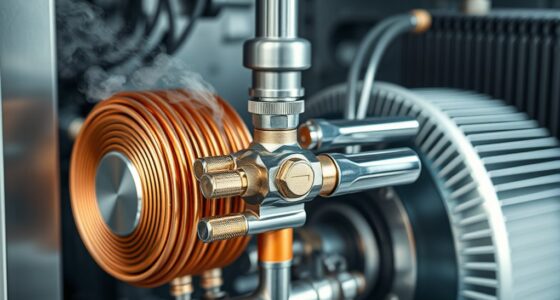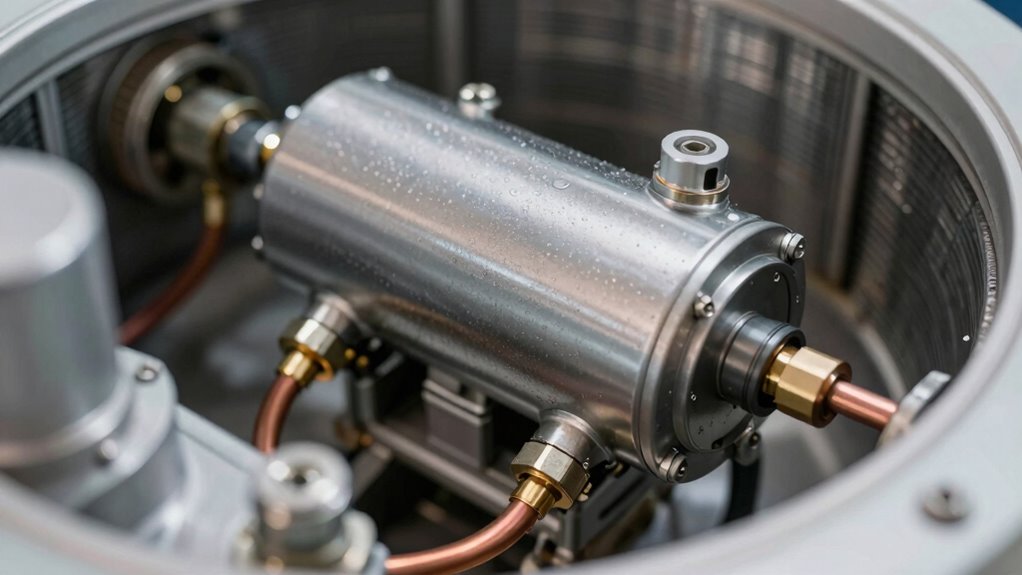

A suction accumulator protects your compressor by preventing liquid refrigerant from reaching it, which can cause damage. It captures excess liquid and guarantees only vapor enters the compressor, keeping it running smoothly and efficiently. Without it, liquid refrigerant could cause hydraulic lock, knocking, and mechanical damage, reducing system lifespan. By stabilizing refrigerant flow during demand changes, it helps your system stay reliable longer. Keep going to discover more about how it keeps your system protected and working at its best.

Get backup power and energy gear delivered free — and shop member deals
- Fast, free delivery on millions of items
- Access to Prime Big Deal Days deals on October 6–7
- Prime Video, Amazon Music and more included
Key Takeaways
- The compressor from damage caused by liquid refrigerant entering its inlet.
- Mechanical failure due to hydraulic lock or knocking from liquid refrigerant.
- System inefficiency and increased energy consumption caused by improper refrigerant flow.
- Component wear and tear resulting from unstable refrigerant flow during demand fluctuations.
- System downtime and costly repairs by preventing liquid carryover and flow-related issues.

A suction accumulator plays a crucial role in protecting your HVAC system by preventing liquid refrigerant from reaching the compressor. When refrigerant flow isn’t properly managed, liquid refrigerant can flood the compressor, causing damage or even failure. The accumulator acts as a safeguard by capturing any excess liquid that might otherwise travel toward the compressor, ensuring only vapor enters. This keeps the compressor running smoothly and maintains ideal refrigerant flow throughout the system. Without this protective device, the compressor would work harder to handle liquid refrigerant, which considerably reduces efficiency and shortens its lifespan.
Your compressor is designed to compress refrigerant vapor, not liquid. When liquid refrigerant enters the compressor, it can cause hydraulic lock, knocking, and severe mechanical damage. This damage interrupts refrigerant flow and forces the system to work harder, ultimately decreasing overall efficiency. A properly functioning suction accumulator prevents these issues by separating the liquid from vapor, allowing only the vapor to flow into the compressor. This ensures that the compressor operates at peak efficiency, consuming less energy and reducing wear and tear. Proper refrigerant management is essential to keep the accumulator effective and prevent system issues. Regular inspection and cleaning of the accumulator and associated components further enhance its protective capabilities.
A suction accumulator prevents liquid refrigerant from entering the compressor, protecting it from damage and maintaining system efficiency.
You’ll find that the accumulator also helps stabilize refrigerant flow, especially during rapid changes in system demand. When your system experiences sudden increases in cooling or heating load, the refrigerant flow can fluctuate, leading to potential liquid carryover. The accumulator buffers these fluctuations by temporarily storing excess liquid refrigerant, preventing it from reaching the compressor. This not only protects the compressor but also helps maintain consistent cooling or heating performance, making your HVAC system more reliable and responsive. Additionally, proper maintenance of the refrigerant flow system ensures the accumulator remains effective over time and prevents system efficiency issues. Regular inspection, cleaning, and system calibration further ensure optimal operation and longevity of your HVAC components.
As an affiliate, we earn on qualifying purchases.
Frequently Asked Questions
How Long Does a Suction Accumulator Typically Last?
A suction accumulator typically lasts between 3 to 5 years, but its lifespan depends on system efficiency and refrigerant flow. If it’s well-maintained and free of debris, it can perform longer. Regular inspections ensure it’s functioning properly, preventing refrigerant flow issues that could harm your system. Keep an eye on signs of wear, and replace it promptly to maintain peak performance and protect your equipment effectively.
Can a Suction Accumulator Be Repaired or Only Replaced?
You can repair a suction accumulator if the damage is minor, like a small leak or clog, but often, replacement is more dependable. Repairing helps prevent refrigerant contamination, which can harm system efficiency. However, if the accumulator is severely damaged or contaminated, replacing it guarantees your system runs smoothly and maintains peak efficiency. Regular maintenance helps spot issues early, saving you money and avoiding costly repairs.
What Are Signs of a Failing Suction Accumulator?
You’ll notice signs of a failing suction accumulator when refrigerant flow becomes inconsistent, causing your system to cycle on and off. Reduced cooling efficiency, strange noises, or ice buildup on the evaporator coil are telltale signs. These issues indicate the accumulator isn’t properly separating liquid refrigerant, which hampers system efficiency. Ignoring these signs could lead to compressor damage, so address them promptly to maintain ideal refrigerant flow and system performance.
Is a Suction Accumulator Necessary for All HVAC Systems?
Think of your HVAC system as a finely tuned orchestra; a suction accumulator acts like a skilled conductor, ensuring harmony. Not all systems need one, but it often boosts system efficiency by preventing liquid refrigerant from reaching the compressor. Regular maintenance procedures, including checking the accumulator, can keep your system running smoothly. If you have a larger or complex setup, installing a suction accumulator can be a wise choice for peak performance.
How Does Climate Affect Suction Accumulator Performance?
Climate impact can considerably affect suction accumulator performance, causing performance variability. In hot, humid environments, it may struggle to efficiently manage excess refrigerant, leading to reduced system efficiency. Conversely, in colder climates, the accumulator might not function ideally due to lower temperatures affecting refrigerant flow. You should regularly monitor and maintain your system, especially if you experience extreme weather, to guarantee your suction accumulator continues to protect your HVAC effectively.
As an affiliate, we earn on qualifying purchases.
Conclusion
So, next time you hear about a suction accumulator protecting your AC system, remember it’s more than just a myth. It truly shields your compressor from liquid refrigerant and potential damage, ensuring your system runs smoothly longer. Think of it as a safeguard that prevents costly repairs. While some might doubt its importance, the evidence shows it plays a vital role in maintaining your AC’s health. Trust the facts—your system will thank you.
HVAC compressor protection device
As an affiliate, we earn on qualifying purchases.
As an affiliate, we earn on qualifying purchases.
As an affiliate, we earn on qualifying purchases.
Halloween Picks
halloween
As an affiliate, we earn on qualifying purchases.