To troubleshoot refrigerant cycle issues in your heat pump, start by checking pressure readings with a gauge set to spot low refrigerant levels or pressure imbalances. Inspect the expansion valve for blockages or leaks, as these can disrupt refrigerant flow and cause uneven heating or cooling. Also, listen for unusual noises from the compressor and look for signs of overheating. If you keep these tips in mind, you’ll better understand where the problem lies and uncover solutions to restore efficiency.
Key Takeaways
- Check refrigerant pressure readings to identify abnormal levels indicating expansion valve or leak issues.
- Inspect the expansion valve for blockages, damage, or improper adjustment affecting refrigerant flow.
- Listen for unusual compressor noises, overheating, or frequent cycling as signs of refrigerant cycle problems.
- Ensure refrigerant leaks are repaired promptly and the system is properly recharged.
- Regularly perform system inspections and maintenance to prevent and address refrigerant cycle issues effectively.

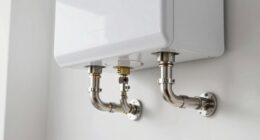
Understanding the refrigerant cycle is essential for diagnosing common cooling and heating issues. When your heat pump isn’t performing as it should, many problems originate in the cycle itself, particularly around components like the expansion valve and compressor. The expansion valve plays a critical role in controlling the flow of refrigerant into the evaporator coil. If it becomes clogged, stuck, or improperly adjusted, it can disrupt the entire cycle, leading to insufficient cooling or heating. You might notice reduced system efficiency, longer run times, or uneven temperature distribution. Checking the expansion valve for blockages or leaks is a good starting point when troubleshooting. A faulty valve can cause the refrigerant to either overfeed or underfeed the evaporator, which hampers heat transfer and stresses the compressor.
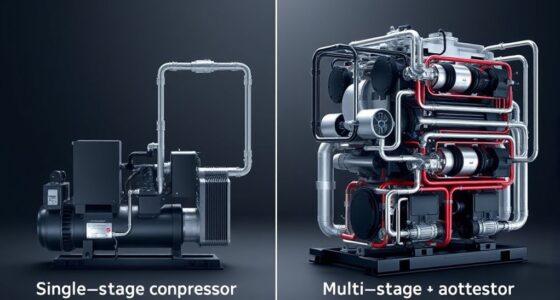
Speaking of the compressor, it’s the heart of the refrigerant cycle, responsible for moving refrigerant between high and low-pressure sides. Its efficiency directly impacts the overall performance of your heat pump. If the compressor isn’t running smoothly—whether due to electrical issues, wear and tear, or internal damage—it can cause inconsistent temperatures and increased energy consumption. You’ll want to listen for unusual noises like knocking or humming, which might signal a problem. Also, if the compressor is overheating or frequently cycling on and off, it’s a sign that it’s struggling to maintain proper pressure or that refrigerant levels are off. Low refrigerant charge, often caused by leaks, can also reduce compressor efficiency, leading to poor heat transfer and higher utility bills.
To troubleshoot these issues, start by examining the system’s pressure readings with a gauge set. Abnormal pressures often point to expansion valve problems or refrigerant leaks. Next, inspect the valve for signs of damage or blockage. If you find that the expansion valve is functioning properly, but the compressor still isn’t operating efficiently, consider whether the refrigerant charge is adequate. Low refrigerant levels not only impair heat transfer but also strain the compressor, risking further damage. In some cases, cleaning or replacing the expansion valve and repairing refrigerant leaks can restore proper flow and pressure, improving compressor efficiency.
Ultimately, understanding how the expansion valve and compressor work together gives you a clearer picture of where issues originate. Proper maintenance, regular inspections, and timely repairs ensure your heat pump runs efficiently, providing reliable heating and cooling while saving you money and preventing costly breakdowns.
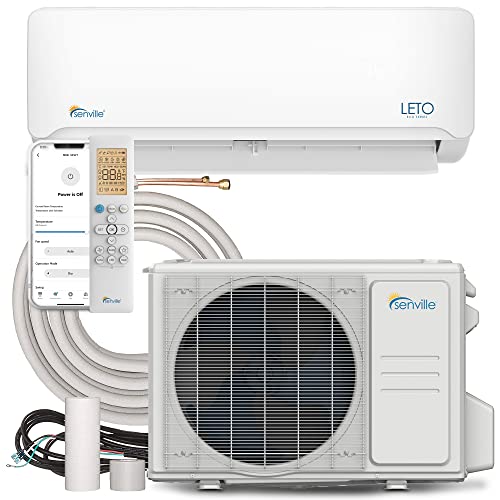
Senville LETO Series Mini Split Air Conditioner Heat Pump, 12000 BTU 110/120V, Inverter, Works with Alexa, SEER2 20.8, 1 Ton, White
Alexa Enabled Mini Split AC/Heating System: Integrate with voice control or app, allowing you to adjust your mini...
As an affiliate, we earn on qualifying purchases.
Frequently Asked Questions
How Can I Identify Refrigerant Leaks Early?
To identify refrigerant leaks early, you should regularly perform refrigerant detection checks using an electronic leak detector. Look for signs like decreased cooling efficiency, ice buildup on the coils, or hissing sounds near connections. Implement leak prevention strategies, such as tightening fittings and inspecting for corrosion. Catching leaks early helps maintain system performance, reduces energy costs, and prevents further damage to your heat pump.
What Are the Safety Precautions During Refrigerant Handling?
When handling refrigerants, you should always wear protective gear like gloves and goggles to prevent skin and eye contact. Guarantee proper ventilation requirements are met, working outdoors or in well-ventilated areas to avoid inhaling fumes. Turn off equipment before connecting or disconnecting refrigerant lines, and use proper tools. Follow all safety guidelines and manufacturer instructions to protect yourself and prevent accidents during refrigerant handling.
How Often Should Refrigerant Levels Be Checked?
You should verify refrigerant levels annually or if you notice performance issues. During refrigerant recharge, use leak detection methods like electronic leak detectors or UV dye to find leaks before recharging. Regular inspection ensures your heat pump operates efficiently. If refrigerant levels are low, it indicates a leak that needs fixing before topping off, preventing future problems and maintaining ideal system performance.
Can Improper Airflow Affect Refrigerant Cycle Performance?
Ironically, you might think airflow issues don’t affect the refrigerant cycle, but they do. Airflow blockages or fan malfunctions can disrupt heat transfer, causing the refrigerant to become less efficient. When airflow isn’t essential, the system struggles to maintain proper pressure and temperature, leading to poor performance. So, ensuring unobstructed airflow and functioning fans is vital to keeping your heat pump’s refrigerant cycle running smoothly.
What Tools Are Best for Diagnosing Refrigerant System Issues?
You’ll want a set of manifold gauges for pressure testing to accurately measure system pressures. A refrigerant recovery machine is essential for safely removing refrigerant before repairs. Use these tools together to identify issues like leaks or improper pressure levels. Additionally, a digital thermometer helps monitor temperature differences across components. Regularly performing pressure testing with these tools allows you to pinpoint problems and make sure the refrigerant cycle runs efficiently.

23000 BTU Mini Split AC & Heat Pump, 230v Energy Efficient Wall-Mounted Ductless Air Conditioner with WiFi Control, r32 Eco-Friendly Refrigerant, Cools/Heats Up to 1500 Sq.Ft, Quiet Operation
Powerful Cooling & Heating - This 23000 BTU mini split system delivers reliable cooling (63-90℉) and heating (32-80℉)...
As an affiliate, we earn on qualifying purchases.
Conclusion
Just like a skilled captain troubleshooting rough seas, you can navigate refrigerant cycle issues with patience and attention. Remember, even Hercules faced challenges but triumphed through perseverance. By understanding the signs and acting promptly, you keep your heat pump running smoothly, avoiding the chaos of a breakdown. With a little detective work, you’ll restore comfort and efficiency—turning potential storms into calm waters, proving that you’re the hero of your own HVAC story.
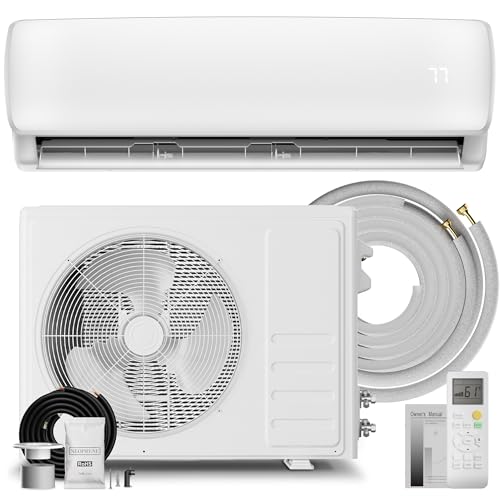
MEPTY 9000BTU Mini Split AC/Heating System, 19 SEER2 Energy Efficient Mini Split Air Conditioner with Heat Pump, 110V Cools Up to 450sq.ft, Ductless Inverter AC Unit with Pre-Charged Condenser
⭐Advanced Energy Saving: Advanced inverter technology with leading 19 SEER2 rating delivers superior performance through ensuring that the...
As an affiliate, we earn on qualifying purchases.
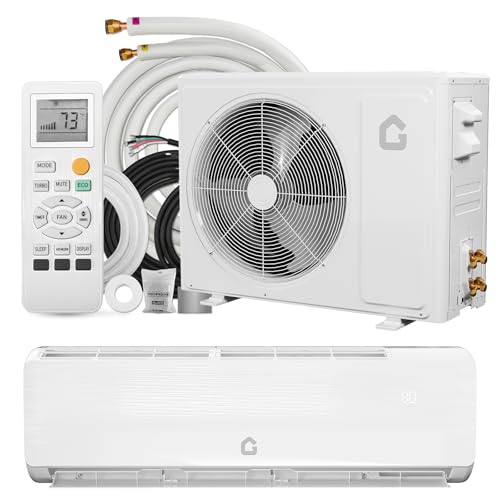
Garvee 9000 BTU Mini Split Air Conditioner Heat Pump System, 19 SEER2 Inverter Mini Split AC/Heating System, Ductless Wall Mount AC Unit Cool Up to 450 Sq. Ft, Installation Kits, 230V
【9,000 BTU High-Efficiency Cooling & Heating】-The mini split ac/heating system delivers 9,000 BTU cooling and 9000 BTU heating,...
As an affiliate, we earn on qualifying purchases.