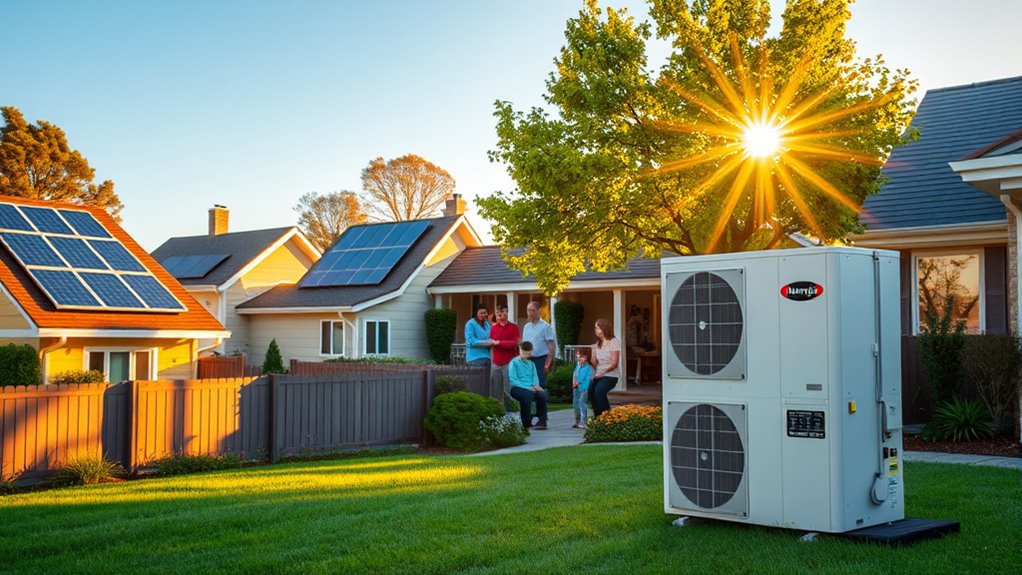

Community solar programs make it easier for you to access renewable energy by allowing you to buy or lease a share of a larger solar array, which can lower your energy costs and eliminate upfront system costs. Paired with heat pump adoption, these programs can enhance your home’s efficiency and reduce reliance on fossil fuels. Policies and incentives are key to making this process affordable and accessible—stay with us to uncover more ways you can benefit from these sustainable options.
Key Takeaways
- Community solar programs can supply renewable energy to heat pumps, reducing their operational carbon footprint and energy costs.
- Incentives for community solar may extend benefits to heat pump users, making adoption more affordable.
- Policies supporting community solar expansion often include provisions that facilitate renewable heating solutions like heat pumps.
- Integrating community solar and heat pump incentives can maximize financial savings for households.
- Advocacy and staying informed about local policies can help access combined benefits for solar participation and heat pump adoption.
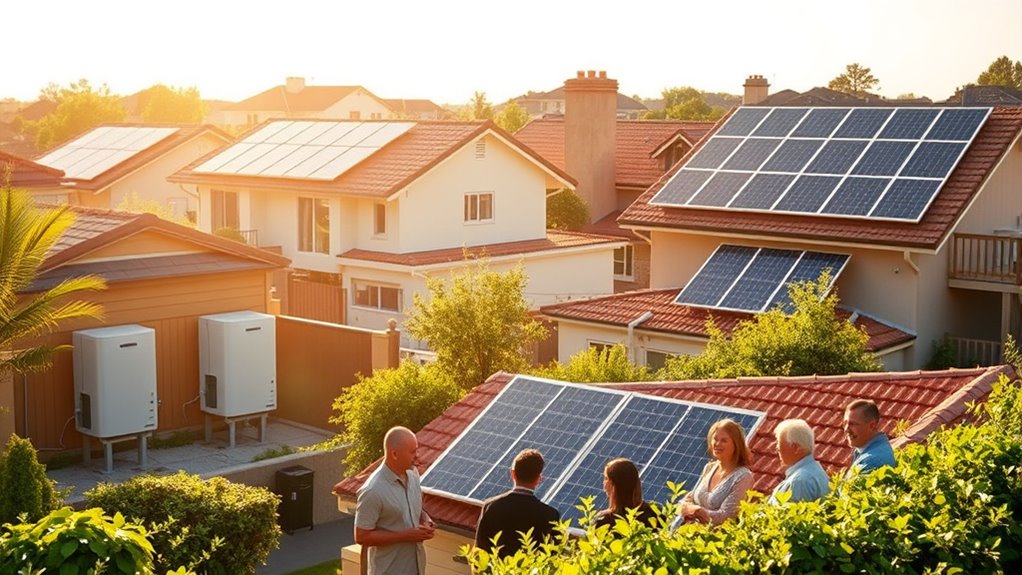
Community solar programs are increasingly popular options for households looking to reduce their energy costs and carbon footprint without installing solar panels on their property. These programs allow you to buy or lease a share of a larger solar array, providing access to clean energy and financial benefits without the upfront costs and maintenance of individual systems. But even with their advantages, you might find that solar incentives and policy barriers influence your decision to participate. Solar incentives, such as tax credits or rebates, can substantially lower the cost of community solar subscriptions, making the switch more affordable. These incentives are designed to encourage clean energy adoption, but their availability varies by state and program, so you’ll need to research what’s accessible in your area. On the other hand, policy barriers can complicate your participation. Some regions have restrictive regulations or lack supportive policies that hinder the growth of community solar initiatives. This might mean fewer options or delays in connecting to a program. For instance, if local policies don’t clearly define how shared solar can be integrated into existing utility frameworks, you could face bureaucratic hurdles or limited access. Steering through these challenges requires understanding the local policy landscape and staying informed about changing regulations that might benefit or impede your involvement. Additionally, policy barriers may include limited access to incentives, complicated application processes, or restrictions on who can participate, especially in low-income or underserved communities. These barriers can discourage some households from engaging even when community solar programs are available. However, many states and utilities are actively working to reduce these barriers by expanding eligibility, simplifying enrollment, and boosting solar incentives. As a participant, you should keep an eye on legislative developments and available programs that aim to make community solar more accessible and affordable. Furthermore, integrating smart marketing strategies can help you stay informed and advocate effectively for supportive policies and incentives. Doing so can help you maximize your benefits, from lowering your energy bills to reducing your carbon footprint. It’s also worth connecting with local organizations or advocacy groups focused on clean energy, as they often provide guidance on steering through policy barriers and accessing available incentives. Overall, while solar incentives can make community solar a financially attractive option, policy barriers remain a challenge in some areas. Your ability to participate effectively depends on staying informed about these dynamics and advocating for policies that support wider access. By understanding how incentives and barriers operate, you can better position yourself to benefit from community solar programs and contribute to a more sustainable future.
Frequently Asked Questions
How Do Community Solar Programs Impact Local Energy Prices?
Community solar programs can lower your local energy prices by spreading out solar project costs among participants, making renewable energy more affordable. When you get involved, community engagement helps optimize the project’s success and guarantees benefits are shared. As more people participate, economies of scale reduce overall costs, which can lead to lower rates for everyone. This collaborative approach makes clean energy accessible and can stabilize or even reduce your energy bills over time.
Are Heat Pumps Suitable for Extreme Weather Conditions?
Heat pumps are generally suitable for extreme climate conditions, but their durability depends on the model and installation quality. Modern heat pumps are designed to operate efficiently even in very cold or hot weather, providing reliable heating and cooling. You should choose a model rated for extreme climate, guarantee proper installation, and maintain it regularly to maximize durability. This way, you’ll stay comfortable year-round, regardless of harsh weather conditions.
What Are the Financing Options Available for Community Solar Projects?
You can finance community solar projects through various options like solar leasing and project funding. Solar leasing allows you to pay a fixed monthly fee or lease the system, reducing upfront costs. Project funding, including grants, loans, and investor financing, helps cover installation expenses. These options make it easier to participate without large initial investments, enabling you to benefit from solar energy savings and environmental impact while managing costs effectively.
How Does Heat Pump Efficiency Vary With Installation Quality?
Think of your heat pump’s efficiency as a finely tuned orchestra; the quality of installation standards and maintenance practices determines whether it plays in harmony or hits discord. When installed correctly, with proper insulation and airflow, your heat pump operates at peak efficiency. Regular maintenance keeps it running smoothly, avoiding energy waste. Poor installation and neglecting upkeep can cause efficiency to plummet, turning a potential symphony into a noisy discord.
Can Community Solar Programs Be Combined With Other Renewable Incentives?
Yes, you can combine community solar programs with other renewable incentives. Solar policy encourages such integrations to maximize benefits. By doing so, you enhance your savings and reduce your carbon footprint. Incentive integration allows you to leverage multiple programs, such as federal tax credits or state rebates, alongside community solar. This approach makes renewable energy more affordable and accessible, helping you meet your sustainability goals more effectively.
Conclusion
By participating in community solar programs, you can substantially boost heat pump adoption and reduce your carbon footprint. For example, communities with access to these programs have seen up to a 30% increase in heat pump installations in just a year. This connection not only lowers energy costs but also accelerates the shift to cleaner, greener energy. Embracing both solutions helps you save money while making a meaningful environmental impact.