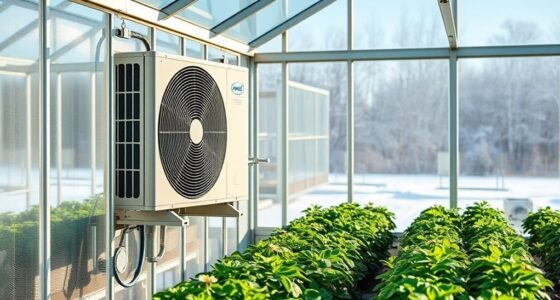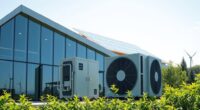
To design renewable energy systems supporting heat pumps, start by evaluating your energy needs and solar potential. Install tailored solar panels and consider adding wind turbines or geothermal sources if suitable. Incorporate energy storage like batteries to keep power steady during non-sunny periods. Use smart controls to optimize system performance and interact with the grid efficiently. Exploring these steps further will help you create a reliable, sustainable setup that maximizes renewable benefits.
Key Takeaways
- Assess household energy needs and solar potential for accurate system sizing.
- Integrate solar panels with energy storage solutions to ensure continuous heat pump operation.
- Utilize smart management systems to optimize renewable energy flow and reduce wastage.
- Combine multiple renewable sources like solar, wind, or geothermal for enhanced reliability.
- Plan for grid interaction and demand response to maximize efficiency and minimize costs.

Are you looking for a sustainable way to power your heat pump? If so, integrating renewable energy sources into your system is a smart move. Solar integration is one of the most effective methods, allowing you to harness the sun’s power to generate electricity that directly supports your heat pump’s operation. By installing solar panels, you can reduce reliance on the grid and lower your energy bills. Solar power systems can be tailored to meet your specific energy needs, guaranteeing that your heat pump has a consistent, clean energy supply. To maximize efficiency, consider pairing your solar setup with energy storage solutions like batteries. This way, you can store excess solar energy generated during sunny periods and use it when the sun isn’t shining, providing a steady power source around the clock.
In addition to solar integration, grid optimization plays a pivotal role in designing an effective renewable energy system for your heat pump. Grid optimization involves managing how your system interacts with the local electrical grid to enhance overall efficiency and stability. Implementing smart inverters and energy management systems allows you to control the flow of electricity, ensuring your heat pump receives the necessary power while minimizing wastage. With grid optimization, you can also participate in demand response programs, which incentivize reducing electricity consumption during peak periods, further lowering costs and reducing strain on the grid. This approach not only benefits your system but also contributes to a more stable and resilient energy infrastructure. Additionally, understanding battery technologies is crucial for effectively integrating energy storage solutions into your renewable system.
When planning your renewable energy system, it’s essential to assess your energy consumption patterns and local solar potential. Conducting a detailed energy audit helps determine the size of the solar array needed and whether additional renewable sources, like small wind turbines or geothermal, could complement your setup. Incorporate smart controls that can automatically switch between solar, stored energy, and grid power based on availability and cost-effectiveness. This flexibility guarantees your heat pump operates efficiently without interruption, no matter the weather or time of day.
Frequently Asked Questions
How Do Weather Variations Affect Renewable Energy System Performance?
Weather fluctuations and seasonal variability can considerably impact your renewable energy system’s performance. During cloudy or windless days, solar panels and wind turbines produce less energy, reducing their efficiency. Extreme temperatures may also affect system components. To guarantee consistent support for heat pumps, you should incorporate energy storage solutions and diversify your energy sources. This approach helps you manage weather variations and maintain reliable renewable energy supply year-round.
What Are the Best Locations for Installing Renewable Energy Systems?
You should install renewable energy systems in locations with high solar potential and strong wind suitability. Look for areas with abundant sunlight, minimal shading, and consistent wind patterns, like open plains or coastal regions. These sites maximize energy generation, making your heat pumps more efficient and sustainable. By choosing ideal locations based on solar potential and wind suitability, you ensure reliable renewable support for your heating needs year-round.
How Can System Integration Optimize Overall Energy Efficiency?
Streamlining systems considerably boosts efficiency by integrating smart controls and energy storage. When you synchronize smart controls, you enable precise, proactive management of energy flows, reducing waste. Coupling this with energy storage allows you to store excess energy for later use, smoothing demand and optimizing performance. This seamless system synergy ensures your renewable energy supports heat pumps effectively, maximizing output, minimizing costs, and making your energy use smarter, simpler, and more sustainable.
What Are the Upfront Costs Versus Long-Term Savings?
Your initial investment in renewable energy systems for heat pumps may seem high at first, but it pays off through significant future savings. You’ll reduce energy bills and lower your carbon footprint over time. Although upfront costs can be substantial, the long-term benefits, like lower operational costs and government incentives, make it a smart financial choice. Ultimately, investing now helps you enjoy energy efficiency and savings for years to come.
How Do Maintenance Requirements Differ for Renewable Systems Supporting Heat Pumps?
They say “forewarned is forearmed,” and that’s true for maintenance of renewable systems supporting heat pumps. You’ll find that maintenance complexity varies; some systems need regular checks on components like solar panels, which are generally durable, while others may require more frequent attention. Overall, these systems tend to be low-maintenance, but staying proactive ensures peak performance and longevity, saving you time and money in the long run.
Conclusion
By designing renewable energy systems for your heat pump, you’re planting seeds for a greener future. Think of it as fueling a mighty river of clean power that flows effortlessly, powering your home with the sun’s warm embrace and the wind’s gentle whisper. With each system you build, you’re weaving a tapestry of sustainability—bright, resilient, and full of promise. Together, you and these systems can turn the page to a cleaner, brighter world.