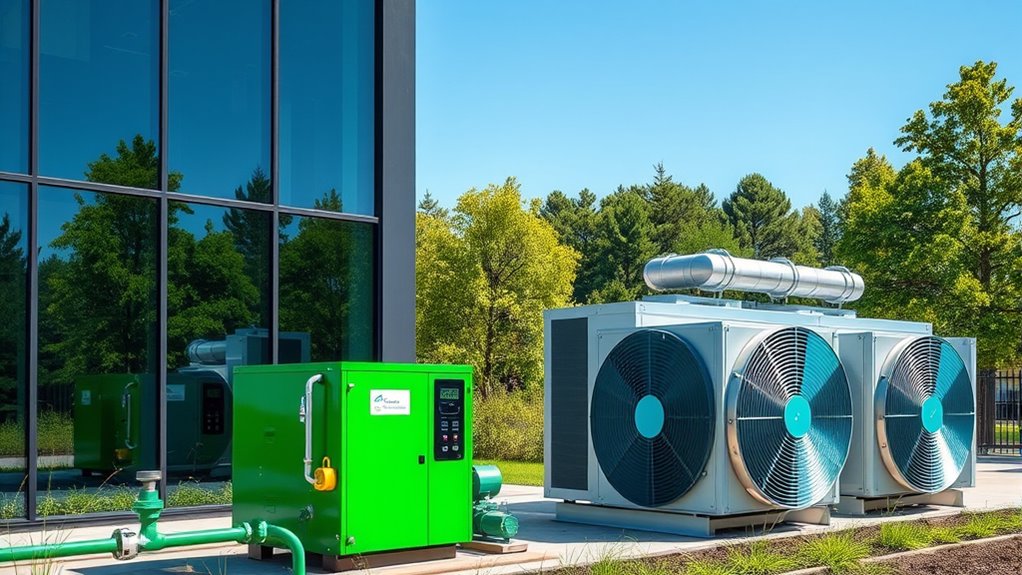

Green hydrogen and heat pumps are key to creating carbon-free buildings. Heat pumps efficiently provide heating and cooling while reducing energy use and emissions. Green hydrogen acts as a versatile, clean fuel supporting various building functions and renewable integration. Combining these technologies enhances resilience and energy flexibility in urban environments, advancing toward fully sustainable, zero-emission buildings. To explore how these innovations are shaping future cities, continue exploring their potential and practical applications.
Key Takeaways
- Green hydrogen serves as a clean, versatile fuel supporting heating, cooling, and power needs in carbon-free buildings.
- Heat pumps offer energy-efficient heating and cooling, reducing emissions and enhancing building insulation.
- Synergistically, green hydrogen and heat pumps improve system resilience and facilitate sector decarbonization.
- Policy incentives and market reforms are essential to promote adoption and scale these sustainable technologies.
- Innovations in renewable integration and smart building design accelerate the transition toward zero-emission urban environments.

30 Pint Dehumidifier for Basement, 2500 Sq. Ft Dehumidifiers for Home with Drain Hose, 3 Modes, Smart Humidity Control, 24H Timer, 0.52 Gal Water Tank, for Whole House, Bedroom, Bathroom, Garage, Rv
Powerful 30-Pint Moisture Removal for Spaces up to 2500 Sq. Ft: High humidity can make rooms feel damp,...
As an affiliate, we earn on qualifying purchases.
The Role of Green Hydrogen in Sustainable Building Energy

Green hydrogen plays a crucial role in making building energy systems more sustainable by providing a clean, versatile fuel source. Its integration encourages building material innovations that improve energy efficiency and reduce reliance on fossil fuels. As a building owner or occupant, your behavioral changes—such as optimizing energy use and supporting renewable initiatives—complement green hydrogen’s benefits. By adopting new materials that work efficiently with hydrogen-powered systems, you help lower emissions and increase sustainability. Green hydrogen can power heating, cooling, and other essential functions, making your building more resilient and eco-friendly. Embracing these technological and behavioral shifts accelerates the shift toward carbon-neutral buildings, where sustainable energy sources like green hydrogen become integral to everyday life. Understanding the energy efficiency of building systems helps maximize the benefits of green hydrogen integration and promotes sustainable development.

Waykar 158 Pints Crawl Space Dehumidifier with Remote Control and Pump, Dual Duct HVAC Commercial Whole-House Dehumidifier for Basement, Industry Water Damage Unit - 5-Year Quality Coverage
【158 Pint Crawl Space Dehumidifier】The Waykar whole-house dehumidifier extracts up to 158 pints of water per day (under...
As an affiliate, we earn on qualifying purchases.
How Heat Pumps Revolutionize Heating and Cooling Systems
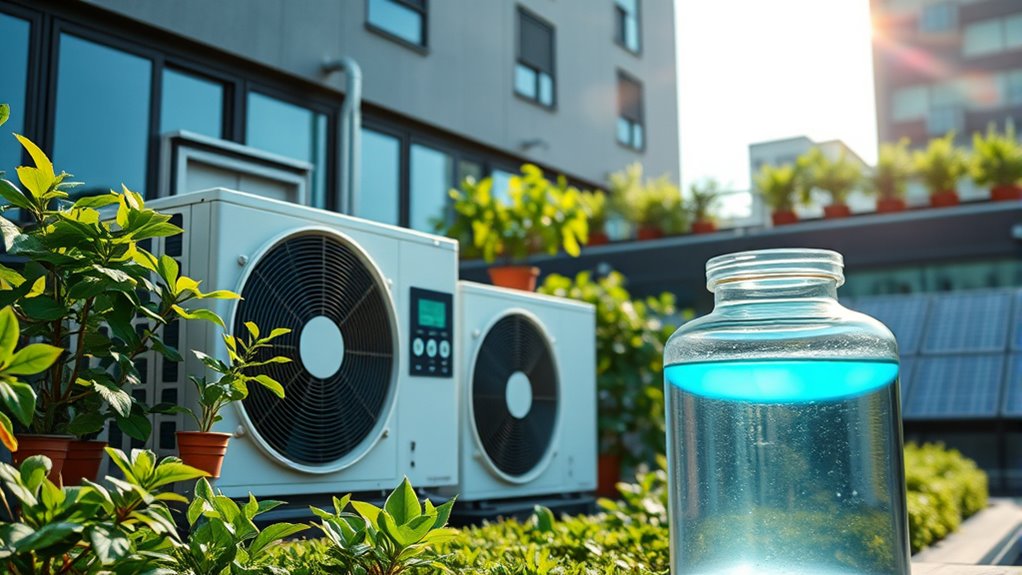
Heat pumps are transforming the way buildings heat and cool by offering an energy-efficient alternative to traditional systems. They reduce energy consumption and lower greenhouse gas emissions, making them ideal for modern urban environments. As urban heat increases, heat pumps help maintain comfort efficiently, even during extreme temperatures. Improving insulation efficiency enhances their performance, ensuring less energy is needed for heating or cooling. Here’s how they make a difference:
Heat pumps boost efficiency and comfort in urban buildings amid rising temperatures.
- Utilize ambient heat from the environment
- Adapt to fluctuating urban heat levels
- Reduce reliance on fossil fuels
- Improve overall insulation efficiency
- Lower operational costs considerably
- Tuning techniques can optimize heat pump performance for specific climate conditions.

5000 Sq.Ft Energy Star Most Efficient 2024 Dehumidifier,DECIUU Max 100 Pint Dehumidifier for Basement with Drain Hose,Intelligent Humidity Control for Home Bathroom Garage Bedroom
Most Efficient 2024 Energy Star Dehumidifier: Tired of battling stubborn humidity? Our ENERGY STAR certified dehumidifier removes 70...
As an affiliate, we earn on qualifying purchases.
Synergies Between Green Hydrogen and Heat Pump Technologies
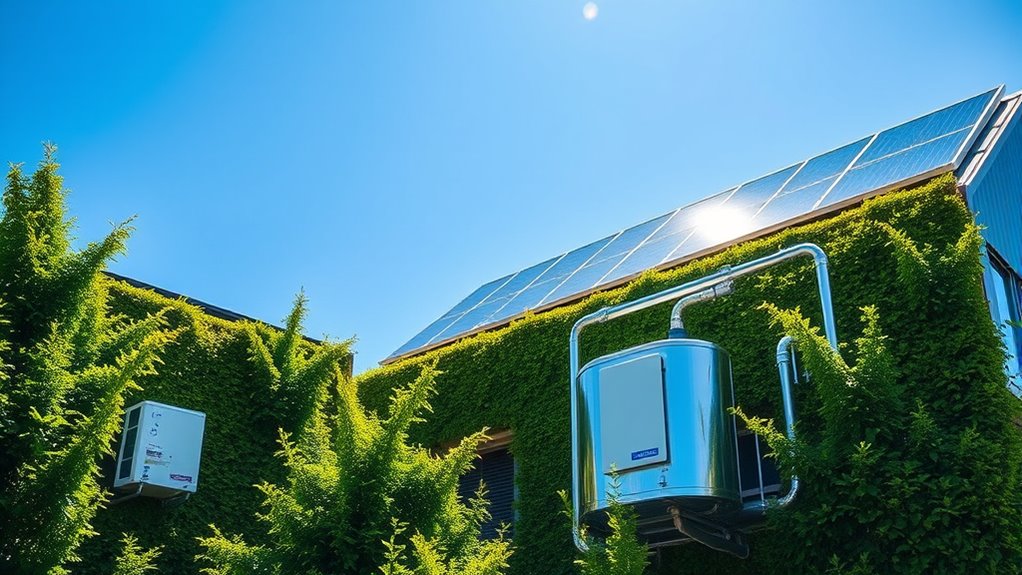
Green hydrogen and heat pump technologies work well together as complementary energy sources, boosting overall system efficiency. By integrating them, you can optimize energy use and reduce reliance on fossil fuels. This synergy offers clear benefits for creating more sustainable, carbon-free buildings.
Complementary Energy Sources
Although green hydrogen and heat pump technologies operate through different mechanisms, they can work together to create more resilient and efficient building energy systems. By integrating these sources into urban planning and building design, you can optimize energy use and reduce reliance on fossil fuels. These complementary energy sources can:
- Provide backup power during peak demand or low renewable generation
- Support decarbonization in hard-to-electrify sectors
- Enable flexible energy management across grids
- Enhance resilience against grid outages
- Promote sustainable urban growth with integrated infrastructure
- Facilitate sector coupling, allowing for more integrated and versatile energy systems
This synergy allows you to tailor energy solutions based on local conditions and building requirements. Combining green hydrogen with heat pumps encourages innovative urban planning and smarter building design, ensuring a stable, low-carbon energy future for your communities.
Integrated System Benefits
Integrating green hydrogen and heat pump technologies creates powerful synergies that enhance overall system efficiency and resilience. By combining these systems, you improve energy management, balancing supply and demand more effectively. During low renewable energy output, hydrogen can serve as a flexible energy storage, ensuring continuous heating and hot water supply without compromising occupant comfort. This integration reduces reliance on fossil fuels and stabilizes energy costs. Additionally, the system’s flexibility allows you to optimize operation based on grid conditions and energy prices. As a result, occupant comfort remains high, even during peak demand or renewable fluctuations. Moreover, understanding core personality traits can help in designing user-centered energy solutions that cater to diverse preferences and behaviors. Overall, these integrated solutions foster a more reliable, efficient, and sustainable building environment that aligns with your carbon-free goals.

ALORAIR Whole House Dehumidifier, 90 PPD Commercial Grade Whole Home Dehumidifiers for Garages, Water Damage Restoration, 2300 Sq.Ft dehumidifiers for Crawl Space
Energy Efficient Whole House Dehumidifier: 90 pints per day at AHAM condition, 70 Pint at DOE, up to...
As an affiliate, we earn on qualifying purchases.
Environmental Benefits of Adopting Carbon-Free Solutions
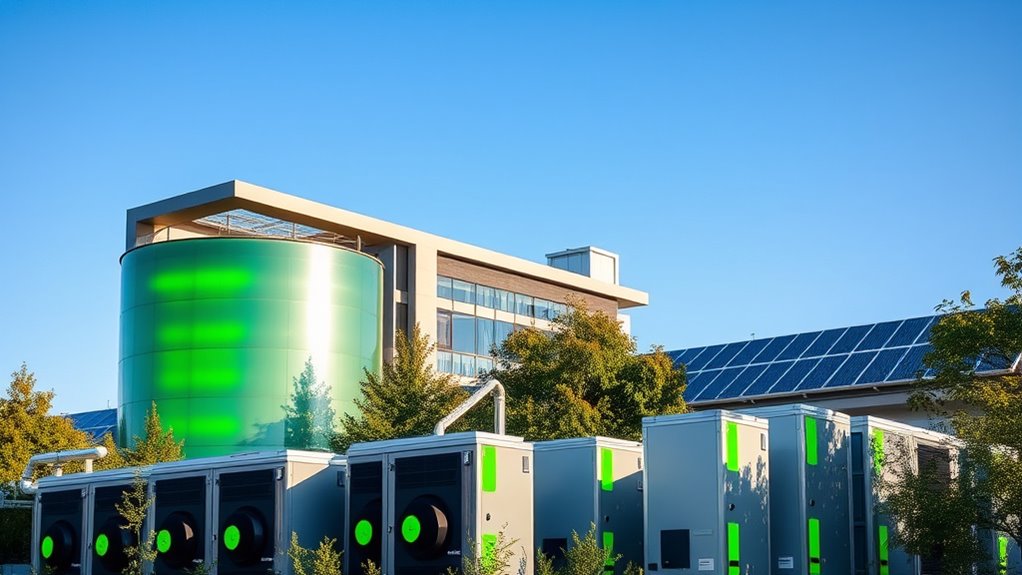
By adopting carbon-free solutions like green hydrogen and heat pumps, you considerably reduce greenhouse gas emissions, helping to combat climate change. These technologies promote environmental health through cleaner energy use, supporting smarter urban planning and reducing pollution. They also contribute to material sustainability by lowering reliance on resource-intensive materials and minimizing waste. Benefits include:
- Lower carbon footprint for buildings and communities
- Improved air quality and public health
- Reduced strain on natural resources
- Enhanced urban resilience with sustainable infrastructure
- Support for eco-friendly development and planning
A new sentence with sustainable materials and the rest of the sentence.
Challenges and Opportunities in Implementing These Technologies

Implementing green hydrogen and heat pumps faces significant hurdles like infrastructure development and market uncertainties. You’ll need to navigate policy barriers that can slow adoption and increase costs. Despite these challenges, there are opportunities to innovate and create supportive frameworks that accelerate conversion. Additionally, integrating renewable energy sources such as solar and wind can enhance the efficiency and sustainability of these technologies renewable energy sources.
Infrastructure Development Hurdles
Building green hydrogen infrastructure and installing heat pumps face significant hurdles, primarily due to the high costs and complex logistics involved. You’ll need to address issues like upgrading grid resilience to handle new energy flows and secure suitable financing models to fund large-scale projects. Without strong infrastructure, integrating these technologies into existing systems becomes difficult. Challenges include:
- Ensuring grid resilience against increased demand
- Securing innovative financing models
- Developing reliable supply chains
- Coordinating different stakeholders
- Overcoming logistical complexities in installation
Additionally, establishing effective maintenance procedures is crucial for long-term operational success. Overcoming these hurdles offers opportunities to modernize energy systems, improve reliability, and promote sustainable growth. Focused investments and strategic planning are essential to turn these challenges into a foundation for a carbon-free future.
Policy and Market Barriers
What are the main policy and market barriers hindering the widespread adoption of green hydrogen and heat pumps? Lack of effective policy reform often results in limited support for these technologies, slowing their integration into existing markets. Without clear regulations or incentives, investors may hesitate to fund projects, fearing policy instability or inadequate returns. Market incentives, such as subsidies or tax credits, are essential to make green hydrogen and heat pumps financially attractive. Currently, inconsistent policies and insufficient incentives create uncertainty, preventing rapid market growth. Overcoming these barriers requires coordinated policy reform that promotes long-term commitment and targeted market incentives. Doing so will encourage adoption, drive innovation, and ensure that these technologies contribute substantially to carbon-free buildings. Additionally, wall organization systems and aesthetic solutions in home decor can play a role in supporting sustainable design practices that align with green building initiatives.
Case Studies Showcasing Innovative Green Building Solutions
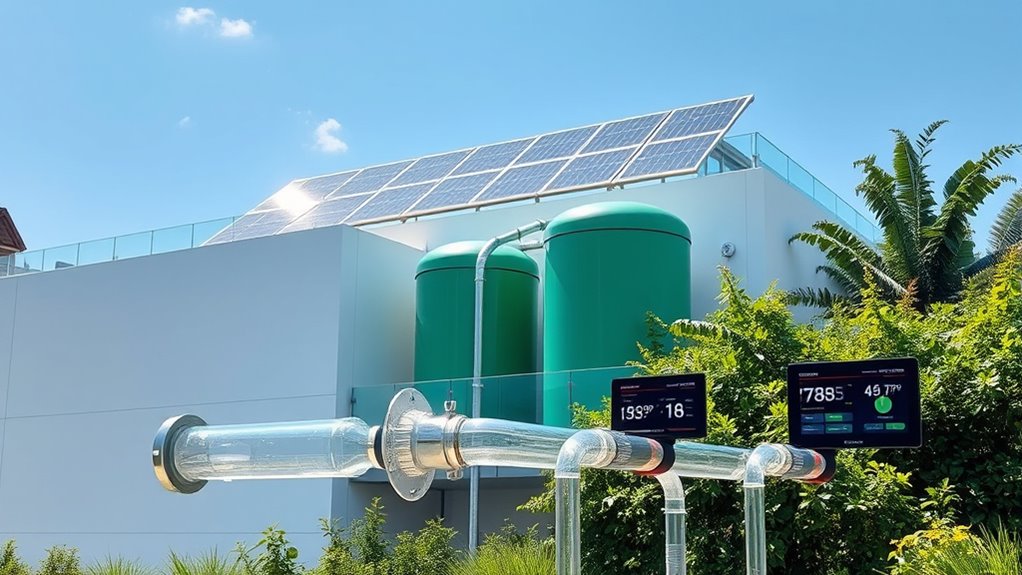
Several innovative green building solutions are already making a tangible impact, demonstrating how renewable energy technologies can transform urban environments. These projects highlight the power of urban design and material innovation to reduce carbon footprints. For example:
Innovative green building solutions showcase renewable energy’s transformative role in creating sustainable urban environments.
- Adaptive reuse of existing structures minimizes resource use
- Green roofs improve insulation and air quality
- Solar-integrated facades harness renewable energy efficiently
- Modular construction accelerates sustainable development
- Smart building systems optimize energy consumption
- Awareness of PlayStation Support Hours ensures timely assistance for connected building technologies.
These case studies show that integrating green technologies with thoughtful urban design and innovative materials can create healthier, more sustainable cities. By prioritizing renewable energy solutions like heat pumps and green hydrogen, these projects set practical examples for future developments, proving that eco-friendly buildings are both achievable and impactful.
Future Outlook for Zero-Emission Built Environments

Innovations showcased in recent green building projects indicate a clear path toward a future where zero-emission environments become standard. Urban planning now prioritizes integrating renewable energy infrastructure, making sustainable development more feasible. Building design is evolving to maximize energy efficiency, incorporating passive design strategies and advanced insulation. Future developments will emphasize flexible layouts that accommodate heat pumps and green hydrogen systems seamlessly. As regulations tighten and technology advances, you’ll see smarter, more connected buildings that actively reduce emissions. Local governments and developers are increasingly collaborating to create neighborhoods centered on sustainability. With these trends, you’ll find that zero-emission built environments aren’t just an aspiration but a practical reality within reach, transforming how we design, plan, and live in urban spaces. Additionally, advancements in home furnishings such as energy-efficient heating solutions and insulation materials will further support these sustainable environments.
Frequently Asked Questions
What Are the Economic Costs of Integrating Green Hydrogen and Heat Pumps?
When you look at the economic costs of integrating green hydrogen and heat pumps, a detailed cost analysis reveals significant upfront investments and operational expenses. These technologies affect market viability by potentially lowering long-term energy costs and reducing emissions. Although initial costs are high, you may find economic benefits over time, especially with supportive policies and technological advancements. Carefully evaluating these factors helps you determine if the integration aligns with your sustainability and budget goals.
How Do Building Designs Influence the Efficiency of These Technologies?
Imagine your building’s design holding the secret to skyrocketing efficiency. Your choice of building materials and architectural layout can make or break how well green hydrogen and heat pumps perform. Using insulating materials and strategic layouts minimizes heat loss and maximizes energy use. You control the flow of energy, ensuring these technologies operate at peak performance, reducing costs, and pushing your building toward true carbon-free excellence.
Are There Specific Geographic Regions More Suitable for Green Hydrogen Use?
You should consider regional resource availability and infrastructure development to determine the best areas for green hydrogen use. Regions with abundant renewable energy sources, like wind or solar, are ideal, as they produce the green electricity needed. Additionally, areas with established infrastructure make it easier to produce, store, and distribute hydrogen. These factors combined make certain geographic regions more suitable for green hydrogen, ensuring efficient and sustainable deployment.
What Safety Concerns Are Associated With Green Hydrogen Storage?
You should be aware that storing hydrogen involves safety concerns like potential hydrogen leakages, which can lead to flammable atmospheres. There’s also a risk of storage explosions if hydrogen isn’t properly maintained or if leaks aren’t detected early. These issues require strict safety measures, including robust containment systems and leak detection technologies, to prevent accidents and guarantee safe storage of hydrogen.
How Can Policy Incentives Accelerate Adoption of These Solutions?
Did you know that well-designed policy frameworks can boost market adoption by up to 50%? You can accelerate the adoption of green hydrogen and heat pumps by implementing targeted incentives, grants, and regulations that lower upfront costs and reduce risks. These policies create a favorable environment, encouraging investments and innovation. Ultimately, proactive policy incentives help overcome barriers, making carbon-free buildings more accessible and widespread faster.
Conclusion
By combining green hydrogen and heat pumps, you can substantially cut carbon emissions—up to 90% compared to traditional systems. This innovative approach not only reduces environmental impact but also offers cost savings and energy efficiency. Embracing these technologies puts you on the path to creating truly zero-emission buildings. With over 30 countries investing in green hydrogen, now’s the perfect time for you to join the shift toward sustainable, carbon-free living.