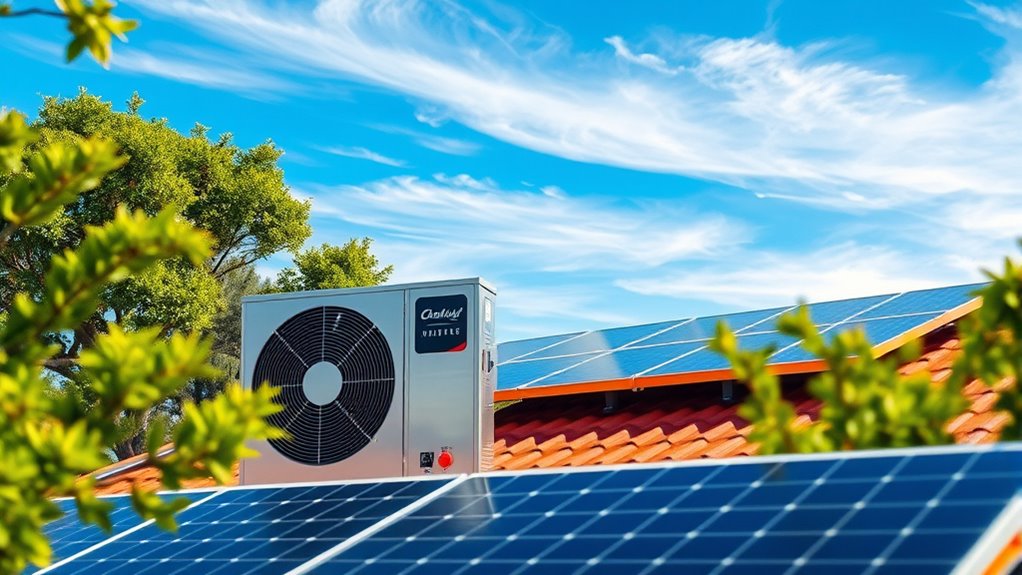

Many homes are now using rooftop solar to power heat pumps, saving on energy bills and reducing environmental impact. These systems generate clean electricity that directly runs heat pumps, often feeding excess energy back to the grid. Smart controls optimize performance, making homes more energy-efficient and grid-friendly. If you want to see real-world examples of how this technology improves efficiency and sustainability, there’s plenty more to explore.
Key Takeaways
- Case studies reveal significant energy cost savings by directly powering heat pumps with rooftop solar.
- They demonstrate enhanced energy efficiency through smart controls optimizing solar and heat pump operation.
- Examples show increased grid stability by feeding excess solar energy back into the grid.
- Studies highlight environmental benefits, reducing reliance on fossil fuels and lowering carbon footprints.
- Real-world cases illustrate system integration promoting energy independence and resilience in residential settings.

As more homeowners turn to renewable energy, combining heat pumps with rooftop solar systems has proven to be a smart and efficient solution for reducing energy costs. This integration not only enhances energy efficiency but also strengthens grid integration, making your home more sustainable and cost-effective. When you install a rooftop solar system alongside a heat pump, your home can generate its own electricity, which directly powers the heat pump. This setup minimizes reliance on the grid, cutting down your energy bills considerably. Plus, with excess solar energy, you can feed power back into the grid, creating a two-way flow that benefits both you and your utility provider. This mutual exchange encourages a more resilient and flexible energy system, aligning with modern grid modernization efforts.
Energy efficiency improves because the heat pump uses electricity generated by your solar panels rather than drawing power from the grid, which often relies on fossil fuels. As a result, your home consumes less grid-supplied energy, reducing your carbon footprint. Additionally, the smart control systems integrated with solar and heat pumps optimize energy use, ensuring the system runs only when needed and at maximum efficiency. For example, during sunny days, your solar panels produce plenty of electricity, allowing the heat pump to operate at higher capacity without increasing your energy costs. When sunlight wanes, the system can seamlessly switch to stored energy or grid power, maintaining comfort without wasting energy. Incorporating smart grid technologies can further enhance this integration by enabling real-time communication between your home and the utility, optimizing energy flow and reliability.
Smart controls optimize solar and heat pump use, reducing energy consumption and lowering your carbon footprint.
Grid integration becomes more effective with these combined systems because they enable your home to act as a mini power plant. During periods of high solar generation, your excess energy can be stored in batteries or exported to the grid, contributing to overall stability. This reduces strain on the grid during peak hours, especially in hot or cold weather when energy demand surges. With smart grid technologies, your system can communicate with the utility, adjusting consumption and generation to match grid needs. This coordination helps prevent outages, reduce energy losses, and ensure a more reliable power supply for everyone. As you adopt these systems, you’re not just saving money—you’re actively participating in a more sustainable energy future.
In essence, combining heat pumps with rooftop solar creates a synergy that maximizes energy efficiency and enhances grid integration. You gain independence from fluctuating energy prices, lower environmental impact, and a more resilient home. The investment pays off through lower bills, increased comfort, and contributing to a cleaner, smarter energy grid. As technology advances, these systems will become even more integrated, making it easier and more affordable for you to harness renewable energy and support a sustainable future.

VINGLI 3PCS Solar Pool Heater for Above Ground and Inground Pools, 8FT x 16IN Solar Water Heater System, High-Efficiency Pool Solar Panels for Swimming Pools and Ponds
Rapid Heating Performance: This 3-piece solar heater set maximizes heat absorption for fast water warming. The high-efficiency design…
As an affiliate, we earn on qualifying purchases.
As an affiliate, we earn on qualifying purchases.
Frequently Asked Questions
What Is the Typical Lifespan of Solar-Powered Heat Pumps?
A solar-powered heat pump typically lasts around 15 to 20 years, depending on maintenance and usage. You should regularly check efficiency metrics to guarantee peak performance, which can extend its lifespan. When doing a cost analysis, consider that investing in quality units might have higher upfront costs but results in better durability and efficiency over time. Proper maintenance helps maximize your system’s longevity and savings.
How Do Weather Fluctuations Affect System Performance?
Weather variability can impact your system’s performance, especially during extreme cold or hot days. Cold weather may reduce heat pump efficiency, while hot days can strain your solar panels. However, a well-designed system enhances resilience, allowing it to adapt to weather fluctuations. Regular maintenance and smart system choices help maintain peak performance, ensuring your solar-powered heat pump remains reliable despite weather changes.
Are There Government Incentives for Installing These Systems?
Did you know that over 40% of homeowners qualify for government incentives? Yes, there are government grants and tax credits available for installing heat pumps powered by rooftop solar. These programs can markedly reduce your upfront costs and improve system efficiency. Check your local policies, as incentives vary by region, and take advantage of these financial incentives to make your eco-friendly upgrade more affordable.
What Maintenance Is Required for Rooftop Solar Heat Pumps?
You’ll need to regularly check your rooftop solar heat pump for debris and clean the solar panels to maintain solar panel durability. Inspect the heat pump’s refrigerant levels and look for leaks, especially since different refrigerant types may require specific handling. Also, keep an eye on system performance and schedule annual professional maintenance to guarantee efficiency and longevity, helping your system operate smoothly year-round.
Can Existing Heating Systems Be Upgraded to Solar-Powered Heat Pumps?
You can upgrade your existing heating system to a solar-powered heat pump, just like the GreenTech project in California, which improved cost efficiency and reduced emissions. While the upgrade involves some installation challenges, such as integrating with your current setup and guaranteeing proper solar panel placement, the long-term savings make it worthwhile. Consulting a professional helps navigate these challenges and guarantees a smooth shift to cleaner, more efficient heating.

Mini DC Brushless Energy Saving Circulation Pump for Solar Water Heater 24V
This is a DC Brushless solar high temperature , used for circulation pumping. There is a 24V that…
As an affiliate, we earn on qualifying purchases.
As an affiliate, we earn on qualifying purchases.
Conclusion
Imagine your home as a symphony of sustainability, where rooftop solar and heat pumps dance together in perfect harmony. With each sunbeam fueling your system, you become the conductor of your energy future, turning your roof into a radiant orchestra of green power. This synergy not only warms your space but also fuels a brighter, cleaner world—making you the hero in this vibrant, sunlit story of innovation and eco-conscious living.

DEWENWILS Pool Pump Timer, Outdoor Smart WiFi Box, Heavy Duty 40A 240VAC 3HP Wireless Controller Timer for Pool, Water Heater, Compatible with Smart Phone, Alexa, Google Assistant, ETL Listed
[Versatile Timer Function] This WiFi pool pump timer can turn your devices on/off automatically at scheduled times with…
As an affiliate, we earn on qualifying purchases.
As an affiliate, we earn on qualifying purchases.

EBL Solar AA Battery Rechargeable Batteries for Outdoor Solar Lights, 1300mAh NIMH Pre-Charged 1.2V Recharge up to 1200x Times for Garden Landscaping String Lights, Pack of 12
【Perfect Solar Batteries】 Exact size AA batteries designed for solar lights, outdoor garden lights, mouse, keyboards, TV remotes,…
As an affiliate, we earn on qualifying purchases.
As an affiliate, we earn on qualifying purchases.