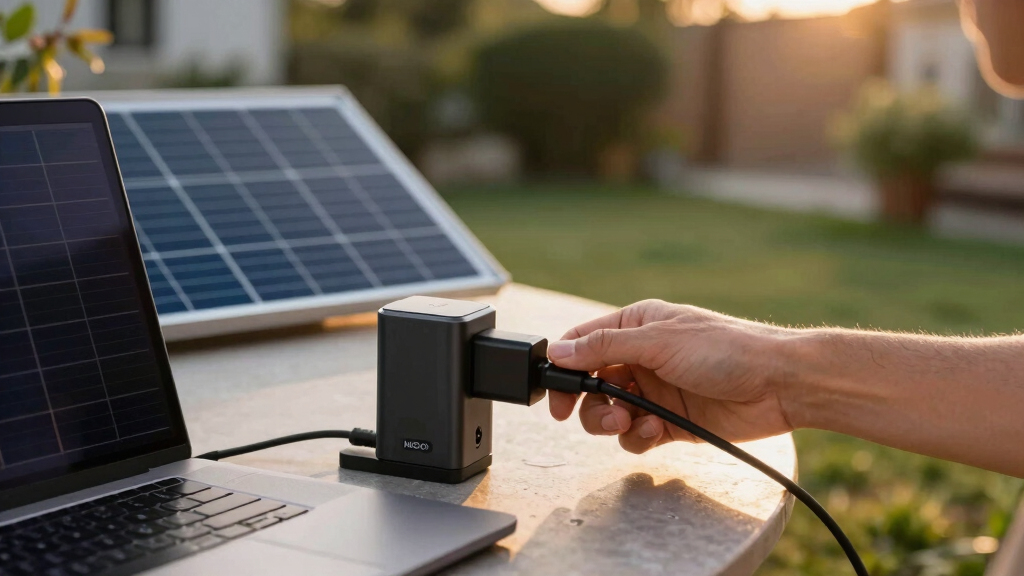
This guide shows how to build a solar-powered laptop charger that uses solar panels to generate electricity for charging your laptop. It is suitable for DIY enthusiasts with basic electrical knowledge. Completing this task will enable you to sustainably power your laptop outdoors or during power outages, reducing reliance on the grid. The process involves selecting the right solar panel, connecting it safely to a battery, and integrating a compatible charging port for your laptop.

Get backup power and energy gear delivered free with Prime
- Fast, free delivery on millions of items
- Prime Video, Amazon Music and more included
- Member-only deals all year

SOARAISE Solar Charger Power Bank – 48000mAh Wireless Portable Charger with 4 Solar Panels, Built-in Cables, Fast Charging, and F…
- ✔ Battery Capacity: 48000mAh
- ✔ Number of Solar Panels: 4
- ✔ Built-in Cables: 4
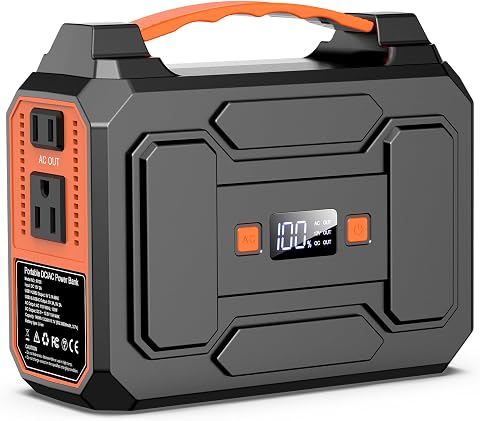
Apowking Portable Power Station 146Wh with AC Outlet and Solar Charging
- ✔ Capacity: 146Wh / 39600mAh
- ✔ Peak Power: 200W
- ✔ Rated Power: 100W

Portable Power Station 300W, 220Wh/60000mAh Outdoor Solar Generator Backup Battery Pack
- ✔ Power Output: 300W (600W Peak)
- ✔ Battery Capacity: 220Wh / 60000mAh
- ✔ Dimensions: 8.5 x 6.7 x 4.1 inches
Difficulty: Intermediate | Time: 2-4 hours
What You’ll Need
Tools & Materials:
- soldering iron and solder
- wire cutters and strippers
- multimeter
- screwdriver
- drill (if mounting panels)
- wires and connectors
- DC-DC converter (if needed)
Knowledge:
- basic understanding of electrical circuits
- familiarity with solar panel wiring and safety precautions
Ensure the solar panel’s voltage and current ratings match your laptop’s charging requirements. Use high-quality components to prevent damage and ensure safety. Prepare a clean workspace and work in a well-ventilated area when soldering.
SOARAISE Solar Charger Power Bank – 48000mAh Wireless Portable Charger with 4 Solar Panels, Built-in Cables, Fast Charging, and F…
<p>This model stands out for its impressive <strong>48,000mAh capacity</strong>, making it ideal for extended outdoor use without frequent recharging. The inclusion of <strong>4 solar panels</strong> significantly improves solar charging efficiency, especially under optimal sunlight. Its <strong>built-in cables and wireless charging</strong> provide convenience for multiple devices, including laptops with USB-C. However, its size and weight may be less convenient for compact travel, and solar charging speed can still be variable depending on sunlight. Compared with lighter options, it sacrifices portability for power and durability.</p>
Pros:
- High capacity for extended outdoor use
- Efficient 4 solar panels for faster solar charging
- Supports multiple devices simultaneously
- Waterproof, shockproof, and dustproof design
Cons:
- Relatively heavy and bulky
- Solar charging speed varies with sunlight
- Large size may be inconvenient for small bags
Best for: Long outdoor trips, camping, and emergency preparedness where capacity and durability matter most
Not ideal for: Frequent travelers needing a lightweight, compact charger or quick top-ups in low sunlight
Bottom line: A robust, high-capacity solar power bank perfect for extended outdoor adventures, with tradeoffs in size and weight.
“A robust, high-capacity solar power bank perfect for extended outdoor adventures, with tradeoffs in size and weight.”
Apowking Portable Power Station 146Wh with AC Outlet and Solar Charging
<p>Compared with high-capacity banks, the <strong>146Wh capacity</strong> of this station makes it suitable for quick, portable power in outdoor or emergency situations. It offers <strong>multiple outputs</strong>, including AC, USB, and DC, making it highly versatile. Its <strong>lightweight design</strong> at just over 3 pounds enhances portability, and it can be recharged via solar, though the solar panel itself is not included—an extra purchase that might add to the overall cost. Its power output is limited to 100W, so it’s best for low- to medium-power devices like laptops, phones, and small appliances.</p>
Pros:
- Lightweight and portable
- Multiple output options for various devices
- Can be recharged via solar panel (additional purchase)
- Built-in LED flashlight with modes
Cons:
- Solar panel not included, additional cost
- Limited to 100W power output
- Battery capacity may be insufficient for long-term use
Best for: Light outdoor use, camping, and emergency backup where portability is a priority
Not ideal for: Powering high-wattage devices or extended high-power use without frequent recharging
Bottom line: A versatile, portable power station that balances size and function, ideal for quick trips and emergency scenarios with some added costs for solar recharging.
“A versatile, portable power station that balances size and function, ideal for quick trips and emergency scenarios with some added costs for solar recharging.”
Portable Power Station 300W, 220Wh/60000mAh Outdoor Solar Generator Backup Battery Pack
<p>Compared with the other two, this <strong>300W capacity</strong> station offers a good balance of power and portability, weighing only 5 pounds. It supports up to 7 devices simultaneously through multiple outlets, including AC, USB, and DC, making it suitable for a range of devices from laptops to small appliances. Its <strong>rechargeability via solar</strong> is key for outdoor use, but it’s limited to devices under 300W, which restricts some high-power appliances. Its compact size and built-in LED light make it a reliable backup for camping and emergencies, though its battery capacity might not support prolonged use without frequent recharging.</p>
Pros:
- Lightweight and compact
- Supports multiple devices simultaneously
- Rechargeable via solar, AC, or car
- Built-in LED light for dark environments
Cons:
- Limited to devices under 300W
- Battery capacity may be insufficient for extended use
- Red indicator during AC activation may concern some users
Best for: Outdoor enthusiasts needing reliable backup power with moderate device support
Not ideal for: Powering high-wattage appliances or long-term power needs without frequent recharging
Bottom line: A compact, versatile backup power station ideal for outdoor use with balanced power and portability, but not suited for intensive high-power tasks.
“A compact, versatile backup power station ideal for outdoor use with balanced power and portability, but not suited for intensive high-power tasks.”
As an Amazon Associate we earn from qualifying purchases.
Before You Start
Check your laptop’s power specifications (voltage and current). Confirm the solar panel’s output matches or exceeds these needs. Gather all tools and parts beforehand. Avoid installing or working on the system in wet conditions or high humidity to prevent electrical hazards.
Step-by-Step Instructions
Step 1: Select a suitable solar panel
Choose a solar panel with an output voltage slightly higher than your laptop’s charging voltage (typically 19V for many laptops) and a current rating that can supply enough power (at least 3A). Ensure the panel’s size fits your available space and portability needs.Tip: Opt for monocrystalline panels for higher efficiency. Check the panel’s datasheet for voltage and current specs.
Check: The solar panel’s specifications match your laptop’s charging requirements and physically fit your setup space.
Step 2: Connect the solar panel to a charge controller
Wire the solar panel’s positive and negative leads to the corresponding inputs on a compatible MPPT or PWM charge controller designed for solar charging systems.Tip: Verify polarity before connecting to avoid damage. Use alligator clips or soldered connections for secure wiring.
Check: The charge controller powers on without errors and indicates proper input voltage and current from the panel.
Step 3: Attach the battery to the charge controller
Connect a suitable 12V or 24V deep-cycle battery to the charge controller’s battery terminals, observing correct polarity.Tip: Use a battery with sufficient capacity (e.g., 20Ah or more) for reliable charging without rapid depletion.
Check: The battery shows charging activity on the charge controller display, with voltage readings appropriate for the type of battery used.
Step 4: Set up the DC-DC converter for your laptop
Connect the DC-DC converter’s input to the battery terminals, ensuring correct polarity. Adjust the output voltage on the converter to match your laptop’s required charging voltage (e.g., 19V).Tip: Use a multimeter to verify the output voltage before connecting to your laptop.
Check: The converter supplies a stable, correct voltage with minimal fluctuation, confirmed by multimeter.
Step 5: Connect the converter to your laptop’s charging port
Plug the converter’s output into your laptop’s charger port, using appropriate connectors or adapters as needed.Tip: Ensure all connections are secure and insulated to prevent shorts.
Check: Your laptop begins charging, and the charging indicator lights up or shows activity.
Common Mistakes to Avoid
- Using a solar panel with insufficient voltage or current for your laptop — Select a panel with ratings that meet or exceed your laptop’s charging specifications to ensure proper charging.
- Incorrect wiring polarity — Always double-check positive and negative connections before powering on; use a multimeter to verify polarity.
- Not including a proper charge controller — Use a charge controller designed for solar systems to prevent battery overcharge and protect connected components.
- Failing to verify voltage output after setting up the converter — Always measure the converter’s output with a multimeter before connecting to your laptop.
Troubleshooting
Problem: Laptop is not charging even when system is connected
Solution: Check all connections for proper polarity, verify voltage output from the converter, and ensure the battery is charged.
Problem: No power from the solar panel or charge controller
Solution: Use a multimeter to test the panel’s output voltage directly; ensure the panel is in direct sunlight and connections are secure.
Problem: Battery voltage drops rapidly or the system shuts down
Solution: Confirm the battery is fully charged, and reduce load or upgrade to a higher capacity battery if needed.
What Success Looks Like
The laptop charges steadily when connected, with voltage and current readings matching your specifications. The system remains operational in sunlight, and all components show no signs of overheating or damage. You can reliably power your laptop outdoors or during outages using solar energy.
Next Steps
Monitor the system regularly to check for wear or damage. Clean solar panels to maintain efficiency. Consider adding a backup or larger battery for longer use. Use your setup in sunny conditions and avoid shading the panel during charging hours. When not in use, disconnect components to preserve battery life.
Frequently Asked Questions
Can I use any solar panel for my laptop?
No, select a solar panel that provides at least the voltage and current your laptop requires. Check your laptop’s power adapter specifications for exact ratings.
Do I need a special battery for this setup?
A deep-cycle 12V or 24V lead-acid or lithium battery is suitable. Ensure it has enough capacity (Ah) to meet your usage needs and is compatible with your charge controller.
Is it safe to connect my laptop directly to a solar panel?
No, direct connection can damage your laptop due to voltage fluctuations and overload. Always use a charge controller and a properly rated DC-DC converter for safe charging.
How long will the system power my laptop on a full charge?
This depends on your battery capacity, solar input, and your laptop’s power consumption. For example, a 20Ah battery at 19V can provide roughly 380Wh, powering a 50W laptop for about 7-8 hours under ideal conditions.
Halloween Picks
halloween
As an affiliate, we earn on qualifying purchases.