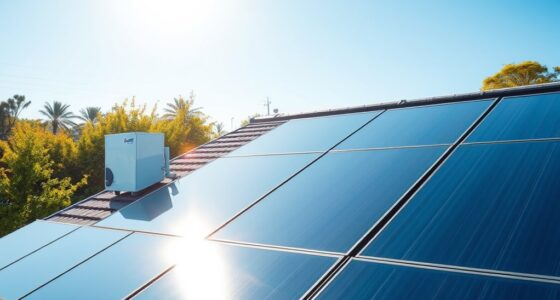
Combining hydroelectric power with heat pump systems creates a sustainable way to meet your energy needs while reducing environmental impact. Hydro provides a reliable, renewable source of electricity that can efficiently run heat pumps for heating and cooling your home or business. This integration maximizes water and energy resources, lowering costs and carbon emissions. If you want to explore how these opportunities can benefit your projects or community, there’s more to discover below.
Key Takeaways
- Combining hydroelectric power with heat pumps enhances renewable energy integration for efficient heating and cooling solutions.
- Small-scale hydro systems can reliably power heat pumps, reducing reliance on fossil fuels and lowering energy costs.
- Utilizing water resource management alongside heat pumps promotes sustainable and eco-friendly building climate control.
- The synergy enables year-round energy optimization, improving overall system efficiency and reducing carbon footprint.
- Opportunities exist for community-scale projects to leverage hydro and heat pump integration for sustainable development.

Hydroelectric power and heat pumps present promising opportunities to enhance renewable energy use and reduce reliance on fossil fuels. As you explore these options, you’ll see how they can leverage existing water resources and improve overall energy efficiency in your community or home. Hydroelectric systems harness the kinetic energy of flowing water, turning it into electricity without emitting greenhouse gases. If you have access to a stream, river, or dam, you can tap into this clean energy source, making good use of natural water resources. These systems are especially effective because they can generate power continuously, unlike intermittent sources like solar or wind, providing a reliable supply of renewable energy.
Incorporating hydroelectric power into your energy mix helps you maximize water resources efficiently. Modern small-scale hydro setups, often called micro-hydro systems, are designed to operate with minimal environmental impact, ensuring you don’t disrupt local ecosystems. By doing so, you not only generate clean electricity but also promote sustainable water management practices. Additionally, hydroelectric power contributes markedly to energy efficiency because it produces large amounts of electricity with relatively low operational costs once installed. You benefit from a consistent, stable energy source that can reduce your dependence on fossil fuels and cut your electricity bills over time.
Heat pumps, on the other hand, offer an innovative way to utilize electricity more efficiently for heating and cooling. They work by transferring heat from one place to another, rather than generating heat directly, which makes them highly energy-efficient. When powered by renewable energy sources like hydroelectric power, heat pumps become an even greener option. For example, in winter, a heat pump extracts heat from the outside air or ground and brings it inside, providing warmth with less energy consumption. In summer, the process reverses, cooling your home efficiently. This versatility makes heat pumps a smart choice for reducing your overall energy footprint. Moreover, embracing renewable energy integration ensures that these systems operate at peak efficiency while supporting sustainability goals.

ALORAIR Whole House Dehumidifier, 90 PPD Commercial Grade Whole Home Dehumidifiers for Garages, Water Damage Restoration, 2300 Sq.Ft dehumidifiers for Crawl Space
Energy Efficient Whole House Dehumidifier: 90 pints per day at AHAM condition, 70 Pint at DOE, up to...
As an affiliate, we earn on qualifying purchases.
Frequently Asked Questions
What Are the Environmental Impacts of Hydroelectric Power?
You should consider that hydroelectric power can cause ecosystem disruption and affect fish migration. Dams alter water flow, disrupt habitats, and block fish routes, impacting local wildlife. While it reduces greenhouse gases, these environmental impacts are significant. You might explore fish ladders or other solutions to minimize harm, but it’s essential to weigh the benefits against potential damage to ecosystems.
How Do Heat Pumps Perform in Extremely Cold Climates?
In extremely cold climates, your heat pump’s efficiency can decline, but modern cold climate heat pumps are designed to perform well even in low temperatures. They use advanced technology to extract heat from the cold air, maintaining heating effectiveness. While efficiency may decrease slightly during the coldest months, these heat pumps still provide reliable heating, reducing your reliance on fossil fuels and lowering energy costs in harsh winter conditions.
What Are the Initial Costs of Installing Hydroelectric Systems?
You’ll find that the initial costs of installing hydroelectric systems vary based on size and site conditions. Installation costs typically include site assessment, dam or turbine construction, and infrastructure setup. Equipment expenses can be significant, especially for larger projects, often ranging from tens of thousands to millions of dollars. Keep in mind, although upfront costs are high, long-term benefits and energy savings can offset these expenses over time.
Can Heat Pumps Be Integrated With Existing Heating Systems?
Imagine you’re living in a future where smart integration is key. Yes, you can integrate heat pumps with your existing heating systems. You’ll want to check system compatibility first, ensuring your current setup can work seamlessly with the heat pump. Modern systems are designed for easy integration, allowing you to upgrade without a complete overhaul. This way, you get efficient heating while keeping your home’s tech in harmony.
What Are the Long-Term Maintenance Requirements for Hydroelectric Facilities?
You’ll need to regularly perform turbine inspections to ensure efficiency and safety, typically annually or as recommended by manufacturers. Reservoir management is essential for maintaining water levels, preventing sediment buildup, and optimizing power generation. Long-term maintenance also involves monitoring equipment for wear, replacing worn parts, and updating control systems. Staying proactive helps prevent costly repairs, extends equipment lifespan, and guarantees your hydroelectric facility continues to operate reliably over the years.

Canyon Lodge Large Pellet Stove
Heats up to 2,000-3,000 sq. ft.
As an affiliate, we earn on qualifying purchases.
Conclusion
By harnessing the gentle whisper of flowing rivers and the steady hum of heat pumps, you can turn your energy choices into a symphony of sustainability. These opportunities are like keys to a greener future, revealing cleaner, more efficient power. Embrace these innovations, and you’ll be riding the wave of progress, transforming everyday actions into powerful acts of change. Together, you and these technologies can paint a brighter, more vibrant world—one sustainable step at a time.

5000 Sq.Ft Energy Star Most Efficient 2024 Dehumidifier,DECIUU Max 100 Pint Dehumidifier for Basement with Drain Hose,Intelligent Humidity Control for Home Bathroom Garage Bedroom
Most Efficient 2024 Energy Star Dehumidifier: Tired of battling stubborn humidity? Our ENERGY STAR certified dehumidifier removes 70...
As an affiliate, we earn on qualifying purchases.

30 Pint Dehumidifier for Basement, 2500 Sq. Ft Dehumidifiers for Home with Drain Hose, 3 Modes, Smart Humidity Control, 24H Timer, 0.52 Gal Water Tank, for Whole House, Bedroom, Bathroom, Garage, Rv
Powerful 30-Pint Moisture Removal for Spaces up to 2500 Sq. Ft: High humidity can make rooms feel damp,...
As an affiliate, we earn on qualifying purchases.