To encourage your switch to renewable energy and heat pumps, many incentives are available, including financial rebates, tax credits, and installation subsidies that lower upfront costs. You can also find financing support to spread payments over time, making projects more affordable. Application assistance may help you navigate eligibility and paperwork easily. By taking advantage of these programs, you can save money while reducing your environmental impact—stay tuned to discover how to maximize these benefits for your home.
Key Takeaways
- Financial incentives like cash rebates and tax credits reduce upfront costs for renewable energy systems and heat pumps.
- Installation subsidies help offset equipment and labor costs, making renewable projects more affordable.
- Financing support options enable low-interest loans and manageable payment plans to encourage adoption.
- Application assistance simplifies the process, increasing access and participation in incentive programs.
- Additional resources promote awareness of incentives, long-term savings, and environmental benefits of renewable energy.
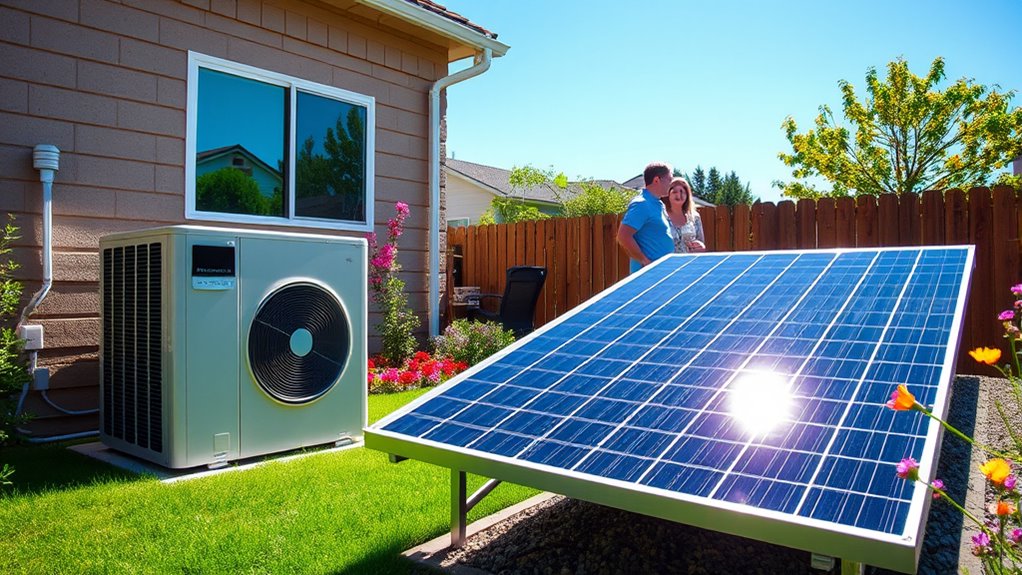
With the growing focus on sustainable energy, many governments now offer incentives to encourage the adoption of renewable energy systems and heat pumps. These incentives are designed to make switching to greener options more affordable and appealing for homeowners and businesses alike. One of the most common forms of support is financial incentives, which can markedly reduce the upfront costs of installing renewable energy solutions. By providing cash rebates or tax credits, governments aim to motivate more people to transition away from fossil fuels and embrace cleaner energy sources. When you take advantage of these incentives, the financial burden of purchasing and installing equipment diminishes, making the decision to go green easier and more accessible.
Government incentives reduce costs and motivate homeowners to adopt renewable energy and heat pumps.
Installation subsidies are another key component of these government programs. These subsidies directly offset the costs associated with purchasing and setting up heat pumps or solar panels. Instead of bearing the full expense, you receive a lump sum or a percentage of the total installation cost covered by the government. This not only eases your financial load but also shortens the payback period for your investment, allowing you to enjoy energy savings sooner. Often, these subsidies are designed to cover equipment costs, labor, or both, ensuring that the entire installation process is more affordable. Subsidies and incentives combined create a compelling case for upgrading your home or business to renewable energy systems.
In addition to reducing initial costs, these incentives can also help you qualify for lower-interest loans or financing options tailored for renewable energy projects. This can further ease your financial planning, allowing you to spread out payments over time rather than facing a large upfront expense. Many programs also offer guidance and support throughout the application process, helping you navigate the paperwork and eligibility requirements. By taking advantage of these opportunities, you not only contribute to environmental conservation but also benefit from lower energy bills long-term.
Furthermore, understanding the innovative planter designs and their integration with sustainable living spaces can enhance your eco-friendly lifestyle and promote urban biodiversity. It’s important to stay informed about the specific incentives available in your area, as they vary widely depending on your location and the type of renewable energy system you choose. Government websites, local utility companies, or renewable energy organizations can provide detailed information about current offers. When you explore these options and leverage available financial incentives and installation subsidies, you make a smart investment in your property’s future, reducing your carbon footprint while enjoying significant savings. Overall, these incentives are a valuable resource designed to boost renewable energy adoption and make your transition to sustainable living more financially feasible.

Home Battery Storage and Backup Power: Maximize Solar, Achieve Independence, and Survive Outages (The Sustainable Home Energy Series Book 8)
As an affiliate, we earn on qualifying purchases.
As an affiliate, we earn on qualifying purchases.
Frequently Asked Questions
Are There Specific Eligibility Criteria for These Incentives?
Yes, there are specific eligibility criteria for these incentives. You need to meet certain financial eligibility requirements, which often involve income or property value assessments. The application process typically involves submitting detailed documentation and proof of installation. Make sure to review the specific guidelines for each program, as they can vary. By understanding these criteria, you can guarantee your application is complete and increases your chances of qualifying.
How Long Do the Incentives Remain Available?
The incentives generally stay available until the specified installation deadlines or until funding runs out. You should track updates on tax credits, as these often have expiration dates tied to legislation. To maximize benefits, plan your installation within the deadline, ensuring you meet all eligibility criteria for the tax credits. Staying informed about policy changes helps you take advantage of these incentives before they expire.
Can Incentives Be Combined With Other Financing Options?
Yes, you can often combine incentives with other financing options, but you should do a thorough cost benefit analysis before proceeding. This helps you understand the financial impact and guarantees you’re making the most of available benefits. During the installation process, check if combining programs affects eligibility or timelines. By doing so, you maximize savings and streamline your project, making it more affordable and efficient.
Are There Regional Differences in Incentive Programs?
Think of incentive programs like a patchwork quilt—each region adds its own unique square. Yes, there are regional variations and incentive diversity across different areas. Some regions offer generous rebates or tax credits, while others may have limited programs. These differences are influenced by local policies, climate, and economic priorities. So, it’s essential to research your area’s specific incentives to make the most of available opportunities and save on your renewable energy projects.
What Documentation Is Required to Apply for Incentives?
To apply for incentives, you need to complete the application process and submit the required documentation. Typically, this includes proof of installation, receipts or invoices, and possibly a certification or inspection report. Make sure to review the specific documentation requirements for your region, as they can vary. Gather all necessary paperwork beforehand to guarantee a smooth application process and avoid delays in receiving your renewable energy or heat pump incentives.
heat pump installation subsidies
As an affiliate, we earn on qualifying purchases.
As an affiliate, we earn on qualifying purchases.
Conclusion
So, go ahead and chase those incentives—because who wouldn’t want free money to swap out their fossil-fuel nightmare for a shiny new heat pump? After all, saving the planet is just a bonus when you get to enjoy the sweet taste of government subsidies. Just think: you’re not only helping the environment, but also secretly winning at the game of “Who Can Spend the Most on Green Tech.” Cheers to your eco-friendly, subsidy-fueled lifestyle!

DIY Off-Grid Solar Power for Beginners: The Easiest Guide to Building Low-Cost Solar Systems for Homes, RVs, Tiny Houses, Boats. Qualify for Tax Credits and Save with Government Incentives.
As an affiliate, we earn on qualifying purchases.
As an affiliate, we earn on qualifying purchases.
low-interest solar financing
As an affiliate, we earn on qualifying purchases.
As an affiliate, we earn on qualifying purchases.