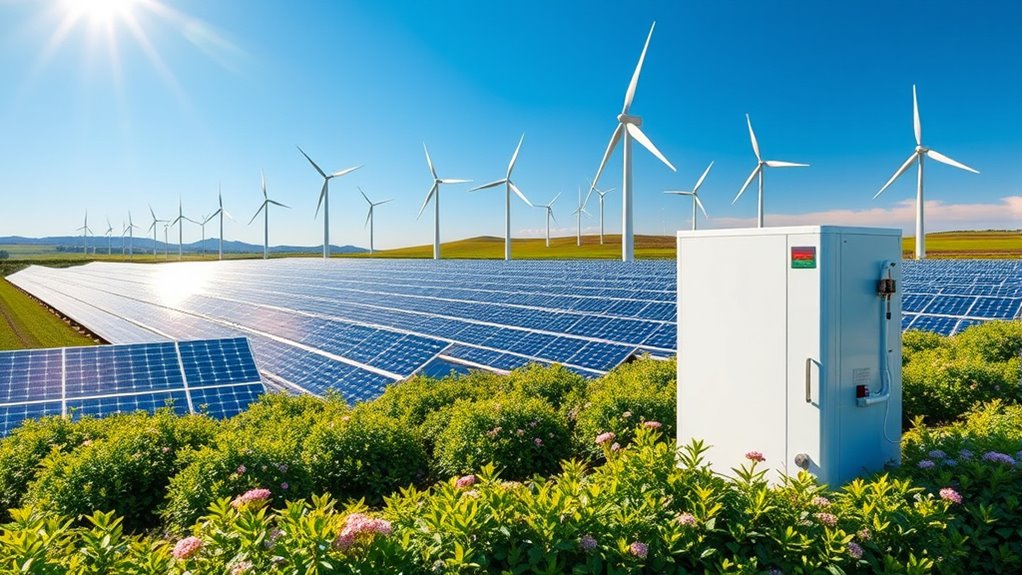

When the renewable energy mix increases, especially with more solar and wind power, your heat pump’s emissions decrease because it runs cleaner energy. Modernizing the power grid makes it easier to use more renewable energy efficiently and reliably. This combination results in less greenhouse gas output from heating and cooling systems. If you keep exploring, you’ll discover how ongoing grid improvements and renewable growth can further lower heat pump emissions for a sustainable future.
Key Takeaways
- A higher share of renewables in the energy mix reduces heat pump emissions by providing cleaner electricity.
- Integrating solar, wind, and hydro sources enhances grid decarbonization, lowering heat pump lifecycle emissions.
- A diverse renewable mix improves grid stability, supporting efficient operation of electric heat pumps.
- Renewable-heavy grids enable heat pumps to operate more sustainably, especially when paired with energy storage.
- Policies promoting renewable energy expansion accelerate decarbonization of heating systems through cleaner electricity.
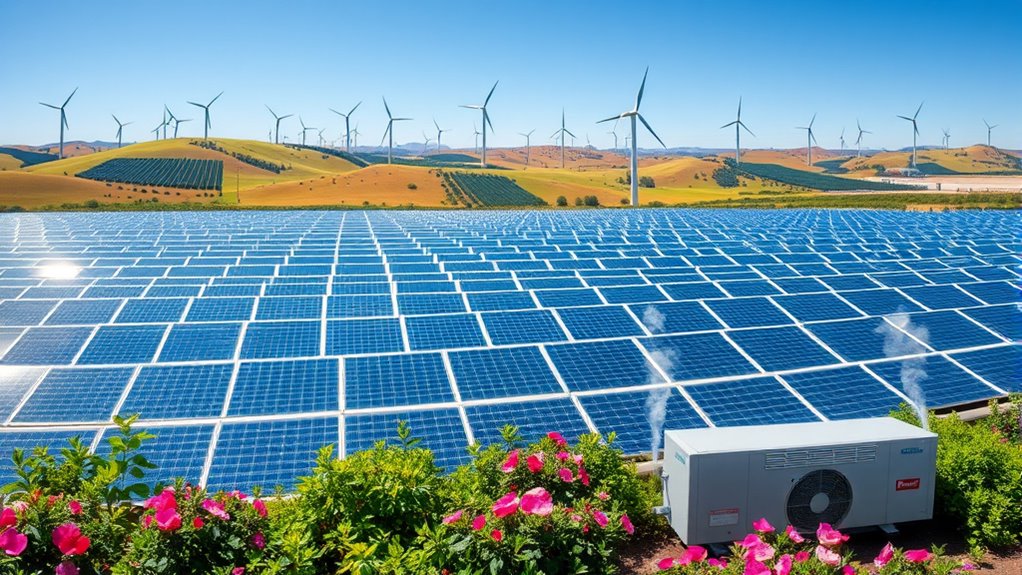
Have you ever wondered how countries are balancing their energy needs with sustainability goals? It’s a complex dance that involves integrating various renewable sources into existing systems. One key aspect is solar integration, which plays a critical role in reducing reliance on fossil fuels. By installing more solar panels, countries can generate clean electricity during daylight hours, cutting emissions from traditional power plants. But solar isn’t just about adding panels; it’s about making that energy usable when demand peaks or dips. That’s where grid modernization becomes essential. Upgrading the electrical grid allows for better management of intermittent solar power, ensuring that excess energy can be stored or redistributed efficiently. Modern grids incorporate advanced technologies such as smart meters, real-time data monitoring, and automated controls. These innovations enable utilities to respond quickly to fluctuations in solar output, maintaining a stable supply while maximizing renewable use. When your heat pump draws electricity from a modernized grid, it benefits from this enhanced stability, reducing the carbon footprint associated with heating and cooling. As solar integration expands, it’s crucial that the grid evolves to handle increased capacity without risking outages or inefficiencies. Grid modernization also facilitates the seamless integration of other renewables like wind and hydro, creating a more resilient and flexible energy system. This interconnected approach means that heat pumps, which are highly efficient heating and cooling devices, can operate more sustainably by relying on cleaner electricity. The cleaner the power source, the lower your heat pump’s emissions become, helping you contribute to broader climate goals. Additionally, grid modernization often includes energy storage solutions such as batteries, which store excess solar power for use during cloudy days or nighttime. This ensures a consistent supply of renewable energy, making heat pumps even greener. As you look toward a sustainable future, understanding how solar integration and grid modernization work together helps you see the bigger picture. They’re not isolated efforts but parts of a coordinated strategy to decarbonize the entire energy system. This synergy enhances the effectiveness of heat pumps by ensuring they operate on renewable electricity whenever possible. The result? Reduced greenhouse gas emissions and a more resilient power grid capable of supporting a growing demand for clean energy. So, when policymakers and utilities focus on expanding solar integration and upgrading the grid, they’re not just improving energy reliability—they’re actively shaping a cleaner, healthier environment for you and future generations.
Furthermore, energy storage solutions such as batteries play a vital role in ensuring a steady supply of renewable energy, especially during periods of low solar activity.

ECO-WORTHY 10KW Output 9.36KWH Off Grid Solar System Complete Kit for Home:12pcs 195W Solar Panels(2340W)+10KW 120V/240V Inverter (UL 1741)+ 2pcs 48V 100AH Lithium Batteries(UL 1973&UL 9540A)
[Ideally Output of 9.36KWH] The power of 9.36KWh per day under 4 hours full sunshine by the 2340W…
As an affiliate, we earn on qualifying purchases.
As an affiliate, we earn on qualifying purchases.
Frequently Asked Questions
How Does the Renewable Energy Mix Influence Heat Pump Efficiency?
The renewable energy mix directly influences your heat pump’s efficiency by enabling better renewable integration, which leads to cleaner electricity. As the grid decarbonizes, your heat pump runs more sustainably and efficiently, reducing emissions. When renewable sources like wind and solar dominate, your heat pump operates with less reliance on fossil fuels, improving overall performance and lowering your carbon footprint. This shift benefits both your energy costs and environmental impact.
Are There Regional Differences in Renewable Energy Sources Affecting Heat Pump Emissions?
Regional resource variability and local energy policies substantially shape heat pump emissions. You’ll notice that regions rich in renewable resources like wind or solar tend to have cleaner, greener heat pumps. Conversely, areas with limited renewable options rely more on fossil fuels, increasing emissions. Local policies push for sustainable solutions, so your region’s commitment to renewables directly impacts your heat pump’s environmental footprint and efficiency.
What Policies Support Integrating Renewable Energy With Heat Pump Systems?
You can support integrating renewable energy with heat pump systems through policies like carbon pricing, which incentivizes cleaner energy use, and grid modernization efforts that enhance the efficiency and reliability of renewable power. These policies encourage investments in renewable sources, making heat pumps more sustainable and reducing emissions. By advocating for such policies, you help create a cleaner energy future, ensuring heat pumps operate with greener electricity and lower environmental impact.
How Quickly Can Renewable Energy Adoption Reduce Heat Pump Emissions?
Imagine turning a massive ship—adopting renewable energy can steer heat pump emissions in just a few years. With technological innovations and strong market incentives, you could see significant reductions within 5-10 years. As these innovations become mainstream and incentives grow, the shift accelerates, cutting emissions faster. Your role in supporting policies and adopting new tech helps speed this journey, making cleaner heat pumps a reality sooner.
What Are the Challenges in Transitioning to a Renewable Energy Mix for Heating?
You face challenges in shifting to a renewable energy mix for heating, like maintaining grid stability as renewable sources fluctuate. Supply chain issues can delay the deployment of key technologies and infrastructure upgrades. Additionally, integrating variable renewable energy into existing systems requires careful planning to guarantee consistent heating. Overcoming these hurdles demands coordinated efforts, investment, and innovation to create a resilient, sustainable energy grid capable of supporting widespread heat pump use.

ECO-WORTHY (Cubix 100) 48V 400Ah 20.48kWh LiFePO4 Solar Battery, UL1973 & UL9540A & CEC Listed, 4 Pack 48V 100AH Server Rack Battery with Bluetooth for Solar Energy Storage, Home Backup Power
UL1973 | UL9540A | CEC LISTED – Completed comprehensive testing by Intertek and has officially earned two key…
As an affiliate, we earn on qualifying purchases.
As an affiliate, we earn on qualifying purchases.
Conclusion
Just as the phoenix rises from its ashes, a well-balanced renewable energy mix can transform our heat pump emissions, fueling a sustainable future. By harnessing diverse clean sources, you shape a world where progress and responsibility coexist. Remember, the power to forge this new dawn lies in your choices today—each step echoes through generations. Embrace the potential of renewables now, and let your actions be the catalyst for a brighter, greener tomorrow.

Meross Smart Energy Consumption Monitor with 18 Circuit Monitoring, Electricity Usage Monitor, Real-Time Power Usage Monitor, Home Assistant Support, Smart Alerts, No Subscriptions, 2-Year Warranty
SAFE & RELIABLE: Meross smart energy consumption monitor is ETL‑certified and compliant with the UL 61010 testing standard,…
As an affiliate, we earn on qualifying purchases.
As an affiliate, we earn on qualifying purchases.
electric heat pump
As an affiliate, we earn on qualifying purchases.
As an affiliate, we earn on qualifying purchases.