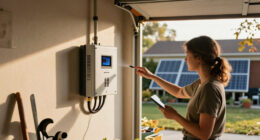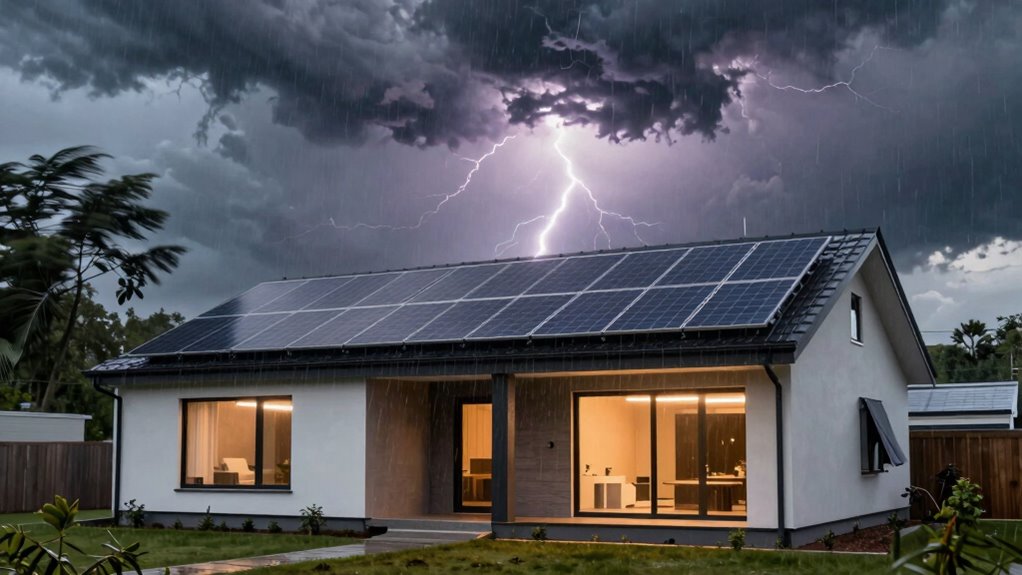
To guarantee your all-electric home can withstand storms, you need a resilience plan that includes solar storage for backup power, smart energy management to prioritize critical loads, and regular system maintenance. This way, you’ll keep essential appliances running, stay safe, and maintain comfort during outages. Plus, adopting additional resilience measures, like portable power stations and water systems, boosts your independence. Keep exploring to discover how to build a robust plan that keeps you resilient no matter the weather.

Get backup power and energy gear delivered free with Prime
- Fast, free delivery on millions of items
- Prime Video, Amazon Music and more included
- Member-only deals all year
Key Takeaways
- Install solar storage systems to harness and store energy for backup during outages, ensuring continuous power for essential needs.
- Achieve grid independence by generating and storing sufficient energy to maintain household functions during storms.
- Integrate smart energy management to prioritize critical loads and optimize system performance during disruptions.
- Implement additional resilience measures like portable power stations and water system maintenance for comprehensive disaster preparedness.
- Develop proactive planning to reduce outage impacts, maintain safety, and enhance long-term household resilience.
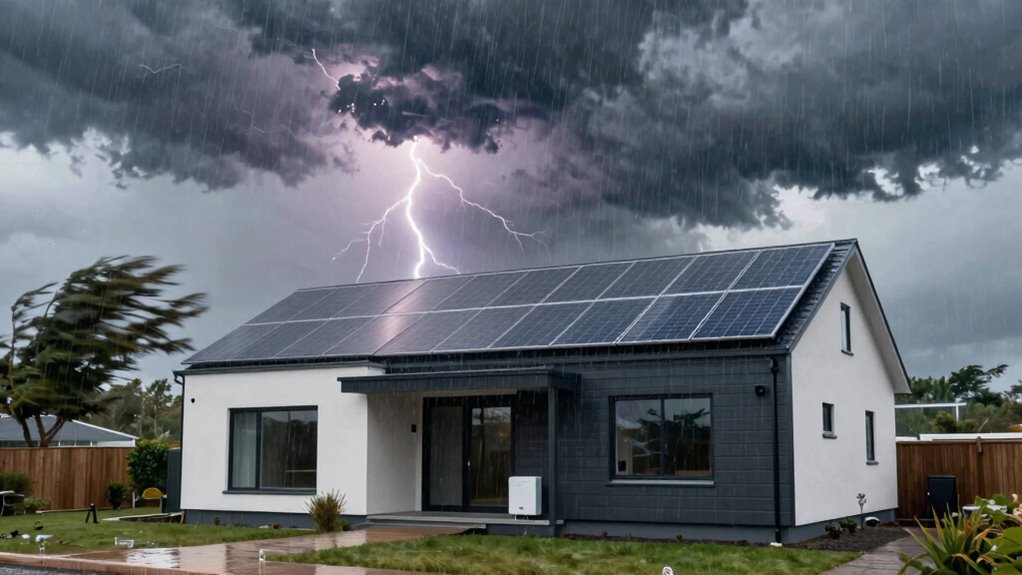
Living in storm-prone areas with all-electric homes requires proactive measures to guarantee safety and reliability during severe weather events. When storms threaten power grids, your home’s resilience depends on your preparedness. A key component of this readiness is solar storage, which allows you to harness solar energy during sunny days and store it for use when storms knock out the grid. By investing in a dependable solar storage system, you can ensure continuous power for essential appliances, heating, and lighting, reducing your dependence on external power sources. This setup not only keeps your home functioning but also provides peace of mind by offering a backup energy supply, even during extended outages.
Solar storage ensures continuous power and peace of mind during storms by providing backup energy for essential needs.
Achieving grid independence is central to a resilient home in storm-prone areas. When your home can operate independently of the main electrical grid, you eliminate the vulnerability associated with power outages caused by severe weather. Installing a combination of solar panels and an energy storage system allows you to generate and store enough power to meet your needs without relying on the grid. This means you can continue with daily routines, keep your family safe, and preserve the comfort of your home, regardless of external disruptions. Grid independence also gives you greater control over your energy consumption, enabling you to maximize usage during outages and reduce dependency on utility companies. grid independence is a fundamental aspect of long-term resilience and self-sufficiency.
To enhance your home’s resilience, you should consider integrating a smart energy management system with your solar storage setup. These systems allow you to monitor and control energy flow in real-time, ensuring that stored energy is used efficiently. During storms, you can prioritize critical loads, such as heating, refrigeration, and communication devices, to maintain safety and comfort. Additionally, regular maintenance of your solar storage units and panels is essential to keep them functioning at their best, especially before storm seasons. Ensuring your batteries are fully charged and your solar panels are clean guarantees maximum energy capture and storage when you need it most. Incorporating solar safety considerations such as snow management and rapid shutdown placement is vital to prevent damage and ensure safe operation during adverse conditions. Proper system maintenance extends the lifespan of your equipment and ensures reliability when it’s needed most. Understanding whole-home water systems and their impact can further improve your home’s overall resilience by ensuring water quality and supply are maintained during disasters. Moreover, integrating portable power stations can provide additional backup energy sources for critical devices during extended outages.
Incorporating these strategies into your home’s resilience plan means you’re not just reacting to storms but proactively preparing for them. Solar storage and achieving grid independence empower you to sustain your household during power outages, minimize disruptions, and maintain safety and comfort. Investing in these technologies is a wise move, especially in areas where severe weather is common. It’s about taking control, reducing vulnerability, and making sure your all-electric home stays resilient, no matter what nature throws your way.
solar battery backup system for home
As an affiliate, we earn on qualifying purchases.
As an affiliate, we earn on qualifying purchases.
Frequently Asked Questions
How Often Should I Review and Update My Resilience Plan?
You should review and update your resilience plan at least once a year, especially after severe storms or significant changes in your home or neighborhood. Regularly practicing emergency preparedness helps identify gaps, and conducting a risk assessment guarantees your plan stays relevant. Staying proactive allows you to adapt to new risks, improve safety measures, and ensure your all-electric home remains resilient against storms and emergencies.
What Are the Initial Costs Involved in Implementing the Plan?
You might think the initial costs are high, but with accurate cost estimation and smart budget planning, they’re manageable. Expect expenses for backup power sources like batteries, surge protectors, and energy-efficient appliances. You’ll also need to allocate funds for safety equipment and possibly home upgrades. While upfront costs vary, prioritizing essential items guarantees your storm resilience plan fits your budget without sacrificing safety or reliability.
Are There Government Incentives for Storm-Proofing All-Electric Homes?
Yes, there are government incentives for storm-proofing all-electric homes. You can access government grants that help cover part of the costs for resilience upgrades. Additionally, many insurance providers offer discounts if you’ve invested in storm-proofing measures. Taking advantage of these incentives can substantially reduce your out-of-pocket expenses, making it more affordable to improve your home’s resilience against storms. Always check local programs for the latest available benefits.
How Can I Ensure My Backup Power System Is Eco-Friendly?
To guarantee your backup power system is eco-friendly, choose renewable batteries like lithium-ion or flow batteries, which have lower environmental impacts. Incorporate solar integration so your system can recharge using clean solar energy during storms or outages. Regularly maintain and monitor your system to maximize efficiency. By combining renewable batteries with solar integration, you create a resilient, sustainable backup power source that reduces reliance on fossil fuels and minimizes your carbon footprint.
What Training Is Recommended for Household Members?
You should train your household members in storm safety and emergency preparedness to guarantee everyone stays safe during power outages. Practice emergency protocols, like how to operate backup systems and safely disconnect from the grid if needed. Conduct regular drills so everyone knows what to do during storms, and teach them basic first aid. This preparation helps your family respond confidently and reduces risks during storm events.
portable power station for emergencies
As an affiliate, we earn on qualifying purchases.
As an affiliate, we earn on qualifying purchases.
Conclusion
By implementing a solid resilience plan, you can protect your all-electric home from storm-related disruptions. Did you know that homes with backup power sources experience 40% fewer outages during severe weather? Staying prepared guarantees your comfort and safety, even when storms hit hard. Remember, investing in resilience isn’t just smart—it’s essential for peace of mind in storm-prone areas. Stay proactive, stay protected, and keep your home running smoothly no matter what Mother Nature throws your way.
smart energy management system for home
As an affiliate, we earn on qualifying purchases.
As an affiliate, we earn on qualifying purchases.
home water storage and filtration system
As an affiliate, we earn on qualifying purchases.
As an affiliate, we earn on qualifying purchases.
Evergreen bestsellers Picks
bestsellers
As an affiliate, we earn on qualifying purchases.