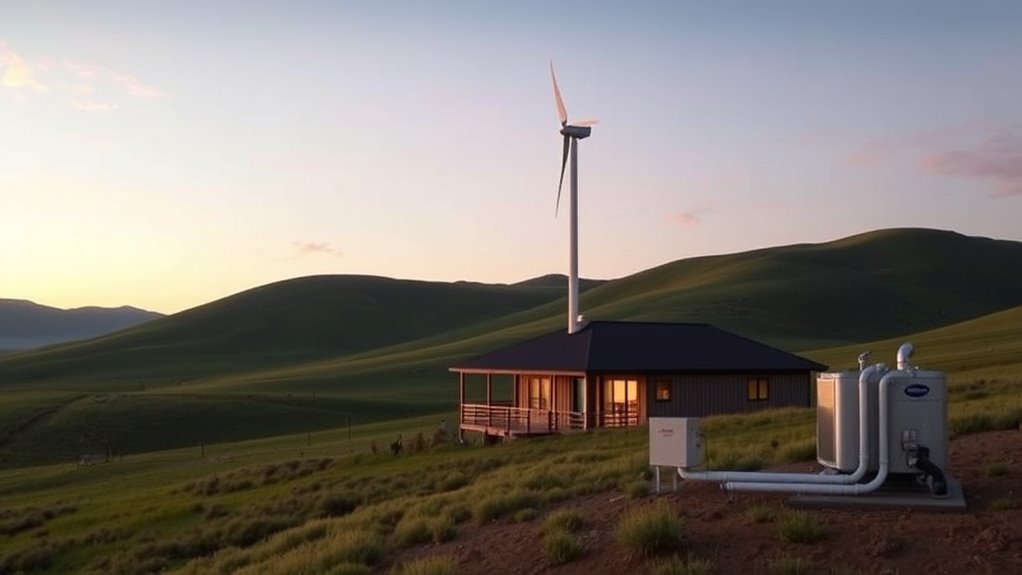
Combining wind power with heat pumps creates a reliable and eco-friendly off-grid energy system. Wind turbines generate clean, renewable energy, while heat pumps efficiently extract environmental heat for heating and cooling. Pairing these with energy storage buffers your home against wind fluctuations, ensuring a steady power supply year-round. This setup reduces dependence on external sources and lowers costs. Keep exploring to discover how this innovative synergy can make your off-grid home more resilient and sustainable.
Key Takeaways
- Wind turbines generate renewable energy that can power heat pumps for heating and cooling needs.
- Energy storage systems, like batteries, stabilize supply by capturing excess wind power for later use.
- Combining wind power with heat pumps enhances off-grid energy efficiency and reduces reliance on fossil fuels.
- Stored wind energy ensures continuous operation of heat pumps during low wind periods or at night.
- Integrated systems promote energy independence, lower costs, and minimize environmental impact for off-grid homes.
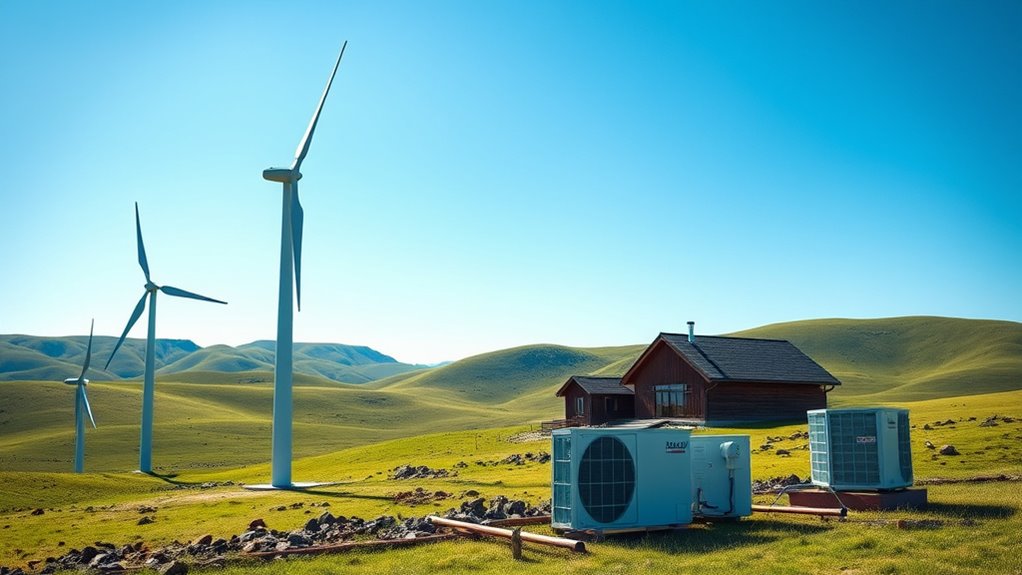
Off-grid homes face the challenge of reliable, sustainable energy, but combining wind power with heat pumps offers a promising solution. When you rely solely on traditional energy sources, you’re vulnerable to supply fluctuations and rising costs. Wind turbines generate clean power, yet their intermittent nature means you need effective energy storage solutions to guarantee a steady supply. By investing in energy storage systems like batteries, you can capture excess wind energy during gusts and use it when the wind dies down. This approach not only stabilizes your energy flow but also enhances your grid independence, allowing you to operate your home without relying on external power sources.
With wind power and heat pumps working in tandem, you create a highly efficient off-grid energy ecosystem. Heat pumps utilize electricity to extract heat from the environment—air, ground, or water—providing heating and cooling with minimal energy use. When powered by wind energy, heat pumps become even more sustainable and cost-effective. During windy periods, excess electricity can be stored for later use, making certain your heat pump operates continuously without drawing from fossil fuels or disconnected grid supply. This synergy reduces your reliance on diesel generators or propane, cutting your carbon footprint while maintaining comfort throughout the seasons.
Energy storage plays a pivotal role in making this system viable. Large-scale battery banks or other storage technologies allow you to buffer the variability of wind energy, assuring a reliable power reserve. This means you can store surplus energy generated during peak wind times and use it during calm days or at night. As a result, your off-grid home becomes self-sufficient, with the ability to meet your heating, cooling, and electrical needs independently. This independence not only provides peace of mind but also shields you from volatile energy prices and grid outages.
Integrating wind turbines, heat pumps, and energy storage also simplifies your overall energy management. You gain control over your power consumption and optimize the use of renewable resources. When the wind blows strong, you generate and store more energy; during lulls, you draw from your stored reserves. This balanced approach ensures your home remains comfortable and operational regardless of external conditions. Over time, you’ll notice reduced reliance on external energy sources, lower utility bills, and a smaller environmental impact—all while enjoying the freedom that comes with true grid independence.
In essence, combining wind power with heat pumps and smart energy storage transforms your off-grid home into a resilient, efficient, and sustainable living space. It’s a proactive way to harness renewable resources, minimize ecological impact, and achieve long-term energy independence. Incorporating energy storage solutions further enhances the system’s reliability and efficiency, making off-grid living more practical and sustainable.
Frequently Asked Questions
How Do Wind and Heat Pump Systems Perform During Extreme Weather?
During extreme weather, your wind and heat pump systems might face challenges, especially with solar fluctuations affecting your overall energy supply. Wind turbines can produce less power in storms or calm conditions, but they still help maintain grid independence. Heat pumps may struggle to heat efficiently in very cold weather, so having backup power sources or energy storage becomes essential to guarantee continuous comfort and reliability during such conditions.
What Are the Initial Costs for Integrating Wind Turbines and Heat Pumps?
You’ll typically face an initial capital investment of $10,000 to $30,000 for installing wind turbines and heat pumps. Installation expenses vary based on system size, location, and complexity. Remarkably, some off-grid homes see energy savings that offset these costs within a few years. While upfront costs seem high, long-term benefits include reduced reliance on fossil fuels and lower utility bills, making this investment worthwhile.
How Reliable Are Off-Grid Wind and Heat Pump Setups Long-Term?
You can count on your off-grid wind and heat pump system to be quite reliable long-term if you maintain proper upkeep and have sufficient battery storage. These setups offer strong grid independence, reducing reliance on external sources. While weather variability can affect performance, regular maintenance and good battery management help guarantee consistent energy supply, making your off-grid lifestyle more sustainable and dependable over time.
Can These Systems Be Scaled for Larger Off-Grid Communities?
You can scale wind power and heat pump systems for larger communities, but it’s not without challenges. About 60% of off-grid projects face scalability issues due to infrastructure costs and energy storage needs. To succeed, focus on community energy planning and innovative solutions. While growing these systems is complex, careful design and community collaboration can overcome scalability challenges, making larger off-grid communities more sustainable and resilient.
What Maintenance Is Required for Combined Wind and Heat Pump Systems?
You’ll need to perform regular component inspections on both your wind turbines and heat pumps to guarantee everything runs smoothly. Check for worn or damaged parts and tighten loose connections. Additionally, replace filters in your heat pump periodically to maintain efficiency. Keeping a maintenance schedule helps prevent unexpected breakdowns, boosts system longevity, and ensures your off-grid home stays powered and heated reliably.
Conclusion
So, here you are, powering your off-grid home with wind and heat pumps, thinking you’ve beaten the system. Ironically, while you’re harnessing nature’s free energy, you’re still fighting against the unpredictable wind and the chill that sneaks in. But hey, at least you’re embracing the irony—relying on nature’s gift to escape the grid’s control, only to find yourself at its mercy once again. Welcome to the beautiful chaos of sustainable living.