
Integrating heat pump systems into district heating networks boosts efficiency and sustainability by utilizing geothermal energy, which offers a stable, renewable heat source. This approach reduces reliance on fossil fuels, lowers emissions, and cuts operational costs over time. Heat pumps work best with geothermal sources, providing reliable heat even during cold weather. If you want to discover how this innovative technology can transform urban heating, there’s more to explore below.
Key Takeaways
- Heat pumps enhance district heating efficiency by utilizing renewable energy sources like geothermal for reliable heat supply.
- Integrating geothermal energy provides a stable, sustainable heat source, reducing reliance on fossil fuels.
- System configurations (series or parallel) optimize heat pump performance and overall network efficiency.
- Geothermal heat extraction maintains high COP, ensuring consistent service during peak demand and cold weather.
- Using heat pump technology decreases greenhouse gas emissions and operational costs in district heating networks.
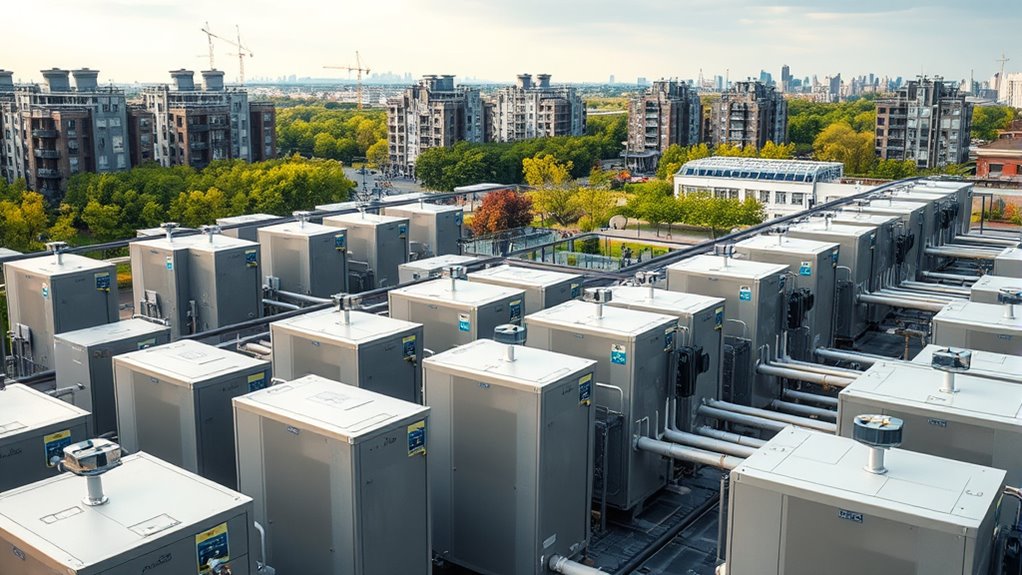
District heating networks are evolving with the integration of heat pump technology, offering a more efficient and sustainable way to supply thermal energy to communities. By harnessing the power of heat pumps, you can substantially improve the system’s efficiency while reducing reliance on fossil fuels. One of the most promising advancements in this field is geothermal integration, which taps into the earth’s stable underground temperature to provide a reliable, renewable heat source. When you incorporate geothermal energy into your district heating system, you benefit from a consistent and sustainable heat supply that minimizes environmental impact. This integration not only boosts system efficiency but also helps lower operational costs over time, making the entire network more resilient and cost-effective.
With geothermal integration, your heat pump can operate more efficiently because it extracts heat from the ground at a relatively constant temperature, regardless of outdoor weather conditions. This stability allows the heat pump to deliver a higher coefficient of performance (COP), meaning you’ll get more heat output for less electrical energy input. As a result, your district heating system becomes more energy-efficient, reducing overall energy consumption and greenhouse gas emissions. The geothermal source provides a dependable baseline of heat, which means your network can maintain consistent service even during peak demand periods or cold snaps. This reliability is vital for urban and rural communities seeking to transition to greener energy solutions.
Furthermore, integrating geothermal energy with heat pump technology enhances the system’s overall efficiency by reducing the need for auxiliary heating sources. You can optimize your network’s performance by combining geothermal heat sources with advanced heat pump systems, ensuring maximum utilization of renewable energy. This approach also allows for better load management, as the stable geothermal heat can be distributed efficiently across the network, minimizing fluctuations and energy losses. By focusing on geothermal integration, you position your district heating system at the forefront of sustainable urban development, aligning with global efforts to decarbonize energy infrastructures. Additionally, understanding the importance of system configuration can help you choose between series or parallel setups for optimal performance.

PelPro PP150 Pellet Stove for Home Heating - 150 lb Hopper, 49,200 BTU Heats up to 2,500 Sq. Ft., Easy-Dial Temp Control, Built-in Thermostat with Auto-Ignition, Powerful & Quiet 265CFM Blower
PP150 pellet stoves for fireplaces are efficient for home heating up to 2,500 sq. ft. at almost 50,000...
As an affiliate, we earn on qualifying purchases.
Frequently Asked Questions
How Do Heat Pumps Impact District Heating System Costs?
Heat pumps can substantially reduce your district heating system costs by boosting energy savings and lowering operational expenses. They efficiently transfer heat from the environment, decreasing the need for expensive fossil fuels. This leads to cost reduction over time, especially with ideal system design and maintenance. You’ll benefit from lower energy bills and a more sustainable energy solution, making heat pumps a smart investment for efficient district heating.
What Are the Main Challenges in Integrating Heat Pumps?
You face huge challenges when integrating heat pumps, like overcoming technological limitations that seem almost impossible to solve and tackling environmental impacts that threaten to derail your plans. These issues can feel overwhelming, but with innovative solutions and careful planning, you can turn these obstacles into opportunities. The key is balancing technological advances with environmental sustainability, ensuring your heat pump system is efficient, eco-friendly, and ready for the future.
How Do Heat Pumps Affect Overall Energy Efficiency?
Heat pumps markedly boost your overall energy efficiency by utilizing renewable energy sources and reducing reliance on fossil fuels. They work well with thermal storage, allowing you to store excess heat for later use, which optimizes energy consumption. By integrating heat pumps into your district heating network, you can enhance renewable integration, lower operational costs, and improve sustainability, making your system more efficient and environmentally friendly.
Can Heat Pumps Operate Effectively in All Climates?
Did you know that modern heat pumps can operate effectively in climates as cold as -25°C? You’ll find that their climate adaptability is impressive, maintaining high thermal performance even in harsh conditions. While some models excel in colder environments, others perform ideally in milder weather. Overall, advancements have considerably expanded their usability, making heat pumps a reliable choice for diverse climates and ensuring consistent heating regardless of temperature fluctuations.
What Maintenance Is Required for Heat Pump-Based Networks?
You need to regularly inspect and maintain your heat pump-based network to guarantee ideal performance. Focus on corrosion prevention by checking for rust or leaks and applying protective coatings as needed. Also, monitor refrigerant levels and manage refrigerant quality to prevent system inefficiencies. Keep filters clean, inspect electrical components, and schedule professional servicing annually to address potential issues early and extend your system’s lifespan.

Canyon Lodge Large Pellet Stove
Heats up to 2,000-3,000 sq. ft.
As an affiliate, we earn on qualifying purchases.
Conclusion
By integrating heat pump technology into district heating networks, you can markedly reduce energy costs and emissions. Imagine a neighborhood where each home is warmed efficiently through a central system powered by renewable energy—like a community in Denmark successfully implementing heat pumps, cutting their carbon footprint and bills. Embracing this approach not only benefits the environment but also offers a reliable, sustainable heating solution for the future.

Large Pellet Stove - 130lb Hopper
Built-in WiFi – Smart Home Technology
As an affiliate, we earn on qualifying purchases.

30 Pint Dehumidifier for Basement, 2500 Sq. Ft Dehumidifiers for Home with Drain Hose, 3 Modes, Smart Humidity Control, 24H Timer, 0.52 Gal Water Tank, for Whole House, Bedroom, Bathroom, Garage, Rv
Powerful 30-Pint Moisture Removal for Spaces up to 2500 Sq. Ft: High humidity can make rooms feel damp,...
As an affiliate, we earn on qualifying purchases.