
Integrating heat pumps into your new home involves combining advanced zoning, insulation, and system design strategies to boost energy efficiency and comfort. By designing zones for precise temperature control and enhancing insulation, you reduce energy waste and size your heat pump appropriately. This integrated approach ensures a sustainable, cost-effective system that offers consistent warmth and coolness. If you want to discover how these strategies work together for ideal results, there’s more to explore below.
Key Takeaways
- Incorporate heat pumps early in the design process to optimize placement and system integration.
- Use zoning strategies to enhance efficiency and allow customized temperature control in different home areas.
- Improve insulation with advanced materials to maximize heat retention and reduce system size and energy use.
- Plan for seamless system integration, combining heat pumps, zoning, and insulation for maximum energy efficiency.
- Consider future upgrades and adjustments to ensure long-term performance and adaptability of the heating and cooling system.
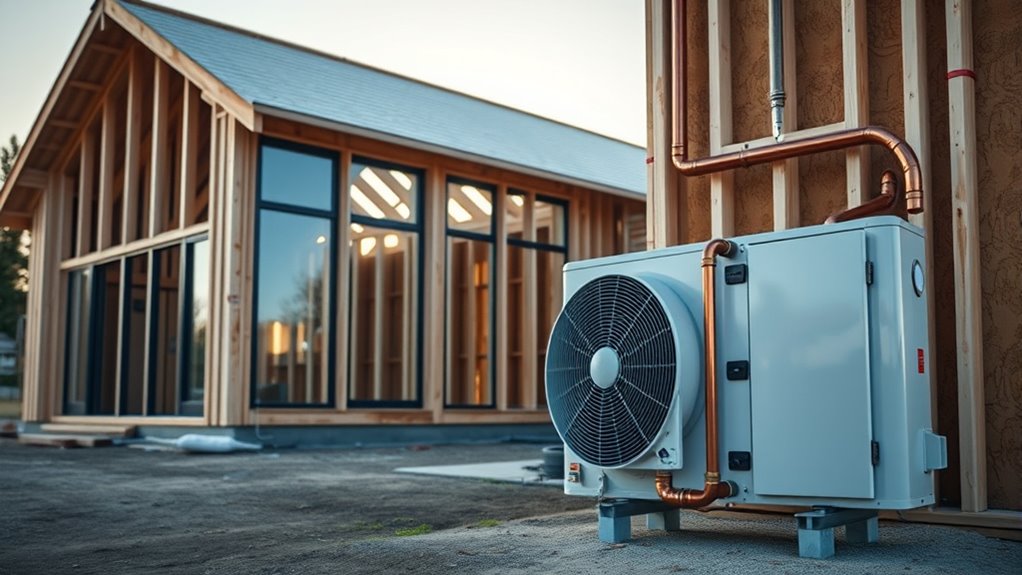
Have you considered how integrating heat pumps can transform your heating and cooling systems? When planning your new home, incorporating heat pumps offers an energy-efficient way to maintain comfort year-round. To maximize their effectiveness, you should pay close attention to zoning strategies. By dividing your home into different zones, you can control temperatures more precisely, reducing energy waste. For instance, bedrooms can be kept cooler during the day while living areas stay warmer, or vice versa. Zoning allows the heat pump to operate only in areas that need heating or cooling, which improves efficiency and lowers your utility bills. This targeted approach also enhances comfort, as each zone can be customized to your preferences without affecting the entire house. When designing these zones, consider the layout and usage patterns to optimize system performance. Additionally, understanding the best juice cleanses for weight loss can help homeowners maintain their health and energy levels while managing the demands of a new construction project.
Alongside zoning strategies, insulation enhancements play an essential role in integrating heat pumps effectively. Good insulation minimizes heat transfer between indoors and outdoors, ensuring your home retains warmth in winter and stays cooler in summer. By investing in quality insulation for walls, ceilings, floors, and windows, you reduce the workload on your heat pump, enabling it to operate more efficiently. Enhanced insulation also allows for smaller, less powerful units, which can save you money upfront and over time. Take advantage of modern insulation materials and techniques, such as spray foam, rigid boards, or reflective barriers, to create a well-sealed environment. Proper insulation complements your zoning system, ensuring each zone maintains its desired temperature with minimal energy consumption. Additionally, it helps prevent drafts and cold spots, making your home more comfortable overall.
When planning your new construction, integrating heat pumps isn’t just about choosing the right unit; it’s about designing a complete system that works seamlessly with zoning strategies and insulation enhancements. This integrated approach ensures your home is energy-efficient, comfortable, and sustainable. Think about future-proofing your space by considering how these elements interact long-term. For example, as your family’s needs evolve, your zoning controls can be adjusted, and insulation can be upgraded if necessary. By proactively planning these aspects, you set yourself up for a low-maintenance, cost-effective heating and cooling solution. Overall, combining heat pumps with smart zoning and insulation improvements creates a harmonious environment that delivers consistent comfort while reducing your carbon footprint.
Frequently Asked Questions
How Do Heat Pumps Perform in Extremely Cold Climates?
In extremely cold climates, heat pumps can still perform well, but you might face some efficiency challenges. Modern cold climate heat pumps are designed to operate effectively even when temperatures drop below freezing. You’ll notice they work best with proper insulation and backup heating systems. Overall, they can provide efficient heating in cold climates, but understanding their limitations helps you make the right choice for your home’s needs.
What Are the Long-Term Maintenance Costs for Heat Pumps?
Your heat pump’s long-term maintenance costs are surprisingly minimal, making it a cost-efficient choice. You’ll find that regular service requirements are straightforward, often involving annual checks and filter replacements that save you money over time. Think of it as a well-oiled machine that runs smoothly through seasons, preventing costly repairs. With proper upkeep, you’ll enjoy reliable performance and low costs, ensuring your investment pays off for decades to come.
Can Heat Pumps Be Integrated With Existing Home HVAC Systems?
Yes, you can integrate heat pumps with your existing HVAC system, but you’ll face retrofit challenges and system compatibility issues. You need to evaluate whether your current ductwork and electrical system can support a heat pump. Consulting a professional is essential to guarantee proper integration, as adjustments might be necessary. While it’s doable, addressing retrofit challenges early helps you avoid costly surprises down the line.
What Is the Typical Installation Timeline for New Construction?
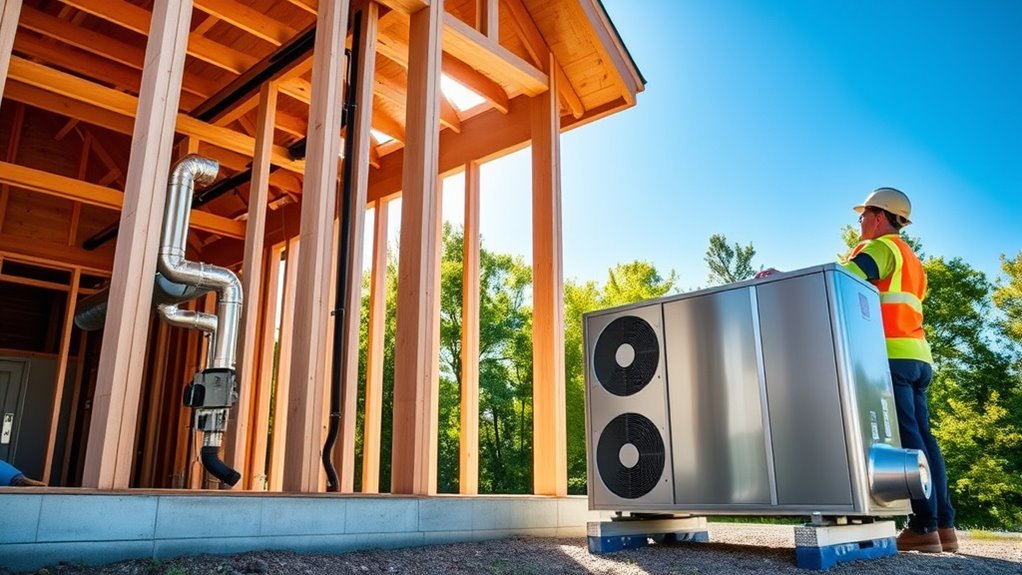
Typically, installing a heat pump during new construction takes about 1 to 2 weeks, fitting smoothly into your construction phases. Remarkably, homes with integrated heat pumps can see energy savings of up to 50%. Your installation involves planning during the early framing stage, electrical work, and final system testing. Coordinating these phases ensures your home gets efficient heating and cooling without delaying your overall construction timeline.
Are There Specific Building Codes for Heat Pump Integration?
Yes, there are specific building codes for heat pump integration. You’ll need to obtain building permits that guarantee your system meets local standards. These codes often include insulation requirements to optimize energy efficiency and safety. Make sure your contractor is familiar with these regulations to avoid delays. Properly following building codes helps ensure your heat pump system is installed correctly, providing reliable heating and cooling for your new home.
Conclusion
By integrating heat pumps into your new home’s design, you’re not just making an eco-friendly choice—you’re transforming your living space into a powerhouse of efficiency and comfort that could outlast generations. Imagine never worrying about soaring energy bills or sudden weather surprises; your home becomes a fortress of warmth and savings, all thanks to this cutting-edge technology. Embrace heat pumps now, and turn your dream home into an unstoppable, climate-controlled sanctuary that beats every expectation.