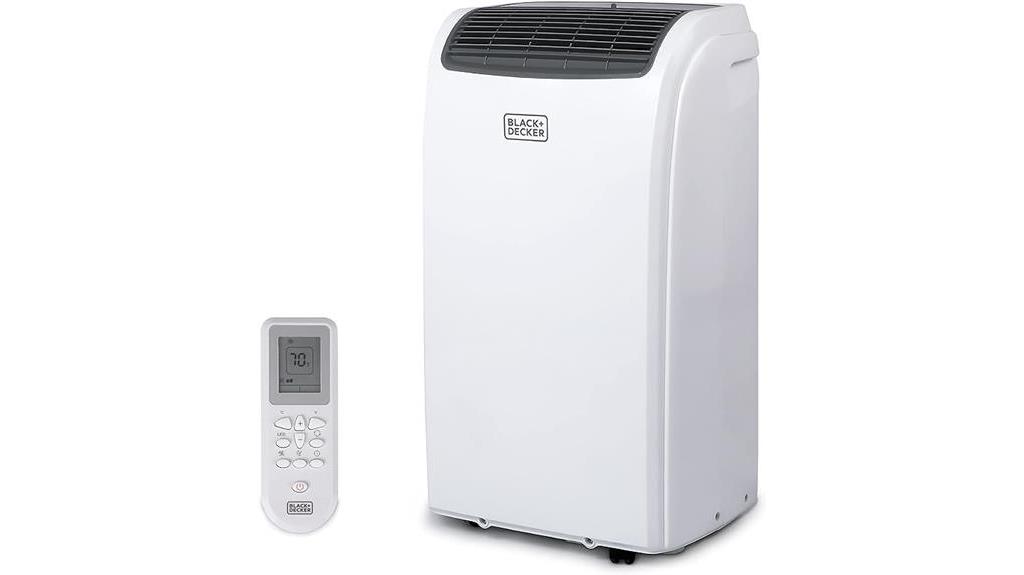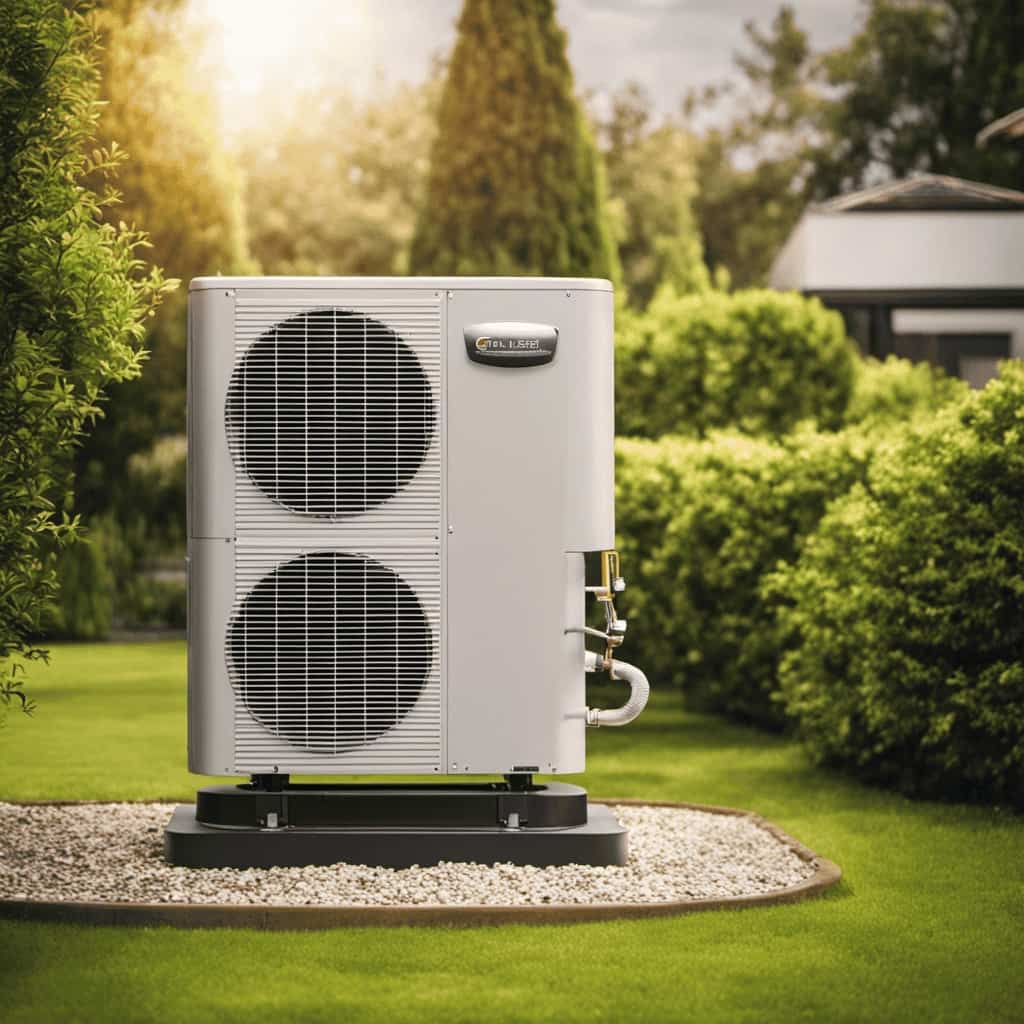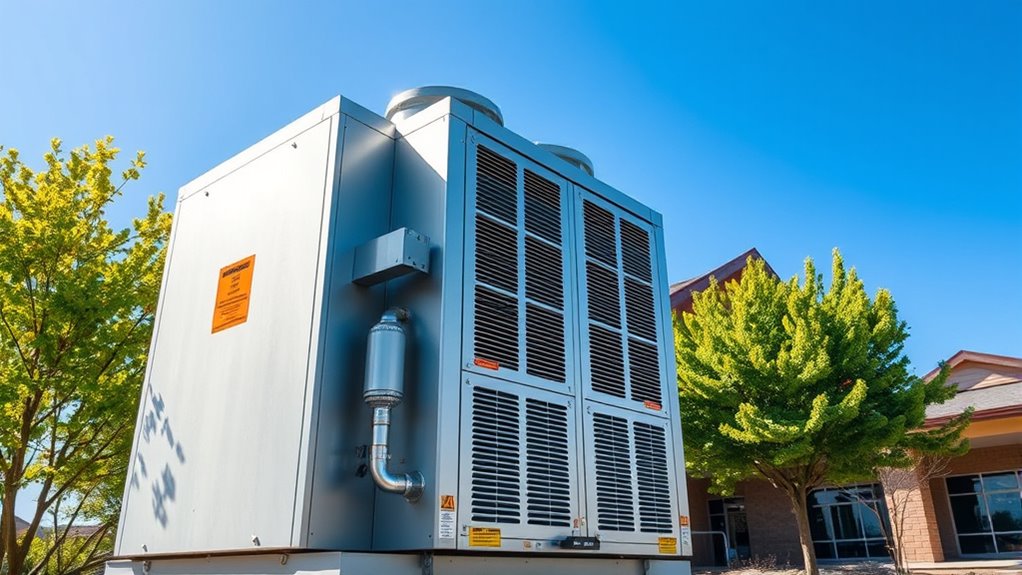

Using heat pumps for public buildings and community centers allows you to enjoy efficient, eco-friendly heating and cooling all year round. They transfer heat from air, ground, or water, reducing energy bills and lowering greenhouse emissions. Heat pumps also boost resilience during extreme weather and simplify your HVAC system. With smart controls and reliable performance, they support sustainability and long-term savings. Keep exploring to discover how these innovative systems can benefit your community.
Key Takeaways
- Heat pumps provide energy-efficient, environmentally friendly heating and cooling for public buildings and community centers.
- They operate efficiently in extreme weather, ensuring reliable climate control year-round.
- Implementing heat pumps reduces operational costs and lowers greenhouse gas emissions.
- They can be integrated with renewable energy sources like solar panels for increased sustainability.
- Using high-quality heat pump systems enhances building resilience and long-term maintenance savings.
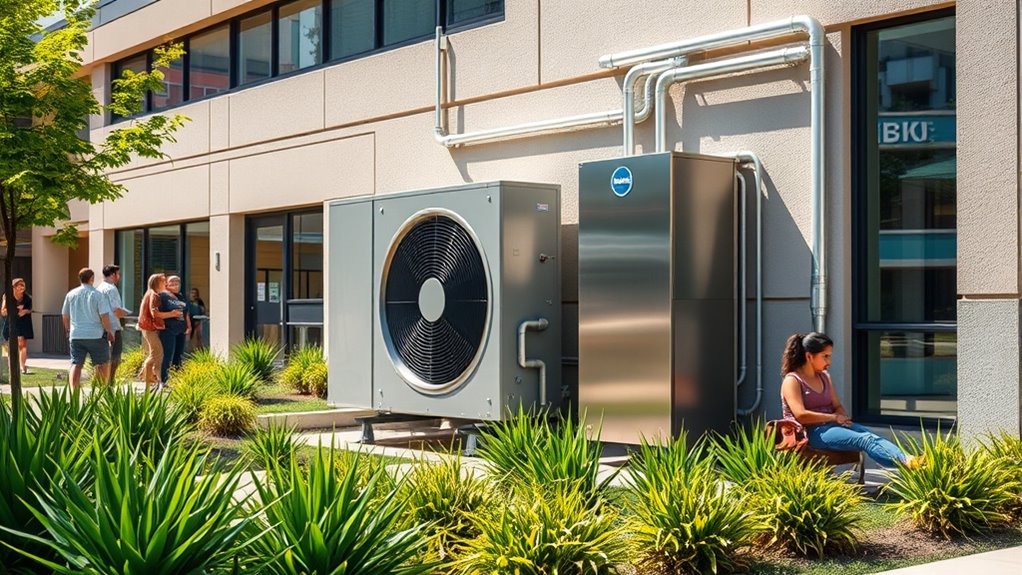
Heat pumps are becoming an increasingly popular choice for powering public buildings because they offer an energy-efficient and environmentally friendly way to heat and cool large spaces. As a decision-maker or facility manager, you’re likely seeking solutions that reduce operating costs while supporting sustainability goals. Heat pumps fit perfectly into this vision because they leverage renewable energy sources, such as ambient air, ground, or water, to provide heating and cooling, markedly lowering reliance on fossil fuels. This shift not only helps cut greenhouse gas emissions but also aligns with increasing regulatory pressures for greener building operations. By choosing heat pumps, you’re tapping into a technology that maximizes energy efficiency, making your community center or public building more sustainable and cost-effective over time.
When considering heat pumps, you’ll notice their ability to deliver high efficiency even during extreme weather conditions. Unlike traditional heating systems that burn fuel or consume vast amounts of electricity, heat pumps transfer heat rather than generate it, which means they consume less energy. This makes them particularly attractive for public buildings that operate year-round, providing reliable climate control while minimizing energy bills. Since they utilize renewable energy, the environmental impact diminishes, supporting broader community efforts to combat climate change. You’ll find that the initial investment in heat pump technology pays off through lower operational costs, longer equipment lifespan, and reduced maintenance needs—all contributing to a more sustainable and cost-efficient building.
Switching to heat pumps also enhances your building’s resilience and energy independence. With ongoing advancements in technology, modern heat pumps now offer smart controls and integration with renewable energy systems like solar panels. This integration further boosts your building’s efficiency by optimizing energy use and reducing reliance on external power sources. Plus, because heat pumps can be used for both heating and cooling, you simplify your HVAC system, reducing complexity and associated costs. As you implement these systems, you contribute to a cleaner environment and demonstrate your commitment to sustainable development, which can inspire community support and enhance your organization’s reputation. Additionally, selecting high-performance units similar to those used in Honda Tuning upgrades ensures reliable and efficient operation in diverse climates.
Frequently Asked Questions
How Do Heat Pumps Perform in Extreme Cold Climates?
In extreme cold climates, heat pumps can still perform well if you choose models designed for cold weather efficiency. They often include frost protection strategies like defrost cycles and insulated coils, which prevent icing and maintain performance. You might need backup heating systems for the coldest days, but with proper equipment and maintenance, heat pumps can reliably provide warmth even in severe winter conditions.
What Is the Typical Lifespan of a Heat Pump System?
A typical heat pump system lasts about 10 to 15 years with proper maintenance. When considering cost comparison, keep in mind that installation costs can be higher upfront but often lead to lower energy bills over time. Regular servicing extends the system’s lifespan, ensuring you get the most from your investment. Overall, choosing a high-quality unit and maintaining it well maximizes longevity and efficiency.
Are There Government Incentives for Installing Heat Pumps?
Did you know that many governments offer financial incentives for installing heat pumps? You can benefit from policy support that reduces upfront costs, making eco-friendly upgrades more affordable. These incentives vary by location but often include rebates, tax credits, or grants. Taking advantage of these programs can considerably lower your investment, encouraging wider adoption of sustainable heating solutions for public buildings and community centers.
How Much Space Is Needed for a Heat Pump Installation?
You’ll need enough installation space to accommodate the heat pump’s outdoor unit, typically about 3 to 4 feet of clearance on all sides for proper airflow and maintenance. Site requirements include level ground, good ventilation, and protection from harsh weather. Make sure the area is free of obstructions, debris, and direct sunlight, guaranteeing the best performance and easy access for servicing. Proper spacing ensures efficiency and longevity of your heat pump.
What Maintenance Is Required for Public Building Heat Pumps?
You need to regularly check your system efficiency, replace filters, and schedule professional inspections to keep your heat pump running smoothly. Filter replacement should be done every few months, especially during peak use, to guarantee ideal airflow. Additionally, inspecting components like coils and refrigerant levels helps maintain efficiency. Consistent maintenance prevents breakdowns, extends equipment lifespan, and keeps your public building’s climate control reliable and energy-efficient.
Conclusion
Switching to heat pumps for public buildings and community centers is a smart move that saves energy and cuts costs. Not only do you get efficient heating and cooling, but you also contribute to a greener planet. It’s a win-win situation that proves you don’t have to reinvent the wheel to make a difference. So, don’t wait for a perfect solution — take the plunge now and watch your community thrive while saving the environment.