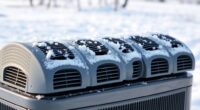
Heat pumps are a smart choice for retail stores and supermarkets because they efficiently provide heating and cooling, helping you cut energy costs and reduce your environmental impact. They transfer heat instead of generating it, which saves money over time, despite higher upfront costs. With modern systems offering smart controls and remote monitoring, you can better manage comfort levels and optimize energy use. Continue exploring to discover how these systems can transform your business’s climate solutions.
Key Takeaways
- Heat pumps improve energy efficiency and reduce operational costs in retail and supermarket environments.
- They provide both heating and cooling with a single, versatile system, simplifying HVAC management.
- Proper installation and maintenance maximize performance, longevity, and energy savings.
- Financial incentives and rebates help offset higher initial setup costs.
- Smart controls enable remote management and real-time monitoring for optimal climate and energy efficiency.

Heat pumps are transforming how retail stores and supermarkets manage their heating and cooling needs. These systems provide an efficient way to regulate indoor temperatures, making them an attractive option for businesses looking to cut energy costs and improve sustainability. Unlike traditional HVAC systems, heat pumps transfer heat instead of generating it, which markedly boosts energy efficiency. This means your store or supermarket can maintain a comfortable environment while consuming less electricity, helping you reduce operational expenses over time.
Heat pumps boost energy efficiency, reducing costs for retail stores and supermarkets.
One of the main concerns when switching to heat pumps is the installation costs. While the initial investment might seem higher compared to conventional heating and cooling units, it’s important to weigh the long-term savings. Heat pumps tend to have lower operating costs due to their energy-efficient design, which can offset the upfront expenses. Additionally, many governments and energy programs offer incentives or rebates to encourage businesses to adopt greener technologies, further easing the financial burden of installation. When planning for installation, it’s essential to work with experienced professionals who can assess your space and recommend the right system size. Proper installation guarantees the heat pump functions at its best, maximizing energy savings and longevity.
Another factor to evaluate is the type of heat pump suitable for your retail environment. Air-source heat pumps are the most common, easy to install, and suitable for moderate climates. However, if you’re in a colder region, ground-source or geothermal heat pumps might be a better fit, providing consistent heating even during harsh winters. Although these systems involve higher installation costs due to drilling and excavation, they deliver superior energy efficiency and durability, making them a worthwhile investment in the long run.
You’ll also benefit from the versatility of heat pumps, which can serve both heating and cooling needs with a single system. This dual functionality simplifies your HVAC setup, reduces maintenance requirements, and minimizes downtime. Plus, modern heat pumps come equipped with smart controls, allowing you to adjust temperatures remotely and monitor energy consumption in real-time. This level of control enables you to optimize energy use further, ensuring your store remains comfortable for customers and staff while keeping expenses in check.
Frequently Asked Questions
Can Heat Pumps Provide Both Heating and Cooling Simultaneously?
Yes, heat pumps can provide both heating and cooling simultaneously thanks to their dual function design. This feature allows you to maintain a comfortable environment year-round, adapting to changing conditions. By switching between heating and cooling modes efficiently, heat pumps enhance energy efficiency, reducing your energy bills. You can enjoy consistent comfort without sacrificing efficiency, making them a smart choice for retail stores and supermarkets looking to optimize their climate control systems.
How Do Heat Pumps Perform in Extremely Cold Climates?
In extremely cold climates, heat pumps can still perform well if they’re frost-resistant and properly insulated. Up to 80% of their efficiency remains at temperatures as low as -15°C, but you’ll need enhanced insulation and defrost features to prevent frost buildup. These measures ensure reliable heating, even during the coldest days, helping you maintain comfort without sacrificing energy efficiency. Proper system design is key to maximum performance.
Are Heat Pumps Suitable for Large Retail Spaces?
Yes, heat pumps are suitable for large retail spaces. They integrate well with retail space design and can efficiently heat or cool large areas. To maximize energy efficiency strategies, consider zoning systems and proper insulation. Heat pumps provide consistent temperature control, reducing energy costs. When properly sized and installed, they’re a reliable, eco-friendly option that supports your retail space’s comfort and sustainability goals.
What Maintenance Is Required for Retail Heat Pump Systems?
Think of your retail heat pump system as a well-oiled machine; it needs regular check-ups to stay efficient. You should regularly inspect and clean filters, monitor refrigerant levels, and guarantee proper refrigerant management to maintain system efficiency. Scheduling professional maintenance at least once a year helps prevent breakdowns, keeps the system running smoothly, and maximizes energy savings. Staying proactive ensures your store stays comfortable and operational year-round.
How Long Is the Typical Lifespan of a Retail Heat Pump?
You can expect a retail heat pump to last around 10 to 15 years with proper maintenance. Its lifespan depends on factors like seasonal efficiency and regular servicing. While installation costs might seem high initially, investing in quality equipment can extend its life. Keep an eye on system performance and schedule routine check-ups to guarantee you get the most out of your heat pump and maximize its durability.
Conclusion
Switching to heat pumps for your retail store or supermarket is like opening a window to a greener future. They offer efficient, reliable heating and cooling that can cut costs and reduce your carbon footprint. By embracing this technology, you’re not just keeping your store comfortable—you’re riding the wave of sustainability. Make the smart move today, and watch your energy savings grow like a well-watered garden, blossoming into a brighter, cleaner tomorrow.