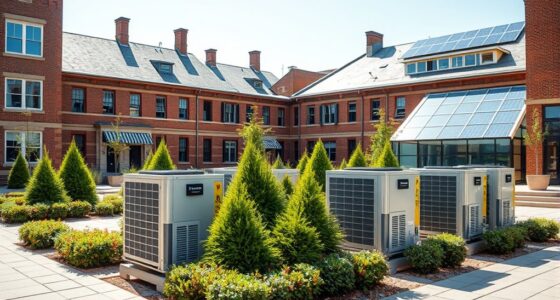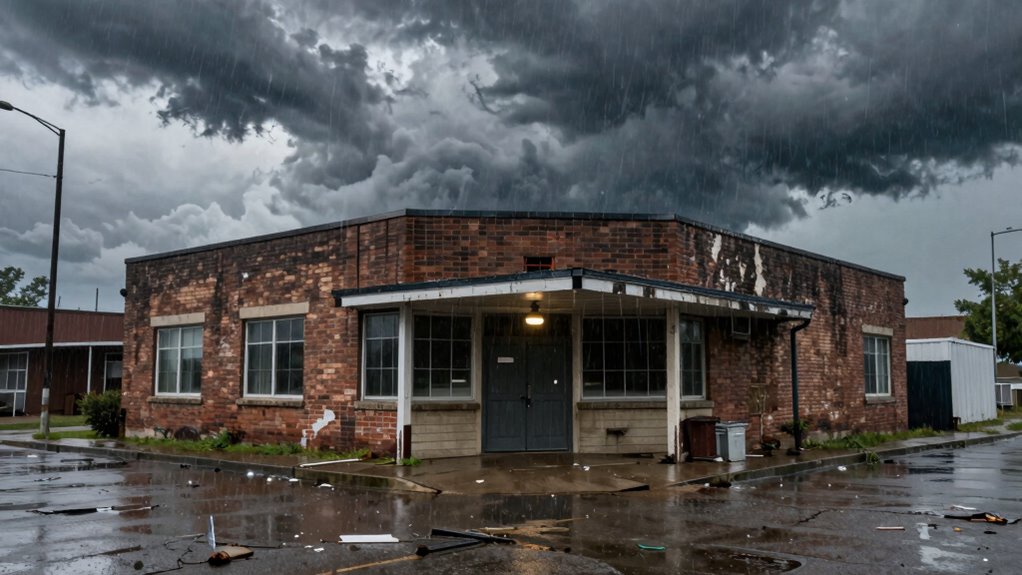

You need community buildings to prioritize resilience over raw capacity because resilience guarantees structures can withstand natural disasters and recover quickly, protecting lives and property. Simply enlarging or increasing capacity doesn’t assure safety during extreme events if the buildings aren’t designed to handle environmental stresses. Resilient designs and proper maintenance reduce vulnerabilities and support ongoing safety, making your community stronger. If you’re curious about practical ways to enhance resilience, there’s more to discover below.

Get backup power and energy gear delivered free — and shop member deals
- Fast, free delivery on millions of items
- Access to Prime Big Deal Days deals on October 6–7
- Prime Video, Amazon Music and more included
Key Takeaways
- Resilience ensures buildings can withstand natural disasters, protecting lives and property beyond mere capacity.
- Adaptable structures facilitate rapid recovery, minimizing downtime and community disruption after crises.
- Sustainable design enhances durability, reducing long-term repair costs and environmental impact.
- Structural reinforcement prevents collapse in extreme weather, addressing vulnerabilities not covered by capacity alone.
- Emergency preparedness features enable safe evacuation and operational continuity during emergencies.
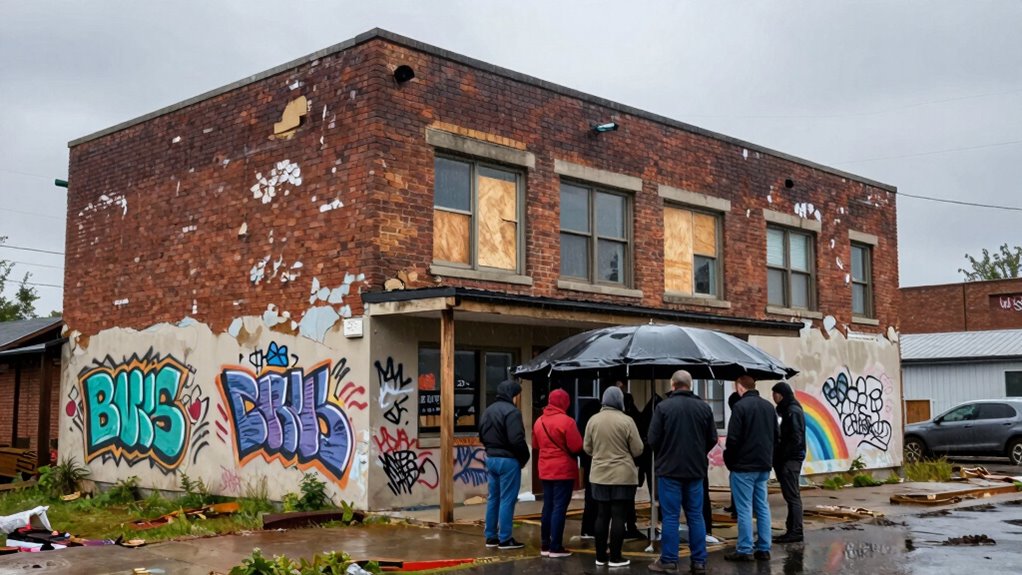
How resilient are your community buildings in the face of natural disasters and changing climates? It’s a question that gets to the heart of what truly matters when it comes to supporting your community’s safety and well-being. Building capacity alone isn’t enough if your structures aren’t designed to withstand the unpredictable forces of nature. Resilience goes beyond just having enough space or resources; it’s about creating buildings that can adapt, endure, and recover quickly. That’s where sustainable design plays an essential role. Incorporating sustainable materials and construction practices ensures that your community buildings are not only environmentally friendly but also stronger and more adaptable in emergencies. Sustainable design emphasizes longevity, reducing vulnerability to weather extremes and structural damage, which is critical during storms, floods, or earthquakes. Additionally, integrating outdoor transformation essentials like fire pits, outdoor ovens, and seating areas can promote community cohesion and provide versatile spaces for gatherings during recovery efforts. Proper maintenance and regular safety assessments also contribute significantly to building structural resilience, ensuring that your facilities remain prepared for unexpected events. Moreover, understanding and implementing disaster-resistant construction techniques can further enhance the durability of your community buildings in the face of extreme conditions. Emergency preparedness is another key component. It’s imperative that your community buildings aren’t just resilient in their physical structure but also in their operational readiness. When disaster strikes, you want spaces that facilitate quick responses, support safe evacuations, and serve as reliable hubs for relief efforts. This means planning for clear evacuation routes, having backup power supplies, and ensuring communication systems are robust and functional even when the grid goes down. Resilience isn’t just about reacting after a disaster; it’s about proactively designing spaces that minimize risks and maximize preparedness. You might think that increasing raw capacity—more floors, larger spaces, or additional facilities—would be enough to meet community needs during crises. However, capacity without resilience can quickly become a liability if your buildings aren’t prepared for extreme conditions. Large, unreinforced structures can collapse or become unsafe, leaving people vulnerable instead of protected. Resilience means you need thoughtful design strategies that integrate sustainable materials and techniques to handle environmental stresses. It’s also crucial to consider climate adaptation measures that can help mitigate the impact of changing weather patterns and sea-level rise. Incorporating innovative construction methods inspired by research in sound engineering or materials science can further improve building performance. It also involves regular maintenance and drills to keep emergency preparedness measures sharp. Ultimately, resilience in community buildings isn’t just a technical concern; it’s a moral one. You owe it to your community to guarantee that your buildings can serve as safe havens in times of crisis. By prioritizing sustainable design and emergency preparedness, you create spaces that are not only capable of supporting your community now but are also prepared to face whatever challenges the future may hold. Resilience isn’t just about surviving—it’s about thriving through adversity, ensuring that your community remains strong and secure no matter what comes your way.
disaster-resistant community building materials
As an affiliate, we earn on qualifying purchases.
As an affiliate, we earn on qualifying purchases.
Frequently Asked Questions
How Is Resilience Different From Building Capacity?
Resilience differs from building capacity by focusing on structural durability and social cohesion during crises, rather than just increasing size or resources. While capacity boosts a community’s ability to handle normal demands, resilience guarantees the building can withstand shocks and recover quickly. You need both, but resilience emphasizes adaptability, durability, and maintaining social bonds to sustain services and safety when faced with unexpected challenges.
What Are Key Factors Influencing Community Building Resilience?
Think of resilience as the sturdy roots keeping a tree standing tall through storms. Your community’s resilience hinges on factors like thoughtful urban planning and strong social cohesion. Well-designed spaces foster adaptability, while social bonds create a safety net during crises. When these elements work together, your community can withstand shocks, bounce back faster, and grow even stronger—making resilience more essential than just increasing capacity.
Can Resilience Measures Be Cost-Effective for Community Buildings?
Yes, resilience measures can be cost-effective for community buildings. You should conduct a cost-benefit analysis to weigh the upfront costs against long-term savings and benefits. Additionally, explore funding opportunities like grants or government programs that support resilience projects. Implementing affordable, strategic resilience enhancements often results in reduced damage during disasters, lower maintenance costs, and increased community safety, making these measures a smart investment.
How Quickly Can Resilience Improvements Be Implemented?
Implementation timelines for resilience improvements can vary depending on the project’s scope, but small upgrades often take a few months, while larger projects may need a year or more. Funding challenges can slow down progress, but with proper planning and community support, you can prioritize critical upgrades to speed up implementation. Staying flexible and seeking grants or partnerships can help overcome delays caused by funding issues.
What Are Examples of Successful Resilience Strategies?
You see, resilient community buildings thrive through adaptive design and risk mitigation, not just size. Successful strategies include flexible spaces that adapt to emergencies, integrating green infrastructure to combat climate risks, and installing backup power systems for continuity. These measures guarantee your community remains resilient during crises, fostering safety and stability. Embracing adaptive design transforms vulnerability into strength, proving that resilience is about smart planning, not just raw capacity.
emergency evacuation signage for community centers
As an affiliate, we earn on qualifying purchases.
As an affiliate, we earn on qualifying purchases.
Conclusion
As you stand in a community building resilient against storms and time, you see more than bricks and mortar—you see a sanctuary where lives intertwine and hope endures. When resilience is your foundation, the building becomes a steadfast guardian, weathering every challenge with quiet strength. It’s a place where laughter echoes in the face of adversity, and the spirit of community shines brighter than any raw capacity ever could. You realize, resilience isn’t just a trait—it’s the heartbeat of connection.
sustainable building materials for resilience
As an affiliate, we earn on qualifying purchases.
As an affiliate, we earn on qualifying purchases.
backup power generators for community buildings
As an affiliate, we earn on qualifying purchases.
As an affiliate, we earn on qualifying purchases.
Fall Picks
fall essentials
As an affiliate, we earn on qualifying purchases.