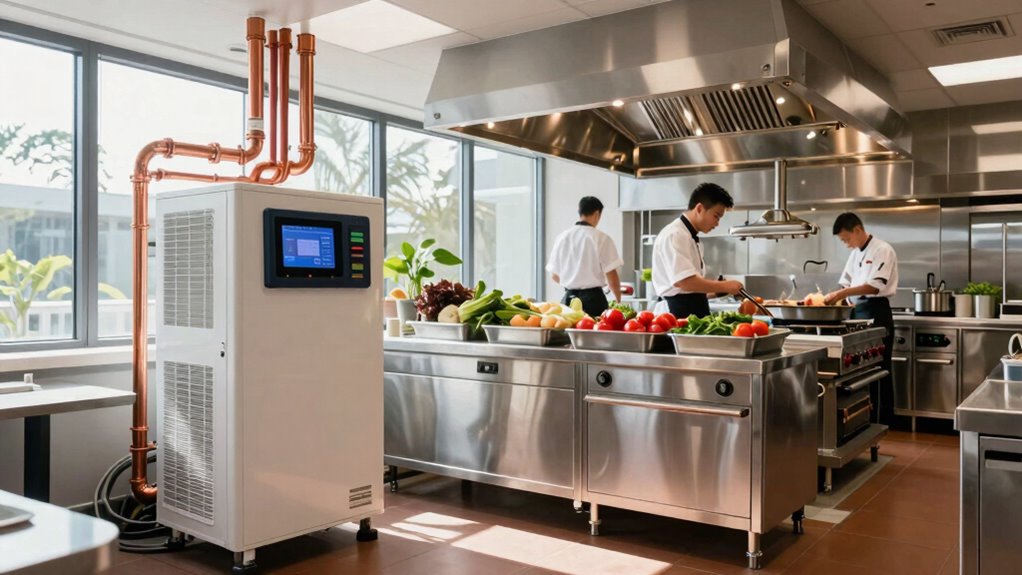

Before electrifying your restaurant’s HVAC, you need to assess your current system’s compatibility and determine if your electrical infrastructure can handle the upgrade. It’s essential to work with professionals early to develop a tailored plan, including potential upgrades to electrical panels and wiring. Efficient systems like heat pumps can cut energy costs, but you must guarantee your building’s layout and insulation are optimized. Staying informed about regulations will help you stay compliant and avoid future challenges—keep exploring to learn more.

Get backup power and energy gear delivered free with Prime
- Fast, free delivery on millions of items
- Prime Video, Amazon Music and more included
- Member-only deals all year
Key Takeaways
- Conduct a thorough infrastructure assessment to ensure electrical systems can support upgraded electric HVAC equipment.
- Engage HVAC and electrical professionals early to develop a tailored, efficient electrification plan.
- Choose high-efficiency electric systems like heat pumps or VRF units to reduce energy costs and environmental impact.
- Plan for necessary electrical upgrades, such as higher-capacity panels and wiring, to accommodate new systems.
- Stay informed on local regulations and compliance requirements that may influence system choices and upgrades.
As restaurants seek to reduce their environmental impact and improve energy efficiency, electrifying HVAC systems has become a key strategy. Shifting from traditional gas or oil-based systems to electric ones can significantly lower your carbon footprint while helping you stay ahead of evolving regulations. However, before jumping into electrification, you need to understand how these changes will impact your energy efficiency goals and guarantee you remain compliant with local regulations.
First, assess your building’s existing infrastructure. Not all HVAC systems are immediately compatible with electric upgrades, so you may need to invest in infrastructure improvements, such as higher-capacity electrical panels or upgraded wiring. These modifications can influence your initial costs but are essential for maximizing energy efficiency and guaranteeing your new system operates smoothly. Consulting with professionals early in the process helps identify potential challenges and develop a tailored plan suited to your restaurant’s size, layout, and usage patterns. Additionally, understanding your current energy consumption patterns can help tailor the system to optimize performance and savings. Implementing energy management strategies can further enhance your system’s efficiency and cost savings over time. Incorporating advanced control systems can also help fine-tune energy use and improve overall system responsiveness. Moreover, understanding the regulatory landscape is crucial to ensure compliance with current and upcoming standards that may impact your electrification plans.
Assess your infrastructure needs early to ensure smooth electric HVAC upgrades and maximize energy efficiency.
Next, consider the energy efficiency benefits of electric HVAC systems. Modern electric heat pumps and VRF (Variable Refrigerant Flow) systems are highly efficient, utilizing less energy than traditional heating and cooling solutions. They can provide both heating and cooling from a single system, reducing redundancy and streamlining maintenance. This efficiency translates into lower utility bills and a smaller environmental impact. Properly integrating these systems can also improve color accuracy in your indoor environment, creating a more comfortable atmosphere for staff and customers. However, to fully realize these benefits, you’ll need to optimize your building’s insulation, sealing, and airflow management, ensuring that the system works efficiently without overworking during extreme weather conditions. Regularly monitoring system performance can also help identify opportunities for further energy savings and operational improvements.
electric heat pump for restaurant HVAC
As an affiliate, we earn on qualifying purchases.
As an affiliate, we earn on qualifying purchases.
Frequently Asked Questions
What Is the Typical Timeline for HVAC Electrification Projects?
You can expect an HVAC electrification project to take around 3 to 6 months, depending on your restaurant’s size and specific needs. During this time, you’ll improve energy efficiency and guarantee equipment durability. Planning phase, equipment selection, and installation are key steps. Coordinating with contractors and suppliers helps minimize delays, so staying proactive ensures your project stays on track and delivers long-term savings and reliable performance.
How Does Electrification Impact Restaurant Indoor Air Quality?
Electrification improves indoor air quality by reducing emissions from traditional HVAC systems and enhancing ventilation standards. While it minimizes indoor pollutants, you must guarantee proper ventilation to manage humidity and odors. Good indoor air quality depends on balancing ventilation with effective filtration. By upgrading to electric systems, you create a healthier environment, but you need to stay vigilant about maintaining ventilation standards to keep air fresh and safe for your staff and customers.
Are There Government Incentives for Electrifying Restaurant HVAC Systems?
Yes, there are government incentives available for electrifying restaurant HVAC systems. You can explore various incentive programs and government grants designed to promote clean energy upgrades. These programs often provide financial assistance, making it more affordable to switch to electric HVAC solutions. By taking advantage of these incentives, you not only reduce your environmental impact but also lower long-term operating costs, ensuring a smarter, more sustainable investment for your restaurant.
What Is the Expected Cost Difference Between Traditional and Electric HVAC?
The cost comparison between traditional and electric HVAC systems varies, but electric options generally have higher installation expenses upfront. You might expect to pay 20-50% more initially for electric systems due to equipment and setup costs. However, electric HVACs often save you money long-term through lower energy bills and maintenance. Carefully evaluate installation expenses against potential savings to decide which system best fits your restaurant’s budget and sustainability goals.
How Can Restaurants Ensure Minimal Operational Disruptions During Conversion?
You can guarantee minimal disruptions by planning your conversion during off-peak hours and communicating clearly with staff and customers. Prioritize energy efficiency and maintenance considerations by scheduling professional inspections and training staff beforehand. This approach helps you avoid operational hiccups, maintain comfort, and maximize the benefits of electric HVAC. Proper planning and expert guidance will keep your restaurant running smoothly throughout the changeover, without sacrificing service quality.
VRF system for commercial buildings
As an affiliate, we earn on qualifying purchases.
As an affiliate, we earn on qualifying purchases.
Conclusion
As you consider electrifying your restaurant’s HVAC, remember that embracing this change is like stepping into the future with a nod to the past—much like a vintage steamer adapting to electric power. It’s a wise move that can boost efficiency, reduce costs, and show your commitment to sustainability. Don’t let this opportunity slip away; the energy of tomorrow is here today, and with it, a brighter, greener future for your restaurant.
high capacity electrical panels for HVAC
As an affiliate, we earn on qualifying purchases.
As an affiliate, we earn on qualifying purchases.
energy management control systems for restaurants
As an affiliate, we earn on qualifying purchases.
As an affiliate, we earn on qualifying purchases.
Halloween Picks
halloween
As an affiliate, we earn on qualifying purchases.