Climate influences how your building manages thermal energy by shaping the need for specific design features. In hot areas, you’ll want solar shading and insulation to reduce heat gain and keep interiors cool. In colder climates, you’ll focus on insulation and glazing to retain warmth. Knowing how climate impacts heat flow helps you select the right materials and strategies, improving comfort and efficiency. Stay with us to discover detailed methods tailored for various climates.
Key Takeaways
- Climate determines whether buildings need to focus on heat retention or heat dissipation strategies.
- Hot climates require shading and insulation to reduce heat gain and maintain indoor cooling.
- Cold regions emphasize insulation and thermal barriers to minimize heat loss.
- Humid environments demand moisture-resistant materials to prevent thermal inefficiencies caused by humidity.
- Overall, climate influences the choice of building materials and design features to optimize thermal energy transfer.

Understanding how climate influences thermal energy in buildings is essential for designing efficient and comfortable spaces. Climate dictates the natural flow of heat in and out of a building, affecting how you manage indoor temperatures and energy consumption. In hot climates, for instance, you need strategies to reduce heat gain, while in colder regions, your focus shifts to retaining warmth. Recognizing these climate-driven challenges allows you to select appropriate design features that optimize thermal comfort and energy efficiency.
Understanding climate helps tailor building design for optimal thermal comfort and energy efficiency.
One of the most effective ways to control heat transfer is through solar shading. In sunny, warm climates, solar shading devices like overhangs, louvers, or shading screens can block excessive sunlight from entering windows. This prevents unwanted heat gain during peak hours, keeping interiors cooler and reducing reliance on air conditioning. Proper placement and sizing of shading elements are critical, as they need to be tailored to the sun’s trajectory and the building’s orientation. By integrating solar shading techniques into your design, you can considerably decrease cooling loads and improve occupant comfort.
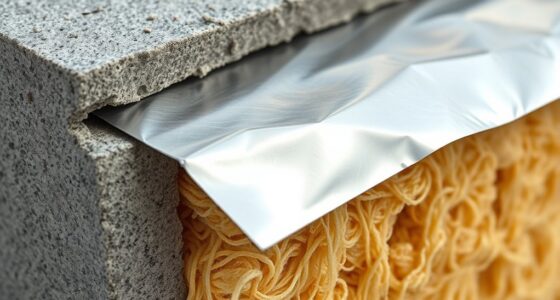
Equally important are insulation materials, which serve as barriers to heat transfer through walls, roofs, and floors. In colder climates, high-quality insulation helps retain heat inside the building, minimizing heat loss and maintaining a warm indoor environment. Conversely, in hot climates, insulation materials can also prevent external heat from penetrating the building envelope, reducing the need for mechanical cooling. When choosing insulation, consider its thermal resistance (R-value), durability, and compatibility with local climate conditions. Effective insulation works hand-in-hand with solar shading, creating a detailed strategy to manage thermal energy transfer regardless of external weather patterns.
Climate influences not only the design elements but also the materials you choose. For example, in humid environments, you might opt for insulation materials that resist mold and moisture damage, while in dry, hot regions, lightweight, reflective insulation can help deflect radiant heat. Understanding these nuances allows you to make informed decisions that enhance building performance and occupant well-being.
In essence, adapting your building design to local climate conditions through thoughtful use of solar shading and insulation materials is key. These strategies help you control thermal energy transfer, ensuring your space remains comfortable and energy-efficient throughout the year. By paying attention to climate-specific needs, you can reduce energy costs, lower environmental impact, and create a healthier indoor environment. The right combination of shading and insulation tailored to your climate not only improves comfort but also maximizes the building’s sustainability and resilience over time. Incorporating appropriate building materials that suit your climate can further optimize energy performance and durability.
Frequently Asked Questions
How Does Humidity Influence Heat Transfer in Buildings?
Humidity influences heat transfer in buildings by affecting humidity control and vapor diffusion. When humidity levels are high, moisture moves more easily through materials, increasing vapor diffusion and reducing insulation effectiveness. You should manage humidity to prevent excess moisture, which can lead to heat loss and mold growth. Proper humidity control helps maintain energy efficiency and comfort, ensuring that heat transfer stays within ideal levels and protecting your building’s structural integrity.
What Role Does Wind Speed Play in Building Thermal Efficiency?
Wind speed markedly impacts your building’s thermal efficiency by influencing airflow patterns around it. Faster winds can enhance natural ventilation, reducing the need for mechanical cooling or heating. If your building is near wind turbines, you might also benefit from their energy generation, further improving overall efficiency. By understanding wind dynamics, you can optimize insulation, window placement, and ventilation systems to maximize comfort and reduce energy costs effectively.
How Do Seasonal Temperature Variations Affect Insulation Performance?
You should know that seasonal temperature swings can reduce insulation performance by up to 20%. When temperatures fluctuate, thermal bridging occurs more often, allowing heat to escape or enter your building. This accelerates insulation degradation over time, making your home less energy-efficient. To combat this, consider upgrading to high-quality insulation and sealing gaps, especially before extreme seasons, to maintain comfort and save on energy costs year-round.
Can Climate Change Impact Long-Term Building Energy Strategies?
Yes, climate change can impact your long-term building energy strategies. As temperatures rise, you’ll need to adapt by increasing renewable energy integration to reduce reliance on fossil fuels. Urban heat islands intensify cooling demands, so implementing strategies like green roofs becomes essential. Planning for these changes now helps you stay resilient, improves energy efficiency, and supports sustainability goals despite a shifting climate.
What Are the Best Materials for Different Climate Zones?
When it comes to choosing insulation materials and facade design, you’ve got to play to the climate’s tune. For cold zones, opt for thick foam or mineral wool to keep heat in. In hot climates, reflective surfaces and breathable materials help shed heat. A well-designed facade and insulation work hand in glove, ensuring your building stays comfy no matter what Mother Nature throws your way.
Conclusion
As you consider how climate influences thermal energy transfer, remember that your building’s design becomes a silent guardian or a ruthless adversary. Just as nature’s climate paints the backdrop of your comfort, your choices in insulation and materials shape your energy efficiency. Embrace this dance with the environment—turning the unpredictable into your ally. After all, isn’t understanding climate’s role the key to unblocking a more sustainable, comfortable future?