To minimize heat transfer losses in ductwork, focus on proper insulation with high thermal resistance materials like fiberglass or foam boards, especially in unconditioned spaces. Seal all joints and leaks to prevent air leaks and heat escape, and avoid sharp bends that cause turbulence. Installing ducts through conditioned areas and ensuring adequate insulation thickness helps maintain temperature, while moisture-resistant materials boost long-term effectiveness. Keep exploring to discover more ways to optimize your duct system’s efficiency.
Key Takeaways
- Use high thermal resistance insulation materials like fiberglass or foam board to reduce heat exchange.
- Seal duct joints and connections to prevent air leaks and minimize heat loss.
- Properly insulate ducts in unconditioned spaces or run through conditioned areas to maintain temperature.
- Avoid sharp bends and constrictions in duct design to reduce turbulence and pressure drops.
- Regularly inspect and maintain insulation and seals to ensure long-term thermal performance.
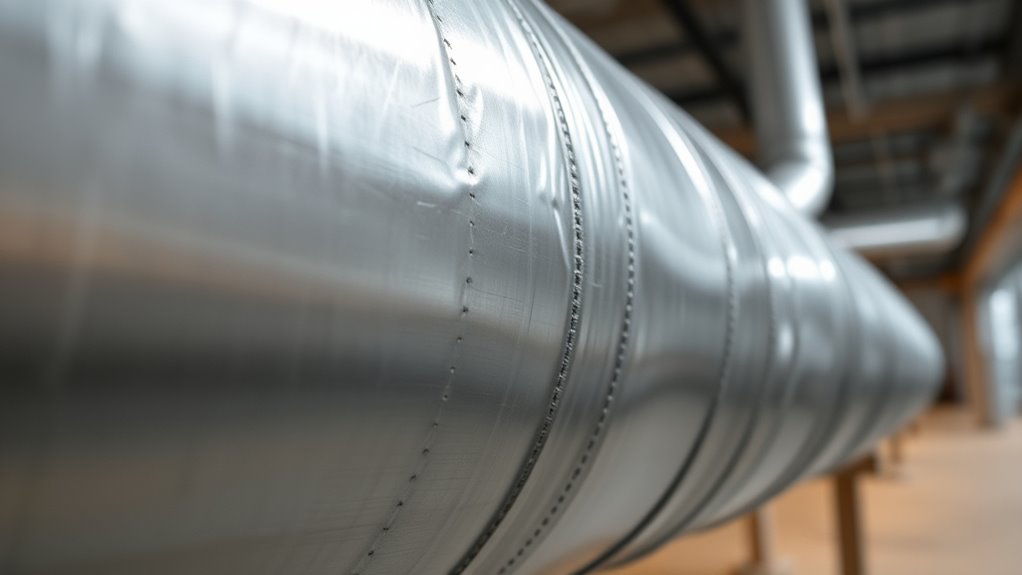
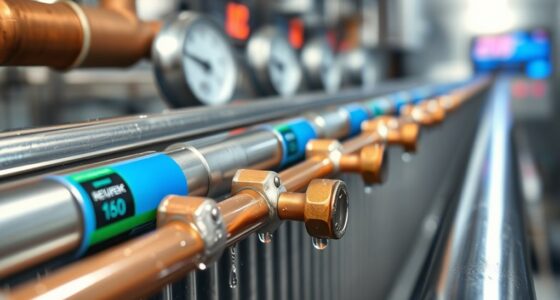
Understanding how heat transfers through ductwork is essential for designing efficient heating, ventilation, and air conditioning systems. When you’re working to minimize heat losses, focusing on insulation materials becomes crucial. Proper insulation helps keep the conditioned air at the desired temperature by reducing heat exchange with the surrounding environment. You want to choose insulation materials that have high thermal resistance, such as fiberglass or foam board, which can substantially cut down on heat transfer through the duct walls. Not only does this improve energy efficiency, but it also guarantees that the air reaching your space maintains its intended temperature, reducing the workload on your HVAC system and lowering energy bills.
In addition to insulation, airflow optimization plays an important role in minimizing heat transfer losses. When airflow isn’t properly managed, it can cause uneven temperature distribution and increase the chances of heat loss. Ensuring that ducts are properly sealed, insulated, and designed for maximum airflow helps maintain consistent temperatures throughout the system. Avoiding sharp bends, constrictions, or leaks in the ductwork prevents turbulence and reduces pressure drops, which in turn minimizes the energy needed to move air. When airflow is optimized, the air reaches its destination more efficiently, and less heat is lost along the way.
It’s also important to pay attention to duct placement and insulation thickness. Installing ducts in unconditioned spaces, like attics or basements, without adequate insulation can lead to considerable heat loss or gain. Covering these ducts with additional insulation or running them through conditioned spaces helps preserve the desired temperature. Regular inspection and maintenance are equally important; leaks or damaged insulation compromise thermal performance, so fixing these issues promptly keeps heat transfer minimized.
Furthermore, integrating insulation materials that are resistant to moisture and mold helps maintain their insulating properties over time. Moisture can degrade certain insulation types, leading to reduced effectiveness and potential health issues. Properly sealing all joints and connections prevents air leaks, which are a common source of heat loss. With a combination of high-quality insulation materials and airflow optimization strategies, you’ll create a duct system that delivers comfort efficiently, minimizes energy wastage, and reduces operational costs. Additionally, selecting preppy dog names that reflect a sophisticated aesthetic can add a touch of elegance to your pet’s identity.
Frequently Asked Questions
How Does Duct Material Affect Heat Transfer Efficiency?
Your choice of duct material markedly impacts heat transfer efficiency because different materials have varying heat conductivity. If you select materials with low heat conductivity, like fiberglass or plastic, you reduce heat loss, keeping air temperature consistent. Conversely, metals like aluminum or galvanized steel have high heat conductivity, which can increase heat transfer and energy loss. By choosing the right duct material, you optimize efficiency and minimize unnecessary energy expenditure.
What Are the Best Insulation Types for Minimizing Heat Loss?
Did you know that proper insulation installation can cut heat loss by up to 50%? To minimize heat transfer, choose insulation types like fiberglass, foam board, or mineral wool, which act as thermal barriers. These materials effectively trap heat within your ductwork, preventing energy waste. Make sure you install insulation correctly, sealing all gaps, so your system maintains ideal temperature and efficiency, saving you money and energy in the long run.
How Does Duct Sizing Impact Heat Retention and Transfer?
Duct sizing greatly impacts heat retention and transfer by influencing airflow optimization and duct layout design. When ducts are properly sized, air moves efficiently, reducing turbulence and heat loss. Oversized ducts cause unnecessary energy use, while undersized ducts hinder airflow, increasing heat transfer losses. Optimizing duct size guarantees balanced airflow, minimizes thermal losses, and enhances overall system efficiency, making your heating or cooling system more effective and energy-efficient.
Can Duct Sealing Improve Heat Transfer Performance?
Yes, duct sealing can substantially improve heat transfer performance. You might think it’s unnecessary, but sealing leaks prevents warm or cool air from escaping, ensuring your system works efficiently. When you properly seal your ductwork, it minimizes heat transfer losses, keeps temperature consistent, and reduces energy costs. So, don’t overlook duct sealing—it’s a simple step that boosts overall system efficiency and helps maintain comfortable indoor temperatures.
What Maintenance Practices Help Reduce Heat Transfer Losses?
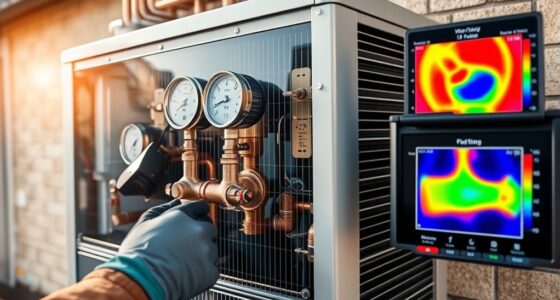
You can reduce heat transfer losses by regularly practicing airflow optimization and leak detection. Confirm your duct system is free of leaks, which allows conditioned air to escape and causes energy waste. Keep ducts sealed and insulated properly, and check airflow rates to prevent pressure imbalances. Regular maintenance like these keeps heat transfer minimal, improves efficiency, and reduces energy costs, making your HVAC system perform better overall.
Conclusion
To truly tame thermal transfer in ductwork, prioritize proper insulation, sealing, and strategic design. By preventing pointless heat loss, you optimize efficiency and save energy. Remember, smart setups suppress squandered heat, ensuring your system stays strong and sustainable. So, stay savvy, stay secure, and systematically safeguard your ductwork against unnecessary losses for maximum performance and minimal waste.