
Solar backup power systems for homes provide a reliable way to keep essential appliances running during power outages or grid disruptions. The best options balance capacity, portability, and cost, but tradeoffs often involve size, complexity, and price. The ECO-WORTHY SL7000 stands out for its high capacity and stackability, making it ideal for larger homes. Meanwhile, the Jackery Explorer 1000 offers a portable, easy-to-use solution for smaller backup needs. Readers should weigh factors like capacity versus portability and budget versus scalability. Continue reading for a detailed breakdown of the top picks and what to consider before buying.

Get backup power and energy gear delivered free with Prime
- Fast, free delivery on millions of items
- Prime Video, Amazon Music and more included
- Member-only deals all year
Key Takeaways
- Capacity and scalability differentiate high-end systems from smaller portable options.
- Portability is key for those wanting backup during outdoor activities or partial home use.
- Higher wattage and battery capacity generally mean increased cost and size, requiring tradeoffs.
- Systems with integrated solar panels simplify setup but may limit flexibility in panel selection.
- Durability and build quality are critical for long-term reliability, especially in harsh climates.
| ECO-WORTHY 10240Wh SL7000 Stackable Power Station with Solar Inverter |  | Best Expandable Whole-Home System | Power Rating: 7000W | Capacity: 10.24 kWh (expandable to 15.36 kWh) | Max Solar Input: 4400W | VIEW LATEST PRICE | See Our Full Breakdown |
| BROWEY S1600 Portable Power Station with Built-in Solar Panel |  | Best for Beginners | Continuous Output: 1600W (3200W peak) | Battery Capacity: 1024Wh LiFePO4 | Battery Lifespan: 3000+ cycles to 80% | VIEW LATEST PRICE | See Our Full Breakdown |
| BLAVOR S1600 Portable Power Station with 40W Solar Panel, 1024Wh LiFePO4 Battery and 1600W Output |  | Best Value All-in-One | Battery Capacity: 1024Wh LiFePO4 | Rated Output: 1600W (3200W peak) | Built-in Solar Panel: Foldable 40W | VIEW LATEST PRICE | See Our Full Breakdown |
| Anker SOLIX S2000 Portable Power Station, 2,010Wh, 1,500W |  | Best Compact Home Backup | Battery Capacity: 2,010Wh LFP | Battery Life: 10,000 cycles / 15 years | Continuous Output: 1,500W (3,000W peak) | VIEW LATEST PRICE | See Our Full Breakdown |
| HumsiENK 15.36kWh Home Backup System, 48V 300Ah LiFePO4 Battery with 8000W Hybrid Split Phase Inverter |  | Best Premium Off-Grid Setup | Battery Capacity: 15.36kWh (48V 300Ah LiFePO4) | Inverter Output: 8000W (10,000W surge) | Output Voltage: 120/240V split phase | VIEW LATEST PRICE | See Our Full Breakdown |
| Jackery Explorer 1000 v2 Portable Power Station, 1070Wh, 1500W |  | Best for Portable Emergency Power on the Go | Battery Capacity: 1070Wh | AC Output: 1500W | Surge Output: 3000W | VIEW LATEST PRICE | See Our Full Breakdown |
| EF ECOFLOW DELTA Pro Ultra 12kWh Power Station with Extra Battery |  | Best for Whole-Home Backup with Scalability | Included Battery Capacity: 12kWh | AC Output: 7200W | Voltage Support: 120V and 240V | VIEW LATEST PRICE | See Our Full Breakdown |
| Jackery HomePower 3600 Plus Portable Power Station with 2x 200W Solar Panels |  | Best for Whole-Home Backup with Solar Integration | AC Output: 3600W | Capacity: 3584Wh | Expandable Capacity: Up to 21kWh | VIEW LATEST PRICE | See Our Full Breakdown |
| PECRON F3000LFP Portable Power Station, 3072Wh LiFePO4 Battery, 3600W Output |  | Best for Demanding Home and Off-Grid Use | Battery Capacity: 3072Wh | Expandable Capacity: Up to 10752Wh | AC Output: 3600W | VIEW LATEST PRICE | See Our Full Breakdown |
| EF ECOFLOW DELTA 3 Classic Portable Power Station, 1024Wh, 1800W |  | Best Compact Power for Essential Home Backup | Battery Capacity: 1024Wh | AC Output: 1800W | Surge Power: 3600W | VIEW LATEST PRICE | See Our Full Breakdown |
| LIBRIDS 640Wh Portable Power Station with 600W Output and 4 AC Outlets |  | Best Compact Backup for Emergency and Portable Use | Battery Capacity: 640Wh | Continuous Output: 600W | Surge Power: 1200W | VIEW LATEST PRICE | See Our Full Breakdown |
| solar backup power systems for home | Battery Capacity |
|---|---|
| ECO-WORTHY 10240Wh SL7000 Stac | — |
| BROWEY S1600 Portable Power St | 1024Wh LiFePO4 |
| BLAVOR S1600 Portable Power St | 1024Wh LiFePO4 |
| Anker SOLIX S2000 Portable Pow | 2,010Wh LFP |
| HumsiENK 15.36kWh Home Backup | 15.36kWh (48V 300Ah LiFePO4) |
| Jackery Explorer 1000 v2 Porta | 1070Wh |
| EF ECOFLOW DELTA Pro Ultra 12k | — |
| Jackery HomePower 3600 Plus Po | — |
| PECRON F3000LFP Portable Power | 3072Wh |
| EF ECOFLOW DELTA 3 Classic Por | 1024Wh |
| LIBRIDS 640Wh Portable Power S | 640Wh |
More Details on Our Top Picks
ECO-WORTHY 10240Wh SL7000 Stackable Power Station with Solar Inverter
For buyers who want whole-house backup without hiring an installer, the SL7000 hits a sweet spot that smaller stations like the Anker SOLIX S2000 simply can’t reach. With 7000W of continuous output and 10.24kWh of storage expandable to 15.36kWh, it can run a well pump, HVAC startup loads, and kitchen appliances simultaneously — something a 1500W-class unit will never do. The dual 3500W inverters and 4400W of solar input mean fast daytime recharging, and the stackable trolley design keeps the footprint manageable compared with a fixed rack battery system like the HumsiENK 15.36kWh unit. The tradeoffs are real: it arrives in multiple separate packages, solar panels are not included, and even with the trolley, moving a multi-box system this heavy takes two people. Compared with the HumsiENK, you give up split-phase 240V output and some raw capacity, but you gain portability and a plug-and-play setup that doesn’t require professional wiring.
Pros:- 7000W output with eight AC outlets covers nearly all household circuits at once
- Expandable from 10.24kWh to 15.36kWh as backup needs grow
- 4400W max solar input recharges the bank quickly during extended outages
- 50A BMS in a fire-resistant metal case adds meaningful safety margin
Cons:- Ships across multiple packages, so assembly is blocked until everything arrives
- Solar panels are not included, adding a substantial extra cost
- Very heavy even with the trolley — not genuinely portable in the camping sense
Best for: Homeowners who need to run high-wattage appliances like well pumps, dryers, or power tools during outages and want capacity they can grow into later
Not ideal for: Renters or apartment dwellers — the system is too large, too heavy, and assumes you can mount solar panels and manage a multi-package delivery
- Power Rating:7000W
- Capacity:10.24 kWh (expandable to 15.36 kWh)
- Max Solar Input:4400W
- AC Outlets:6 x 20A, 2 x 30A
- Battery Configuration:4 x 48V 50Ah LiFePO4 batteries
- Inverters:2 x 3500W parallel/phase-separable
- BMS:Built-in 50A with safety valve
Our verdict“This pick makes the most sense for homeowners who want near whole-house coverage in a movable, expandable format rather than a permanently installed system.”
BROWEY S1600 Portable Power Station with Built-in Solar Panel
Most backup kits make you buy panels separately, which is exactly where beginners get stuck. The BROWEY S1600 solves that with a 40W solar panel built right into the chassis, so everything you need to generate power ships in one box — a genuinely friendlier starting point than the Anker SOLIX S2000, which has more capacity but zero solar included. The LiFePO4 chemistry rated for 3000+ cycles means this will still be functional a decade from now, and the pure sine wave 1600W output is safe for a refrigerator or CPAP machine during an overnight outage. The honest tradeoff: 40W of integrated solar is a trickle, not a stream — a full solar recharge from the built-in panel alone takes days, so it competes more as an emergency kit than an off-grid workhorse. Compared with the similar BLAVOR S1600, the BROWEY charges faster on AC (80% in three hours), making it the better choice for users who mostly recharge at home before a storm.
Pros:- Built-in 40W panel with MPPT controller means no separate solar purchase
- LiFePO4 battery rated for 3000+ cycles and 10+ years of service
- Fast AC recharging to 80% in about three hours
- Pure sine wave output safe for sensitive medical and refrigeration devices
Cons:- Built-in solar is limited to 40W — far too slow as the primary recharge method
- 1024Wh capacity won’t carry a household through extended outages
Best for: First-time buyers and apartment residents who want a single-box emergency kit that can top itself up on a windowsill between uses
Not ideal for: Anyone planning multi-day off-grid living — 1024Wh drains fast and the built-in 40W panel cannot keep pace with real consumption
- Continuous Output:1600W (3200W peak)
- Battery Capacity:1024Wh LiFePO4
- Battery Lifespan:3000+ cycles to 80%
- Built-in Solar Panel:40W with MPPT
- Ports:8 total, including 100W USB-C PD
- Recharge Time:80% in 3 hours (AC + USB-C)
- Waveform:Pure sine wave
Our verdict“This option stands out for buyers who want a complete, no-extra-purchases starter kit for short outages and occasional camping rather than serious off-grid power.”
BLAVOR S1600 Portable Power Station with 40W Solar Panel, 1024Wh LiFePO4 Battery and 1600W Output
The BLAVOR S1600 goes head-to-head with the BROWEY S1600 on nearly every spec — same 1024Wh capacity, same 1600W output, same integrated 40W panel — but edges ahead on cell longevity with 3500+ rated cycles and 80% capacity retention past 4000 cycles. That matters if this station will sit in a closet cycling through storm seasons for a decade. The foldable panel design is a smarter physical execution too, letting you angle toward the sun instead of repositioning the whole unit. Like the BROWEY, it won’t power a whole home; where the Anker SOLIX S2000 doubles the runtime with its 2010Wh bank, the BLAVOR trades capacity for including solar generation out of the box. The frustration here is transparency: weight and recharge times aren’t published, which makes planning harder for buyers comparing against better-documented rivals. Still, for the price of one purchase, you get storage, generation, and eight outlets of output flexibility.
Pros:- 3500+ cycle LiFePO4 cells with strong capacity retention out to 4000 cycles
- Foldable built-in panel angles toward the sun for better charging efficiency
- Four charging methods and eight outlets cover most small-emergency scenarios
- 100W bidirectional USB-C simplifies charging and device powering with one cable
Cons:- The 40W built-in panel recharges the 1024Wh battery very slowly
- Weight and recharge times are not specified by the manufacturer
Best for: Budget-conscious buyers who want the longest-lasting cells in the entry-level class and don’t need more than a day of essential backup
Not ideal for: Specification-driven shoppers — missing weight and recharge-time data makes it hard to verify performance claims before buying
- Battery Capacity:1024Wh LiFePO4
- Rated Output:1600W (3200W peak)
- Built-in Solar Panel:Foldable 40W
- Cycle Life:3500+ cycles, 80% at 4000+
- Outlets:8
- USB-C:100W bidirectional fast charging
- Display:LCD
Our verdict“This model is better suited to value hunters who prioritize battery lifespan over documented specs and only need light emergency duty.”
Anker SOLIX S2000 Portable Power Station, 2,010Wh, 1,500W
While the ECO-WORTHY SL7000 demands a corner of your garage, the Anker SOLIX S2000 delivers serious backup in a 35.7-pound package the size of a small cooler — the best capacity-to-portability ratio in this lineup. Its standout spec is battery longevity: 10,000 charge cycles rated over 15 years, which dwarfs the 3000-cycle ratings of the BROWEY and BLAVOR units and means this is likely the last power station you’ll buy. The sub-10ms UPS switchover is the feature that quietly matters most — plug your router or fish tank heater into it full-time and an outage becomes a non-event. Anker estimates up to 35 hours of refrigerator runtime, roughly double what the 1024Wh units can manage. The compromises: 1500W continuous output rules out heavy appliances, solar input caps at 400W (versus 4400W on the SL7000), and there’s no 12V DC port — an annoyance for car accessories and RV users.
Pros:- 10,000-cycle LFP battery rated for 15 years of service
- Genuinely compact and light at 35.7 lbs for a 2kWh class station
- Sub-10ms UPS switchover enables always-connected automatic backup
- Six recharging methods and eight outlets offer flexible deployment
Cons:- No 12V DC port limits compatibility with automotive and RV gear
- Solar input caps at 400W, slowing off-grid recharge considerably
- 1500W continuous output can’t run high-draw appliances like dryers or well pumps
Best for: Suburban homeowners who want set-and-forget automatic backup for essentials like a fridge, internet, and medical devices without a big installation
Not ideal for: Off-grid builders and RV travelers — 400W solar input and no 12V port limit its usefulness beyond home emergency duty
- Battery Capacity:2,010Wh LFP
- Battery Life:10,000 cycles / 15 years
- Continuous Output:1,500W (3,000W peak)
- Max Solar Input:400W
- UPS Switchover:<10 ms
- Weight:35.7 lbs
- Refrigerator Backup:Up to 35 hours (estimated)
Our verdict“This pick makes the most sense for buyers prioritizing lifespan and automatic essential-appliance backup in a grab-and-go form factor.”
HumsiENK 15.36kWh Home Backup System, 48V 300Ah LiFePO4 Battery with 8000W Hybrid Split Phase Inverter
At the top of this roundup sits the HumsiENK system, and it earns that position through sheer architectural seriousness: a 15.36kWh LiFePO4 bank, an 8000W split-phase 120/240V inverter, and a built-in 10,000W MPPT controller — the only product here that can legitimately run a household off-grid indefinitely with enough panels. Unlike the ECO-WORTHY SL7000, which is powerful but portable-focused, this is a true hybrid system that scales to 230.4kWh of storage and 48kW of inverter capacity, making it a foundation rather than a gadget. The ≤10ms UPS transfer and UL1741 certification put it in a different reliability category than consumer power stations. The flip side is commitment: it arrives by freight truck, likely needs professional installation or at least careful electrical planning, and its capacity is overkill if you just want to keep a fridge and router alive — the Anker SOLIX S2000 handles that job for a fraction of the cost and effort. Bluetooth and LCD monitoring round out a package built for people who treat backup power as infrastructure.
Pros:- 15.36kWh capacity with expansion up to 230.4kWh and 48kW of parallel inverters
- Split-phase 120/240V output supports well pumps, HVAC, and 240V appliances
- 10,000W MPPT controller and 160A charger handle serious solar arrays
- UL1741 certification and 200A BMS with active balancing for long-term safety
Cons:- Freight shipping and probable professional installation add real cost and lead time
- Massively oversized for users with only modest backup requirements
Best for: Off-grid homeowners and outage-prone households who want permanent, expandable, whole-house power with 240V appliance support
Not ideal for: Casual users seeking occasional emergency power — the freight delivery, installation planning, and cost are wasted on small backup needs
- Battery Capacity:15.36kWh (48V 300Ah LiFePO4)
- Inverter Output:8000W (10,000W surge)
- Output Voltage:120/240V split phase
- MPPT Solar Controller:10,000W built-in
- Cycle Life:6000+ cycles at 80% DoD
- Expandability:Up to 230.4kWh storage, 48kW output
- Certification:UL1741
- UPS Transfer Time:≤10ms
Our verdict“Compared with every other option here, this system makes sense only for buyers building genuine off-grid or whole-house infrastructure rather than portable emergency power.”
Jackery Explorer 1000 v2 Portable Power Station, 1070Wh, 1500W
The Jackery Explorer 1000 v2 excels as a compact backup power option for those who need reliable, mobile energy. Its 1070Wh LFP battery supports 1500W continuous AC output, making it suitable for powering essential appliances during outages or outdoor activities. Compared with larger units like the EF ECOFLOW DELTA 3, it offers less capacity but is significantly more portable and easier to maneuver. The quick 1.7-hour full charge time, combined with app-based control, enhances convenience, though solar charging is limited to Jackery panels, which can be a restriction for off-grid use. The need to enable fast charging via the app each time could be inconvenient for frequent use. This model is ideal for users who prioritize portability and quick recharges for short-term backup needs, but less so for those seeking sustained, whole-home backup capacity.
Pros:- Lightweight at 23.8 lbs, easy to transport
- Fast charging in just 1.7 hours
- Long cycle life with 4000 cycles to over 70% capacity
- Multiple output ports, including USB-C and AC
Cons:- Solar panel not included, limits off-grid flexibility
- Requires app activation for fast charging each time
- Limited capacity for large household appliances
Best for: Individuals needing portable backup power for camping, RVs, or emergency use where mobility is essential
Not ideal for: Homeowners seeking a high-capacity, stationary backup system for entire house power during extended outages
- Battery Capacity:1070Wh
- AC Output:1500W
- Surge Output:3000W
- Battery Chemistry:LFP
- Weight:23.8 lbs
- Full Charge Time:1.7 hours
- Cycle Life:4000 cycles
- USB-C Ports:2
- AC Ports:3 pure sine wave
Our verdict“This pick suits users who need a portable, quick-charging backup for short-term or outdoor power needs.”
EF ECOFLOW DELTA Pro Ultra 12kWh Power Station with Extra Battery
The EF ECOFLOW DELTA Pro Ultra stands out for its massive 12kWh battery capacity and 7200W output, making it well-suited for whole-house backup or high-demand appliances. Its ability to expand up to 90kWh with additional batteries and inverters surpasses most competitors such as the Jackery Explorer 1000, which is limited in capacity. The 0 ms UPS transfer ensures seamless power continuity for sensitive electronics. However, the need to purchase extra batteries and inverters separately can significantly increase overall costs and complexity. The dual-package delivery might also be inconvenient for those who prefer an all-in-one solution. This system is designed for homeowners who want scalable, reliable backup power that can support entire households during outages, but may be overkill for small or temporary backup needs.
Pros:- Supports high-demand appliances with 7200W output
- Expandable up to 90kWh with additional batteries
- Seamless 0 ms UPS transfer for sensitive electronics
- Versatile charging options including solar, wall, and EV charger
Cons:- Additional batteries and inverters sold separately, increasing cost
- Separate packages may complicate setup and delivery
- Large size and weight may limit portability
Best for: Homeowners seeking a scalable, high-capacity system for prolonged outages or whole-house backup
Not ideal for: Users with limited space or budget constraints who only need backup for essential appliances
- Included Battery Capacity:12kWh
- AC Output:7200W
- Voltage Support:120V and 240V
- Expandable Capacity:Up to 90kWh
- Recharge Time:2 hours per 6144Wh battery
- Charging Methods:Solar, EV, wall, generator
Our verdict“This system is ideal for homeowners who want a scalable, robust backup capable of running entire homes during extended outages.”
Jackery HomePower 3600 Plus Portable Power Station with 2x 200W Solar Panels
The Jackery HomePower 3600 Plus offers a substantial 3584Wh capacity with 3600W AC output, making it suitable for powering a small household during extended outages. Its ability to expand up to 21kWh with additional units provides a flexible approach to whole-home backup, rivaling larger systems like the EF ECOFLOW DELTA Pro. The portability, thanks to its luggage-style design with wheels and a telescopic handle, makes it more manageable for home use where mobility might matter. The included two 200W solar panels enable rapid recharging—up to 2 hours in ideal conditions—though the panels ship separately, requiring coordination for setup. The 240V parallel connection needed for full capacity might be a hurdle for some users. This model is best for homeowners seeking a balance of capacity, portability, and solar flexibility, but it might be less suitable for those needing ultra-high capacity or minimal setup effort.
Pros:- High 3600W output for heavy appliances
- Expandable capacity with additional units
- Fast recharge in just 2 hours with included panels
- Lightweight, mobile design
Cons:- Solar panels are sold separately, adding to initial cost
- 240V output requires parallel connection with another unit for full capacity
- Large capacity units can be cumbersome to move frequently
Best for: Homeowners wanting a portable, expandable backup system with integrated solar charging for mid-sized homes
Not ideal for: People with very limited space or those who prefer a fixed, non-expandable system for full-time backup
- AC Output:3600W
- Capacity:3584Wh
- Expandable Capacity:Up to 21kWh
- Battery Type:LFP
- Charge Time:2 hours
- Solar Panels Included:2x 200W
Our verdict“This system suits homeowners who want a portable, scalable backup solution with fast solar recharge capability.”
PECRON F3000LFP Portable Power Station, 3072Wh LiFePO4 Battery, 3600W Output
The PECRON F3000LFP targets users who need a high-capacity, durable backup capable of powering demanding home appliances or off-grid systems. With 3072Wh capacity and 3600W pure sine wave output, it can handle tools, pumps, and electronics with ease. Its 13 ports, including six AC outlets and multiple USB options, provide broad versatility. The fast 2-hour AC recharge and 1600W solar input support quick turnaround times, while its LiFePO4 chemistry ensures longevity, rated for over 6000 cycles. However, expanding capacity involves purchasing a costly cascade cable separately, which might be a barrier for some. Its large size and weight make frequent transportation impractical. This unit is best suited for users with space and need for heavy-duty backup, especially off-grid or backup for demanding appliances, but less so for portable or small-scale needs.
Pros:- High 3600W pure sine wave output
- Expandable capacity up to 10752Wh
- Fast two-hour recharge from AC
- Numerous ports and UPS functionality
Cons:- Expansion requires a costly cascade cable
- Bulkier and heavier, less portable
- Additional components sold separately
Best for: Homeowners or off-grid users needing a rugged, high-capacity backup capable of powering demanding appliances
Not ideal for: Those seeking a lightweight, portable unit for occasional use or small household backup
- Battery Capacity:3072Wh
- Expandable Capacity:Up to 10752Wh
- AC Output:3600W
- Recharge Time:2 hours
- Solar Input:1600W
- Ports:13
Our verdict“This unit is best for users who need a durable, high-capacity backup for demanding appliances or off-grid living.”
EF ECOFLOW DELTA 3 Classic Portable Power Station, 1024Wh, 1800W
The EcoFlow DELTA 3 Classic provides a practical balance between capacity and portability, with 1024Wh and 1800W continuous output. Its rapid 45-minute charging from 0–80% and under-10ms UPS switching make it suitable for essential electronics and small appliances during outages. While its capacity is modest compared to larger models like the EF ECOFLOW DELTA Pro, it is more manageable for smaller homes or apartment setups. The LiFePO4 cells promise over a decade of daily use, and app controls add convenience. The main limitation is that solar charging is optional and sold separately, which could hinder off-grid independence if solar is a priority. This system is perfect for users needing reliable backup for critical devices without the bulk of larger units, but less suitable for whole-home, long-term backup needs.
Pros:- Lightweight and portable design
- Fast AC recharge in under an hour
- Under 10ms UPS switchover for sensitive electronics
- Long-lasting LiFePO4 battery
Cons:- Limited capacity for whole-home backup
- Solar charging is optional and sold separately
- Not suitable for powering high-demand appliances
Best for: Small households or apartment dwellers seeking reliable backup for essential electronics with minimal footprint
Not ideal for: Users requiring extended capacity or to power large appliances like dryers or water heaters
- Battery Capacity:1024Wh
- AC Output:1800W
- Surge Power:3600W
- Recharge Time:45 minutes
- Battery Chemistry:LiFePO4
- UPS Switchover:Under 10ms
Our verdict“This unit is best for small spaces or essential backup needs where portability and quick recharge matter most.”
LIBRIDS 640Wh Portable Power Station with 600W Output and 4 AC Outlets
The LIBRIDS 640Wh portable power station stands out for its lightweight, compact design that makes it an excellent choice for emergency backup, camping, or small home outages. Compared to larger systems like the Eco-Worthy SL7000, this unit offers less capacity but is far easier to move and set up, making it ideal for users prioritizing portability. Its LiFePO4 battery provides over 4000 cycles, promising long-term reliability with frequent use. The fast AC charging in just 1.5 hours minimizes downtime, and the pure sine wave inverter with a 10ms UPS transfer ensures sensitive electronics stay protected. However, the 600W continuous output limits its ability to run high-power appliances like refrigerators or space heaters, and it requires protection from moisture. This system is better suited for individuals who need reliable, portable backup power for small devices or emergency situations, rather than for powering entire homes during outages.
Pros:- Fast 1.5-hour AC charging reduces downtime
- Long-lasting LiFePO4 battery with over 4000 cycles
- Supports up to eight devices simultaneously
- Includes a 10ms UPS transfer for sensitive electronics
Cons:- Limited 600W continuous power restricts high-demand appliances
- Requires protection from rain and humid conditions
Best for: Homeowners seeking a portable, reliable backup for essential electronics during power outages or outdoor activities.
Not ideal for: Households that need to run high-power appliances or entire home circuits during extended outages.
- Battery Capacity:640Wh
- Continuous Output:600W
- Surge Power:1200W
- Battery Chemistry:LiFePO4
- Battery Life:4000+ cycles
- AC Charging Time:1.5 hours
- UPS Transfer Time:10ms
- Output Ports:8
- AC Outlets:4
Our verdict“This portable power station is ideal for users needing reliable, mobile backup for small electronics and emergency use, but not for powering larger home appliances.”
How We Picked
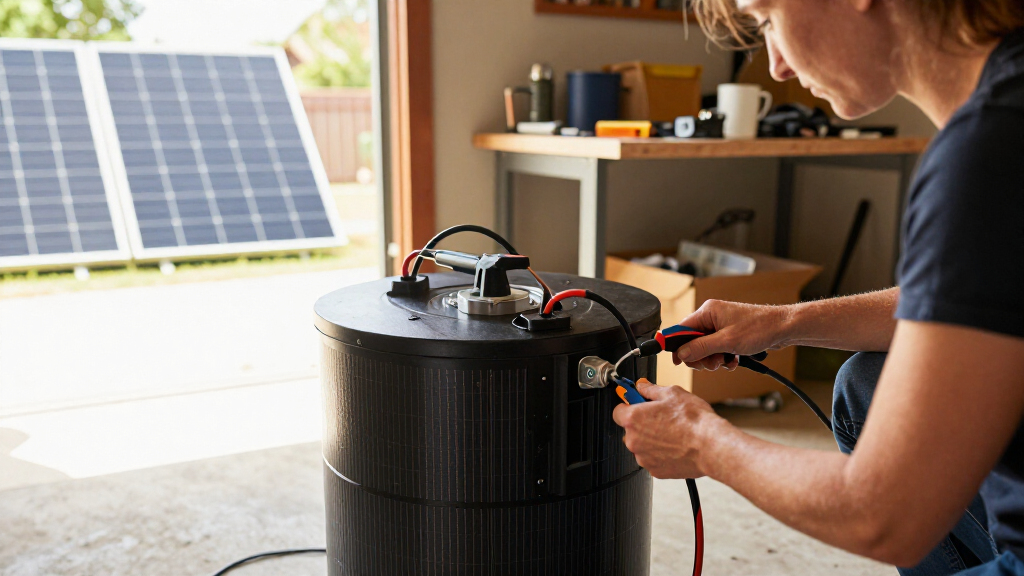
Our evaluation focused on performance, usability, build quality, and value. We prioritized systems with reliable battery chemistry, sufficient capacity for essential loads, and ease of integration with solar panels. Cost-effectiveness was also key, but we recognized that higher upfront investment often yields longer-term reliability and scalability. Products were ranked based on their ability to serve different home backup needs—ranging from portable, emergency-use units to full-scale home systems—ensuring a variety of options for different budgets and requirements.Factors to Consider When Choosing Solar Backup Power Systems For Homes
Choosing the right solar backup power system involves understanding several critical factors that impact performance and value. Beyond just capacity, consider how the system integrates with your existing solar setup, its ease of use, and the potential for expansion. Making an informed choice means balancing your current needs with future scalability, budget, and the environment in which the system will operate.Capacity and Power Output
Capacity, measured in watt-hours (Wh) or kilowatt-hours (kWh), determines how much energy your system can store and deliver. For home backup, aim for a system that can handle your essential appliances—like refrigerators, lights, and communication devices—without frequent recharging. Higher wattage output is crucial if you want to run multiple heavy appliances simultaneously. Keep in mind that larger capacity systems tend to be more expensive and less portable, so match capacity to your actual needs to avoid overspending or underperformance.
Portability vs. Permanence
Decide whether you need a portable system for outdoor use or a permanent installation for home backup. Portable units are typically smaller, lighter, and easier to move, making them suitable for emergency preparedness or outdoor activities. Fixed systems, often larger and more integrated, can provide continuous power during outages but require professional installation and more space. Consider your lifestyle and how often you might need to move or expand your setup before choosing between these options.
Battery Chemistry and Durability
The choice of battery chemistry affects lifespan, safety, and maintenance. Lithium Iron Phosphate (LiFePO4) batteries, common in high-end units, offer longer cycle life and thermal stability, making them ideal for regular use and long-term reliability. Conversely, lead-acid batteries are cheaper upfront but degrade faster and require more maintenance. Investing in a system with durable, proven chemistry can save money and hassle over the years, especially if you plan to rely on it regularly.
Ease of Integration and Solar Compatibility
Look for systems that are compatible with your existing solar panels or offer integrated solar options. Fully integrated units simplify setup but may limit panel choices, potentially affecting flexibility and cost. Remotely controllable and user-friendly interfaces make managing your backup power easier, especially during emergencies. Always verify the system’s compatibility with your solar array voltage and connector types to avoid unexpected expenses or setup challenges.
Cost, Scalability, and Maintenance
Initial investment varies widely, with high-capacity, premium systems costing significantly more but offering better longevity, capacity, and features. Consider future expansion—can the system add additional batteries or panels? Maintenance requirements differ; most lithium systems are low-maintenance, but regular checks ensure longevity. Balancing upfront costs with long-term reliability and potential upgrades is key to making a satisfying purchase.
Frequently Asked Questions
How much backup capacity do I need for my home?
The amount of backup capacity depends on your essential appliances and how long you want to keep them running during outages. Typically, a system with 5-10 kWh can power basic needs for a day, but larger homes or longer outages require more capacity. Assess your daily energy consumption, prioritize critical loads, and choose a system that can comfortably handle these demands without frequent recharging or overloading.
Can I expand my solar backup system later?
Many systems are designed with scalability in mind, allowing you to add more batteries or solar panels over time. However, not all units support expansion, so it’s important to check the manufacturer’s specifications. Planning for future growth at the time of purchase can save money and hassle later, especially if your energy needs increase or you want longer backup durations.
Are portable solar backup systems suitable for whole-home backup?
Portable units are generally better suited for powering critical appliances or outdoor use rather than entire homes. They tend to have limited capacity and wattage, which may not support full household loads during long outages. For whole-home backup, look for larger, fixed systems with higher capacity and more robust features designed specifically for this purpose.
What are the main tradeoffs between different battery chemistries?
LiFePO4 batteries offer longer lifespan, better thermal stability, and require less maintenance, making them a preferred choice for regular use. However, they are more expensive upfront. Lead-acid batteries are cheaper initially but degrade faster and need periodic maintenance, which can add to long-term costs. Your choice depends on your budget, intended use, and willingness to handle maintenance tasks.
How important is inverter size in a backup system?
The inverter determines how much power your system can supply at once. An undersized inverter can limit your ability to run multiple appliances simultaneously, while an oversized one may increase cost without added benefit. Choose an inverter that matches or exceeds your maximum expected load to ensure reliable operation during outages, especially if you plan to power larger appliances or multiple devices at the same time.
Conclusion
For those seeking a reliable, high-capacity solution, the ECO-WORTHY SL7000 offers excellent scalability and power for larger homes. Beginners or those with limited space might prefer the Jackery Explorer 1000 for its portability and ease of use. Budget-conscious buyers should consider systems like the LIBRIDS 640Wh for basic backup needs, while homeowners wanting a seamless, integrated setup should look at premium options like the EF ECOFLOW DELTA Pro. Match your choice to your specific energy requirements, budget, and future plans for the best long-term results.Fall Picks
fall essentials
As an affiliate, we earn on qualifying purchases.