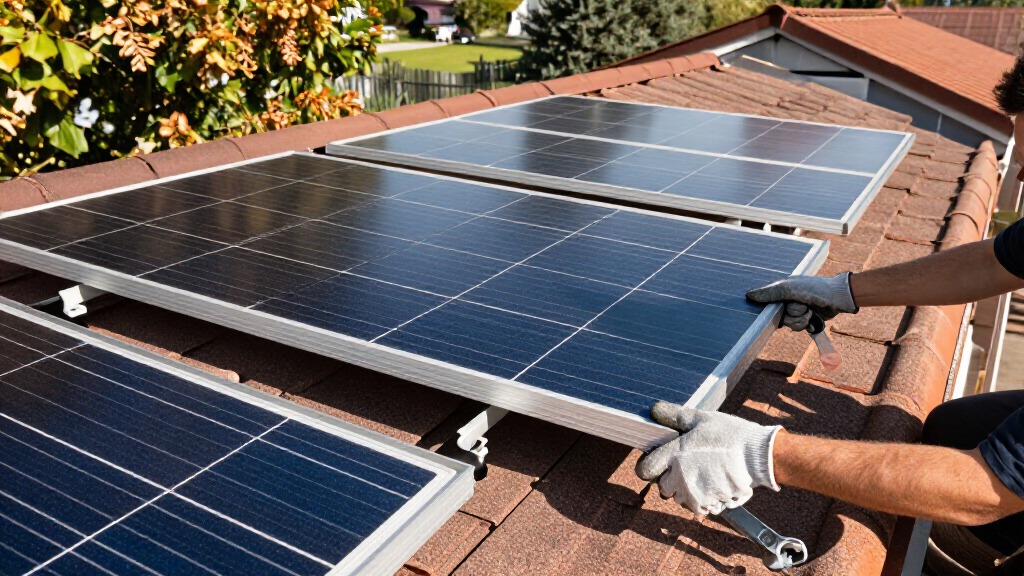
Solar panel kits for home range from small 12V setups to large off-grid systems, so the right choice depends on what you need to power and how long you need it running. I rank the ECO-WORTHY 10 kW kit with 16.1 kWh of battery storage as the best overall for buyers seeking a substantial off-grid system without choosing the largest listed battery package. The 1200W 24V system with a 4.68 kWh lithium battery is a more manageable fit for modest loads, while the Renogy 400W kit with a 40A MPPT controller suits buyers who want a compact system built around a named charge controller. The main tradeoffs are system scale, storage capacity, component compatibility, and how much installation planning a kit leaves to you. Read on for my comparison, selection criteria, and guidance on matching a kit to your home’s actual energy use.

Get backup power and energy gear delivered free with Prime
- Fast, free delivery on millions of items
- Prime Video, Amazon Music and more included
- Member-only deals all year
Key Takeaways
- The 10 kW kits are not interchangeable: their listed battery capacities range from 10.24 kWh to 32.2 kWh, changing how much energy they can store after sunset.
- Panel wattage and inverter capacity answer different questions: the 2,340 W panel package paired with a 10 kW inverter can supply less solar input than the inverter’s headline rating suggests.
- Smaller systems serve different jobs: the 200W kit is a modest 12V/24V setup, while the 400W kits add MPPT control or batteries and an inverter, depending on the package.
- Battery inclusion changes the buying decision: some kits list batteries and an inverter, while other smaller options center on panels and charge control, leaving more system design to the buyer.
- There is no single best size for every home: the strongest match depends on daily energy use, peak loads, backup duration, roof or ground space, and whether the system will connect to the grid.
| ECO-WORTHY 10 kW Off-Grid Solar Panel Kit with Split-Phase Inverter and 32.2 kWh Battery Storage |  | Best for Maximum Off-Grid Capacity | Panel count: 18 | Total PV capacity: 10,620 W | Battery storage: 32.2 kWh combined LiFePO₄ | VIEW LATEST PRICE | See Our Full Breakdown |
| ECO-WORTHY 1200W 48V Solar Power Kit with Battery and Inverter |  | Best All-in-One Starter System | System power: 1,200 W | Panel configuration: 6 × 195 W N-type bifacial panels | Panel efficiency: 25% | VIEW LATEST PRICE | See Our Full Breakdown |
| ECO-WORTHY 200W 12V/24V Solar Panel Kit with 30A PWM Charge Controller |  | Best for Small 12V or 24V Loads | Panel power: 200 W total (2 × 100 W) | System voltage: 12 V or 24 V | Charge controller: 30 A PWM | VIEW LATEST PRICE | See Our Full Breakdown |
| ECO-WORTHY 10 kW Off-Grid Solar System Kit with Split-Phase Inverter, Batteries, and Solar Panels |  | Best for Balanced Battery and Inverter Capacity | Inverter continuous output: 10,000 W | Inverter peak output: 20,000 W | Output voltage: 120 V or 120/240 V split-phase | VIEW LATEST PRICE | See Our Full Breakdown |
| ECO-WORTHY 1200W 24V 4.68kWh Lithium Battery Solar System Off-Grid |  | Best for Longer Battery Reserve in a Mid-Size Kit | Panel configuration: 6 × 195 W | Total panel power: 1,170 W | Battery capacity: 7.168 kWh (12.8 V, 280 Ah × 2) | VIEW LATEST PRICE | See Our Full Breakdown |
| ECO-WORTHY 10 kW Off-Grid Solar System Kit with 2,340 W Panels, 10 kW Inverter, and 10.24 kWh Batteries |  | Best for a Balanced Off-Grid Home Setup | Solar array: 12 × 195 W bifacial panels; 2,340 W total | Battery bank: 2 × 48 V, 100 Ah lithium batteries; 10.24 kWh total | Inverter: 10,000 W maximum continuous output | VIEW LATEST PRICE | See Our Full Breakdown |
| ECO-WORTHY 10 kW Off-Grid Solar Panel Kit with 16.1 kWh Battery |  | Best for Larger Battery Reserve | Solar array: 5 × 590 W panels; 2,950 W total | Battery: 48 V, 314 Ah LiFePO₄; 16.1 kWh | Inverter: 10,000 W maximum power; 20,000 W peak output | VIEW LATEST PRICE | See Our Full Breakdown |
| ECO-WORTHY 400W 12V Solar Panel Kit with MPPT Controller and Bluetooth |  | Best Compact Starter Kit | Solar array: 4 × 100 W monocrystalline panels; 400 W total | System voltage: 12 V DC | Charge controller: 40 A MPPT | VIEW LATEST PRICE | See Our Full Breakdown |
| ECO-WORTHY 400W 12V Solar Panel Kit with Lithium Batteries and Inverter | 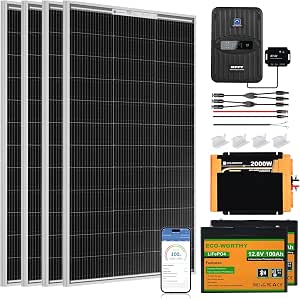 | Best Complete Small-System Kit | Solar array: 4 bifacial panels; 400 W total | Panel conversion rate: 23% | Battery bank: 2 × 12 V, 100 Ah lithium batteries | VIEW LATEST PRICE | See Our Full Breakdown |
| ECO-WORTHY Solar Panel and LiFePO4 Home Backup System |  | Best for Maximum Home Backup Storage | Solar array: 6 × 590 W N-type panels | Battery bank: 2 × 48 V, 314 Ah LiFePO₄ batteries | Usable energy: 30 kWh+ | VIEW LATEST PRICE | See Our Full Breakdown |
| Renogy 400W 12V Monocrystalline Solar Kit with 40A MPPT Charge Controller |  | Best for a Modular 12V Off-Grid Setup | System power: 400W | System voltage: 12V | Solar panels: 4 × 100W monocrystalline panels | VIEW LATEST PRICE | See Our Full Breakdown |
| solar panel kits for home | Panel dimensions |
|---|---|
| ECO-WORTHY 10 kW Off-Grid Sola | — |
| ECO-WORTHY 1200W 48V Solar Pow | — |
| ECO-WORTHY 200W 12V/24V Solar | 35.2 × 23.1 × 1.3 in |
| ECO-WORTHY 10 kW Off-Grid Sola | — |
| ECO-WORTHY 1200W 24V 4.68kWh L | — |
| ECO-WORTHY 10 kW Off-Grid Sola | 58.86 × 26.18 × 1.18 in |
| ECO-WORTHY 10 kW Off-Grid Sola | 89.69 × 44.65 × 1.18 in |
| ECO-WORTHY 400W 12V Solar Pane | 35.2 × 23 × 1.37 in |
| ECO-WORTHY 400W 12V Solar Pane | 35.63 × 23.03 × 1.18 in each |
| ECO-WORTHY Solar Panel and LiF | — |
| Renogy 400W 12V Monocrystallin | 41.8 × 20.9 × 1.38 in each |
More Details on Our Top Picks
ECO-WORTHY 10 kW Off-Grid Solar Panel Kit with Split-Phase Inverter and 32.2 kWh Battery Storage
For a home that needs substantial off-grid generation and overnight reserves, this kit pairs 10,620 W of panels with 32.2 kWh of LiFePO₄ storage and a 10,000 W split-phase inverter. That combination gives it more stored energy and panel capacity than the ECO-WORTHY 10 kW system with nine panels and 20.48 kWh of batteries, making this the stronger fit for longer backup needs or larger loads. The 120/240 V output can serve compatible household circuits, while dual MPPT controllers and Wi-Fi monitoring add useful system visibility. The tradeoff is scale: its 18 large panels, heavy shipment, and professional-installation recommendation make it a substantial project, not a plug-in home backup unit. I’d skip it for modest loads or a small roof.
Pros:- 10,620 W of PV capacity from 18 panels
- 32.2 kWh of LiFePO₄ storage for extended reserve
- 10,000 W inverter with 120/240 V split-phase output
- Dual MPPT controllers and Wi-Fi monitoring
Cons:- Professional installation is recommended
- Large, heavy shipment requires truck delivery and a suitable receiving address
Best for: Homeowners planning a professionally installed off-grid system with high energy needs and substantial overnight battery reserves.
Not ideal for: Buyers seeking a compact, DIY-friendly backup kit or a small system for a few essential appliances; its panel array and installation needs are substantial.
- Panel count:18
- Total PV capacity:10,620 W
- Battery storage:32.2 kWh combined LiFePO₄
- Battery voltage:48 V
- Inverter continuous output:10,000 W
- Inverter peak output:20,000 W
- Output voltage:120 V or 120/240 V split-phase
- MPPT controllers:Dual
Our verdict“Choose this kit for a professionally installed off-grid home system where panel capacity and battery reserve matter more than a simple setup.”
ECO-WORTHY 1200W 48V Solar Power Kit with Battery and Inverter
This is the more approachable complete system in this group: six 195 W bifacial panels, a 48 V LiFePO₄ battery, and an inverter with a built-in 80 A MPPT controller arrive as one off-grid package. Its 3,500 W inverter and 7,000 W surge rating offer more appliance-starting headroom than the ECO-WORTHY 200 W kit, which supplies panels and a PWM controller but no battery or inverter. The battery’s 2.56 kWh usable energy is a useful buffer, though it is far below the storage in the large 10 kW systems. The stated daily generation relies on four hours of full sunlight, so actual output will vary with location, season, and installation. This makes sense for a small cabin or starter setup, but not a whole-home power solution.
Pros:- Includes panels, LiFePO₄ battery, inverter, and MPPT controller
- 3,500 W inverter with 7,000 W surge capacity
- Battery rated for more than 4,000 cycles
- Wi-Fi monitoring and UPS switching
Cons:- Daily energy estimate depends on four hours of full sunlight
- Battery usable energy is limited for sustained household loads
- Components may arrive in multiple packages
Best for: Cabin owners and off-grid beginners who want panels, battery, inverter, and charge control in one modest-capacity package.
Not ideal for: Households seeking whole-home backup or several days of stored energy; its 2.56 kWh usable battery is much smaller than the 10 kW kits’ storage.
- System power:1,200 W
- Panel configuration:6 × 195 W N-type bifacial panels
- Panel efficiency:25%
- Battery:48 V, 50 Ah LiFePO₄
- Usable battery energy:2,560 Wh
- Inverter output:3,500 W; 7,000 W surge
- MPPT controller:Built-in 80 A
- Battery cycle life:More than 4,000 cycles
Our verdict“Pick this as a self-contained starter system for modest off-grid loads, rather than as a substitute for a high-capacity home installation.”
ECO-WORTHY 200W 12V/24V Solar Panel Kit with 30A PWM Charge Controller
This is the simplest and smallest option here: two 100 W panels, brackets, cables, and a 30 A PWM controller, without a battery or inverter. That makes it a better match for a shed, boat, or small cabin circuit than the ECO-WORTHY 1,200 W kit, which adds storage and AC conversion for buyers who need a more complete setup. Its ability to wire for 12 V or 24 V gives owners some flexibility when matching an existing battery system, and the pre-drilled panels and included mounting hardware reduce the number of separate parts to source. The tradeoff is limited output, plus PWM charge control rather than MPPT. The stated 800 Wh daily output assumes four hours of full sunshine, and home buyers will need to add compatible storage and other equipment.
Pros:- Includes two panels, controller, mounting brackets, and cables
- Can be configured for 12 V or 24 V systems
- Pre-drilled panels and included Z brackets simplify mounting
- Aluminum frames and IP65-rated junction box
Cons:- PWM controller is less capable than the MPPT control in the larger ECO-WORTHY kits
- No battery or inverter is included
- Up to 800 Wh daily output assumes four hours of full sunshine
Best for: Owners of small off-grid setups, boats, or cabins who already have compatible batteries and need a basic panel-and-controller kit.
Not ideal for: Homeowners who want a complete solar backup package or meaningful whole-home generation; this kit has only 200 W of panels and no battery or inverter.
- Panel power:200 W total (2 × 100 W)
- System voltage:12 V or 24 V
- Charge controller:30 A PWM
- Solar cell efficiency:Up to 21.5%
- Daily output:Up to 800 Wh under four hours of full sunshine
- Panel dimensions:35.2 × 23.1 × 1.3 in
- Connector type:MC4
- Included components:Two panels, brackets, controller, and cables
Our verdict“Choose this for a small existing 12 V or 24 V setup, but look to the 1,200 W kits for an integrated battery-and-inverter system.”
ECO-WORTHY 10 kW Off-Grid Solar System Kit with Split-Phase Inverter, Batteries, and Solar Panels
This system keeps the 10,000 W split-phase inverter found in the larger ECO-WORTHY 10 kW kit but pairs it with nine panels for 5,310 W of PV and four batteries totaling 20.48 kWh. Compared with the 18-panel version, it offers less solar input and less total storage, but its four-battery configuration may suit buyers who prefer that supplied storage arrangement while retaining substantial inverter capacity. That distinction matters: a powerful inverter does not create energy, so the smaller array may take longer to replenish reserves when household demand is high. Dual MPPT, Wi-Fi monitoring, battery communications, and inverter protections add system-management features. Large pallet delivery and professional installation remain significant practical demands, making this a planned home energy project rather than a casual DIY purchase.
Pros:- 10,000 W continuous inverter output with split-phase support
- 20.48 kWh of LiFePO₄ storage across four batteries
- Dual MPPT, Wi-Fi monitoring, and CAN/RS485 battery communication
- Supports up to six parallel inverter units
Cons:- 5,310 W PV capacity is substantially lower than the 10,620 W kit
- Large panels ship on a pallet by truck
- Professional installation is recommended
Best for: Homeowners who need 120/240 V split-phase output and substantial battery storage but do not need the 18-panel kit’s greater PV capacity.
Not ideal for: Buyers prioritizing maximum solar generation or a lightweight DIY setup; it has half the panel count of the 10,620 W ECO-WORTHY kit and requires professional installation.
- Inverter continuous output:10,000 W
- Inverter peak output:20,000 W
- Output voltage:120 V or 120/240 V split-phase
- Solar panels:9 × 590 W
- Total PV capacity:5,310 W
- Battery storage:20.48 kWh total LiFePO₄
- Battery configuration:4 × 48 V, 100 Ah
- Inverter features:Dual MPPT, Wi-Fi monitoring, supports up to six parallel units
Our verdict“Choose this when split-phase inverter capacity and a four-battery configuration matter more than maximizing panel output.”
ECO-WORTHY 1200W 24V 4.68kWh Lithium Battery Solar System Off-Grid
Among the two 1,200 W-class ECO-WORTHY systems here, this one favors battery capacity: it includes a 7.168 kWh lithium pack, a 60 A MPPT controller, and a 3,000 W pure sine wave inverter. The ECO-WORTHY 1200 W 48 V kit has a higher-rated 3,500 W inverter and a 7,000 W surge figure, but its usable battery energy is only 2.56 kWh. Buyers who value longer stored-energy capacity over inverter surge headroom may prefer this 24 V configuration. Six panels provide 1,170 W total, and Bluetooth monitoring offers local system checks. The stated 4.68 kWh daily output depends on optimal sunlight, while the panel array and battery modules take meaningful space. Installation may also call for professional help, so this is not the easiest choice for a first-time DIY build.
Pros:- 7.168 kWh lithium battery storage
- 60 A MPPT charge controller with stated 99% tracking efficiency
- 3,000 W pure sine wave inverter
- Bluetooth monitoring with a stated range of up to 82 ft
Cons:- Complex installation may require professional assistance
- Six panels and battery modules need substantial space
- Stated daily output depends on optimal sunlight
Best for: Cabin, trailer, or home-backup users who want a mid-size off-grid kit with more stated battery storage than the other 1,200 W option.
Not ideal for: Buyers needing higher inverter surge capacity or a compact, simple installation; the 48 V ECO-WORTHY kit lists a 7,000 W surge rating and this kit has sizable panels and batteries.
- Panel configuration:6 × 195 W
- Total panel power:1,170 W
- Battery capacity:7.168 kWh (12.8 V, 280 Ah × 2)
- System voltage:24 V
- Charge controller:60 A MPPT
- Inverter:3,000 W pure sine wave
- MPPT tracking efficiency:99%
- Conversion efficiency:95%
Our verdict“Pick this for a mid-size off-grid setup where battery reserve is the priority, and choose the 48 V ECO-WORTHY kit if inverter surge capacity matters more.”
ECO-WORTHY 10 kW Off-Grid Solar System Kit with 2,340 W Panels, 10 kW Inverter, and 10.24 kWh Batteries
This kit pairs a 10 kW split-phase inverter with 2,340 W of panels and 10.24 kWh of battery storage, making it a more balanced home-scale package than the smaller ECO-WORTHY 400W kits. Its 120 V/240 V output supports a wider range of household loads, while app monitoring helps track stored energy and charging. The twelve bifacial panels are more manageable individually than the very large panels in ECO-WORTHY’s 16.1 kWh kit, though the total array still needs substantial roof or ground space. The main compromise is the storage-to-inverter balance: a 10 kW inverter can supply large loads, but the included batteries hold less energy than the larger-storage options in this roundup. I’d shortlist it for a home with professional installation and moderate daily energy needs, not as a plug-and-play package.
Pros:- Combines panels, inverter, batteries, and mounting accessories in one package.
- 120 V/240 V output supports common household appliances and split-phase loads.
- App monitoring provides battery information over Bluetooth and Wi-Fi.
- Parallel inverter operation allows system output to be expanded.
Cons:- Professional installation is recommended, so it is not a simple DIY setup.
- The stated 9.36 kWh daily production assumes four hours of full sunshine.
- Its 10.24 kWh storage is limited compared with the larger battery systems in this roundup.
Best for: Homeowners planning a professionally installed off-grid system who need 120 V/240 V output and moderate battery storage.
Not ideal for: Households seeking long backup duration for heavy daily loads; the 10.24 kWh battery bank is smaller than the 16.1 kWh and 30 kWh-plus options here.
- Solar array:12 × 195 W bifacial panels; 2,340 W total
- Battery bank:2 × 48 V, 100 Ah lithium batteries; 10.24 kWh total
- Inverter:10,000 W maximum continuous output
- AC output:120 V/240 V
- Daily production estimate:9.36 kWh under four hours of full sunshine
- Panel dimensions:58.86 × 26.18 × 1.18 in
- Panel efficiency:25%
- Certifications:Inverter: UL 1741; batteries: UL 1973 and UL 9540A
Our verdict“Choose this kit for a professionally installed off-grid home system where split-phase output matters more than maximum battery reserve.”
ECO-WORTHY 10 kW Off-Grid Solar Panel Kit with 16.1 kWh Battery
The clearest reason to choose this kit over the ECO-WORTHY 10 kW system with 10.24 kWh of storage is its 16.1 kWh LiFePO₄ battery. That extra reserve can help a household carry more energy into the evening or through periods of weaker sun, while the 10 kW split-phase inverter supplies 120 V and 240 V loads. The five 590 W panels keep the array count low, but each panel measures nearly 90 inches long and 45 inches wide, so moving and placing them takes planning. Battery wheels and a display add useful handling and monitoring details, although the complete shipment is large enough to arrive by truck. This is a stronger fit for buyers who value storage and fewer panels over easier rooftop handling; the smaller 400 W ECO-WORTHY kits are far simpler, but serve much smaller loads.
Pros:- 16.1 kWh battery capacity exceeds the storage in the 10.24 kWh ECO-WORTHY kit.
- 10 kW split-phase inverter provides 120 V/240 V output.
- Five high-output panels reduce panel count compared with smaller-panel arrays.
- Battery display, wireless connectivity, and built-in wheels aid monitoring and movement.
Cons:- Panels are large and heavy to handle, despite the low panel count.
- The system ships by truck and requires space for pallet delivery.
- Professional installation is recommended.
Best for: Homeowners building an off-grid system who want more battery reserve and can accommodate oversized panels and truck delivery.
Not ideal for: DIY beginners or homes with limited roof access; the panels and battery are bulky, and professional installation is recommended.
- Solar array:5 × 590 W panels; 2,950 W total
- Battery:48 V, 314 Ah LiFePO₄; 16.1 kWh
- Inverter:10,000 W maximum power; 20,000 W peak output
- AC output:120 V/240 V split phase
- MPPT controllers:Dual MPPT controllers
- Panel dimensions:89.69 × 44.65 × 1.18 in
- Panel construction:Monocrystalline silicon, tempered glass, polymer, and aluminum
Our verdict“Pick this package over the 10.24 kWh ECO-WORTHY kit when longer battery reserve matters more than compact, easy-to-handle panels.”
ECO-WORTHY 400W 12V Solar Panel Kit with MPPT Controller and Bluetooth
This is the simplest way in this group to start with solar charging without committing to a full home backup system. The 400 W array and 40 A MPPT controller suit modest 12 V off-grid uses, while Bluetooth monitoring makes system data accessible from a phone. Unlike the ECO-WORTHY 400 W kit that includes batteries and an inverter, this package leaves those components out, giving buyers more freedom to choose a battery setup but requiring additional purchases before it can power AC appliances. Its stated output of up to 1.6 kWh per day depends on sunlight, so it is better viewed as a small energy source for a shed, cabin, or limited loads than as a whole-home solution. The four panels are more approachable than the oversized modules in the 10 kW kits, though the listed 32.66 kg item weight still calls for careful handling.
Pros:- 40 A MPPT controller manages the 400 W array for a 12 V system.
- Bluetooth module enables mobile monitoring within its stated range.
- Mounting brackets and four panels are included.
- Bypass diodes and stated wind and snow ratings support varied installation conditions.
Cons:- Batteries and an inverter are not included, limiting out-of-box use.
- Up to 1.6 kWh daily generation depends on sunlight conditions.
- The listed item weight is 32.66 kg, which can make handling less convenient.
Best for: Owners of small cabins, sheds, or 12 V systems who already have or plan to select their own battery and inverter.
Not ideal for: Households seeking complete home backup or ready-to-use AC power; this kit does not include batteries or an inverter.
- Solar array:4 × 100 W monocrystalline panels; 400 W total
- System voltage:12 V DC
- Charge controller:40 A MPPT
- Panel efficiency:21%
- Daily energy estimate:Up to 1.6 kWh, depending on sunlight
- Panel dimensions:35.2 × 23 × 1.37 in
- Bluetooth range:Up to 82 ft
- Included components:Four panels, MPPT controller, Bluetooth module, and mounting Z brackets
Our verdict“Choose this starter kit for modest 12 V charging when you want to select your own storage and inverter rather than buy a complete system.”
ECO-WORTHY 400W 12V Solar Panel Kit with Lithium Batteries and Inverter
Compared with the ECO-WORTHY 400 W kit that includes only panels and a controller, this package adds two lithium batteries and a 2,000 W pure sine wave inverter, so it is much closer to a working small off-grid setup. The included MPPT controller and Bluetooth module also reduce the number of separate components a buyer has to source. Its 400 W array and 12 V architecture suit an RV, shed, or small cabin, but they do not put it in the same home-power class as the 10 kW split-phase systems. The inverter’s 2,000 W rating is a ceiling, not a guarantee that every appliance can run together, and the stated daily energy depends on ideal sunlight. I’d favor it for modest AC loads and included storage, while skipping it for a household that needs 240 V service or substantial whole-home backup.
Pros:- Includes panels, lithium batteries, MPPT controller, inverter, and accessories.
- Pure sine wave inverter supplies up to 2,000 W rated output.
- Battery cycle life is stated as more than 3,000 deep cycles.
- Bluetooth monitoring and built-in battery management support system oversight.
Cons:- The 400 W array is small for regular household energy needs.
- Daily production depends on strong sunlight and the stated estimate assumes about four sun hours.
- The 12 V system does not provide the 120 V/240 V split-phase output of the larger home kits.
Best for: RV, cabin, or shed owners who want a small 12 V system with batteries and an inverter included.
Not ideal for: Homeowners needing 120 V/240 V split-phase power, high daily energy production, or whole-home backup capacity.
- Solar array:4 bifacial panels; 400 W total
- Panel conversion rate:23%
- Battery bank:2 × 12 V, 100 Ah lithium batteries
- Battery cycle life:More than 3,000 deep cycles
- Charge controller:40 A MPPT
- Inverter:12 V, 2,000 W pure sine wave
- Panel dimensions:35.63 × 23.03 × 1.18 in each
- Connectors:MC4
Our verdict“Choose this all-in-one 12 V package for modest off-grid loads when built-in battery storage and AC conversion matter more than household-scale capacity.”
ECO-WORTHY Solar Panel and LiFePO4 Home Backup System
Among these options, this system is the strongest match for buyers seeking substantial home backup rather than a small off-grid starter setup. Its 30 kWh-plus usable storage and 10 kW hybrid inverter put it well beyond the 16.1 kWh ECO-WORTHY kit in battery reserve, while six 590 W panels provide a larger array than that kit’s five panels. Support for 120 V and 240 V output, app monitoring, and several battery communication protocols gives installers useful system-integration options. The tradeoff is physical scale: nearly 90-inch panels, a large battery bank, and palletized truck delivery demand space and professional planning. The randomly selected inverter exterior version is another small uncertainty for buyers matching equipment visually. I’d place it ahead of the smaller kits for backup capacity, but not for ease of DIY installation or compact home layouts.
Pros:- More than 30 kWh of usable storage exceeds the other listed ECO-WORTHY battery systems.
- 10 kW hybrid inverter supports both 120 V and 240 V output.
- Bluetooth, Wi-Fi, and LCD monitoring provide several ways to check system status.
- Battery protections, active balancing, and RS485, CAN, and RS232 communication support system management.
Cons:- Large panels and batteries require significant installation space and careful handling.
- Palletized truck delivery may be difficult for homes without suitable access.
- The exterior version of the inverter is selected randomly.
Best for: Homeowners planning professionally installed backup or off-grid power who need substantial stored energy for extended outages.
Not ideal for: Renters, DIY beginners, or homes without room for large panels and pallet-delivered equipment; its size and installation needs are demanding.
- Solar array:6 × 590 W N-type panels
- Battery bank:2 × 48 V, 314 Ah LiFePO₄ batteries
- Usable energy:30 kWh+
- Inverter:10 kW hybrid
- AC output:120 V and 240 V
- Battery cycle life:9,000+ cycles at 80% depth of discharge
- MPPT tracking efficiency:99.9%
- Monitoring and communications:Bluetooth, Wi-Fi, LCD, RS485, CAN, and RS232
Our verdict“Choose this system for professionally installed home backup where maximum battery reserve matters more than delivery, space, and setup convenience.”
Renogy 400W 12V Monocrystalline Solar Kit with 40A MPPT Charge Controller
I’d shortlist this Renogy kit for a small off-grid system where a 12V battery setup and room to expand panel placement matter more than having storage and an inverter bundled in. Four 100W panels give you separate pieces to arrange across available mounting space, while the 40A MPPT controller manages charging and the Bluetooth module lets you check system data by phone. Brackets, cables, and an adaptor kit reduce the number of basic components to source separately.
Compared with the ECO-WORTHY 400W 12V kit, this is another controller-focused option, not a complete home-backup package. Its main tradeoff is scope: there’s no battery or inverter listed, and the 12V design is a less natural fit for larger household loads than the roundup’s 48V or 10 kW systems. I’d choose it for a modest standalone setup, not whole-home power.
Pros:- Four 100W monocrystalline panels provide 400W of stated panel capacity.
- 40A MPPT charge controller is included for battery charging.
- Bluetooth module supports phone monitoring.
- Mounting brackets, cables, and adaptor kit are included.
Cons:- No battery or inverter is listed, so those components must be sourced separately.
- 12V system specification is less suited to larger household loads than higher-voltage kits.
- Each panel is limited to a stated maximum power of 100W, requiring several panels for the full system capacity.
Best for: Cabin, shed, or RV owners building a modest 12V off-grid system who want four panels, MPPT charging, and phone monitoring without a bundled battery and inverter.
Not ideal for: Homeowners seeking whole-home backup or a ready-to-run system, since this kit is specified for 12V and does not list a battery or inverter.
- System power:400W
- System voltage:12V
- Solar panels:4 × 100W monocrystalline panels
- Charge controller:40A MPPT
- Maximum battery voltage:32V
- Panel dimensions:41.8 × 20.9 × 1.38 in each
- Connector type:MC4
- Included components:Bluetooth module, Z-brackets, adaptor kit, and tray cable
- Panel warranty:5 years, materials and workmanship
Our verdict“Choose this Renogy kit for a component-based 12V off-grid build with monitoring, but skip it if you need a complete home-backup system.”

How We Picked
I compared the 11 listed kits by their stated panel output, battery capacity, inverter provision, charge-controller type, system voltage, and intended scale. I gave more weight to how clearly a kit’s components align with a practical home use than to a large headline number alone: panel wattage affects potential solar input, battery capacity affects stored energy, and inverter capacity affects the loads a system can serve at once. I also looked at how much system planning the listed package appears to leave to the buyer, since a panel-and-controller kit is a different proposition from a package that includes storage and an inverter.
The ranking favors kits with a clearer fit for a defined buyer and a more balanced combination of components. That puts the 10 kW ECO-WORTHY option with 16.1 kWh of storage first as a substantial, middle-ground home-scale off-grid pick among the listed large systems, while the smaller 1200W and 400W kits rank for narrower needs. Larger battery packages may suit buyers prioritizing longer backup, but more storage does not by itself guarantee adequate solar production or a grid-connected solution. I treat product names and stated specifications as the available evidence; buyers should confirm included components, compatibility, local code requirements, and installation details before purchase.
Factors to Consider When Choosing Solar Panel Kits For Home
Before choosing a kit, I would start with the job it needs to do: reduce grid use, run selected circuits during an outage, or supply an off-grid home. These goals call for different panel, battery, and inverter combinations. The following checks help prevent a kit that looks capable on paper from falling short in daily use.
Match Solar Production to Daily Energy Use
Estimate the energy you use in a typical day, then identify which loads you want the solar system to serve. A kit’s panel wattage describes its rated capacity under specified conditions, not a guaranteed daily energy yield; shade, orientation, season, and location all change production. Make a separate list of high-use appliances and their run times rather than sizing from a single monthly bill total. A large inverter cannot make up for a panel array that produces too little energy to recharge the batteries. Ask for a realistic production estimate for your site before treating a kit as a whole-home solution.
Size Battery Storage for the Loads and Backup Window
Battery capacity is about when you can use stored energy, not how much solar the panels generate. Work out which essential loads need backup and for how many hours, then account for battery operating limits and conversion losses. Refrigeration, pumps, heating equipment, and other loads that run for long periods can consume storage faster than a brief appliance start-up suggests. More battery capacity can extend backup, but it also needs enough panel output and charging capacity to refill it. Avoid choosing a large battery solely because it is the largest figure in a product name.
Check Inverter Capacity and Starting Loads
The inverter must support both the combined running demand of simultaneous appliances and the short surge some motors draw when starting. Make a load list for the circuits you plan to power, including pumps, compressors, and tools, and compare their startup demands with the inverter’s surge rating. Split-phase capability can matter for equipment that requires 240V, but a split-phase label does not by itself show that a system can run every household circuit. Confirm voltage, output type, and transfer or backup arrangements with the supplier. If the kit does not include an inverter, budget time and expertise for choosing a compatible one.
Confirm What the Kit Includes—and What It Leaves Out
Kit names can make packages sound more complete than their listed components show, so verify the bill of materials before buying. Check whether panels, mounting hardware, wiring, disconnects, batteries, inverter, and charge controller are all included, and whether any listed quantities match your intended layout. A charge controller is not a substitute for an inverter, and neither item alone makes a system ready for home connection. Ask about battery chemistry, system voltage, supported expansion, and component compatibility. Missing balance-of-system parts can add design work and create delays even when the core equipment is suitable.
Decide Whether You Need Off-Grid or Grid-Connected Equipment
An off-grid kit is designed around independent generation and storage; it does not automatically connect to a utility service or qualify for net metering. Grid-connected systems often need specific inverter functions, utility approval, and equipment that meets local electrical rules. If you want backup while keeping a grid connection, confirm that the system supports the intended backup arrangement and identify which circuits it can serve. Local permitting, inspection, and interconnection requirements can affect equipment choices before installation begins. Do not assume a kit marketed for home use can be connected to household wiring without a qualified installer.
Plan for Site Conditions, Installation, and Future Expansion
Roof area, roof condition, shade, orientation, and cable distance all affect whether a kit’s rated output is practical at your property. Ground mounting may offer a better sun angle but needs suitable space, secure foundations, and a protected cable route. Think about maintenance access, snow or debris, weather exposure, and how you will isolate equipment for service. If you may expand later, check whether the charge controller, inverter, battery system, and wiring support additional panels or storage. A system that fits your site and can be maintained safely is often a better choice than a larger package that is difficult to install.
Frequently Asked Questions
Can one of these kits power an entire house?
Some of the listed 10 kW packages are aimed at larger off-grid setups, but a 10 kW inverter rating does not prove that a kit can supply a whole home through every season. You also need enough panel production, battery storage, and inverter surge capacity for your actual loads. Heating, cooking, water heating, and vehicle charging can push demand far beyond what a modest package can support. Check daily energy use and peak simultaneous loads, then ask an installer to model the system for your location. Treat whole-home operation as a system-design question, not a conclusion drawn from the kit title.
Which specification matters more: panel wattage or battery capacity?
Neither figure can be judged on its own because they describe different parts of the system. Panel wattage relates to how quickly the array may generate energy in suitable conditions, while battery capacity describes how much energy can be stored for later use. A large battery paired with limited solar input may take longer to recharge, and a powerful array with little storage may not cover evening or outage use. Compare both figures against your daily energy needs and desired backup period. Also check the inverter and controller ratings so the components can work together.
Are these kits suitable for a grid-connected home?
Some components may be usable in a grid-connected design, but a kit described as off-grid should not be assumed to support utility interconnection or outage backup in the way you expect. Grid connection can require approved inverter functions, utility permission, protective equipment, and local inspections. Backup operation may also require a transfer arrangement and a clearly defined set of backed-up circuits. Ask the manufacturer or installer for documentation showing the intended system configuration and applicable certifications. Confirm local requirements before buying or wiring equipment.
Should I choose a 400W kit or a 1200W kit for a small home setup?
Start with the appliances you want to run, rather than choosing by panel wattage alone. The 400W options are better matched to modest loads or a limited-purpose system, while the 1200W options provide more stated panel capacity and, depending on the package, additional battery and inverter components. A 400W kit with storage may suit a different job from a 400W panel-and-controller kit, so check the included parts closely. Neither size should be assumed to cover a conventional home’s full daily use. Estimate energy consumption and charging conditions before deciding.
What should I verify before hiring an installer or ordering a kit?
Ask for a written component list with model numbers, quantities, voltage ratings, and any parts sold separately. Have the installer confirm that panels, controller, batteries, inverter, wiring, and protection equipment are compatible with one another and with your planned loads. Clarify who handles permits, inspections, utility paperwork, mounting, and commissioning. Request a site-specific production estimate and a backup-load plan instead of relying on rated output alone. This preparation can reveal a mismatch before equipment arrives and help define the full scope of the project.
Conclusion
For a substantial off-grid system with a middle-ground storage package, I recommend the ECO-WORTHY 10 kW kit with 16.1 kWh of battery capacity as the best overall pick in this lineup. Buyers who need the longest listed storage window should compare the 32.2 kWh version, while those prioritizing a lower-complexity, smaller system can look at the 1200W 24V kit with a 4.68 kWh lithium battery as the best value-oriented fit for modest loads. For beginners, the 400W kit that includes lithium batteries and an inverter offers a more bundled starting point than a panel-and-controller package, though its capacity remains limited. For a compact setup centered on charge control, the Renogy 400W kit with 40A MPPT controller is the specific-use pick; for large off-grid needs, compare the ECO-WORTHY 10 kW packages by panel output and battery capacity rather than headline inverter size. I would verify the exact bill of materials, site production, and installation requirements before choosing any of them.
Halloween Picks
halloween
As an affiliate, we earn on qualifying purchases.