
If you’re looking for the best self-hosting servers in 2026, you’re probably balancing performance, affordability, and ease of use. The Dell PowerEdge R640 stands out for its reliable performance and expandability, making it perfect for advanced users. The DARGO Mini Server offers a compact, plug-and-play solution for home labs, ideal for beginners or those with limited space. However, choosing the right server involves tradeoffs between raw power, cost, and complexity. Keep reading for a detailed comparison to find the best fit for your needs.

Get backup power and energy gear delivered free with Prime
- Fast, free delivery on millions of items
- Prime Video, Amazon Music and more included
- Member-only deals all year
Key Takeaways
- High-performance models like the Dell PowerEdge R640 excel in scalability but come with higher costs and complexity.
- Mini and entry-level servers such as the DARGO Mini Server provide simplicity and affordability, but may lack advanced features for heavy workloads.
- Renewed and refurbished options can deliver significant savings while still offering robust hardware, though they may have limited warranties.
- Balance between hardware specs (like RAM and storage) and intended workload is key; overpaying for features you’ll never use is common.
- Ease of setup and management varies widely, influencing which server is best for beginners versus experienced users.


| self-hosting server | Processor | Storage |
|---|---|---|
| Dell PowerEdge R740 2U Rack Se | Dual Xeon Gold 6130 16-Core 2.10 GHz | 15.36TB SSD |
| Dell PowerEdge R640 Server 3.5 | 3.50GHz 16-Core | 9.6TB |
| Hewlett Packard Enterprise Pro | Intel Pentium Gold G7400 3.7GHz | 1TB HDD |
| Mastering Self-Hosting for Hom | — | — |
| DARGO Mini Server | Quad-core | 1TB SSD |
| Self-Hosting Handbook: Deploy | — | — |
| ZimaBlade 7700 Home Server Sta | Intel Quad-Core | — |
| Dell PowerEdge R720 Server | 2x 2.60GHz E5-2670 | — |
| PCSP R640 8 Bay SFF DNS & Home | 2x Intel Silver 4114 | 2x 1TB SATA SSD |
| Dell PowerEdge R640 Server 2X | 2x Xeon Gold 6150 | — |
| Dell PowerEdge R640 Server 2.7 | 2x 2.70GHz Intel Xeon Gold 6150 | — |
| Dell PowerEdge R630 Server wit | 2x Intel Xeon E5-2690 v4 2.60GHz | 2x 1TB SSD |
More Details on Our Top Picks
Dell PowerEdge R740 2U Rack Server, Dual Xeon 6130, 512GB DDR4, 15.36TB SSD, RAID, Dual Power, iDRAC, Rail Kit (Renewed)
The Dell PowerEdge R740 stands out as the best choice for those needing a robust, scalable self-hosting platform with enterprise-grade features. Its dual Xeon Gold 6130 processors and massive 512GB DDR4 RAM deliver exceptional processing power, making it suitable for hosting multiple demanding applications or complex services. Compared with the Dell PowerEdge R640, this model offers greater expandability, especially in storage and memory, but that comes with increased size and complexity. The main tradeoff is that storage and memory upgrades are not pre-installed, requiring additional investment and setup time, and being a renewed product, it may have limited warranty coverage. This pick is ideal for small businesses or advanced users who want a high-performance, ready-to-scale server without compromising on features.
Pros:- Exceptional processing power with dual Xeon Gold CPUs
- Massive 512GB DDR4 memory capacity for demanding workloads
- Fast 15.36TB SSD storage for quick data access
- Includes rail kit for easy rack installation
Cons:- Storage drives and memory are not pre-installed, requiring additional setup
- Renewed product may have limited warranty and support
Best for: Enterprises or small businesses requiring scalable, high-performance self-hosting infrastructure
Not ideal for: Home users or hobbyists with limited technical skills or small-scale needs
- Processor:Dual Xeon Gold 6130 16-Core 2.10 GHz
- Memory:512GB DDR4
- Storage:15.36TB SSD
- Form Factor:2U Rack Server
- Features:RAID, Dual Power, iDRAC, Rail Kit
Our verdict“This server is best suited for advanced users and businesses that need high performance and scalability out of their self-hosted solutions.”
Dell PowerEdge R640 Server 3.50GHz 16-Core 192GB RAM 9.6TB Windows Server Rails (Renewed)
The Dell PowerEdge R640 offers a balanced mix of power and manageability for those seeking a reliable enterprise server. Its 3.50GHz 16-core processor and 192GB RAM deliver solid performance for hosting business-critical applications, similar to the PowerEdge R740, but with less raw expandability. Compared with the R740, this model is more compact and easier to fit into standard rack setups, yet it sacrifices some of the larger storage and memory options. The main tradeoff is the lack of detailed warranty info and its heavy chassis, which might require significant rack space. This makes it a good fit for data centers or organizations needing dependable performance with straightforward management.
Pros:- Powerful 3.50GHz 16-core processor for demanding tasks
- Robust 192GB RAM for multitasking and virtualization
- Includes necessary rack components and power cords
- Renewed with quality standards
Cons:- Limited information on warranty and support
- Heavy and bulky, requiring ample rack space
Best for: Mid-sized enterprises or data centers requiring dependable, manageable servers with good processing power
Not ideal for: Home labs or hobbyists needing extensive storage or future expandability
- Processor:3.50GHz 16-Core
- RAM:192GB
- Storage:9.6TB
- Form Factor:Rackmount
- Features:Power cords included, supports enterprise workloads
Our verdict“This server is ideal for organizations needing a reliable, high-performance rack server with balanced capabilities.”
Hewlett Packard Enterprise ProLiant MicroServer Gen11 Tower Server, Intel Pentium Gold G7400, 16GB RAM, 1TB HDD, 180W Power Supply
The HPE ProLiant MicroServer Gen11 is designed for users who prioritize a compact, cost-effective solution for basic self-hosting. Its Intel Pentium Gold G7400 processor offers enough power for light workloads such as personal websites or small data storage, but it falls short when handling demanding tasks—unlike the R740 or R640. The device’s small footprint, remote management via iLO 6, and expandability make it attractive for space-constrained environments, yet its limited CPU performance and basic storage make it unsuitable for heavy or complex services. The absence of an included OS also means more initial setup for less technically experienced users. This is best for small businesses or individuals seeking a manageable, budget-friendly server for light duties.
Pros:- Compact and space-efficient design
- Remote management with iLO 6
- Expandable memory and storage options
- Affordable entry point for self-hosting
Cons:- Limited CPU performance for demanding workloads
- No included operating system and basic storage capacity
Best for: Small businesses or home users running lightweight applications or testing environments
Not ideal for: Power users or those hosting high-traffic sites requiring significant resources
- Processor:Intel Pentium Gold G7400 3.7GHz
- Memory:16GB DDR5
- Storage:1TB HDD
- Power Supply:180W external
- Management:HPE iLO 6
Our verdict“This server is suited for those wanting a small, manageable platform for basic services and testing, not for high-demand applications.”
Mastering Self-Hosting for Homelabs: From Beginner to Pro Building Secure Home Servers with Linux, Docker, Proxmox VE, Networking Security, and Self-Hosted Applications
This comprehensive book serves as an essential guide for anyone eager to build a flexible, secure home server environment. While not a hardware product, it provides the knowledge needed to set up and optimize servers like the DARGO Mini Server or a custom-built Linux-based server. It covers a wide range of tools, including Linux, Docker, and Proxmox VE, and discusses networking security — making it perfect for hobbyists and professionals aiming to deepen their self-hosting skills. The main tradeoff is that it assumes a certain level of familiarity with technical concepts, which could overwhelm complete beginners. This resource is ideal for users wanting to evolve from basic setups to advanced, secure home labs.
Pros:- Thorough, step-by-step guidance for self-hosting
- Covers a broad array of tools and security practices
- Suitable for both beginners and advanced users
- Empowers users to build custom, secure home servers
Cons:- Lacks specific hardware recommendations or pre-configured setups
- Dense content may be challenging for complete beginners
Best for: Tech-savvy individuals or hobbyists looking to master self-hosting and server management
Not ideal for: Absolute beginners with no technical background or those seeking ready-to-use hardware solutions
Our verdict“This book is perfect for users ready to learn and implement advanced self-hosting techniques in their home labs.”
DARGO Mini Server – Plug & Play Home Host with 16GB RAM and 1TB SSD, Free Domain & Auto SSL
The DARGO Mini Server provides a straightforward, plug-and-play solution for those new to self-hosting who want to run websites, apps, or private clouds without technical hassle. Its 16GB RAM and 1TB SSD ensure smooth operation for typical personal or small business use, and the included free domain and auto SSL simplify security setup. Compared with more complex hardware like the PowerEdge R740, this model sacrifices raw power for ease of use. Its hardware may struggle under high traffic or demanding applications, and stable internet connection is critical for performance. This device makes sense for beginners or those seeking a cost-effective, low-maintenance way to host their digital services at home.
Pros:- Easy plug-and-play setup, no technical skills needed
- Includes free domain and auto SSL for secure hosting
- Supports multiple open-source applications with one-click deployment
- Cost-effective for small-scale use
Cons:- Limited hardware capacity for high-demand workloads
- High-volume commercial use may incur extra costs
Best for: Individuals or small businesses needing simple, secure hosting with minimal setup
Not ideal for: High-traffic websites or heavy-duty applications requiring advanced hardware
- RAM:16GB
- Storage:1TB SSD
- Processor:Quad-core
- Connectivity:Gigabit Ethernet
Our verdict“This server is ideal for beginners or small projects that prioritize simplicity and security over raw power.”
Self-Hosting Handbook: Deploy Your Own Web Applications and Services on a VPS or Home Server
This book stands out for its practical guidance tailored to indie developers looking to deploy web apps on VPS or home servers. Compared with hardware options like the ZimaBlade 7700 or enterprise servers, it focuses on the conceptual and procedural aspects, making it ideal for those new to self-hosting. The lack of detailed technical instructions and platform specificity means it may not satisfy advanced users seeking step-by-step setups. It serves as a valuable starting point but requires supplementary resources for actual deployment. Best for those starting out or on a tight budget who want foundational knowledge without deep technical dives.Pros:- Provides clear, practical guidance for starting self-hosting projects
- Suitable for beginners and indie developers with limited technical background
- Covers deployment on both VPS and home servers, offering flexible context
Cons:- Lacks detailed, platform-specific instructions for complex setups
- No technical depth for advanced or enterprise environments
Best for: Indie developers and hobbyists new to self-hosting, seeking introductory guidance.
Not ideal for: Experienced sysadmins or developers needing in-depth technical procedures or advanced automation.
Our verdict“This handbook is best suited for newcomers wanting a gentle introduction to self-hosting fundamentals.”
ZimaBlade 7700 Home Server Starter Kit, Intel Quad-Core, 16GB RAM
The ZimaBlade 7700 excels for those who need a silent, energy-efficient server that can run core applications like Nextcloud or Plex without disturbing household environments. Its fanless design sets it apart from bulkier, noisy servers like the Dell PowerEdge R720, making it ideal for living spaces. Setup is straightforward with CasaOS, but expanding storage or adding hardware requires some technical skill, and the kit doesn’t specify included storage. Compared to enterprise hardware, it sacrifices raw power for simplicity and quiet operation. This pick makes the most sense for home users who prioritize silence and ease of use over extensive capacity.Pros:- Fanless, silent operation perfect for living spaces
- Quick 3-minute setup via CasaOS interface
- PCIe expansion for future upgrades
Cons:- Limited details on total storage capacity included
- Requires some technical knowledge for hardware expansion
Best for: Home users wanting a silent, low-maintenance server for media and personal cloud services.
Not ideal for: Power users or businesses needing large storage, high reliability, or extensive customization.
- Processor:Intel Quad-Core
- RAM:16GB
- Form Factor:Home Server Starter Kit
- Expansion Slots:PCIe 2.0 x4
- Cooling:Fanless, passive
Our verdict“This server kit is ideal for quiet, simple home setups but not for heavy or enterprise workloads.”
Dell PowerEdge R720 Server, 2x 2.60GHz E5-2670, 192GB RAM, 8x 2TB HDD, No OS (Renewed)
The PowerEdge R720 offers a robust platform with dual Xeon processors and 192GB RAM, far surpassing small-scale options like the ZimaBlade in raw power. It’s suited for demanding applications, virtualization, or hosting multiple services but comes with the tradeoff of complexity and size, making it less friendly for home or small office use. Unlike the compact PCSP R640, it’s heavily geared toward enterprise environments, requiring technical expertise for setup and maintenance. This server is ideal for those needing serious compute resources without budget constraints. Best for IT professionals or organizations with the space and skills to manage enterprise hardware.Pros:- High-performance dual CPU configuration for demanding workloads
- Massive 192GB RAM capacity supports virtualization and heavy apps
- Certified refurbished with warranty ensures reliability
Cons:- No included operating system, adding initial setup complexity
- Large, bulky hardware requiring significant space and power
Best for: Businesses or advanced users deploying multiple or resource-heavy self-hosted services.
Not ideal for: Home users or small teams seeking easy, plug-and-play solutions.
- Processor:2x 2.60GHz E5-2670
- Cores:16
- RAM:192GB
- Hard Drives:8x 2TB HDD
- Power Supply:2x 750W
- OS:No OS included
Our verdict“This server is best suited for users needing enterprise-grade power and are equipped to handle complex hardware management.”
PCSP R640 8 Bay SFF DNS & Homelab Server, Dual Intel Silver 4114, 2x 1TB SATA SSD, Win 2025 Eval
The PCSP R640 provides a compact yet powerful platform with dual 20-core Silver 4114 CPUs and ample RAM support for demanding homelab or DNS projects. Its 8-bay chassis offers some storage flexibility, though only 2x 1TB SSDs are included, limiting immediate capacity compared to the enterprise Dell R640 or R640 with larger SSD arrays. The pre-installed Windows 2025 Evaluation allows quick testing but necessitates licensing for full deployment. Its multiple 10GbE ports and high core count make it suitable for virtualization and network experiments, unlike simpler servers. This makes sense for tech-savvy users wanting a dense, capable homelab in a small footprint.Pros:- High-core dual processor setup for multitasking and virtualization
- Supports up to 384GB RAM for demanding workloads
- Includes multiple 10GbE ports for versatile connectivity
Cons:- Limited storage with only 2x 1TB SSDs included
- Evaluation OS requires licensing for full use
- Bulkier than typical small servers
Best for: Homelab enthusiasts or IT professionals needing virtualization and network testing capabilities.
Not ideal for: Users seeking plug-and-play, low-maintenance servers or those with limited technical skills.
- Processor:2x Intel Silver 4114
- Memory:Up to 384GB DDR4
- Storage:2x 1TB SATA SSD
- Network:10GbE/1GbE quad-port NIC
- Operating System:Windows 2025 Evaluation
- Form Factor:SFF 8 Bay
Our verdict“This server is best for advanced homelab users needing high compute and network performance in a compact form.”
Dell PowerEdge R640 Server 2X Gold 6150 2.70GHz 36-Core 256GB RAM 800GB SSD + 10.8TB
The R640 with dual Xeon Gold 6150 processors and 256GB RAM offers immense processing power and memory, suitable for large-scale self-hosting, similar to the enterprise-grade PowerEdge R720 but with newer architecture and more memory. Its massive storage options with SSD and HDD arrays make it capable of hosting multiple demanding services simultaneously. However, its weight, size, and complexity make it less practical for home or small office environments. Compared to the R720, it’s more current and efficient but requires technical expertise for deployment and management. This server is ideal for professional organizations or data centers needing high reliability and scalability.Pros:- Powerful dual Xeon Gold 36-core processors for heavy workloads
- Large 256GB RAM capacity supports advanced virtualization
- Substantial storage with SSD and 10.8TB HDD arrays
Cons:- Heavy, requires significant physical space and power
- Complex setup not suited for beginners or small setups
- Renewed product may have limited warranty
Best for: Organizations or professionals operating large, resource-intensive self-hosted environments.
Not ideal for: Small-scale users or those with limited space or technical skills.
- Processor:2x Xeon Gold 6150
- Cores:36 each
- RAM:256GB
- SSD Storage:800GB
- Additional Storage:10.8TB HDD
- OS:No OS included
Our verdict“This server suits high-demand, enterprise-level self-hosting needs where performance and reliability are paramount.”
Dell PowerEdge R640 Server 2.70GHz 36-Core 256GB RAM 2x 480GB SSD 6x 1.2TB HDD (Renewed)
This Dell PowerEdge R640 excels in demanding environments where raw power and scalability matter. Its dual 2.70GHz Xeon Gold processors with 36 cores provide exceptional multitasking capability, making it ideal for hosting multiple services or virtual machines. Compared to the Dell PowerEdge R630, which offers a more compact 1U form factor and less memory, the R640 is better suited for enterprise deployments that require high throughput and extensive storage. However, its size and weight are drawbacks for smaller setups, and being a renewed unit, support options may be limited. Its flexible storage options, combining SSDs and HDDs, provide a balanced mix of speed and capacity, while remote management through iDRAC9 simplifies maintenance in remote or data center environments.
Pros:- Exceptional processing power with dual Xeon Gold CPUs
- Massive 256GB RAM capacity for intensive multitasking
- Flexible storage options with SSDs and HDDs included
- Remote management with iDRAC9 simplifies maintenance
Cons:- Heavy and large, requiring significant space and mounting considerations
- Renewed product may have limited warranty or support options
- No optical drive included, which might be necessary for some use cases
Best for: Large-scale data centers or enterprise environments needing robust, scalable servers for demanding workloads
Not ideal for: Small offices or home labs where space, simplicity, and lower power consumption are priorities
- Model:Dell PowerEdge R640
- Processor:2x 2.70GHz Intel Xeon Gold 6150
- Total Cores:36
- Memory:256GB DDR4 RAM
- Hard Drives:2x 480GB SSD + 6x 1.2TB HDD
- Remote Access:iDRAC9 Express
- Network Ports:Dual 10GB SFP+ + Dual 1GB RJ-45
- Power Supplies:2x 1100W Platinum
Our verdict“This server is ideal for organizations needing high throughput and scalable performance, but less suitable for small or space-constrained setups.”
Dell PowerEdge R630 Server with Dual Intel Xeon E5-2690 v4, 128GB RAM, 2x 1TB SSD
The Dell PowerEdge R630 offers a compact yet powerful 1U rack server solution, combining dual Xeon E5-2690 v4 processors with 14 cores each, providing strong performance for both enterprise and advanced home setups. Its 128GB RAM capacity supports substantial multitasking and virtual machine hosting, while the 2x 1TB SSDs deliver fast data access. When compared to the larger PowerEdge R640, the R630’s smaller form factor makes it more suitable for space-constrained environments, though it sacrifices some expandability and raw capacity. This model requires a bit more technical setup than plug-and-play options like the DARGO Mini Server, but it offers enterprise-grade reliability in a manageable size. Its rack-mount design may be overkill for casual home users but excels in professional self-hosted environments needing high performance in limited space.
Pros:- Powerful dual Xeon E5-2690 v4 processors with 14 cores each
- Large 128GB RAM capacity for virtual machines and multitasking
- Fast SSD storage with 2x 1TB drives
- Enterprise-grade rack-mount design for durability and expandability
Cons:- Requires technical knowledge to set up and maintain
- May be overkill for basic or small-scale self-hosting needs
- Renewed product may lack full warranty support
Best for: Tech-savvy home users or small businesses needing a high-performance, space-efficient server for hosting multiple services
Not ideal for: Beginners or those seeking a simple, low-maintenance server for light workloads, due to its technical complexity
- Processor:2x Intel Xeon E5-2690 v4 2.60GHz
- Cores per Processor:14
- Total Cores:28
- Memory:128GB DDR4
- Storage:2x 1TB SSD
- Form Factor:1U Rack Mount
- Bay:8-Bay 2.5″ SFF
- Network:Standard Ethernet ports
Our verdict“This server fits well for those needing serious performance in a compact form factor, but isn’t suited for beginners or light-duty use.”
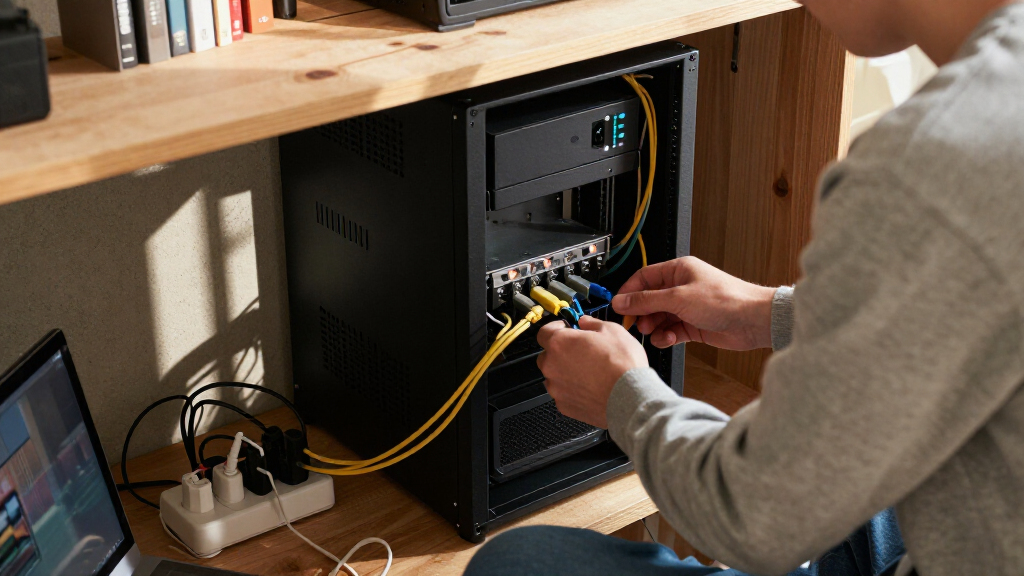
How We Picked
Our evaluation focused on performance, build quality, expandability, and value for money. We prioritized servers that can handle a variety of self-hosted applications from web hosting to media servers, ensuring they offer reliable uptime and good hardware longevity. Ease of maintenance and manageability—especially remote management features—also played a key role. To rank the options, we considered user reviews, hardware specifications, and the reputation of the brands, aiming to identify servers that deliver solid performance at different price points and user levels.Factors to Consider When Choosing Best Self-hosting Servers
Choosing the best self-hosting server requires balancing several factors beyond just raw hardware specs. Understanding your specific needs, future growth plans, and technical expertise will help you avoid costly mistakes and select a server that fits your goals without overpaying or underperforming.Performance and Workload Capacity
Assess the expected workload your server will handle. If you’re running multiple websites, media streaming, or virtual machines, prioritize high CPU core counts, ample RAM, and fast storage options. For lighter tasks, a more modest setup saves money and simplifies management. Avoid over-specifying if your needs are basic, but don’t skimp on CPU and memory if you plan to scale up.
Expandability and Future-Proofing
Look for servers with sufficient drive bays, RAM slots, and PCIe expansion options. This ensures you can upgrade storage or add network cards as your needs grow. Some models, like the Dell PowerEdge R640, excel here, but more compact units may limit future upgrades. Think about where you’ll want to take your self-hosted projects in the coming years to avoid early obsolescence.
Ease of Management and Remote Access
Features like integrated iDRAC, IPMI, or similar remote management tools significantly simplify ongoing maintenance, especially if you operate the server off-site. For beginners, user-friendly interfaces and comprehensive documentation matter even more. Avoid servers with limited management options if you expect to handle troubleshooting yourself or prefer remote administration.
Cost and Total Ownership
Initial purchase price is just part of the total cost. Factor in electricity consumption, warranty, and potential upgrade expenses. Refurbished or renewal options can lower upfront costs but may have limited warranties or support. Balance your budget against the expected lifespan and your willingness to perform DIY maintenance or upgrades.
Form Factor and Space Requirements
Rack-mounted servers like the Dell PowerEdge R640 are ideal for data centers or dedicated server rooms, but they require rack space and professional installation. Tower servers or mini servers like the DARGO are better suited for home labs or small offices. Consider your available space and noise tolerance to choose a server that fits your environment comfortably.
Frequently Asked Questions
Can I run a self-hosted server on a standard home network?
Yes, most self-hosting servers can operate on a typical home network, but you’ll want to ensure your router supports port forwarding and has sufficient bandwidth. If you plan to access your server remotely or host multiple services, consider a dedicated IP address and a stable internet connection. Keep in mind that some setups may require additional configuration for security and performance.
Is it better to buy a pre-configured server or build my own?
Pre-configured servers save time and often come with warranty and support, making them ideal for those who prefer plug-and-play solutions. Building your own can offer tailored hardware and potentially lower costs, but it requires more technical skill and ongoing maintenance. For most users aiming for reliability with minimal fuss, a pre-built server is usually the smarter choice.
What’s the advantage of a rack-mounted server over a tower model?
Rack-mounted servers typically offer higher scalability, better airflow, and easier management in data center environments. They often support more drives and expansion cards, making them suitable for growing workloads. However, they require rack space and professional setup, which might be overkill for small home labs or casual users.
How much RAM do I need for a typical self-hosted setup?
The amount of RAM depends on your applications. Basic web hosting or media servers can run well on 8-16GB, but virtual machines or multiple containers benefit from 32GB or more. Consider future growth—it’s better to choose a server with extra RAM slots so you can upgrade later without replacing the entire machine.
Are refurbished servers reliable enough for long-term use?
Refurbished servers can be highly reliable if purchased from reputable sources with warranty coverage. They often come with tested hardware and are a cost-effective way to access enterprise-grade equipment. However, check the warranty period and return policy, and be prepared for potentially shorter lifespans compared to new units.
Conclusion
For those seeking the best overall performance with room to grow, the Dell PowerEdge R640 makes a compelling choice. Budget-conscious users or hobbyists might prefer the DARGO Mini Server for its simplicity and affordability. Beginners should consider pre-configured models with remote management features to simplify setup. If you need a server for specific workloads like virtualization or media hosting, prioritize hardware specs accordingly. Ultimately, your choice depends on your technical skills, space, and future plans—matching the server to your exact needs will lead to the best experience.Halloween Picks
halloween
As an affiliate, we earn on qualifying purchases.