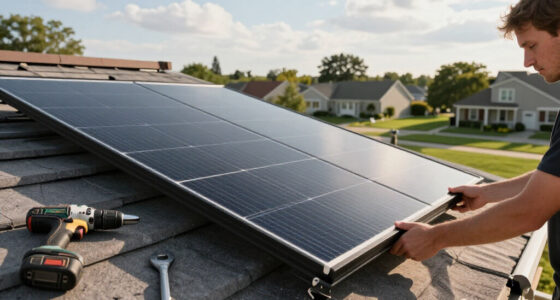
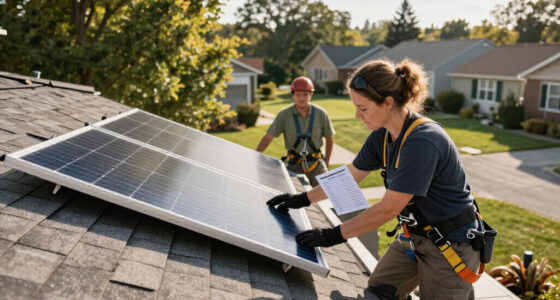
Choosing the best home solar panels requires balancing raw power output with installation complexity and storage capabilities. My analysis identifies the Callsun 450W Bifacial Solar Panels as the top choice for homeowners seeking maximum energy yield per square foot due to their high-efficiency N-Type cells. For those prioritizing a complete, ready-to-go solution, the 12 kW Hybrid Solar Power System Kit stands out by bundling panels with a massive LiFePO4 battery and inverter. The primary tradeoff in this category lies between modular flexibility and integrated convenience; standalone panels offer customization but require separate inverters and batteries. Continue reading to see how these options compare on cost-per-watt, durability, and suitability for grid-tied versus off-grid setups.

Get backup power and energy gear delivered free with Prime
- Fast, free delivery on millions of items
- Prime Video, Amazon Music and more included
- Member-only deals all year
Key Takeaways
- N-Type bifacial cells consistently outperform traditional P-Type monocrystalline panels in low-light and partial-shade conditions, making them the superior choice for complex roof geometries.
- Integrated kits with LiFePO4 batteries offer a higher upfront cost but provide significantly longer lifespans and safer thermal stability compared to lead-acid or older lithium-ion alternatives.
- Plug-and-play balcony solar systems are gaining traction for renters but lack the grid-interactive capabilities needed for whole-home energy independence.
- High-wattage panels (450W+) require robust racking systems and often need professional electrical certification, whereas smaller 100W-200W sets are more DIY-friendly for partial setups.
- Hybrid inverters included in complete kits eliminate the need for separate battery inverters, simplifying the wiring process and reducing potential points of failure in the system.
| Callsun 450W Bifacial Solar Panels, 2-Pack, N-Type 16BB |  | Best High-Output Bifacial Panels | Panel count: 2 | Cell technology: N-Type monocrystalline, 16BB | Stated efficiency: 25.6% | VIEW LATEST PRICE | See Our Full Breakdown |
| 12 kW 48 V Hybrid Solar Power System Kit with 12 kWh LiFePO4 Battery and 26 Solar Panels |  | Best Complete Home Backup Kit | Maximum inverter power: 12,000W | Inverter output: 120/240V split phase, pure sine wave | Solar array: 26 × 120W panels; 3,120W total | VIEW LATEST PRICE | See Our Full Breakdown |
| DOKIO 800W Solar Panel Set, 2 × 400W Monocrystalline Panels |  | Best for 12V and 24V Off-Grid Builds | Panel count: 2 | Output voltage: 31V DC | Maximum voltage: 24V DC | VIEW LATEST PRICE | See Our Full Breakdown |
| Jackery Solar Generator 1000 v2 with 200W Solar Panel |  | Best Portable Solar Backup | Battery capacity: 1,070Wh | Battery type: LFP | AC output: 1,500W | VIEW LATEST PRICE | See Our Full Breakdown |
| JJN Bifacial N-Type Solar Panels, 2-Pack, 425 W Each (850 W Total) |  | Best for Long-Term Array Planning | Panel count: 2 | Cell type: N-Type monocrystalline, 16BB | Stated efficiency: 25% | VIEW LATEST PRICE | See Our Full Breakdown |
| Renogy 400W Premium Solar Kit with 40A MPPT Charge Controller |  | Best Beginner Off-Grid Kit | Total Power: 400 watts | Panel Configuration: 4 × 100W monocrystalline | Charge Controller: 40A MPPT Rover | VIEW LATEST PRICE | See Our Full Breakdown |
| ECO-WORTHY 590W N-Type Bifacial Monocrystalline Solar Panels, 10-Pack |  | Best High-Efficiency Panels | Power Output: 590W per panel | Module Efficiency: Up to 23.23% | Cell Technology: N-type half-cut monocrystalline | VIEW LATEST PRICE | See Our Full Breakdown |
| PluggedSolar 800W Plug-and-Play Solar Panel System with Micro-Inverter |  | Best for Easy Grid-Tie Installation | Total Panel Power: 800W (4 × 200W) | Inverter: Micro grid-tie with Wi-Fi | Outlet Voltage: 110/120V | VIEW LATEST PRICE | See Our Full Breakdown |
| SUNGOLDPOWER 450W Monocrystalline Solar Panels, 10-Pack |  | Best Value Bulk Panels | Power per Panel: 450 W | Cell Type: Monocrystalline silicon | Weight per Panel: 49.2 lb | VIEW LATEST PRICE | See Our Full Breakdown |
| ECO-WORTHY 1200W 48V Solar Power Kit with LiFePO4 Battery and 3500W Inverter |  | Best Complete Off-Grid System | Maximum Power: 1200 W | Battery: 48 V, 50 Ah LiFePO4 | Inverter Output: 3500 W | VIEW LATEST PRICE | See Our Full Breakdown |
| ECO-WORTHY 10 kW Off-Grid Solar Panel Kit with Split-Phase Inverter and 32.2 kWh Battery Storage |  | Best High-Capacity Off-Grid System | Inverter Continuous Output: 10,000 W | Total PV Capacity: 10,620 W | Battery Storage: 32.2 kWh total | VIEW LATEST PRICE | See Our Full Breakdown |
| ECO-WORTHY 400W N-Type Monocrystalline Solar Panel Set, 4 × 100W |  | Best Modular Starter Set | Total Set Output: 400 watts | Cell Type: N-type bifacial monocrystalline | Conversion Efficiency: Up to 25% | VIEW LATEST PRICE | See Our Full Breakdown |
| ECO-WORTHY 10 kW Off-Grid Solar System Kit with 2,340 W Panels, 10 kW Inverter, and 10.24 kWh Batteries |  | Best Balanced Off-Grid Kit | Solar Panel Quantity: 12 | Total PV Capacity: 2,340 W | Inverter Output: 10,000 W | VIEW LATEST PRICE | See Our Full Breakdown |
| Jackery HomePower 3600 Plus Portable Power Station with Two 200W Solar Panels |  | Best Portable Backup Solution | Battery Capacity: 3,584Wh | Output Wattage: 3,600W | Expandable Capacity: Up to 21kWh per unit | VIEW LATEST PRICE | See Our Full Breakdown |
| SUNGOLDPOWER 450W Monocrystalline Solar Panels, 10-Pack | | Best Value Panel Array | Combined Maximum Power: 4500W | Power per Panel: 450W | Panel Count: 10 | VIEW LATEST PRICE | See Our Full Breakdown |
More Details on Our Top Picks
Callsun 450W Bifacial Solar Panels, 2-Pack, N-Type 16BB
I’d choose the Callsun pair for a rooftop or ground-mounted array where high output per panel and rear-side light capture suit the installation. Its two 450W panels provide 900W of rated power, slightly more than the JJN pair’s 850W, while the double-glass construction and IP68 rating are aimed at long-term outdoor exposure. The 25.6% stated efficiency is also higher than JJN’s 25% figure, though actual production depends on siting and operating conditions.
The tradeoff is system fit: these panels are intended for higher-voltage setups using an MPPT controller or inverter, so I’d check electrical compatibility before buying. Bifacial gains also rely on reflected light reaching the back, making them less compelling when mounted close to an opaque roof. Compared with DOKIO’s 800W set, Callsun prioritizes bifacial generation and weather protection over straightforward off-grid battery compatibility.
Pros:- Two 450W panels provide 900W of rated power.
- Bifacial design can collect reflected light from behind the panels.
- Double-glass construction and IP68 rating are suited to outdoor exposure.
- N-Type 16BB cells and stated 25.6% efficiency.
Cons:- Rear-side gains depend on installation height, surface reflectivity, and surrounding conditions.
- High-voltage system requirements call for a compatibility check with the inverter or MPPT controller.
- Large panels need suitable mounting space and handling.
Best for: Homeowners building an MPPT-based rooftop or ground array who want high rated output and can expose both panel faces to useful light.
Not ideal for: Buyers replacing panels in a low-voltage battery setup without checking controller compatibility, or mounting panels flush against a surface that blocks rear-side light.
- Panel count:2
- Cell technology:N-Type monocrystalline, 16BB
- Stated efficiency:25.6%
- Maximum voltage:30.08V
- Amperage capacity:14.97A
- Dimensions:69.37 × 44.65 × 1.18 in per panel
- Ingress protection:IP68
- Output commitment:25-year commitment to at least 84.5% output
Our verdict“Choose Callsun for a compatible array where bifacial placement and high per-panel output matter more than simple low-voltage integration.”
12 kW 48 V Hybrid Solar Power System Kit with 12 kWh LiFePO4 Battery and 26 Solar Panels
This is the most integrated option here: it bundles 26 panels, a hybrid inverter, and a LiFePO4 battery, rather than asking buyers to assemble compatible parts. Its split-phase 120/240V output is suited to a home backup or off-grid system, and WiFi monitoring plus dual MPPT controllers add useful control as the array produces power. Compared with the Callsun and JJN panel-only packs, this kit provides the major balance-of-system components as well as solar modules.
That completeness comes with a serious installation commitment. The 910lb listed weight and instruction to use a qualified electrician make it a poor fit for casual DIY projects, and its 3,120W of panels is modest relative to the inverter’s 12,000W maximum rating. I’d also resolve the battery capacity discrepancy—12kWh stated versus 11.8kWh listed—before planning backup runtime. Buyers seeking a smaller portable setup may prefer the Jackery Solar Generator 1000 v2, though it offers far less capacity and output.
Pros:- Includes inverter, battery, and 26 solar panels in one system kit.
- Pure sine wave 120/240V split-phase output supports household loads.
- LiFePO4 battery has a built-in BMS and stated 8,000+ cycle rating.
- Supports parallel expansion for additional inverters and batteries.
Cons:- Installation is intended for a qualified electrician.
- Listed item weight is 910lb, making delivery and placement substantial tasks.
- Battery capacity is described as both 12kWh and 11.8kWh.
Best for: Homeowners planning a substantial fixed backup or off-grid installation who want panels, storage, and a split-phase inverter in one package.
Not ideal for: Renters, DIY beginners without electrical support, or households that need a compact system and cannot accommodate heavy equipment and professional installation.
- Maximum inverter power:12,000W
- Inverter output:120/240V split phase, pure sine wave
- Solar array:26 × 120W panels; 3,120W total
- Battery chemistry:LiFePO4
- Battery voltage and capacity:51.2V, 230Ah; 12kWh stated and 11.8kWh listed
- MPPT controllers:Dual 200A
- Connectivity:WiFi, CAN/RS485
- Parallel expansion:Up to 6 inverters and 16 batteries
- Item weight:910lb
Our verdict“Pick this kit if you want a professionally installed, expandable home backup system rather than panels alone or a portable power station.”
DOKIO 800W Solar Panel Set, 2 × 400W Monocrystalline Panels
DOKIO is the more direct choice for buyers building a 12V or 24V off-grid system around compatible batteries and a charge controller. The pair supplies 800W total, and its 9.84ft MC4 leads give more freedom to position panels relative to the controller than a short-lead setup. Tempered glass, aluminum frames, and IP65-rated junction boxes suit outdoor installation. Compared with Callsun’s 900W bifacial pair, DOKIO gives up rated output and rear-side generation in favor of a clearly described fit with AGM, Gel, and LiFePO4 batteries.
I would not treat the panels as a complete charging system: a suitably rated controller is required, and the listing advises MPPT. The total current also needs to match the controller, while series wiring only works with compatible equipment. At 44.45kg for the set, handling is another practical hurdle. Unlike the Jackery bundle, this is a fixed-array component rather than a portable power station with storage and AC outlets.
Pros:- Two panels provide 800W of rated power.
- Long 9.84ft MC4 leads allow flexible panel placement.
- Designed for compatible AGM, Gel, and LiFePO4 battery systems.
- Tempered glass, aluminum frames, and IP65-rated junction boxes support outdoor use.
Cons:- Charge controller is required and not included in the described set.
- Controller must handle the array’s total current; wiring choices depend on system compatibility.
- The 44.45kg listed weight makes installation and repositioning harder.
Best for: Off-grid cabin, RV, or workshop owners who already have compatible 12V or 24V battery equipment and need a two-panel array.
Not ideal for: Buyers wanting a ready-to-use solar generator, an included charge controller, or panels that are easy for one person to lift and position.
- Panel count:2
- Output voltage:31V DC
- Maximum voltage:24V DC
- Connectors:MC4
- Cable length:9.84ft per panel
- Dimensions:67.8 × 44.6 × 2.4 in per panel
- Item weight:44.45kg
- Battery compatibility:AGM, Gel, and LiFePO4
Our verdict“Choose DOKIO for a fixed 12V or 24V off-grid build when you have the right controller and can manage the panel weight.”
Jackery Solar Generator 1000 v2 with 200W Solar Panel
Jackery is the practical pick for buyers who need portable power with a solar panel included, not a permanent roof array. The 1,070Wh LFP power station provides 1,500W of AC output and 3,000W surge capacity, with three pure sine wave outlets and USB ports for common devices. At 23.8lb, the station is far easier to move than the 910lb hybrid kit, though its capacity and solar input are built for a smaller scale of backup. The included 200W panel can replenish the battery when conditions allow, but it is not comparable to the 800W DOKIO pair or the 850W JJN array for fixed home generation.
Its main limitation is that this is a portable power station rather than a complete home solar installation. The one-hour AC charging claim depends on enabling emergency charging in the app, and the panel and station ship separately. I’d pick it for essential devices, trips, and short outages—not for powering a whole home or storing large amounts of rooftop production.
Pros:- Portable 1,070Wh LFP power station with 1,500W AC output.
- 3,000W surge output can accommodate some loads with higher startup demand.
- Includes a 200W solar panel and app-controlled charging modes.
- Multiple AC, USB-C, and USB-A ports support varied devices.
Cons:- Solar input and battery storage are much smaller than those of fixed-array and hybrid-kit options.
- One-hour AC charging requires emergency charging to be enabled in the app.
- The solar panel and power station ship separately.
Best for: Campers, renters, and households seeking movable backup for communications, small appliances, and essential electronics.
Not ideal for: Homeowners planning whole-home backup or a high-output fixed array; the included 200W panel and 1,070Wh storage serve a more limited role.
- Battery capacity:1,070Wh
- Battery type:LFP
- AC output:1,500W
- Surge output:3,000W
- Included solar panel:200W
- AC outlets:3 pure sine wave
- USB ports:2 USB-C, 1 USB-A; USB-C output up to 100W
- Weight:23.8lb
- Warranty:5 years
Our verdict“Choose Jackery for portable, modest-scale backup and camping power, not as a substitute for a full home solar array.”
JJN Bifacial N-Type Solar Panels, 2-Pack, 425 W Each (850 W Total)
The JJN pair suits buyers who want bifacial N-Type panels with a transferable 30-year power output warranty. Its two 425W modules total 850W, placing it between DOKIO’s 800W pair and Callsun’s 900W set. Stated efficiency reaches 25%, and the listing includes wind and snow load figures that help buyers evaluate mounting demands. Pre-drilled holes and MC4 connectors also make it easier to plan into a compatible rooftop or off-grid installation.
There are practical compromises. At 94.6lb per panel, these are heavy modules that call for careful handling and suitable mounting hardware. The package includes panels only, so unlike the 12kW hybrid kit, it does not supply an inverter, battery, or controller. Bifacial output is also installation-dependent: a panel mounted close to an opaque roof surface may not make much use of its rear face. I’d favor Callsun for higher stated efficiency and IP68 protection, but JJN offers a longer stated transferable output warranty.
Pros:- Two 425W panels provide 850W total rated power.
- Bifacial N-Type 16BB cells can capture light from both sides.
- Transferable 30-year power output warranty is stated.
- Includes pre-drilled mounting holes, MC4 connectors, and wind and snow load ratings.
Cons:- Each panel’s listed 94.6lb weight makes transport and installation demanding.
- Panels only; compatible inverter, controller, and battery equipment are not included.
- Rear-side generation depends on mounting and reflected-light conditions.
Best for: Homeowners and off-grid builders planning a fixed array who value a transferable long-term output warranty and can provide compatible system equipment.
Not ideal for: Solo installers, buyers with limited lifting support, or anyone seeking a complete solar-and-storage kit rather than panel modules alone.
- Panel count:2
- Cell type:N-Type monocrystalline, 16BB
- Stated efficiency:25%
- Output voltage:31.05V
- Amperage:13.78A
- Wind and snow load:2400Pa wind; 5400Pa snow
- Connectors:MC4
- Power output warranty:30-year transferable
Our verdict“Pick JJN if a long stated output warranty and bifacial generation matter more than low panel weight or an all-in-one system.”
Renogy 400W Premium Solar Kit with 40A MPPT Charge Controller
This kit stands out for beginners entering off-grid power because it bundles everything needed for a 12V system. Unlike the PluggedSolar 800W System, which requires grid connection, this Renogy kit is self-contained and ideal for cabins or RVs. The inclusion of a Bluetooth-enabled MPPT controller allows easy monitoring via smartphone, a feature often missing in budget kits. However, the 56.4-pound weight makes transport harder than lighter portable options. While robust, it lacks the battery storage found in the ECO-WORTHY 1200W Kit, meaning users must source and install batteries separately. This tradeoff lowers the upfront cost but adds complexity for novices.
Pros:- Includes a Bluetooth-enabled MPPT controller for easy phone-based monitoring
- Comes with mounting brackets and cables for a complete 12V setup
- Renogy offers strong brand support and a 5-year panel warranty
Cons:- Does not include batteries or an inverter, requiring additional purchases
- Limited to 12V systems, restricting scalability for larger homes
Best for: Hobbyists and RV owners building their first 12V off-grid system who want reliable components without complex wiring.
Not ideal for: Users needing immediate backup power, as this kit excludes batteries and inverters.
- Total Power:400 watts
- Panel Configuration:4 × 100W monocrystalline
- Charge Controller:40A MPPT Rover
- System Voltage:12 volts
- Item Weight:56.4 pounds
- Warranty:5 years
Our verdict“Ideal for DIY enthusiasts starting a small off-grid setup who value ease of integration over immediate power storage.”
ECO-WORTHY 590W N-Type Bifacial Monocrystalline Solar Panels, 10-Pack
These panels target users prioritizing maximum energy density per square foot. With a 23.23% module efficiency and bifacial design, they outperform standard monocrystalline options like the SUNGOLDPOWER 450W Panels in low-light and reflective environments. The N-type half-cut cells offer better degradation resistance than older P-type technologies. However, the large physical footprint and heavy weight require significant roof or ground space, and delivery demands truck access, unlike the compact PluggedSolar units. The 30-year linear performance guarantee provides long-term peace of mind, but the lack of included mounting hardware or inverters means this is strictly a component purchase for experienced installers.
Pros:- High 23.23% efficiency captures more energy in less space
- Bifacial design generates power from both front and rear surfaces
- N-type cells offer superior durability and lower light-induced degradation
Cons:- Requires truck delivery and significant handling effort due to size and weight
- No mounting hardware or inverters included, increasing total project cost
Best for: Homeowners with ample roof space seeking the highest possible wattage output from premium panel technology.
Not ideal for: Renters or those with limited roof area, as these panels are bulky and require professional-grade installation planning.
- Power Output:590W per panel
- Module Efficiency:Up to 23.23%
- Cell Technology:N-type half-cut monocrystalline
- Design:Bifacial dual-glass
- Warranty:10-year workmanship; 30-year performance
- Dimensions:89.7 x 44.6 x 1.4 inches
Our verdict“The top choice for efficiency-focused buyers who have the space and expertise to install high-end panels.”
PluggedSolar 800W Plug-and-Play Solar Panel System with Micro-Inverter
This system simplifies home solar adoption by eliminating complex electrical work. The plug-and-play design connects directly to a standard 110/120V outlet, contrasting sharply with the Renogy 400W Kit, which requires battery integration. The micro-inverter with Wi-Fi monitoring provides real-time data on energy production and savings, appealing to tech-savvy users. However, the conflicting power specifications in the listing create ambiguity about actual output limits. Additionally, the components arrive in separate shipments, requiring patience for full assembly. It is best suited for those who want to offset grid usage without managing DC battery banks, though it offers no backup power during outages.
Pros:- Simple plug-in installation requires no professional electrician
- Built-in Wi-Fi monitoring tracks energy savings in real time
- Micro-inverter optimizes performance for each individual panel
Cons:- No battery storage means no power during grid outages
- Conflicting power figures in product specs create uncertainty
Best for: Homeowners wanting to reduce electricity bills via grid-tie systems without hiring an electrician for DC wiring.
Not ideal for: Users needing backup power during blackouts, as this system disconnects from the grid for safety.
- Total Panel Power:800W (4 × 200W)
- Inverter:Micro grid-tie with Wi-Fi
- Outlet Voltage:110/120V
- Cord Length:50 ft
- Panel Material:Monocrystalline silicon
- Item Weight:5 lb
Our verdict“Perfect for renters or homeowners seeking effortless grid-tie solar savings without complex infrastructure.”
SUNGOLDPOWER 450W Monocrystalline Solar Panels, 10-Pack
For large-scale installations on a budget, this 10-pack delivers 4,500W total capacity at a competitive per-watt price. The half-cell technology improves shade tolerance, making these panels more forgiving than the full-cell alternatives in the Renogy kit. The IP67 rating and tempered glass ensure durability against harsh weather. However, the 49.2-pound weight per panel makes DIY installation challenging without a team. Unlike the ECO-WORTHY bifacial panels, these do not capture rear-side light, potentially lowering total yield in snowy or reflective ground conditions. The warranty tiers are standard but lack the premium longevity of higher-end N-type models.
Pros:- Half-cell design maintains power output even when partially shaded
- Robust IP67 rating and aluminum frame withstand harsh weather
- Pre-drilled holes simplify mounting for various system voltages
Cons:- Heavy weight complicates handling and roof installation
- Monocrystalline cells lack bifacial gain found in premium competitors
Best for: Contractors and DIYers building large solar arrays who prioritize cost-effectiveness over premium efficiency.
Not ideal for: Individuals with limited strength or no installation help, as handling ten heavy panels is physically demanding.
- Power per Panel:450 W
- Cell Type:Monocrystalline silicon
- Weight per Panel:49.2 lb
- Warranty:25 years at 80% output
- Dimensions:75.2 × 44.65 × 1.38 in
- Connector:MC4
Our verdict“A solid choice for large off-grid or on-grid projects where budget and shade tolerance are key priorities.”
ECO-WORTHY 1200W 48V Solar Power Kit with LiFePO4 Battery and 3500W Inverter
This kit offers a turnkey off-grid solution, combining panels, a high-capacity LiFePO4 battery, and a robust inverter. Unlike the Renogy 400W Kit, which requires separate battery purchases, this system provides 2,560 Wh of usable energy right out of the box. The UPS switching feature ensures seamless power continuity, critical for sensitive electronics. The Wi-Fi monitored inverter and 80A MPPT controller offer advanced management capabilities. However, the split delivery of components can delay setup, and the system’s performance heavily relies on consistent sunlight, making it less ideal for cloudy regions compared to grid-tie options like the PluggedSolar system.
Pros:- Includes a high-cycle LiFePO4 battery for long-term reliability
- UPS function provides instant backup power during grid failures
- Wi-Fi monitoring and built-in MPPT controller simplify system management
Cons:- Heavy battery and multiple packages make delivery and setup cumbersome
- Daily energy output is highly dependent on four hours of direct sunlight
Best for: Off-grid homeowners or cabin owners needing reliable backup power and energy storage without sourcing components separately.
Not ideal for: Users in low-sunlight areas or those who only need grid-tie savings, as the battery capacity may go underutilized.
- Maximum Power:1200 W
- Battery:48 V, 50 Ah LiFePO4
- Inverter Output:3500 W
- Panel Efficiency:25%
- Battery Cycle Life:More than 4000 cycles
- UPS Switching Time:20 ms
Our verdict“The most comprehensive kit for serious off-grid users who value integrated storage and backup capabilities.”
ECO-WORTHY 10 kW Off-Grid Solar Panel Kit with Split-Phase Inverter and 32.2 kWh Battery Storage
This kit stands out for its massive 32.2 kWh battery storage, a capacity that dwarfs smaller portable units like the Jackery HomePower 3600 Plus. While the Jackery is ideal for emergency backup, this ECO-WORTHY system is built for full-time off-grid living. The inclusion of 18 high-wattage monocrystalline panels ensures rapid recharging, even in less-than-perfect sunlight conditions. However, the sheer size of the components means this is not a DIY-friendly project for most; professional installation is strongly recommended to handle the 10,000 W continuous inverter and heavy pallet-delivered batteries. It represents a significant infrastructure upgrade rather than a simple appliance.
Pros:- Includes 32.2 kWh of LiFePO4 storage, allowing for multi-day autonomy.
- 10,000 W continuous output supports heavy appliances like well pumps and AC units.
- Dual MPPT controllers optimize energy harvest from the 10.62 kW array.
- Modular design allows for future expansion of battery capacity.
Cons:- Requires professional installation due to high-voltage components and weight.
- Logistics are complex, requiring truck access for pallet delivery.
- Initial footprint is large, demanding significant roof and ground space.
Best for: Off-grid homeowners needing substantial energy independence and daily consumption exceeding 10-15 kWh.
Not ideal for: Renters or homeowners with limited roof space who cannot accommodate 18 large panels and heavy battery banks.
- Inverter Continuous Output:10,000 W
- Total PV Capacity:10,620 W
- Battery Storage:32.2 kWh total
- Battery Type:LiFePO₄
- Output Voltage:120 V / 240 V split-phase
- Solar Panels:18 × 590 W monocrystalline
- MPPT Controllers:Dual
Our verdict“This is a robust infrastructure solution for serious off-grid applications, not a plug-and-play backup.”
ECO-WORTHY 400W N-Type Monocrystalline Solar Panel Set, 4 × 100W
Unlike the fixed, high-capacity arrays in the ECO-WORTHY 10 kW Off-Grid Solar Panel Kit, this 400W set offers flexibility for smaller, targeted applications. The N-type bifacial cells provide up to 25% conversion efficiency, which is higher than many standard P-type panels in this wattage class. Each 100W panel is light enough for a single person to mount on a boat, RV, or garden shed, making it a practical entry point for those wary of committing to a large rooftop system. The tradeoff is scalability; adding more panels requires careful wiring management to avoid voltage mismatches, and the IP68 rating, while robust, does not negate the need for proper mounting hardware that is not always included in the most basic configurations.
Pros:- N-type bifacial cells offer higher efficiency and better low-light performance.
- Lightweight 23.8 lb panels are easy to handle and mount individually.
- Plug-and-play MC4 connectors simplify wiring for beginners.
- IP68-rated junction boxes ensure durability in wet environments.
Cons:- Low total wattage (400W) limits application to small devices or trickle charging.
- Shipping in separate boxes can lead to staggered delivery times.
- Requires separate purchase of charge controllers and batteries for a complete system.
Best for: DIY enthusiasts building small off-grid setups for RVs, boats, or security cameras.
Not ideal for: Homeowners seeking to offset significant household electricity bills, as 400W is insufficient for whole-home use.
- Total Set Output:400 watts
- Cell Type:N-type bifacial monocrystalline
- Conversion Efficiency:Up to 25%
- Dimensions per Panel:35.63 × 23.03 × 1.18 inches
- Weight per Panel:23.8 pounds
- Connector Type:MC4
- Compatibility:12V/24V systems
Our verdict“An excellent, efficient starting point for small-scale, mobile, or partial off-grid projects.”
ECO-WORTHY 10 kW Off-Grid Solar System Kit with 2,340 W Panels, 10 kW Inverter, and 10.24 kWh Batteries
This system strikes a middle ground between the massive capacity of the ECO-WORTHY 10 kW Off-Grid Solar Panel Kit with 32.2 kWh Battery and smaller starter kits. With 10.24 kWh of storage, it suits households with moderate consumption who want a complete package without the bulk of larger banks. The 12 bifacial panels at 25% efficiency help maximize yield in reflective environments. However, the panel array (2,340 W) is smaller relative to the inverter size, meaning you may not fully utilize the 10,000 W output during peak sun hours unless you expand the array later. It is a versatile choice for those who want split-phase output for standard US appliances but have limited roof space for the 18-panel configurations seen in other models.
Pros:- Balanced 10.24 kWh storage suits daily moderate usage without excessive weight.
- Includes mounting accessories and a complete inverter/battery setup.
- Bifacial panels capture reflected light, boosting effective generation.
- App-based monitoring via Wi-Fi/Bluetooth simplifies system management.
Cons:- Panel array (2.34 kW) is undersized relative to the 10 kW inverter for peak performance.
- Professional installation is still recommended for safety and code compliance.
- Daily energy output claims rely on optimal, uninterrupted sunshine.
Best for: Small off-grid cabins or homes with moderate energy needs and limited roof area.
Not ideal for: Users with high daytime energy demands who need maximum solar input to match the 10 kW inverter capacity immediately.
- Solar Panel Quantity:12
- Total PV Capacity:2,340 W
- Inverter Output:10,000 W
- Battery Capacity:10.24 kWh (2 × 48 V, 100 Ah)
- Panel Efficiency:25%
- Certifications:UL 1741 inverter; UL 1973 batteries
- Output Voltage:120 V/240 V AC
Our verdict“A practical, space-efficient off-grid solution for users who don’t need massive storage or array size.”
Jackery HomePower 3600 Plus Portable Power Station with Two 200W Solar Panels
Compared to the permanent installations like the ECO-WORTHY 10 kW Off-Grid Solar Panel Kit, the Jackery HomePower 3600 Plus prioritizes mobility and ease of use. It requires no professional installation, no permits, and no complex wiring—just plug it in. The 3,600W output handles most household appliances, and the wheeled design makes it manageable despite the 77.2 lb weight. However, it is not a replacement for a whole-home system; the 3.5 kWh capacity will deplete quickly during extended outages unless you expand it with additional units. It is the best choice for renters or those needing immediate, reliable backup without altering their home’s electrical infrastructure.
Pros:- No installation required; ready to use out of the box.
- Expandable capacity up to 21kWh allows for scalable backup.
- Hybrid charging (AC+DC) refills the battery in just 2 hours.
- Wheeled design and telescopic handle aid in portability.
Cons:- Solar charging is slow (4 hours) compared to AC charging.
- Higher cost per watt of storage compared to fixed off-grid kits.
- Limited to 3.5kWh base capacity, requiring extra units for long outages.
Best for: Renters, apartment dwellers, or homeowners wanting instant, non-invasive emergency power backup.
Not ideal for: Those seeking to reduce monthly electricity bills through solar generation, as it is not connected to the grid.
- Battery Capacity:3,584Wh
- Output Wattage:3,600W
- Expandable Capacity:Up to 21kWh per unit
- Battery Cycle Life:6,000 cycles
- Weight:77.2 lbs
- Hybrid Charging Time:2 hours
- Included Solar:Two 200W Panels
Our verdict“The ultimate plug-and-play backup power solution for those who cannot or do not want to install a permanent system.”
SUNGOLDPOWER 450W Monocrystalline Solar Panels, 10-Pack
If you already have an inverter and charge controller, this 10-pack offers a straightforward way to scale up your solar array. At 4,500W combined, it provides substantial generation capacity for a typical home, outpacing the smaller 2.34 kW array in the ECO-WORTHY 10 kW Off-Grid Solar System Kit. The 25-year output warranty (80% retention) offers peace of mind regarding long-term durability. The tradeoff is weight and logistics; at 48.5 lbs per panel, handling ten of them requires a team and careful planning. This is a pure component purchase, meaning you must ensure your existing system can handle the voltage and current load of ten 450W panels in series or parallel.
Pros:- High combined output of 4,500W suits whole-home energy offsetting.
- Grade A cells with tempered glass ensure durability and performance.
- Extensive 25-year output warranty provides long-term value assurance.
- Pre-drilled holes and standard frames simplify mounting on racking.
Cons:- Very heavy (48.5 lbs per panel), making installation labor-intensive.
- Does not include inverters, batteries, or mounting rails.
- Requires compatible charge controllers to handle the array voltage.
Best for: Experienced DIYers upgrading an existing solar setup who need high-wattage panels at a competitive rate.
Not ideal for: Beginners or those without an existing inverter/battery system, as this kit lacks the necessary power electronics.
- Combined Maximum Power:4500W
- Power per Panel:450W
- Panel Count:10
- Weight per Panel:48.5 lbs
- Output Warranty:80% for 25 years
- Cell Type:Monocrystalline Silicon
- Dimensions:75.2 × 44.7 × 1.4 in
Our verdict“A cost-effective, high-capacity panel solution for users ready to integrate solar into an existing electrical system.”

How We Picked
To determine the best home solar panels, I evaluated each product based on four core criteria: energy conversion efficiency, system integration ease, durability warranties, and scalability. Efficiency was measured by the panel type (N-Type vs. P-Type) and wattage density, as higher density means more power from limited roof space. Integration ease looked at whether the kit included necessary components like inverters, charge controllers, and batteries, or if it required sourcing these separately. Durability focused on the construction of the frames and the reputation of the cell technology, particularly regarding degradation rates over time. Scalability assessed how easily the system could be expanded, a factor that separates beginner kits from serious whole-home solutions.
The ranking logic prioritizes versatility and long-term value over initial sticker price. Products that offer bifacial technology or integrated battery storage were favored because they address common homeowner pain points: maximizing yield from suboptimal roof angles and maintaining power during grid outages. Standalone panel packs were ranked lower than complete kits unless they offered exceptional efficiency advantages that justified the additional labor and component costs. This approach ensures the recommendations align with actual residential needs rather than just technical specifications.
Factors to Consider When Choosing Best Home Solar Panels
Selecting the right solar setup involves more than just picking the highest wattage panel. These factors will help you align your purchase with your specific energy goals and property constraints.Panel Technology: N-Type vs. P-Type Efficiency
The shift from P-Type to N-Type solar cells represents a major advancement in residential solar. N-Type panels degrade slower over time and maintain higher efficiency in high-temperature environments, which is critical for roofs in hot climates. When comparing options, look for N-Type 16BB (16 busbars) configurations, as the additional busbars reduce electrical resistance within the cell. This translates to more usable power during peak sun hours compared to older P-Type designs. If your roof receives intense sunlight, investing in N-Type technology yields a better return on investment over the panel’s 25-year lifespan.
Bifacial Capability and Albedo Effect
Bifacial solar panels capture sunlight on both the front and rear sides, potentially increasing energy yield by 10-20%. However, this benefit is entirely dependent on the ground reflection, or albedo, beneath the panels. Installing these on a dark asphalt shingle roof offers minimal gain, while mounting them on a white gravel roof or elevated ground mount maximizes the effect. Before choosing bifacial models, assess your installation surface; if you lack a reflective surface, standard monocrystalline panels may offer better value by avoiding the premium price of bifacial glass without utilizing its main feature.
Inverter Compatibility: Micro vs. String vs. Hybrid
The inverter type dictates how your system handles shading and battery integration. Micro-inverters allow each panel to operate independently, meaning shade on one panel does not drag down the output of the entire string. This is ideal for complex roofs with obstructions. String inverters are more affordable but require uniform sunlight across all panels. Hybrid inverters are essential if you plan to add battery storage later, as they manage both AC and DC power flows seamlessly. Choosing the wrong inverter type can limit your system’s efficiency and complicate future upgrades, so match the inverter to your roof’s shading profile and storage needs.
Battery Chemistry: LiFePO4 vs. Lead-Acid
For systems including storage, Lithium Iron Phosphate (LiFePO4) batteries are the current standard for residential use. They offer a cycle life of 3,000-6,000 cycles, far exceeding the 500-1,000 cycles of traditional lead-acid batteries. LiFePO4 batteries are also lighter and have a flatter discharge curve, meaning you get consistent voltage until the battery is nearly empty. While the upfront cost is higher, the total cost of ownership over ten years is often lower due to fewer replacements. Avoid older lithium-ion chemistries like NMC for stationary home storage due to lower thermal stability and shorter lifespans.
DIY Complexity and Permitting Requirements
Many homeowners underestimate the permitting and electrical code requirements for home solar. Plug-and-play balcony systems often bypass some local codes, but roof-mounted grid-tied systems typically require professional inspection and utility interconnection agreements. Kits that include pre-wired components and clear installation manuals reduce the DIY barrier, but they do not exempt you from local regulations. Before purchasing, check with your local building department about net metering policies and installation permits. A system that is technically easy to install may still require a licensed electrician to sign off on the connection to your home’s main panel.
Frequently Asked Questions
Can I install bifacial panels on my existing asphalt shingle roof?
Yes, you can install bifacial panels on asphalt shingles, but the energy gain will be minimal. Asphalt has a low albedo (reflectivity), so very little light bounces off the roof to be captured by the rear side of the panel. To get the full benefit of bifacial technology, you would need to raise the panels higher off the roof surface to allow more ambient light to reach the back, which complicates mounting. If you have a standard roof, high-efficiency monocrystalline panels are usually a better value than paying a premium for bifacial features you cannot fully utilize.Do I need a battery backup if I am connected to the grid?
You do not strictly need a battery if you have net metering, where the utility company credits you for excess power sent back to the grid. However, during a power outage, most standard grid-tied inverters shut down for safety, leaving you without power even if the sun is shining. A battery backup allows your home to continue operating during outages, which is valuable if you live in an area prone to storms or blackouts. If reliability is a priority, choose a kit with a hybrid inverter and battery storage, even if your primary goal is reducing monthly bills.Is it worth buying a complete kit versus individual components?
Complete kits reduce the risk of component incompatibility, such as mismatched voltage ranges between panels and inverters. They also simplify the warranty process, as one manufacturer supports the whole system. However, buying components separately allows you to optimize each part for your specific needs, such as choosing a higher-end inverter with better monitoring features. For beginners, a complete kit is safer and faster to deploy. Experienced DIYers may prefer sourcing parts separately to save money or tailor the system to unique roof constraints, but this requires more technical knowledge to ensure all parts work together correctly.How does shading affect my solar panel output?
Shading has a disproportionate impact on solar output because traditional string inverters force all panels in a series to operate at the lowest common denominator. If one panel is shaded by a chimney or tree, the entire string’s output can drop significantly. Micro-inverters or power optimizers mitigate this by allowing each panel to operate independently, so only the shaded panel loses power. If your roof has partial shading, prioritize systems with micro-inverters or N-Type panels with better low-light performance, as they handle partial shade more gracefully than standard P-Type panels.What is the difference between a plug-and-play system and a grid-tied system?
Plug-and-play systems are designed for easy installation, often plugging directly into a standard wall outlet, and are ideal for renters or small-scale energy offsetting. They typically lack the capacity to power high-draw appliances like air conditioners or electric vehicles. Grid-tied systems are permanently installed on the roof and connected to your home’s breaker panel, allowing them to offset a significant portion of your total household energy use. Grid-tied systems require professional installation and permits but offer much higher energy production and potential financial returns through net metering.Conclusion
The Callsun 450W Bifacial Solar Panels remain my top recommendation for homeowners with ample roof space who want to maximize energy yield through advanced N-Type technology. If you prefer a hassle-free, all-in-one solution that handles both generation and storage, the 12 kW Hybrid Solar Power System Kit is the best premium choice, offering robust battery integration and high output. For those just starting out or looking for a low-commitment entry point, the DOKIO 800W Solar Panel Set provides a balanced mix of power and ease of installation without the complexity of full battery systems. Ultimately, match your choice to your roof’s shading profile and your need for outage protection; if you need reliability during blackouts, prioritize kits with LiFePO4 batteries and hybrid inverters.