The best smart thermostat for most homes is the ecobee Smart Thermostat Premium, which combines broad smart-home features with room-sensor support. For a more hands-off learning approach, the Google Nest Learning Thermostat (4th Gen) adds a temperature sensor, while the Amazon Smart Thermostat is a straightforward pick for homes already using Alexa. The main tradeoffs are HVAC compatibility, the amount of automation you want, and whether remote sensors or a simpler control panel matter more to you. Some models need a C-wire or a power adapter, so checking your system before choosing can prevent a frustrating installation. Read on for how the 15 options compare and which one best fits your setup.

Get backup power and energy gear delivered free — and shop member deals
- Fast, free delivery on millions of items
- Access to Prime Big Deal Days deals on October 6–7
- Prime Video, Amazon Music and more included
Key Takeaways
- Ecobee Premium leads for feature range: It brings room-sensor support and built-in voice-assistant options together, while the Enhanced and Essential models offer narrower feature sets.
- Nest stands out for learning-based control: The 4th Gen bundle includes a separate temperature sensor; the 3rd Gen and standard Nest Thermostat suit different budgets and control preferences.
- Honeywell Home offers the widest spread of control styles: From the T5 and X2S to the Lyric T6 Pro and RTH9600WF, its options vary in interface and setup rather than following one single smart-home approach.
- Sensi prioritizes approachable installation: The Lite, ST55, and Touch 2 give DIY-focused buyers several control-panel choices, though feature needs should guide which one they select.
- Compatibility is the first filter, not an afterthought: These models vary in wiring needs, HVAC support, and smart-home integration, so a model’s feature list matters only if it fits the system already in the home.
| ecobee Smart Thermostat Premium with Wi-Fi, Siri and Alexa |  | Best Overall | Connectivity: Wi-Fi | Voice assistants: Siri and Alexa | Included accessory: SmartSensor | VIEW LATEST PRICE | See Our Full Breakdown |
| Honeywell TH9320WF5003 Wi-Fi Programmable Touchscreen Thermostat |  | Best for 7-Day Scheduling | Model: TH9320WF5003 | Connectivity: Wi-Fi | Controls: Touchscreen and app | VIEW LATEST PRICE | See Our Full Breakdown |
| ecobee Smart Thermostat Enhanced |  | Best for Smart-Home Compatibility | Connectivity: Wi-Fi | Display: 4-inch LCD | Voltage: 24 volts | VIEW LATEST PRICE | See Our Full Breakdown |
| ecobee Smart Thermostat Essential Wi-Fi Thermostat |  | Best for Straightforward DIY Setup | Connectivity: Wi-Fi | Display: 3.74-inch LCD touchscreen | Power source: Battery powered | VIEW LATEST PRICE | See Our Full Breakdown |
| Google Nest Learning Thermostat (4th Gen) with Nest Temperature Sensor (2nd Gen), Obsidian |  | Best for Learning Schedules and Room Comfort | Compatibility: Most 24V heating and cooling systems | Connectivity: Wi-Fi | C wire: Not required in most homes; may be needed in some | VIEW LATEST PRICE | See Our Full Breakdown |
| Honeywell Home T5 Smart Wi-Fi Thermostat |  | Best for Flexible Scheduling | Model: RTH8800WF2022 | Connectivity: Wi-Fi | System control: Heating and cooling | VIEW LATEST PRICE | See Our Full Breakdown |
| Honeywell Home X2S Smart Wi-Fi Thermostat, Gray |  | Best for Matter Smart Homes | Connectivity: Wi-Fi | HVAC compatibility: Up to 2 heat/2 cool conventional or 2 heat/1 cool heat pump | Smart home compatibility: Matter, Amazon Alexa, Google Assistant, and Apple HomeKit | VIEW LATEST PRICE | See Our Full Breakdown |
| Honeywell Home Lyric T6 Pro Wi-Fi Programmable Thermostat |  | Best for Multi-Stage HVAC | Model: TH6220WF2006/U | Connectivity: Wi-Fi | Compatible systems: Heat pump up to 2 heat/1 cool; conventional up to 2 heat/2 cool | VIEW LATEST PRICE | See Our Full Breakdown |
| Amazon Smart Thermostat with Alexa and Ring Compatibility |  | Best for Alexa and Ring Homes | Model: S6ED3R | HVAC compatibility: Most 24V systems, including conventional forced air, heat pumps, and radiant boilers | Connectivity: 2.4 GHz Wi-Fi, 802.11 b/g/n; no 5 GHz support | VIEW LATEST PRICE | See Our Full Breakdown |
| Google Nest Learning Thermostat (3rd Gen), Stainless Steel |  | Best for Learning Your Routine | Generation: 3rd | Connectivity: Wi-Fi and Bluetooth | Wi-Fi bands: 2.4 GHz and 5 GHz, 802.11 b/g/n | VIEW LATEST PRICE | See Our Full Breakdown |
| Google Nest Thermostat, Programmable Wi-Fi Smart Thermostat, Charcoal | 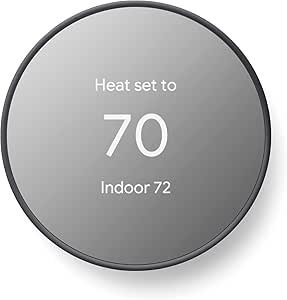 | Best for Google Home Households | Display: 2-inch LCD | Connectivity: Wi-Fi (2.4 GHz and 5 GHz), Bluetooth Low Energy | Supported systems: Heating, cooling, and heat pump | VIEW LATEST PRICE | See Our Full Breakdown |
| Sensi Lite Smart Thermostat, WiFi, Alexa, DIY, Energy Star Certified, ST25 | 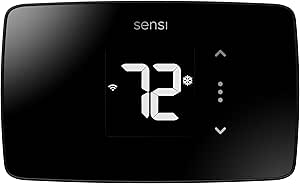 | Best for Privacy-Minded DIY Buyers | Model: ST25 | Display: LCD | Connectivity: Wi-Fi | VIEW LATEST PRICE | See Our Full Breakdown |
| Sensi Smart Thermostat Wi-Fi DIY Alexa Energy Star Certified ST55 |  | Best for Broad Smart-Home Compatibility | Model: ST55 | Display: LED, 5-inch screen listed in product data | Connectivity: Wi-Fi | VIEW LATEST PRICE | See Our Full Breakdown |
| Honeywell Home RTH9600WF Smart Color Wi-Fi Thermostat |  | Best Color Touchscreen | Model: RTH9600WF | Display: Selectable-color LCD touchscreen | Connectivity: Wi-Fi | VIEW LATEST PRICE | See Our Full Breakdown |
| Sensi Touch 2 Wi-Fi Smart Thermostat, ST76 |  | Best for Room-Sensor Expansion | Model: Sensi Touch 2 ST76 | Display: LCD touchscreen | Connectivity: Wi-Fi (2.4 and 5.0 GHz) | VIEW LATEST PRICE | See Our Full Breakdown |
| smart thermostat | Connectivity | Display | Model | Power |
|---|---|---|---|---|
| ecobee Smart Thermostat Premiu | Wi-Fi | — | — | — |
| Honeywell TH9320WF5003 Wi-Fi P | Wi-Fi | 4.5 inches | TH9320WF5003 | Hardwired, 24 volts; requires C wire |
| ecobee Smart Thermostat Enhanc | Wi-Fi | 4-inch LCD | — | — |
| ecobee Smart Thermostat Essent | Wi-Fi | 3.74-inch LCD touchscreen | — | — |
| Google Nest Learning Thermosta | Wi-Fi | Touchscreen; 60% larger display | — | — |
| Honeywell Home T5 Smart Wi-Fi | Wi-Fi | 4.95-inch LCD touchscreen | RTH8800WF2022 | — |
| Honeywell Home X2S Smart Wi-Fi | Wi-Fi | 6.57-inch LCD | — | — |
| Honeywell Home Lyric T6 Pro Wi | Wi-Fi | Manual screen, 11.4 cm | TH6220WF2006/U | AC/DC; 30 volts |
| Amazon Smart Thermostat with A | 2.4 GHz Wi-Fi, 802.11 b/g/n; no 5 GHz support | — | S6ED3R | — |
| Google Nest Learning Thermosta | Wi-Fi and Bluetooth | — | — | Hardwired; 24 volts |
| Google Nest Thermostat | Wi-Fi (2.4 GHz and 5 GHz), Bluetooth Low Energy | 2-inch LCD | — | Battery powered; two included A batteries |
| Sensi Lite Smart Thermostat | Wi-Fi | LCD | ST25 | Battery or C-wire; two included AAA batteries |
| Sensi Smart Thermostat Wi-Fi D | Wi-Fi | LED, 5-inch screen listed in product data | ST55 | Corded electric; two included AA batteries |
| Honeywell Home RTH9600WF Smart | Wi-Fi | Selectable-color LCD touchscreen | RTH9600WF | 24 volts; one AAA battery required |
| Sensi Touch 2 Wi-Fi Smart Ther | Wi-Fi (2.4 and 5.0 GHz) | LCD touchscreen | Sensi Touch 2 ST76 | Common wire (C-wire) |
More Details on Our Top Picks
ecobee Smart Thermostat Premium with Wi-Fi, Siri and Alexa
The ecobee Smart Thermostat Premium earns my top spot because it combines room-aware comfort with features that extend beyond temperature control. Its included SmartSensor can help address rooms that stay too warm or cool, while the built-in air quality monitor adds useful information that the simpler ecobee Smart Thermostat Enhanced does not provide. The built-in speaker supports Siri or Alexa, so this model can also take on some smart-home and audio duties without a separate speaker.
That breadth brings tradeoffs: Siri needs an Apple home hub, some security features require a subscription, and doorbell integration depends on compatible ecobee hardware. Choose the Enhanced instead if you want occupancy-based temperature adjustments without the extra monitoring and speaker features.
Pros:- Included SmartSensor supports room-to-room comfort adjustments.
- Built-in air quality monitoring and filter reminders add information beyond temperature control.
- Built-in speaker supports Siri or Alexa and music streaming.
- Includes a Power Extender Kit and Trim Kit, with a three-year warranty.
Cons:- Siri functions require an Apple home hub.
- Some security features require an ecobee Smart Security subscription.
- Doorbell video and two-way talk require a compatible ecobee Smart Doorbell Camera.
Best for: Households with uneven room temperatures that want an included room sensor, air quality monitoring, and built-in voice control in one thermostat.
Not ideal for: Shoppers seeking a simple thermostat or those who do not want to rely on an Apple home hub for Siri or pay for optional security features.
- Connectivity:Wi-Fi
- Voice assistants:Siri and Alexa
- Included accessory:SmartSensor
- HVAC compatibility:Works with 95% of HVAC systems
- Installation accessories:Power Extender Kit and Trim Kit included
- Air quality monitor:Built in
- Smart speaker:Built in
- Warranty:3 years
Our verdict“I recommend the Premium for homes that will use its included room sensor and extra monitoring, while the ecobee Enhanced is a better fit for buyers who want fewer add-ons.”
Honeywell TH9320WF5003 Wi-Fi Programmable Touchscreen Thermostat
The Honeywell TH9320WF5003 is the schedule-first pick in this group. Its 7-day programming lets households set a different routine for each day, and the 4.5-inch touchscreen keeps basic controls and comfort information on the wall. App access and Alexa compatibility add remote adjustments without making occupancy learning or room sensors the center of the experience. That makes it a more traditional alternative to the ecobee Smart Thermostat Enhanced, which adjusts around occupancy and schedule.
The tradeoff is installation and system fit: this Honeywell requires a C wire and is not suitable for dual-fuel heat pumps without a fossil fuel kit. I would choose it for predictable routines and on-device programming, but skip it if your wiring is uncertain or your system needs broader compatibility.
Pros:- Seven-day programming supports different schedules for each day.
- Large 4.5-inch touchscreen provides on-device controls and comfort information.
- Wi-Fi app control and Alexa compatibility allow remote adjustments.
- Energy-saving mode and display or app alerts add practical operating tools.
Cons:- Requires a C wire for installation.
- Not suitable for dual-fuel heat pumps without a fossil fuel kit.
- Lacks the included room sensor and occupancy-based comfort features of the ecobee Premium.
Best for: Households with stable, day-by-day heating and cooling routines that want a large touchscreen and app access.
Not ideal for: Owners of dual-fuel heat pumps without a fossil fuel kit, or homes without a C wire that need a thermostat with more flexible power options.
- Model:TH9320WF5003
- Connectivity:Wi-Fi
- Controls:Touchscreen and app
- Programming:7-day
- Display:4.5 inches
- Power:Hardwired, 24 volts; requires C wire
- Mounting:Wall mount
- Compatibility:Works with Alexa
Our verdict“I would choose this Honeywell for a home with compatible wiring and regular weekly routines, but pick the ecobee Enhanced for occupancy-based adjustments.”
ecobee Smart Thermostat Enhanced
The ecobee Smart Thermostat Enhanced is a strong fit for a connected home that needs broad assistant support but not a built-in speaker or air quality monitor. It works with Alexa, Google Assistant, Apple HomeKit, and SmartThings, and adjusts temperature using occupancy, schedules, and humidity. Compared with the ecobee Premium, it leaves out the included SmartSensor and extra monitoring features; that keeps the focus on core thermostat automation rather than room-by-room equipment.
Its Power Extender Kit can help in homes without a C wire, and the trim kit is included, though HVAC compatibility still needs checking before installation. A SmartSensor is sold separately, so buyers dealing with persistent hot or cold rooms may prefer the Premium or the Google Nest Learning Thermostat bundle, which includes a sensor.
Pros:- Supports Alexa, Google Assistant, Apple HomeKit, and SmartThings.
- Adjusts temperature based on occupancy, schedule, and humidity.
- Includes a Power Extender Kit for installation in homes without a C wire.
- Remote control, ENERGY STAR certification, and a three-year warranty.
Cons:- SmartSensors for room-by-room comfort are sold separately.
- Does not include the Premium model’s built-in speaker or air quality monitor.
- HVAC compatibility should be checked before purchase and installation.
Best for: Smart-home households that want occupancy-aware temperature control and compatibility with several major platforms.
Not ideal for: Buyers who need a room sensor in the box, built-in voice hardware, or air quality monitoring.
- Connectivity:Wi-Fi
- Display:4-inch LCD
- Voltage:24 volts
- Compatible HVAC systems:Air conditioner, boiler, furnace, heat pump, and humidifier
- Smart-home compatibility:Amazon Alexa, Google Assistant, Apple HomeKit, and SmartThings
- Included accessories:Power Extender Kit and trim kit
- Energy certification:ENERGY STAR
- Warranty:3 years
Our verdict“I recommend the Enhanced for connected homes that want flexible assistant support and occupancy-based control, while the Premium is better for buyers who want a sensor included.”
ecobee Smart Thermostat Essential Wi-Fi Thermostat
The ecobee Smart Thermostat Essential keeps the smart-thermostat basics accessible: a color touchscreen, app control, scheduling, and compatibility with Apple HomeKit, Google Assistant, and Alexa. Auto-away and auto-scheduling can reduce the need for constant manual adjustments, while support for many 24 VAC systems—including boilers and heat pumps—makes it a flexible choice for common home setups. Compared with the ecobee Enhanced, it is a more pared-back option rather than a model centered on occupancy and humidity-driven adjustments.
The included information does not list a Power Extender Kit or trim kit; homes without a C wire may need to buy the power accessory separately, and a SmartSensor is also sold separately. That contrasts with the Enhanced, which includes a Power Extender Kit. I would check wiring and system compatibility before choosing this DIY-focused model.
Pros:- Color touchscreen and app support provide both on-wall and remote controls.
- Supports Apple HomeKit, Google Assistant, and Alexa.
- Works with many common 24 VAC systems, including boilers and heat pumps.
- Auto-away, auto-scheduling, fan control, and indoor humidity detection add useful controls.
Cons:- A Power Extender Kit may be needed for homes without a C wire and is sold separately.
- SmartSensor and trim kit are sold separately.
- Does not offer the Premium’s included SmartSensor or built-in air quality monitor.
Best for: DIY-minded homeowners with a compatible 24 VAC system who want app scheduling and voice-assistant support without built-in speaker features.
Not ideal for: Homes without a C wire where a separately purchased power accessory is unwelcome, or buyers seeking an included room sensor.
- Connectivity:Wi-Fi
- Display:3.74-inch LCD touchscreen
- Power source:Battery powered
- Compatible systems:Most 24 VAC systems, including gas, oil, electric, dual fuel, forced air, heat pumps, and boilers
- Smart-home compatibility:Apple HomeKit, Google Assistant, and Amazon Alexa
- Controls and scheduling:App, programmable temperature control, auto-away, and auto-scheduling
- Additional features:Fan control and indoor humidity detection
- Mounting:Wall mount
Our verdict“I would pick the Essential for compatible systems and basic app-led scheduling, but choose the ecobee Enhanced if an included Power Extender Kit matters.”
Google Nest Learning Thermostat (4th Gen) with Nest Temperature Sensor (2nd Gen), Obsidian
The Google Nest Learning Thermostat (4th Gen) suits people who want a thermostat to adapt to their habits and help address temperature differences between rooms. It learns preferences and includes a second-generation Nest Temperature Sensor, giving it an advantage over the ecobee Enhanced, whose SmartSensors are sold separately. Its larger touchscreen, Google Home app control, and Matter compatibility also make it a polished choice for homes with a wider connected-device setup.
That convenience depends on system fit: it works with most 24V heating and cooling systems, but some homes may still need a C wire. Unlike the ecobee Premium, it does not list a built-in speaker or air quality monitor, so buyers wanting those functions should look there instead. I would choose Nest for learned routines and the included sensor, not for extra air-quality or audio features.
Pros:- Learns temperature preferences and adapts to changing routines.
- Includes a second-generation Nest Temperature Sensor for room comfort.
- Works with the Google Home app and compatible voice assistants.
- Matter compatibility supports integration with connected smart-home devices.
Cons:- Some homes may still require a C wire.
- HVAC compatibility depends on the specific heating and cooling system.
- Does not list the ecobee Premium’s built-in air quality monitor or smart speaker.
Best for: Households that want a thermostat to learn temperature routines and an included sensor to help manage hot or cold rooms.
Not ideal for: Buyers who prioritize built-in air quality monitoring and speaker features, or homes whose HVAC wiring needs a C wire the owner cannot provide.
- Compatibility:Most 24V heating and cooling systems
- Connectivity:Wi-Fi
- C wire:Not required in most homes; may be needed in some
- Display:Touchscreen; 60% larger display
- Control:App, button, Alexa, Siri, and Google Assistant
- Smart-home compatibility:Matter
- Included sensor:Nest Temperature Sensor (2nd gen)
- Material and color:Aluminum, Polished Obsidian
Our verdict“I recommend this Nest bundle for buyers who value learned schedules and a room sensor in the box, while the ecobee Premium is better for built-in monitoring and audio.”
Honeywell Home T5 Smart Wi-Fi Thermostat
The Honeywell Home T5 suits households that want a choice between a set weekly routine and location-based temperature changes. Its 7-day scheduling and geofencing let you keep a predictable timetable or have the thermostat respond when residents leave and return. Remote app control, auto-away mode, vacation settings, and monthly energy reports add useful control without requiring a learning thermostat. Compared with the Honeywell Home X2S, the T5 offers geofencing and a stated 7-day program, while the X2S adds Matter support and humidity display. The tradeoff is installation: the T5 may need a C-wire or power adapter, and it does not support heating-only oil furnace systems without a C-wire. I’d choose it for schedule flexibility, not for the broadest system compatibility.
Pros:- Offers both 7-day scheduling and geofencing-based temperature control.
- Supports remote control through a smartphone or tablet.
- Works with Alexa, Google Assistant, and Apple HomeKit.
- Includes auto-away mode and monthly energy reports.
Cons:- May require a C-wire or power adapter, depending on the installation.
- Does not support heating-only oil furnace systems without a C-wire.
Best for: Households with compatible heating and cooling who want to switch between a weekly schedule and geofencing-based control.
Not ideal for: Homes with a heating-only oil furnace and no C-wire, or buyers who want Matter support.
- Model:RTH8800WF2022
- Connectivity:Wi-Fi
- System control:Heating and cooling
- Scheduling:7-day programmable
- Display:4.95-inch LCD touchscreen
- Smart home compatibility:Amazon Alexa, Google Assistant, Apple HomeKit, Android, and iOS
- Special features:Geofencing, auto-away mode, fan control, vacation mode, and ENERGY STAR certification
- Power and wiring:24 volts; C-wire required in some installations
Our verdict“Choose the T5 if you want weekly schedules plus geofencing and your HVAC wiring is compatible.”
Honeywell Home X2S Smart Wi-Fi Thermostat, Gray
The Honeywell Home X2S is the clearest fit here for buyers who want a thermostat to join a Matter-based smart home. It works with major platforms including Alexa, Google Assistant, and Apple HomeKit, and supports a range of schedules, auto-away, filter reminders, and an indoor humidity display. Its support for up to 2 heat and 2 cool stages on conventional systems also gives it broader stated staging capacity than the simpler scheduling-focused T5. The X2S is less flexible at installation, though: a C-wire is required, with an adapter potentially needed, while the T5 may work without one depending on the system. I’d favor the X2S for platform interoperability and maintenance reminders, but skip it if your wiring cannot provide the required power.
Pros:- Matter certification supports integration with major smart home platforms.
- Offers multiple schedule formats, including 7-day and non-programmable options.
- Includes auto-away and filter reminders.
- Displays indoor humidity and supports up to 2 heat and 2 cool stages on conventional systems.
Cons:- Requires a C-wire; some installations may also need an adapter.
- The listed controls and features may be more than buyers seeking simple manual scheduling need.
Best for: Homeowners building a Matter-compatible setup who have a C-wire and want thermostat control across major voice platforms.
Not ideal for: Renters or owners with HVAC wiring that cannot supply a C-wire and who do not want to add an adapter.
- Connectivity:Wi-Fi
- HVAC compatibility:Up to 2 heat/2 cool conventional or 2 heat/1 cool heat pump
- Smart home compatibility:Matter, Amazon Alexa, Google Assistant, and Apple HomeKit
- Programming:5-1-1 day, 5-2 day, 7 day, or non-programmable
- Display:6.57-inch LCD
- Controls:App, push button, and voice
- Power and wiring:Corded electric; C-wire required, adapter may be needed
- Warranty:2 years
Our verdict“Pick the X2S for Matter compatibility and flexible scheduling if your home has the required wiring.”
Honeywell Home Lyric T6 Pro Wi-Fi Programmable Thermostat
The Honeywell Home Lyric T6 Pro earns its place for buyers whose system needs support for multiple heating or cooling stages. It handles up to 2 heat/1 cool on heat pumps or 2 heat/2 cool on conventional systems, making it a more targeted fit than the Alexa-focused Amazon Smart Thermostat, which is described as supporting most 24V systems but does not list the same stage limits. The T6 Pro provides Wi-Fi app control and works with Alexa and Apple HomeKit, but the supplied details do not list geofencing, energy reports, or broad platform support like the T5. Its feature case is strongest when HVAC compatibility comes first. I’d skip it if you want a richer documented set of automation tools or Google Assistant support.
Pros:- Supports up to 2 heat/1 cool stages on heat pumps.
- Supports up to 2 heat/2 cool stages on conventional systems.
- Offers Wi-Fi app control.
- Compatible with Amazon Alexa and Apple HomeKit.
Cons:- The listed smart home support does not include Google Assistant.
- Product details do not specify geofencing or energy reporting features.
- Requires two AA batteries.
Best for: Owners of multi-stage heat pumps or conventional systems who want Wi-Fi app control and use Alexa or Apple HomeKit.
Not ideal for: Buyers who need Google Assistant compatibility or want documented geofencing, energy reports, and broader automation features.
- Model:TH6220WF2006/U
- Connectivity:Wi-Fi
- Compatible systems:Heat pump up to 2 heat/1 cool; conventional up to 2 heat/2 cool
- Smart home compatibility:Amazon Alexa and Apple HomeKit
- Control:App control
- Display:Manual screen, 11.4 cm
- Power:AC/DC; 30 volts
- Dimensions:1.09 × 4.06 × 4.06 inches (D × W × H)
Our verdict“Choose the T6 Pro when multi-stage HVAC support matters more than a long list of smart automation features.”
Amazon Smart Thermostat with Alexa and Ring Compatibility
The Amazon Smart Thermostat makes the most sense for homes already organized around Alexa or Ring. You can manage schedules and automatic temperature adjustments in the Alexa app, and the thermostat also works with the Ring app. That focused app ecosystem is a contrast with the Honeywell Home X2S, which supports Matter and a wider set of named smart home platforms; Amazon’s model is a more direct choice for Alexa households, not a cross-platform hub. It supports most 24V HVAC systems, but needs a C-wire or separately sold power adapter and only connects to 2.4 GHz Wi-Fi. Voice control also depends on a separate Alexa-enabled device. I’d pick it for Alexa-centered control, but not for homes using 5 GHz-only Wi-Fi or another assistant.
Pros:- Supports schedules and automatic temperature adjustments.
- Can be controlled through the Alexa and Ring apps.
- Compatible with many 24V systems, including heat pumps and radiant boilers.
- Includes installation accessories and a quick start guide.
Cons:- Requires a C-wire or a separately sold power adapter.
- Does not support 5 GHz Wi-Fi.
- Voice control requires a separate Alexa-enabled device.
Best for: Alexa or Ring households with a compatible 24V HVAC system and 2.4 GHz Wi-Fi.
Not ideal for: Homes relying on 5 GHz-only Wi-Fi, another voice assistant, or voice control without an Alexa-enabled device.
- Model:S6ED3R
- HVAC compatibility:Most 24V systems, including conventional forced air, heat pumps, and radiant boilers
- Connectivity:2.4 GHz Wi-Fi, 802.11 b/g/n; no 5 GHz support
- Controls:Alexa app, Ring app, Alexa-enabled voice device, and three on-device touch buttons
- Power requirement:C-wire or separately sold power adapter
- Certifications:ENERGY STAR and ECOLOGO Gold
- Dimensions:3.56 × 3.56 × 0.84 inches
- Included items:Thermostat, installation tool, wall plate, cosmetic plate, and quick start guide
Our verdict“Choose this thermostat if you want app-based heating and cooling control within an existing Alexa or Ring setup.”
Google Nest Learning Thermostat (3rd Gen), Stainless Steel
The Google Nest Learning Thermostat (3rd Gen) stands apart from schedule-led options such as the Honeywell Home T5 by learning preferred temperatures and routines, then adjusting settings to match. That approach can reduce the need to build every time block yourself, while Energy History and HVAC alerts give you ways to track use and spot system issues. App and voice control add remote access, and it works with Google Assistant and Amazon Alexa. The tradeoff is that learning behavior is the central draw; buyers who prefer direct weekly programming may find the T5’s explicit 7-day schedule easier to manage. Remote control and notifications also rely on working internet and Wi-Fi, while the Nest Temperature Sensor is sold separately. I’d choose this model for adaptive control, not for a self-contained sensor package.
Pros:- Learns preferred temperatures and adjusts settings around household routines.
- Supports remote control through the Nest app.
- Works with Google Assistant and Amazon Alexa for voice control.
- Provides Energy History and HVAC alerts.
Cons:- Remote control and notifications require working internet and Wi-Fi.
- Nest Temperature Sensor is sold separately.
- Buyers who want explicit weekly scheduling may prefer the T5’s stated 7-day programming.
Best for: Households that want a thermostat to learn their temperature routine and use app or voice control to manage it remotely.
Not ideal for: Buyers who prefer a straightforward programmed schedule, need remote features without reliable Wi-Fi, or expect a temperature sensor in the box.
- Generation:3rd
- Connectivity:Wi-Fi and Bluetooth
- Wi-Fi bands:2.4 GHz and 5 GHz, 802.11 b/g/n
- Wireless interconnect:802.15.4 at 2.4 GHz
- Power:Hardwired; 24 volts
- Controls:Remote, app, and voice
- Compatible assistants:Google Assistant and Amazon Alexa
- Temperature sensor compatibility:Nest Temperature Sensor, sold separately
Our verdict“Choose the Nest Learning Thermostat if you want adaptive temperature control and are comfortable relying on Wi-Fi for remote features.”
Google Nest Thermostat, Programmable Wi-Fi Smart Thermostat, Charcoal
The Google Nest Thermostat is a strong fit for buyers who want app-based scheduling and automatic temperature adjustments without stepping up to a more elaborate learning model. It can adjust settings when the home is empty, and the Google Home app makes remote changes straightforward. Compared with the Google Nest Learning Thermostat (4th Gen), this model leans on schedules and away adjustments rather than a richer learning-focused setup, which suits buyers who prefer simpler control. Its DIY design and ability to work without a C-wire in many homes make installation more approachable, but compatibility depends on the HVAC system: some heat pumps, zones, and heating-and-cooling configurations need a C-wire or power accessory. It also relies on Wi-Fi for remote controls and notifications.
Pros:- Adjusts temperature when the home is empty
- Remote scheduling and control through the Google Home app
- Designed for DIY wall installation
- Supports Google Assistant and Matter-certified voice assistants
Cons:- Some systems require a C-wire or compatible power accessory
- Remote control and notifications depend on working Wi-Fi and internet
- Offers less of a learning-focused experience than the Nest Learning Thermostat
Best for: Google Home users who want remote scheduling and away temperature adjustments, and whose HVAC wiring is compatible with the thermostat.
Not ideal for: Homes with complex zone or heat-pump wiring and no C-wire or compatible power accessory, or households that need remote control during internet outages.
- Display:2-inch LCD
- Connectivity:Wi-Fi (2.4 GHz and 5 GHz), Bluetooth Low Energy
- Supported systems:Heating, cooling, and heat pump
- Control:Google Home app, remote control, and voice control
- Voice compatibility:Google Assistant and Matter-certified voice assistants
- Power:Battery powered; two included A batteries
- Voltage:24 volts
- Color and mounting:Charcoal; wall mount
Our verdict“Choose this Nest for straightforward Google Home scheduling and away adjustments, provided your HVAC wiring is compatible.”
Sensi Lite Smart Thermostat, WiFi, Alexa, DIY, Energy Star Certified, ST25
The Sensi Lite ST25 prioritizes approachable installation and privacy-minded app control over a feature-rich display. Its built-in level and step-by-step guidance can help DIY installers position and wire it with less guesswork, while flexible schedules and geofencing offer ways to manage heating and cooling around routines. Sensi also says it does not sell personal data or track activity for advertising, a distinction that may matter to app-conscious buyers. Compared with the Sensi ST55, the Lite is a simpler choice, with a stated C-wire requirement for heat-pump and heat/cool-only systems rather than the ST55’s ability to work without a common wire in most cases. Check wiring before choosing it: that requirement can rule it out, and its Wi-Fi features depend on a working connection.
Pros:- Built-in level and guided installation support
- Scheduling, geofencing, and remote app control
- Works with Amazon Alexa, Google Assistant, and SmartThings
- Sensi states it does not sell personal data or use activity tracking for ads
Cons:- A C-wire is required for heat-pump and heat/cool-only systems
- Remote app functions require Wi-Fi
- Compatibility should be checked against the HVAC wiring before installation
Best for: DIY buyers who want app, voice, and geofencing controls with a stated privacy policy and whose HVAC wiring meets the C-wire requirements.
Not ideal for: Owners of heat-pump or heat/cool-only systems without a C-wire, or buyers who want the broader wiring flexibility described for the Sensi ST55.
- Model:ST25
- Display:LCD
- Connectivity:Wi-Fi
- Voice and smart-home compatibility:Amazon Alexa, Google Assistant, and SmartThings
- Supported systems:Air conditioner, boiler, furnace, and heat pump
- Power:Battery or C-wire; two included AAA batteries
- Voltage:24 volts
- Mounting and color:Wall mount; black
- Warranty:3 years
Our verdict“Pick the Sensi Lite for guided DIY setup and privacy-minded connected control if your system meets its wiring requirements.”
Sensi Smart Thermostat Wi-Fi DIY Alexa Energy Star Certified ST55
The Sensi ST55 is the most flexible fit here for households using more than one smart-home platform: it lists support for Alexa, Apple HomeKit, Google Assistant, SmartThings, and Vera. App-guided installation and the ability to work without a common wire in most cases also make it a useful alternative to the Sensi Lite ST25, which requires a C-wire for heat pumps and heat/cool-only systems. Scheduling and remote control cover everyday adjustments, while usage reports and filter reminders add practical maintenance prompts. The tradeoff is a more modest on-device interface: its small LED display offers less detail than the Honeywell Home RTH9600WF color touchscreen. Full connected functions also rely on Wi-Fi, and the included AA batteries need periodic replacement.
Pros:- Broad compatibility with Alexa, Apple HomeKit, Google Assistant, SmartThings, and Vera
- Designed to install without a C-wire in most cases
- Usage reports and filter-change reminders support routine system care
- App-guided DIY installation and programmable schedules
Cons:- Small LED display provides limited on-device detail
- Full connected functionality depends on Wi-Fi
- AA battery backup requires periodic replacement
Best for: Households with mixed smart-home platforms or HVAC systems that benefit from a thermostat designed to work without a C-wire in most cases.
Not ideal for: Buyers who want a large, information-rich touchscreen or who need full app and remote features without Wi-Fi.
- Model:ST55
- Display:LED, 5-inch screen listed in product data
- Connectivity:Wi-Fi
- Smart-home compatibility:Amazon Alexa, Apple HomeKit, Google Assistant, SmartThings, and Vera
- Supported systems:Air conditioner, boiler, furnace, and heat pump
- Power:Corded electric; two included AA batteries
- Voltage:24 volts AC
- Control:App, touch, and voice
- Mounting and color:Wall mount; white
Our verdict“Choose the ST55 for broad smart-home support and flexible wiring, not for a large or information-rich thermostat display.”
Honeywell Home RTH9600WF Smart Color Wi-Fi Thermostat
The Honeywell Home RTH9600WF is the display-first choice in this group: its customizable color touchscreen makes local adjustments and comfort information easier to view than on the compact screen of the Sensi ST55. It combines that interface with flexible scheduling, app control, and Smart Response technology, plus compatibility with Alexa, Google Assistant, Cortana, and IFTTT. That makes it a better match for buyers who value a prominent wall control and established assistant integrations than for those prioritizing simple wiring. Unlike the Google Nest Thermostat, which can work without a C-wire in many homes, this Honeywell requires a C-wire or compatible adapter. It also does not support 120–240V electric baseboard heat, and heating-only oil systems have a C-wire condition, so HVAC compatibility needs checking before purchase.
Pros:- Customizable color LCD touchscreen
- Remote control and monitoring through the Honeywell Home app
- Flexible schedules and Smart Response technology
- Compatible with Alexa, Google Assistant, Cortana, and IFTTT
Cons:- Requires a C-wire or compatible power adapter
- Not compatible with 120–240V electric baseboard heat
- Heating-only oil systems require a C-wire
Best for: Homeowners with a compatible 24-volt HVAC system and C-wire who want a customizable color touchscreen and scheduled control.
Not ideal for: Homes using 120–240V electric baseboard heat, systems without a C-wire or adapter, or heating-only oil systems without a C-wire.
- Model:RTH9600WF
- Display:Selectable-color LCD touchscreen
- Connectivity:Wi-Fi
- Supported systems:Forced-air gas, oil, or electric; hot water and steam; heat pumps with electric backup
- Smart-home compatibility:Amazon Alexa, Google Assistant, Microsoft Cortana, and IFTTT
- Wiring:C-wire required
- Power:24 volts; one AAA battery required
- Mounting:Wall mount
- Included accessories:Wall plate, screws, anchors, quick-start guide, thermostat ID card, wire labels, and user guide
Our verdict“Choose the RTH9600WF if you want a color touchscreen and have compatible HVAC wiring with a C-wire.”
Sensi Touch 2 Wi-Fi Smart Thermostat, ST76
The Sensi Touch 2 ST76 suits buyers who want a touchscreen thermostat now and the option to add room sensors later. It supports up to 15 Sensi Room Sensors, which can help address uneven temperatures across rooms when paired with those separately sold sensors. App, touch, and voice controls cover daily use, with scheduling and usage reports for managing routines. Compared with the Google Nest Thermostat, the ST76 is more explicit about room-sensor expansion, but it is less forgiving at installation: it requires a C-wire, while the Nest can operate without one in many homes. Sensor support also adds a separate purchase and setup step, so buyers seeking a complete out-of-box solution may prefer a simpler model. Check wiring compatibility before selecting it.
Pros:- Supports up to 15 optional Sensi Room Sensors
- App, touchscreen, and voice control
- Scheduling, remote access, and usage reports
- App-guided DIY installation
Cons:- Requires a C-wire
- Room sensors are sold separately
- Sensor-based room coverage requires additional setup
Best for: Homeowners with a C-wire who want touchscreen control and plan to address temperature differences across multiple rooms with optional sensors.
Not ideal for: Homes without a C-wire or buyers who want room sensors included rather than sold separately.
- Model:Sensi Touch 2 ST76
- Display:LCD touchscreen
- Connectivity:Wi-Fi (2.4 and 5.0 GHz)
- Smart-home compatibility:Amazon Alexa, Google Assistant, and SmartThings
- Supported systems:Air conditioner, boiler, furnace, and heat pump
- Power:Common wire (C-wire)
- Voltage:24 volts
- Room sensor support:Up to 15 Sensi Room Sensors, sold separately
- Dimensions and color:5.6 x 3.25 x 0.77 inches; black
Our verdict“Pick the Sensi Touch 2 if your home has a C-wire and you want the option to expand temperature monitoring with room sensors.”

How We Picked
I ranked these thermostats by how well they solve common buyer needs, not by counting features. My main criteria were HVAC compatibility and wiring demands, ease of installation and everyday control, useful automation, smart-home support, and the ability to address uneven temperatures across rooms. I also weighed whether a model’s added capabilities make sense for its intended buyer or add complexity without a clear benefit.
The ecobee Premium ranks first for its mix of room-sensor support and connected-home features. The 4th Gen Nest follows for buyers who want learning-based control and a bundled sensor, while simpler picks such as Amazon’s thermostat and Sensi’s Lite earn consideration for a less involved approach. Honeywell Home, the remaining ecobee and Nest models, and the other Sensi options fill more specific needs; their order reflects differences in controls, ecosystem fit, and setup rather than a claim that one brand suits every home.
Factors to Consider When Choosing Best Smart Thermostats
Before comparing app features, I’d narrow the shortlist by what your heating and cooling system can support and how much control you want to hand over to automation. These checks can rule out a poor fit early and help you avoid paying for features your household will not use.
Check HVAC and Wiring Compatibility Before Choosing
Start by identifying whether your home has conventional heating and cooling, a heat pump, a boiler, or a multi-stage system. Thermostats that look similar can support different equipment, so check the manufacturer’s compatibility information against the system model, not just the number of wires at the wall. A C-wire supplies continuous power, and some installations need one even when an older thermostat worked without it. Power adapters can help in some homes, but they add installation steps and are not a universal fix. If you rent, live in a condo, or cannot access the furnace wiring, confirm what changes are allowed before buying. A compatibility checker or HVAC technician can be more useful than guessing from a wiring photo alone.
Choose How Much Automation You Actually Want
Smart thermostats range from app-connected manual schedules to systems that learn patterns and adjust settings with less input. Learning can reduce routine adjustments, but it may take time to match a household with changing shifts, frequent guests, or irregular occupancy. A predictable schedule may be easier to manage when several people share control or when setpoints need to remain consistent. Geofencing can adjust temperatures based on phone location, but it may behave poorly if household members have different routines or leave a device at home. Check whether automated changes are easy to review and override. Buyers who prefer direct control should favor clear schedules and simple app controls over automation for its own sake.
Decide Whether Room Sensors Solve a Real Problem
A thermostat measures conditions where it is installed, which may not reflect a bedroom upstairs or a sunny room in the afternoon. Remote sensors can help the system respond to temperatures or occupancy in selected rooms, but they do not create separate heating zones in a home with one HVAC system. Before buying them, identify which rooms are uncomfortable and at what times; that helps determine whether sensor-based averaging or room prioritization could help. Sensors may also need batteries and placement away from direct sunlight, drafts, and heat-producing electronics. If the whole home feels consistently comfortable, a sensor bundle may add little practical value. If one room repeatedly drives complaints, sensor support may matter more than an especially elaborate display.
Match the Thermostat to Your Smart-Home Setup
Integration is most useful when it works with devices and assistants your household already uses. A thermostat that connects to a voice assistant can make quick setpoint changes easier, while app-only control may be enough for buyers who rarely use voice commands. Check the exact compatibility of the thermostat with your hub, routines, and preferred assistant; support can vary between product generations and features. Also think about who needs access: shared accounts, guest access, and account recovery can matter more than adding another automation. If you are building a mixed-brand smart home, prioritize reliable basic control before assuming every device will work together seamlessly. A strong ecosystem match can make a simpler thermostat more convenient than a feature-heavy model that sits outside your routines.
Pay for the Interface You Will Use Every Day
A large color touchscreen can make adjustments visible and convenient, especially for people who prefer wall controls to a phone app. A more minimal interface may suit buyers who set a schedule once and rarely touch the thermostat. Consider where the unit will be mounted, how easily its display can be read, and whether household members can change settings without help. Touch controls and app menus can vary in clarity, so look at the control flow rather than relying on a long feature list. A polished screen does not improve comfort if the thermostat is difficult to operate or if most adjustments happen through a voice assistant. Choose a display and control style around actual household habits, not appearance alone.
Balance Long-Term Convenience Against Setup and Upkeep
Installation is only one part of ownership: app accounts, Wi-Fi access, software support, and sensor batteries can all affect day-to-day use. A DIY-friendly model may save a service visit, but wiring uncertainty or a complex HVAC setup can make professional installation the calmer choice. Check whether the thermostat depends on a stable internet connection for remote control and which features remain available if Wi-Fi goes down. Households with frequent network changes should value dependable local controls and straightforward reconnection. Think about who will manage updates and troubleshoot the system over time. Paying for advanced automation makes more sense when the household will maintain and use it; a simpler thermostat can be the better fit when low upkeep is the priority.
Frequently Asked Questions
How can I tell whether a smart thermostat will work with my HVAC system?
Find your HVAC equipment type and the wiring labels behind your current thermostat, then compare both with the manufacturer’s compatibility guidance. A C-wire is a common point of uncertainty because some smart thermostats need continuous power, and a power adapter is not suitable for every setup. Heat pumps, multi-stage systems, and some boiler configurations can have wiring requirements that are easy to misread. If the labels are unclear, take a photo before disconnecting anything and ask the thermostat maker or an HVAC professional to confirm compatibility. Do not assume a thermostat will work just because the wall plate has a similar number of wires.
Is a remote temperature sensor worth getting if my home has uneven temperatures?
It can help when a single thermostat location does not represent the rooms your household uses most. A sensor gives the system information from another room, but it cannot make a single-zone HVAC system deliver independent temperatures to every space. Think about when the discomfort happens and whether the room is affected by sunlight, drafts, insulation, or airflow; a sensor may report the issue without fixing its physical cause. If the problem is persistent, balancing vents or getting an HVAC assessment may be needed alongside thermostat changes. Sensors make the most sense when room readings can guide scheduling or comfort decisions that matter to your household.
Should I choose a learning thermostat or one with a schedule I set myself?
A learning thermostat may suit a household with recurring routines that wants fewer manual adjustments, while a fixed schedule offers clearer control over when temperatures change. If work hours, caregiving, or occupancy vary week to week, automatic learning may need frequent correction. A schedule is not automatically less smart: it can be dependable and easy to understand when routines are known. Check whether the model lets you edit or pause automated settings without hassle. The best choice depends on whether you value less day-to-day input or predictable behavior that you control directly.
Can I install a smart thermostat myself, or should I hire an HVAC professional?
DIY installation can be reasonable when your system is listed as compatible, the wiring is clearly labeled, and you are comfortable following electrical safety instructions. Turn off power to the HVAC equipment before handling thermostat wires, and keep a clear record of the original connections. Hire a professional if you have a heat pump or multi-stage system you cannot identify, uncertain wiring, or no safe way to supply required power. A difficult setup can lead to incorrect operation or equipment problems, so avoiding a service call is not worth guessing. Confirming compatibility before purchase can help you decide whether the installation is a manageable project.
What should I prioritize if my household uses more than one smart-home platform?
First decide which functions matter most: remote temperature changes, voice control, routines, or shared access for household members. Then verify support for the exact thermostat model and product generation, since integration can differ between versions. Basic app control may work across a household even when advanced routines depend on one assistant or hub. Avoid choosing based on a broad compatibility label alone; confirm that the actions you expect are supported. If the platforms are mixed, straightforward controls and a stable app experience may matter more than adding features tied to a single ecosystem.
Conclusion
For a capable all-around choice, I’d start with the ecobee Smart Thermostat Premium; it has the strongest combination of room-sensor support and connected features in this group. For a premium, learning-focused setup, choose the Google Nest Learning Thermostat (4th Gen) with its included temperature sensor. Buyers who want a simpler, more accessible route can compare the Amazon Smart Thermostat with Sensi’s DIY-oriented models, while those who prefer a particularly direct interface may find a Honeywell Home touchscreen model a better match. For value, I’d shortlist the ecobee Essential, Amazon Smart Thermostat, and Sensi Lite only after checking compatibility and the features each household actually needs. If your HVAC wiring or equipment is unusual, make compatibility the deciding factor and ask for qualified help before choosing. My final pick is the model that fits your system and routine—not the one with the longest feature list.
Halloween Picks
halloween
As an affiliate, we earn on qualifying purchases.