Solar backup power stations pair a battery station with solar panels so you can keep essentials running during outages or off the grid, and the right pick depends almost entirely on how much power you actually need. For most buyers, the UDPOWER S2400 stands out as the best overall choice thanks to its 2083Wh LiFePO4 battery, 2400W output across six AC outlets, and built-in UPS functionality for seamless home backup. If budget matters more than raw capacity, the GRECELL 519Wh delivers surprising value for lights, phones, and a small fridge, while the OUKITEL P5000 Pro with 5120Wh and 7200W peak output is the serious whole-home option. The main tradeoffs in this category come down to capacity versus portability, LiFePO4 versus older battery chemistry for lifespan, and whether a bundled solar panel actually charges the battery at a useful speed. Keep reading for the full breakdown of all 15 models.

Get backup power and energy gear delivered free with Prime
- Fast, free delivery on millions of items
- Prime Video, Amazon Music and more included
- Member-only deals all year
Complete the kit


Key Takeaways
- The UDPOWER S2400 earned best overall status because it was the only sub-$1,000-class model combining LiFePO4 chemistry, 2400W continuous output, six AC outlets, and true UPS pass-through in one package.
- Bundled solar panels created a wide performance gap: the OUKITEL P2001 Pro’s 400W panel can meaningfully recharge its 2048Wh battery in a day, while 40W-60W panels on smaller units like the Jackery Explorer 300 bundle are trickle chargers at best.
- Several products in the lineup appeared twice with different configurations (Jackery Explorer 1000 V2 and Explorer 300), and buying the station alone versus with panels changed the value equation enough to warrant separate rankings.
- Battery chemistry was the clearest dividing line for longevity: LiFePO4 models like the BLUETTI AC180 and UDPOWER S2400 are rated for thousands of cycles, while cheaper NMC units in the small-capacity tier may degrade in a few years of regular solar cycling.
- The ultra-budget tier (MARBERO 88Wh, 300W units) failed as backup power for appliances but proved genuinely useful as grab-and-go emergency kits for phones, radios, and CPAP accessories during short outages.


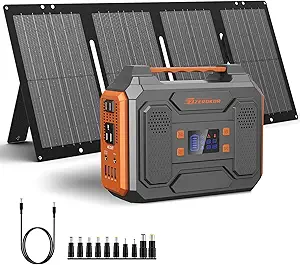


| solar backup power station | Capacity | Weight |
|---|---|---|
| Jackery Solar Generator 1000 V | 1070Wh | 23.8 lbs |
| Jackery Explorer 1000 v2 Porta | 1070Wh | 23.8 lbs |
| Anker SOLIX S2000 Portable Pow | 2010Wh | 35.7 lbs |
| UDPOWER S2400 Portable Power S | 2083Wh | 41 lbs |
| OUKITEL P2001 Pro Portable Pow | 2048Wh | 25 kg (55 lbs) |
| Portable Solar Generator 300W | — | — |
| Jackery Explorer 300 Portable | 292Wh | 7.5 lbs |
| BLUETTI Portable Power Station | — | — |
| MARBERO Portable Power Station | 88Wh (24,000mAh) | 1.04 kg |
| Jackery Explorer 300 Portable | 292Wh | 7.5 lbs |
| Librids Portable Power Station | 640Wh | — |
| Portable Solar Generator 300W | — | 6.5 pounds |
| Anker SOLIX C1000 Gen 2 Portab | 1,024Wh LiFePO4 | 11.3 kg |
| OUKITEL P5000 Pro Portable Pow | 5,120Wh LiFePO4 | 120 pounds |
| GRECELL Portable Power Station | 519Wh | — |
More Details on Our Top Picks
Jackery Solar Generator 1000 V2 with 200W Solar Panel, 1070Wh, 1500W AC
Of the mid-size bundles in this roundup, this pairing makes the most sense for the widest range of buyers because it solves the complete solar backup equation in one purchase — station plus panel — without the weight penalty of the bigger units. The 1070Wh capacity with 1500W of AC output is enough to run a fridge, lights, and laptops through a short outage, and the 200W panel recharges it in about six hours of decent sun. Compared with the OUKITEL P2001 Pro, you give up roughly half the capacity and a lot of raw wattage, but you save nearly 20 pounds, which matters if the station ever leaves the house. The LFP battery rated for a decade of use means this isn’t a purchase you’ll repeat in three years. The main annoyance: the fastest charging mode requires app activation, and the panel and station arrive in separate boxes.
Pros:- Complete bundle with a 200W solar panel included
- Lightweight at 23.8 lbs with a foldable handle for easy transport
- 1500W AC output runs most essential home appliances
- LFP battery rated for over 10 years of regular use
Cons:- Fastest charging mode must be activated through the app
- Station and solar panel ship in separate boxes, arriving on different days
Best for: Homeowners and campers who want a ready-to-run solar backup kit with panel included and manageable weight
Not ideal for: Households running power-hungry appliances like well pumps or window AC units — 1500W output won’t cover them
- Capacity:1070Wh
- AC Output:1500W (3000W surge)
- Battery Type:LFP
- Weight:23.8 lbs
- Charging Time:1 hour fast, 3 hours full AC, ~6 hours solar
- Ports:3 AC, 2 USB-C, 1 USB-A, 1 DC car port
- Solar Panel:200W included
Our verdict“The most balanced solar backup kit here — capacity, portability, and an included panel make it the safest default choice for most buyers.”
Jackery Explorer 1000 v2 Portable Power Station, 1070Wh, 1500W
Buying the station alone is the smarter move if you already own panels or plan to expand later, and that’s exactly the case this model makes. At the same 1070Wh capacity and 1500W output as the bundled Solar Generator 1000 V2, it skips the panel so you can pair it with whatever wattage your budget allows — or a cheap 60W folder like the ones bundled with the 300W units in this roundup for occasional top-ups. Full recharge in 1.7 hours from a wall outlet is genuinely useful before a storm, and the 4000-cycle LFP cells match what UDPOWER and OUKITEL offer at far higher prices. The tradeoff is real, though: panel compatibility is limited to Jackery’s own ecosystem, so third-party panels are largely off the table, and relying on the app for full control will frustrate anyone who prefers plain buttons.
Pros:- Same 1070Wh capacity as the bundled version at a lower entry price
- Very fast 1-hour fast charge, 1.7-hour default full recharge
- 4000-cycle LFP battery for long-term reliability
- Versatile port selection including 100W USB-C PD
Cons:- Solar panel not included
- Only compatible with Jackery-branded solar panels
- App required to access full feature set
Best for: Budget-conscious buyers who already own solar panels or want to buy the panel separately on their own timeline
Not ideal for: Off-grid users with third-party panels — Jackery’s closed ecosystem locks out most alternatives
- Capacity:1070Wh
- AC Output:1500W (3000W surge)
- Battery Type:LFP, 4000 cycles
- Weight:23.8 lbs
- Charging Time:1 hour fast, 1.7 hours default
- Ports:3 AC, 2 USB-C, 1 USB-A, 1 DC car port
- App Control:Yes
Our verdict“The right pick if you want Jackery quality today and flexibility on solar later — just confirm you’re okay staying inside their panel ecosystem.”
Anker SOLIX S2000 Portable Power Station, 2010Wh, 1500W
Where this model separates itself from the Jackery 1000 V2 units isn’t raw output — it’s the same 1500W — but in capacity and staying power. Nearly double the watt-hours means a fridge or CPAP machine runs through a longer outage without rationing, and the 10,000-cycle battery rating is in a different league from the 4000-cycle cells in the Jackery and UDPOWER units. For someone who plans to cycle this station weekly — say, an off-grid shed or van setup — that lifespan difference is the whole story. The compact 8.2-inch-wide footprint is also easier to stash than the bulky OUKITEL P2001 Pro. Drawbacks exist: there’s no 12V DC car port, which rules out some automotive accessories and DC fridges, and the 35.7-pound weight sits awkwardly between ‘portable’ and ‘stationary’ — plan on two hands and a clear path.
Pros:- 10,000-cycle LFP battery far outlasts typical 4000-cycle rivals
- 2010Wh capacity nearly doubles the Jackery 1000 V2 units
- Compact footprint fits easily on a shelf or in a vehicle
- Four recharging methods including 400W solar input
Cons:- No 12V DC car port for automotive accessories
- At 35.7 lbs it’s awkward to move regularly
- Runtime drops noticeably with high-draw appliances
Best for: Frequent users and off-grid setups where battery cycle life and larger capacity matter more than portability
Not ideal for: Anyone relying on 12V DC accessories — the missing car port is a genuine limitation
- Capacity:2010Wh
- Continuous Output:1500W (3000W peak)
- Battery Type:LiFePO4, 10,000 cycles
- Weight:35.7 lbs
- Dimensions:8.2 x 11.1 x 12.7 inches
- Solar Input:Up to 400W
- Recharging Methods:AC, solar, generator, car outlet
Our verdict“The longevity champion — buy it if you’ll cycle it hard for years, skip it if you need DC output or frequent carrying.”
UDPOWER S2400 Portable Power Station with 210W Solar Panel, 2083Wh LiFePO4, 2400W UPS, 6 AC Outlets
If the question is ‘which of these can actually back up a room of my house,’ this is the one. The 2400W rated output with six AC outlets lets you plug in a microwave, TV, router, and lamps simultaneously without playing outlet Tetris — something the 1500W Anker S2000 and Jackery units simply can’t manage. The UPS-style automatic switchover is the standout feature: plug your devices into it full-time, and when the grid drops, they keep running without rebooting, which matters for computers and network gear. The included 210W panel gives it the same ready-to-go appeal as the Jackery bundle, and a 1.3-hour AC recharge beats nearly everything here. The cost is weight — 41 pounds makes this a two-person lift, and its value proposition collapses if you mostly want something for car camping, where the Jackery 1000 V2 is far more practical.
Pros:- 2400W output across six AC outlets runs multiple appliances at once
- UPS automatic backup switch keeps sensitive devices running seamlessly
- 210W solar panel included in the bundle
- Full AC recharge in just 1.3 hours
Cons:- Heavy at 41 lbs, requiring two people to move safely
- Solar charging efficiency drops sharply in weak sunlight
- Over 4000 charge cycles but trails Anker’s 10,000-cycle rating
Best for: Homeowners who want automatic, whole-room outage protection for electronics and kitchen appliances without installing a generator
Not ideal for: Campers and road-trippers — at 41 lbs with a bulky frame, it’s a stationary home unit, not a travel companion
- Capacity:2083Wh
- Rated Output:2400W (3000W peak)
- Battery Type:LiFePO4, over 4000 cycles
- Weight:41 lbs
- AC Recharge Time:1.3 hours from 0-100%
- Solar Input:Up to 440W (210W panel included)
- Outlets:6 AC plus USB and DC ports
Our verdict“The closest thing in this lineup to true home backup — choose it for outage protection, not for portability.”
OUKITEL P2001 Pro Portable Power Station with 3200W/2048Wh Capacity and 400W Solar Panel
This is the brute-force option of the group, and it’s priced accordingly. With 3200W of output — more than double the Jackery 1000 V2 units — it will run power tools, a full kitchen setup, or several appliances at once, and the 400W included panel is double what Jackery and UDPOWER bundle, meaning faster real-world solar recovery. Charging speed is its party trick: 80% in 80 minutes, or a combined solar-plus-AC blitz to fast-charge in 50 minutes, which outpaces everything else here including the UDPOWER’s 1.3-hour claim. The eleven-outlet array, with four USB-C ports, means nobody fights over chargers. Against the OUKITEL P5000 Pro in this roundup, it’s the ‘sensible’ big sibling — half the capacity, but at 25 kg it’s still movable by one determined adult. The tradeoffs: it’s expensive, genuinely heavy, and arrives in multiple separate shipments that may not land on the same day.
Pros:- 3200W output runs power tools and multiple high-draw appliances
- 400W solar panel included, double the bundled competition
- Extremely fast charging: 80% in 80 minutes
- Eleven outlets including four USB-C PD ports
Cons:- Premium price point for the capacity and output class
- At 25 kg, moving it solo is difficult
- Station and solar panel ship separately and may arrive days apart
Best for: Buyers who need serious output for power tools, workshops, or near-whole-home backup and can handle the price and weight
Not ideal for: Casual campers and first-time buyers — this is more capacity and cost than occasional-use scenarios justify
- Capacity:2048Wh
- Power Output:3200W
- Battery Type:LiFePO4
- Weight:25 kg (55 lbs)
- Charging Time:80 minutes full, 50 minutes fast (solar + AC)
- Outlets:4 AC, 4 USB-C PD, 2 USB-A, 2 DC, 1 car lighter
- Solar Panel:400W included
Our verdict“The most powerful complete kit in this batch — worth the premium only if you’ll actually use 3200W and 400W of solar.”
Portable Solar Generator 300W with 60W Solar Panel
This option stands out as one of the few picks here that bundles a 60W monocrystalline panel with the battery at a budget price, which is exactly what a first-time solar buyer wants — no separate panel purchase to figure out. Compared with the Jackery Explorer 300, which costs more and includes no panel at all, this kit gets you a complete solar loop out of the box with a solid 20.5% conversion efficiency. The tradeoff is build quality and ruggedness: the junction box is not waterproof, so it needs careful placement in wet weather, and capacity tops out at levels that only cover phones, lights, and small devices. Compared with the MARBERO, it offers more total capacity, but it lacks that model’s grab-and-go size.
Pros:- Complete kit with a 60W solar panel included at a low price
- 20.5% solar conversion efficiency is strong for this price class
- Six charging ports plus an SOS flashlight cover emergency basics
- Multiple input options: wall, car, and solar charging
Cons:- Junction box is not waterproof, limiting outdoor reliability
- 300W ceiling means no power tools, kettles, or large appliances
- Battery degrades if left uncharged for long stretches
Best for: Budget-conscious campers and emergency preppers who want a complete solar generator kit without buying pieces separately
Not ideal for: Anyone hoping to run appliances over 300W or leave the panel exposed to rain — the non-waterproof junction box and output ceiling rule out serious home backup
- Power Output:300W
- Solar Panel:60W monocrystalline (included)
- Conversion Efficiency:20.5%
- Charging Ports:2 AC, 1 DC, 3 USB, 1 Quick Charge USB
- Safety:Battery management system with cooling
- Extras:SOS flashlight, AC adapter, car charging cable
Our verdict“Buy this if you want the cheapest all-in-one way to experiment with solar backup; skip it if you need weatherproof gear or appliance-level power.”
Jackery Explorer 300 Portable Power Station, 292Wh
At 7.5 lbs, the Explorer 300 is the sweet spot in this roundup for people who actually carry their power station — it weighs a fraction of the BLUETTI AC180 while sharing the same 300W output class. What separates it from cheaper units like the Portable Solar Generator 300W is chemistry: the 4,000+ charge cycle rating means years of weekend use before meaningful degradation, where budget cells fade much faster. The catch is that no solar panel ships in the box, so your true cost of going solar is higher than the sticker suggests, and 292Wh will run a laptop and lights all weekend but not a mini fridge overnight. For hikers, photographers, and van lifers, the portability trade is worth it; for home backup, it isn’t.
Pros:- Only 7.5 lbs — genuinely backpack-friendly
- 4,000+ charge cycles for long-term value
- Full port spread: 2 AC, USB-C PD, 2 USB-A, and a car port
- Fast solar charging when paired with a Jackery panel
Cons:- No solar panel included despite the price
- 292Wh capacity is too small for extended or appliance-level use
Best for: Hikers, photographers, and van lifers who prioritize carrying weight and need reliable laptop, drone, and camera charging
Not ideal for: Home backup buyers — 292Wh won’t sustain a fridge or medical device through an outage, and you’ll need to buy a panel separately
- Capacity:292Wh
- Rated Output:300W (600W surge)
- Weight:7.5 lbs
- Charge Cycles:4,000+
- Outlets:2 AC, 1 USB-C PD, 2 USB-A, 1 car port
- Dimensions:15.43 x 9.92 x 11.89 inches
Our verdict“This pick makes the most sense for mobile users who value weight over watt-hours; home-backup shoppers should step up to the BLUETTI AC180 or larger.”
BLUETTI Portable Power Station AC180, 1152Wh
The AC180 is where this lineup shifts from camping gear to genuine emergency home backup. Its one-hour wall charging is the fastest refill in this batch, and the 1800W output (boostable to 2700W via app) runs nearly any household appliance the smaller picks here can’t touch — the Jackery Explorer 300, at the same 300W class, simply can’t power a microwave or space heater. Add a 500W solar input and UPS functionality, and it covers the outage scenario more completely than anything else at its price. The compromises are real, though: at roughly 27 lbs it’s a two-hand carry, not a hiking companion, and buyers wanting multi-day whole-home coverage should look at the OUKITEL P2001 Pro’s 2048Wh instead.
Pros:- Charges from 0 to full in about 1 hour via AC
- 1800W continuous (2700W boost) handles kitchen appliances
- Doubles as a UPS for home essentials
- 5-year warranty beats most rivals in this class
Cons:- Heavy and bulky compared with sub-10-lb rivals
- 1152Wh runs out fast under 1800W loads — one high-draw appliance at a time
- Premium price versus budget 300W units
Best for: Homeowners who want fridge-and-appliance-level outage protection and fast recharging without paying for a 2kWh+ flagship
Not ideal for: Backpackers and car campers watching pack weight — this is a home-first unit that’s luggable at best
- Battery Capacity:1152Wh LiFePO4
- AC Output:1800W (2700W peak)
- Charging Time:~1 hour AC; 2.8–3.3 hours solar
- Solar Input:500W max
- Outlets:8 total
- Warranty:5 years
Our verdict“The most sensible middle ground for real emergency backup: enough power for essentials, fast to refill, and solar-ready — as long as you don’t need to carry it far.”
MARBERO Portable Power Station 88Wh, 120W Surge
Sometimes the best backup power station is the one that’s actually with you when the lights go out, and at 2.3 lbs and pocket-sized dimensions, the MARBERO is the only pick in this roundup that lives in a glovebox or go-bag. Its role is fundamentally different from the BLUETTI AC180: no appliances, just phones, headlamps, radios, and tablets — the communication essentials during an outage. The built-in LED flashlight with SOS mode adds genuine emergency value that larger units skip, and the UL-standard cylindrical cells are a reassuring detail at this price. Be clear-eyed about limits: with 88Wh and 80W continuous output, a single laptop charge takes a big bite out of the tank, and the Jackery Explorer 300 nearly triples capacity for only a few pounds more.
Pros:- Genuinely pocketable at 1.04 kg with a 6.5-inch footprint
- Charges 0–80% in about 2 hours
- Bright LED flashlight with SOS mode built in
- Eight output ports with full overload and short-circuit protection
Cons:- 88Wh capacity exhausts quickly on anything beyond phones
- 80W continuous output excludes most AC appliances
- Extended trips require constant solar recharging
Best for: Commuters, road-trippers, and emergency-kit builders who want always-carryable power for phones, lights, and small devices
Not ideal for: Anyone planning to run a CPAP, fan, or laptop for hours — 88Wh and 80W continuous output are strictly small-device territory
- Capacity:88Wh (24,000mAh)
- Output Wattage:80W continuous, 120W surge
- Weight:1.04 kg
- Output Ports:8
- Charging Time:~2 hours to 80%
- Battery Safety:UL-standard cylindrical cells with multi-protection
Our verdict“The right buy when the priority is having <em>something</em> charged and lit during a short outage or roadside stop — not a substitute for a real power station.”
Jackery Explorer 300 Portable Power Station with 40W Solar Panel
This bundle solves the main complaint I’d raise about the standalone Jackery Explorer 300: it ships with a matching 40W solar panel, so you get a complete, trusted-brand solar setup in one purchase. That makes it the cleanest entry point into solar backup for people who don’t want to research panel compatibility, and it shares the same 4,000+ cycle battery and 7.5-lb portability that make the Explorer 300 the roundup’s lightweight pick. The tradeoff is solar speed — up to 7.5 hours of good sun for a full charge, roughly double what the 60W kit on the Portable Solar Generator 300W achieves — so it’s a weekend-trip solution, not a rapid-response one. Compared with the BLUETTI AC180, capacity and output are far lower, but so are weight and complexity.
Pros:- Matching 40W solar panel included — no compatibility guesswork
- Same 4,000+ cycle battery and 7.5-lb build as the standalone Explorer 300
- Versatile ports including 100W USB-C PD
- Jackery ecosystem makes adding panels later simple
Cons:- Full solar recharge takes up to 7.5 hours with the 40W panel
- 292Wh capacity caps runtime for anything beyond small devices
Best for: First-time solar buyers who want a matched, brand-backed panel-and-battery kit for weekend camping and modest emergency prep
Not ideal for: Impatient off-gridders and home-backup planners — the small panel charges slowly, and 292Wh won’t carry a household through an outage
- Capacity:292Wh
- Included Solar Panel:40W
- AC Outlets:2 (300W rated)
- USB-C PD:100W
- Car Port:120W
- Charge Cycles:4,000+
- Weight:7.5 lbs
Our verdict“The easiest on-ramp to solar power in this lineup — buy it for matched simplicity at camp, not for fast charging or home emergencies.”
Librids Portable Power Station 640Wh, 1200W Surge
What sets the Librids 640Wh apart in a crowded mid-size field is its 1.5-hour recharge time, which is faster than the GRECELL 519Wh’s 6–7 hour wall charge by a wide margin. For outage preparedness, that speed matters more than raw capacity — a station that refills quickly between outages keeps protecting you, while a slow one becomes a bottleneck. The LiFePO₄ chemistry with 4,000+ cycles and a 5-year warranty outclasses the standard lithium cells in the GRECELL, meaning this unit should outlast cheaper rivals by years. Compared with the Anker SOLIX C1000, you trade away roughly 380Wh of capacity and a lot of inverter headroom, but you also spend considerably less. The tradeoff: it’s built for backup and moderate outdoor use, not continuous heavy loads or wet conditions.
Pros:- Recharges fully in just 1.5 hours, among the fastest in its class
- LiFePO4 battery rated for 4,000+ cycles with a 5-year warranty
- Pure sine wave inverter keeps sensitive electronics safe
- Four AC outlets let you distribute devices without a power strip
Cons:- Limited to dry, ventilated environments — no wet-weather use
- 640Wh capacity runs out quickly if you’re powering a fridge overnight
- Not built for continuous heavy-load applications
Best for: Budget-conscious buyers who want a whole-home-outage-safe battery chemistry and rapid refills without paying flagship prices
Not ideal for: People planning to run high-wattage appliances like microwaves or power tools — the surge rating isn’t designed for sustained heavy loads
- Capacity:640Wh
- Surge Power:1200W
- Charging Time:1.5 hours
- Battery Type:LiFePO4
- Cycle Life:4000+ cycles
- Output Ports:4 AC outlets, USB ports
- Warranty:5 years
Our verdict“A smart pick for buyers who prioritize battery longevity and fast refills over maximum capacity.”
Portable Solar Generator 300W Power Station with 60W Foldable Solar Panel
This kit earns its spot as the cheapest way into true solar self-sufficiency: unlike the GRECELL 519Wh and the Librids 640Wh, this package actually bundles a 60W foldable panel, so you can refill the 296Wh battery off-grid on day one rather than buying a panel separately. At 6.5 pounds, it’s also dramatically lighter than the Anker SOLIX C1000 (25 pounds), making it the grab-and-go option for car campers and hikers with a base camp. The compromises are real, though. A 296Wh capacity is roughly a quarter of the C1000’s, and the 300W inverter ceiling rules out anything beyond laptops, lights, and small appliances. Compared with the similarly-sized Jackery Explorer 300, the included panel tips the value math in this kit’s favor.
Pros:- Includes a 60W foldable solar panel in the package
- Weighs just 6.5 pounds for genuine portability
- Three charging methods: solar, wall outlet, and 12V car socket
- Enough output variety (2 AC, USB-C, USB-A, DC) for phones, laptops, and lights
Cons:- 300W output can’t handle high-wattage appliances
- 296Wh capacity drains fast under multi-device use
- Lithium-ion cells offer fewer cycles than LiFePO4 rivals like the Librids
Best for: First-time buyers and car campers who want a complete solar generator kit at an entry-level price
Not ideal for: Anyone prepping for home outages — 296Wh won’t run a refrigerator or power multiple devices through a night
- Wattage:300 watts
- Battery Capacity:296Wh
- Weight:6.5 pounds
- Solar Panel Power:60W foldable
- Output Ports:2 AC, 2 USB-A, 1 USB-C, 1 DC
- Charge Cycles:Over 1000
- Charging Methods:Solar panel, wall outlet, car 12V socket
Our verdict“The most affordable complete solar kit here — buy it for off-grid weekends, not home backup.”
Anker SOLIX C1000 Gen 2 Portable Power Station
The Anker SOLIX C1000 Gen 2 takes the top slot because it nails the balance every other product here compromises on. Its 49-minute HyperFlash recharge beats even the quick-charging Librids, while its 1,024Wh capacity and 2,000W continuous output put it in a different league than the 300W and 500W budget units — enough to run a refrigerator, several devices, and lights simultaneously. Against the OUKITEL P5000 Pro, it gives up serious capacity but weighs under 25 pounds instead of 120, meaning most people can actually move it without help. Solar recharge in 1.8 hours is also class-leading for this size. The main hesitation is right-sizing: if your needs are limited to phones and a laptop, this is overkill and the budget kits make more financial sense. Anker’s app ecosystem and UPS passthrough round out a genuinely complete package.
Pros:- HyperFlash recharge hits 80%+ in under an hour
- 2,000W continuous output runs kitchen appliances, not just gadgets
- Compact and lighter than comparable 1kWh stations
- Nine outlets plus UPS backup mode for seamless outage switchover
Cons:- More capacity and power than light-duty users need
- Solar panel sold separately, unlike the 300W bundle
- Premium brand pricing relative to lesser-known rivals
Best for: Homeowners who want real outage coverage (fridge, router, essentials) in a unit one person can carry
Not ideal for: Minimalists powering only phones and small devices — the 300W starter kit or GRECELL covers that for far less
- Capacity:1,024Wh LiFePO4
- Continuous Output:2,000W
- Peak Output:3,000W
- AC Recharge Time:49 minutes
- Solar Recharge Time:1.8 hours
- Total Outlets:9
- Weight:11.3 kg
- Dimensions:15.1″L x 8.2″W x 9.6″H
Our verdict“The best all-around choice if one purchase has to cover both camping trips and home outages.”
OUKITEL P5000 Pro Portable Power Station, 5120Wh, 7200W Peak
When a blackout stretches past a day, the OUKITEL P5000 Pro is the only option in this lineup built to keep going. Its 5,120Wh capacity is five times the Anker SOLIX C1000 and roughly ten times the budget kits, while 3,600W continuous / 7,200W surge output can start and run power-hungry appliances like well pumps, space heaters, and full-size refrigerators. The 5,000+ cycle LiFePO₄ rating means it can cycle daily for over a decade as part of a solar setup. Nothing else here competes at this scale — even the OUKITEL P2001 Pro halves the capacity. The cost of that capability is physical: at 120 pounds and the footprint of a small suitcase standing on end, it’s a stationary home asset, not a camping companion. Pairing it with enough solar to recharge 5kWh adds further expense.
Pros:- 5,120Wh capacity supports multi-day outages or daily off-grid living
- 3,600W continuous / 7,200W surge runs demanding appliances
- 5,000+ charge cycles for a 10+ year service life
- Fast recharging via AC or solar panel arrays
Cons:- 120 pounds makes it a two-person or stationary installation
- Large footprint requires dedicated storage space
- Highest cost in the roundup, plus additional solar investment to recharge it
Best for: Homeowners in outage-prone areas or off-grid properties who need multi-day, whole-appliance backup
Not ideal for: Campers and apartment dwellers — at 120 pounds it’s effectively immovable and oversized for anything portable
- Capacity:5,120Wh LiFePO4
- Continuous Output:3,600W
- Surge Output:7,200W
- Voltage:110V
- Charge Cycles:Over 5,000
- Weight:120 pounds
- Dimensions:11.7″L x 19.1″W x 21.6″H
Our verdict“Buy this only if you’re serious about whole-home resilience; everyone else is better served by the Anker C1000.”
GRECELL Portable Power Station 500W, 519Wh Solar Generator
The GRECELL 519Wh wins on sheer output variety for the money: it’s the only unit here with a built-in wireless charging pad on top, alongside three QC3.0 USB-A ports, a 60W USB-C, two pure sine wave AC outlets, and DC/car ports. For a desk-camp setup or an emergency kit where phones are the priority, that port selection beats the Librids despite the Librids’ larger capacity. Its 519Wh of standard lithium storage sits comfortably above the 296Wh budget kit while staying far cheaper than the Anker SOLIX C1000. But the tradeoffs stack up: a 500W ceiling excludes most kitchen appliances, recharge times run 6–9 hours depending on the source — four times slower than the Librids — and the panel is sold separately. It’s a solid communicator-hub power source, not an appliance backup.
Pros:- Unmatched port variety including wireless charging and QC3.0 USB-A
- Pure sine wave outlets protect sensitive electronics
- Charges via solar, car, or wall outlet
- 519Wh capacity comfortably outlasts the 296Wh budget kit
Cons:- 500W limit rules out nearly all kitchen appliances
- Slow 6–9 hour recharge times
- Solar panel sold separately and standard lithium cells have a shorter lifespan than LiFePO4 rivals
Best for: Campers and emergency preppers whose devices are mostly phones, tablets, laptops, and small fans who want maximum port options per dollar
Not ideal for: Buyers who need to run a refrigerator or any appliance over 500W, or anyone who values fast recharging
- Power Output:500W
- Capacity:519Wh
- Battery Type:Lithium
- AC Outlets:2 pure sine wave
- USB Ports:3 USB-A QC3.0, 1 USB-C PD 60W
- Wireless Charger:Yes, 10W
- Recharge Time:6–9 hours (solar), 6–7 hours (wall)
Our verdict“A feature-dense, budget-friendly hub for gadget-heavy users — just don’t expect it to run appliances or refill quickly.”

How We Picked
I ranked these solar backup power stations against four buyer-focused criteria rather than raw spec sheets. Usable capacity and output came first: a station needs enough watt-hours to run real loads (a fridge, a CPAP machine, a microwave) and enough inverter wattage to start them, so I weighted models that could handle 1500W or more with surge headroom. Battery chemistry and cycle life came second, because a backup unit that loses half its capacity after two years is a poor investment — LiFePO4 models scored higher than NMC equivalents at similar prices.
The third criterion was solar charging realism: I compared bundled panel wattage against battery size to calculate rough recharge times, and penalized bundles where the panel is too small to matter. Finally, I judged value and versatility — price per watt-hour, outlet variety, UPS capability, and whether the unit makes sense for both emergency backup and camping. Models higher in the ranking balanced all four criteria; niche picks earned their spots by excelling in one specific scenario, like portability or whole-home capacity.
Factors to Consider When Choosing Solar Backup Power Stations
Before settling on a specific model, it helps to understand the bigger picture of what you’re actually buying. A solar backup power station is a system — battery, inverter, and panels — and mismatches between those three components cause most buyer disappointment. These are the factors I’d weigh before spending anything.Size the Battery to Your Real Load, Not Your Imagination
The most common mistake in this category is buying capacity you’ll never use, or worse, capacity that runs out halfway through an outage. Add up the wattage of the devices you genuinely need during a blackout — typically a refrigerator (100-200W), phone chargers, a few LED lights, and maybe a medical device. A fridge alone consumes roughly 1-1.5kWh per day, which means a 500Wh unit buys you less than a day of refrigeration. Models in the 2000Wh range, like the UDPOWER S2400 or Anker SOLIX S2000, cover a full day of fridge plus lights plus electronics with room to spare. Anything above 4000Wh belongs in whole-home territory, where you should also be comparing against a permanently installed system instead of a portable one.
Battery Chemistry Determines How Long the Investment Lasts
Two stations with identical watt-hour ratings can have wildly different lifespans depending on chemistry. LiFePO4 batteries are rated for 3,000-plus charge cycles, which translates to roughly a decade of daily solar cycling before capacity drops meaningfully. Older NMC chemistry, still common in compact and budget units, typically manages 500-800 cycles before degradation sets in. Since backup stations sit charged most of their life and cycle deeply when used, chemistry matters more here than in everyday gadgets. If you cycle the battery weekly with solar, the LiFePO4 premium pays for itself; if the unit lives in a closet for rare emergencies, a cheaper NMC model is defensible. Check the cycle-life rating on any unit above $400 — brands that don’t publish it are usually hiding a low number.
Solar Panel Wattage Must Match Battery Size
A bundled panel is only useful if it can recharge the battery at a realistic speed. As a rule of thumb, divide battery capacity by panel wattage, then assume you’ll get only 5-6 effective sun hours per day. A 400W panel paired with a 2048Wh battery (as in the OUKITEL P2001 Pro bundle) can complete a recharge in one good solar day. A 60W panel against even a 500Wh battery needs most of two sunny days — workable for camping, frustrating during an extended outage. If fast solar recovery matters, budget for a second panel rather than assuming the included one is sufficient. Also confirm the station’s maximum solar input wattage; some units accept far more panel power than any bundle includes.
Inverter Wattage and Surge Ratings Gate What You Can Run
Watt-hours tell you how long you can run devices; inverter wattage tells you whether you can run them at all. Motors in refrigerators, well pumps, and power tools draw two to three times their running wattage at startup, which is why surge ratings exist. A 300W station cannot run a refrigerator, period — no matter how charged it is. The 1500W tier (Jackery 1000 V2, Anker SOLIX S2000) handles most household essentials, while 2400W-plus units like the UDPOWER and OUKITEL P2001 Pro can run multiple appliances simultaneously. Before buying, check the running wattage stickers on the appliances you care about and add a 50% buffer for surge. Undersizing the inverter is the most common cause of returns in this category.
UPS and Pass-Through Charging Change How You Use It
Some stations double as an uninterruptible power supply: you plug your device into the station, the station into the wall, and when power cuts, the switch happens in milliseconds. For a home-office setup, a fish tank, or medical equipment, this feature turns a backup battery into an always-ready safeguard rather than something you scramble to deploy mid-outage. The UDPOWER S2400 advertises UPS capability, and models with fast switchover specs are worth a premium if your use case involves anything that can’t tolerate a power blip. If you only need occasional camping power, skip the feature and save the money. Also check whether the unit supports pass-through charging — the ability to charge devices while the station itself recharges — which matters during extended solar recovery days.
When to Pay More — and When Cheaper Is Smarter
Price per watt-hour falls sharply as capacity rises, which tempts buyers toward the biggest unit they can afford. Resist that pull unless you’ve calculated a genuine need. Pay more when you need LiFePO4 chemistry for frequent cycling, high inverter wattage for appliances, or expansion capability via extra batteries. Pay less when your loads are small and predictable — phones, lights, a fan, a laptop — because a 300-500Wh unit handles all of it at a fraction of the cost and weight. Weight is the hidden cost of capacity: 2000Wh units weigh 40-60 pounds, and 5000Wh models approach rolling-luggage territory. For apartment dwellers and campers, a smaller station plus a modest panel is often the smarter, more portable system.
Frequently Asked Questions
Can a solar backup power station actually run a refrigerator during an outage?
Yes, but only if both the battery capacity and inverter wattage are sufficient. A typical fridge needs 100-200 running watts but pulls 600-1200W at compressor startup, so the inverter needs at least that much surge headroom — which rules out the sub-500W units in this lineup entirely. On capacity, expect a refrigerator to consume 1-1.5kWh per day, meaning a 1000Wh station covers roughly one day and a 2000Wh model like the Anker SOLIX S2000 or OUKITEL P2001 Pro covers two. With a 400W panel contributing during daylight, that runtime stretches further. The practical floor for refrigeration backup is a 1000Wh battery with a 1500W inverter; below that, plan on using the station for other essentials.
Is it better to buy a bundle with solar panels or purchase panels separately?
Bundles usually win on convenience and slight discounts, but not always on performance. The strong bundles in this category — like the OUKITEL P2001 Pro with its 400W panel — pair panel wattage that genuinely matches the battery. Weaker bundles attach 40-60W panels to stations that accept 200-400W of input, which means you’re paying for a panel you’ll likely outgrow. My guidance: check the station’s maximum solar input rating first. If the bundled panel is under half of that rating and you expect extended outages or frequent off-grid use, buy the station alone and add a higher-wattage panel separately. If you only need trickle-topping for camping, small bundled panels are fine.
What capacity do I actually need for home backup versus camping?
For camping, where you’re charging phones, running lights, and maybe powering a portable cooler, 300-600Wh is genuinely enough — the Jackery Explorer 300 and GRECELL 519Wh exist for exactly this reason and do it well. Home backup is a different calculation because refrigeration, internet equipment, and medical devices change the math. A realistic home-emergency floor is 1000Wh for a few essentials, 2000Wh for a fridge plus electronics, and 4000Wh-plus if you want to add a microwave, coffee maker, or partial HVAC. Match the inverter to your largest appliance, not your average load. Buying a camping-sized unit for home backup is the single most common disappointment I see in this category.
How long do these batteries last, and does sitting in storage hurt them?
Lifespan depends almost entirely on chemistry and storage habits. LiFePO4 models like the BLUETTI AC180, UDPOWER S2400, and OUKITEL units are rated for roughly 3,000-3,500 cycles — years of weekly use before capacity drops to about 80%. NMC-based units, common in compact models, are typically rated for 500-800 cycles, which is fine for occasional camping but a real limitation if you cycle them with solar regularly. For storage, keep the battery at 50-80% charge in a cool, dry spot and top it up every few months; most stations have a storage-mode feature for this. Heat is the biggest enemy, so avoid garages that hit high summer temperatures. Stored properly, even NMC units hold usable capacity for 5+ years of emergency duty.
Are cheap 300W power stations worth buying at all?
They are, as long as you understand what they’re for. A 300W station with a 60W panel is not home backup — it can’t run a fridge, a microwave, or most power tools. What it does well is run lights, charge phones and laptops repeatedly, power a fan or radio, and keep a CPAP running through a short outage, all in a package you can carry with one hand. For apartment dwellers, car campers, and anyone building a go-bag for emergencies, that’s a legitimate niche at a fraction of the price of a 2000Wh unit. The mistake is expecting appliance-level performance from a sub-$200 station. If you need both, a small grab-and-go unit plus a large home unit often works better than one compromise in the middle.
Conclusion
After comparing all 15 models, the right choice depends almost entirely on what you’re powering. For best overall, the UDPOWER S2400 earns the top spot with LiFePO4 chemistry, 2400W of output across six outlets, UPS capability, and solar-panel flexibility at a mid-tier price. The Anker SOLIX S2000 is the strongest runner-up if you prefer a more established ecosystem. For best value, the GRECELL 519Wh and Librids 640Wh deliver honest backup capacity without the brand premium, while the Jackery Explorer 1000 V2 bundle is the value pick if you want panel included. For best premium, the OUKITEL P5000 Pro with 5120Wh and 7200W peak output is the closest a portable unit gets to whole-home backup, with the OUKITEL P2001 Pro bundle as the smarter premium choice for most homes thanks to its matched 400W panel. For beginners, the Jackery Explorer 300 with 40W panel offers the friendliest entry point into solar power without a steep learning curve. And for specific needs: the MARBERO 88Wh for a car emergency kit, the BLUETTI AC180 for fast-charging off-grid versatility, and the Anker SOLIX C1000 Gen 2 for anyone prioritizing cycle life in a compact footprint. Whatever you choose, match the battery to your real loads and the panel to the battery — that single discipline separates a satisfying purchase from an expensive paperweight.
Evergreen bestsellers Picks

Breville Barista Express Espresso Machine with Grinder, Black Truffle

TCL 55 T7 Series 4K 120Hz QLED Smart Google TV (55T7)

De'Longhi Stilosa Compact Manual Espresso Machine with Milk Frother
As an affiliate, we earn on qualifying purchases.