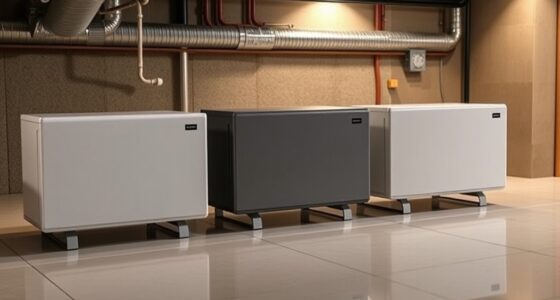
For a central whole-house system, I rank the Senville 36,000 BTU Inverter Central Heat Pump first for its inverter operation and balanced capacity; the Senville 4-ton system with 10 kW auxiliary heat stands out for larger homes that need backup, while the Goodman GPHH33031 offers a packaged R-32 option. The main tradeoffs are choosing the right capacity, deciding whether a packaged unit or split system suits the home, and balancing auxiliary heat against the electric load it adds. The Albott three-zone mini split serves a different need: room-by-room control rather than conventional ducted whole-house distribution. Read on for the full breakdown, including which systems fit particular home layouts and heating needs.

Get backup power and energy gear delivered free with Prime
- Fast, free delivery on millions of items
- Prime Video, Amazon Music and more included
- Member-only deals all year
Key Takeaways
- The Senville 36,000 BTU inverter system leads the central-system picks because it pairs a midrange capacity with inverter operation; it is not a substitute for a load calculation.
- Auxiliary heat changes the decision. The 4-ton Senville includes 10 kW backup, while the 3-ton Senville offers 20 kW; greater heater capacity can help in cold conditions but may call for electrical-service and operating-cost checks.
- Packaged units and split systems solve different installation problems. The Goodman package models house the heating and cooling components together, while Senville central systems use a separate outdoor unit and indoor air handler.
- The Albott is the outlier, not a like-for-like central replacement. Its three indoor heads allow zone control, but its listed 30,000 BTU total is not equivalent to a ducted system serving every room.
- Capacity spans 24,000 BTU through 5 tons across this lineup. That range provides choices for different homes, but square footage alone cannot identify the right model; climate, insulation, ducts, and room-by-room loads matter.
| Senville 36,000 BTU Inverter Central Air Conditioner and Heat Pump | 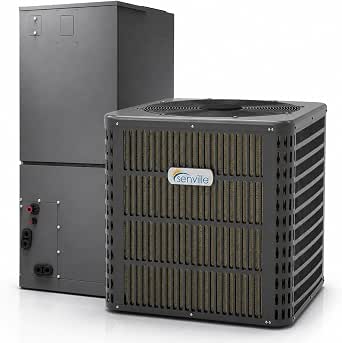 | Best Overall | Model: SENTC-36TD-16 | Cooling power: 36,000 BTU | Capacity: 3 tons | VIEW LATEST PRICE | See Our Full Breakdown |
| Senville 4-Ton Central Air Conditioner and Heat Pump with 10 kW Auxiliary Heat |  | Best for Cold-Climate Capacity | Cooling capacity: 48,000 BTU | Capacity: 4 tons | Coverage area: Up to 2,000 sq. ft. | VIEW LATEST PRICE | See Our Full Breakdown |
| Senville 5-Ton Central Air Conditioning Heat Pump with 10 kW Auxiliary Heat |  | Best for High Cooling Capacity | Model: SENDC-60HF-10K-16 | Cooling capacity: 55,000 BTU | System capacity: 5 tons | VIEW LATEST PRICE | See Our Full Breakdown |
| Senville 24,000 BTU Central Air Conditioning Heat Pump System | | Best for Efficiency in a Smaller Home | Model: SENTC-24TD-16 | Cooling capacity: 24,000 BTU | System capacity: 2 tons | VIEW LATEST PRICE | See Our Full Breakdown |
| Senville 3-Ton Central Air Conditioning Heat Pump with 20 kW Auxiliary Heater |  | Best for Built-In Backup Heat | Model: SENDC-36HF-20K-16 | Cooling capacity: 36,000 BTU | System capacity: 3 tons | VIEW LATEST PRICE | See Our Full Breakdown |
| Goodman 4-Ton 14 SEER Heat Pump Package Unit (GPH1448H41) |  | Best for Larger Homes Needing a Packaged System | Model: GPH1448H41 | Capacity: 4 tons | Efficiency: 14 SEER | VIEW LATEST PRICE | See Our Full Breakdown |
| Albott 3-Zone Mini Split AC/Heat Pump, 9k+9k+12k BTU, 22 SEER2 | 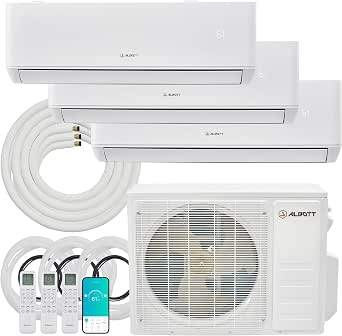 | Best for Multi-Zone Temperature Control | Indoor unit capacities: 9,000 + 9,000 + 12,000 BTU | Outdoor unit capacity: 28,000 BTU | Cooling power: 30,000 BTU | VIEW LATEST PRICE | See Our Full Breakdown |
| Goodman GPHH33031 2.5-Ton Packaged Heat Pump, 13.4 SEER2, R-32 |  | Best Packaged-System Pick for Moderate Loads | Model: GPHH33031 | Capacity: 2.5 tons | Efficiency: 13.4 SEER2 | VIEW LATEST PRICE | See Our Full Breakdown |
| Senville 3-Ton Inverter Central Air Conditioner and Heat Pump | | Best for Cold-Weather Split-System Heating | Cooling capacity: 36,000 BTU | Listed coverage: Up to 2,000 sq. ft. | System type: Split system | VIEW LATEST PRICE | See Our Full Breakdown |
| whole house heat pump | Efficiency | Warranty | Model | Refrigerant |
|---|---|---|---|---|
| Senville 36,000 BTU Inverter C | Up to 18.6 SEER2 | 10 years on compressor; 5 years on parts | SENTC-36TD-16 | — |
| Senville 4-Ton Central Air Con | 15.6 SEER | 5 years on parts; 10 years on compressor; labor not included | — | R-454B |
| Senville 5-Ton Central Air Con | 15.3 SEER | — | SENDC-60HF-10K-16 | R-454B |
| Senville 24,000 BTU Central Ai | Up to 20 SEER2 | 10 years on compressor; 5 years on parts | SENTC-24TD-16 | — |
| Senville 3-Ton Central Air Con | — | 2 years on parts; 7 years on compressor | SENDC-36HF-20K-16 | R-454B |
| Goodman 4-Ton 14 SEER Heat Pum | 14 SEER | — | GPH1448H41 | — |
| Albott 3-Zone Mini Split AC/He | 22 SEER2 | 2 years | — | R-32 (GWP 675) |
| Goodman GPHH33031 2.5-Ton Pack | 13.4 SEER2 | 10-year limited parts warranty with qualified installation and online registration | GPHH33031 | R-32 |
| Senville 3-Ton Inverter Centra | — | 5 years parts; 10 years compressor; labor not covered | — | R-454B |
More Details on Our Top Picks
Senville 36,000 BTU Inverter Central Air Conditioner and Heat Pump
I rank this as the most balanced whole-house option in this group for buyers whose home suits a 3-ton system. Its 36,000 BTU capacity and stated coverage of up to 1,800 sq. ft. make it a more measured fit than the 4-ton Senville, which is specified for up to 2,000 sq. ft. The 18.6 SEER2 rating and inverter compressor give efficiency-minded buyers a useful combination for heating and cooling, while the indoor unit’s 38 dB rating supports quieter operation. App and button controls add convenience without changing the system’s central-ducted format. The tradeoff is that this system lacks the stated -22°F heating capability and auxiliary heat included with the larger Senville packages. It also weighs 302 lb and needs split-system installation, so it is not a simple replacement for a portable or packaged unit.
Pros:- Provides both central heating and cooling with 36,000 BTU capacity
- Up to 18.6 SEER2 efficiency
- Indoor operation rated as low as 38 dB
- App and button controls offer two ways to operate the system
Cons:- Coverage is specified up to 1,800 sq. ft., less than the larger Senville central systems
- No auxiliary heater is listed
- The 302-lb split system requires professional planning and installation
Best for: Homeowners with ductwork and a roughly 1,800-sq.-ft. home who want one inverter system for heating and cooling.
Not ideal for: Owners in very cold climates who need heating specified down to -22°F or want included auxiliary heat.
- Model:SENTC-36TD-16
- Cooling power:36,000 BTU
- Capacity:3 tons
- Coverage:Up to 1,800 sq. ft.
- Efficiency:Up to 18.6 SEER2
- Airflow:Up to 1,110 CFM
- System type:Inverter split system
- Voltage:208/230 V
- Warranty:10 years on compressor; 5 years on parts
Our verdict“Choose this 3-ton Senville for a ducted home up to about 1,800 sq. ft. where balanced capacity, quiet operation, and inverter efficiency matter more than included cold-weather backup heat.”
Senville 4-Ton Central Air Conditioner and Heat Pump with 10 kW Auxiliary Heat
This 4-ton Senville is the stronger fit when cold-weather heating and a broad included package matter more than the highest efficiency figure in this batch. It is rated to heat at temperatures as low as -22°F and includes 10 kW auxiliary heat, an air handler, condenser, thermostat, and 16-foot installation kit. That makes its supplied equipment more complete than the 5-ton Senville, which does not include an installation kit. Its 48,000 BTU capacity is specified for homes up to 2,000 sq. ft., so buyers should match it to a contractor’s load calculation rather than assume more capacity is always better. At 15.6 SEER, it trails the 24,000 BTU Senville’s stated up-to-20 SEER2 rating. Professional installation is required, and the warranty excludes labor.
Pros:- Heating operation specified down to -22°F
- Includes 10 kW auxiliary heat for additional heating support
- Package includes air handler, condenser, thermostat, and 16-foot installation kit
- Inverter compressor provides both heating and cooling
Cons:- 15.6 SEER rating is below the stated efficiency of the 24,000 BTU Senville
- Professional installation is required
- Warranty covers parts and compressor but not labor
Best for: Homeowners in cold regions with ductwork who need a 4-ton system, auxiliary heat, and a kit that includes core installation components.
Not ideal for: Buyers prioritizing a higher stated efficiency rating, or homes that do not need this system’s 48,000 BTU capacity.
- Cooling capacity:48,000 BTU
- Capacity:4 tons
- Coverage area:Up to 2,000 sq. ft.
- Efficiency:15.6 SEER
- Auxiliary heat:10 kW
- Refrigerant:R-454B
- Heating temperature:Down to -22°F
- Included components:Indoor air handler, outdoor condenser, thermostat, and 16-foot installation kit
- Warranty:5 years on parts; 10 years on compressor; labor not included
Our verdict“Pick this 4-ton package if you need low-temperature heating and included auxiliary heat, and your home’s sizing assessment supports its capacity.”
Senville 5-Ton Central Air Conditioning Heat Pump with 10 kW Auxiliary Heat
Among these five options, this is the largest system by rated cooling capacity at 55,000 BTU. It suits buyers whose contractor has established a need for a 5-ton unit, while its stated coverage remains up to 2,000 sq. ft.—a reason to verify sizing carefully rather than select by tonnage alone. Like the 4-ton Senville, it has an inverter compressor, 10 kW auxiliary heat, and heating specified down to -22°F. The difference is that this model delivers more cooling capacity but has a lower stated SEER rating, 15.3 versus the 4-ton model’s 15.6. It includes a thermostat, air handler, and condenser, but unlike that 4-ton package, the installation kit is not included. Licensed installation is required, and labor is outside the warranty.
Pros:- Highest stated cooling capacity in this five-product group at 55,000 BTU
- Includes 10 kW auxiliary heat
- Heating operation specified down to -22°F
- Includes indoor air handler, outdoor condenser, and thermostat
Cons:- Installation kit is not included, unlike the 4-ton Senville package
- 15.3 SEER rating is lower than the 4-ton model’s 15.6 SEER
- Professional installation is required and labor is not covered by the warranty
Best for: Homeowners whose load calculation calls for a 5-ton central system and who want auxiliary heat for cold-weather support.
Not ideal for: Buyers who need a more complete installation package, want higher stated efficiency, or have not confirmed that a 5-ton system fits their home.
- Model:SENDC-60HF-10K-16
- Cooling capacity:55,000 BTU
- System capacity:5 tons
- Coverage area:Up to 2,000 sq. ft.
- Efficiency:15.3 SEER
- Auxiliary heat:10 kW
- Refrigerant:R-454B
- Heating temperature:Down to -22°F
- Installation kit:Not included
Our verdict“Choose this model only when a qualified load assessment supports 5 tons and you are prepared to source the installation kit separately.”
Senville 24,000 BTU Central Air Conditioning Heat Pump System
For a smaller ducted home, this 2-ton Senville puts the lineup’s highest stated efficiency figure ahead of raw capacity: up to 20 SEER2, paired with 24,000 BTU of heating and cooling. Its 38 dB indoor noise rating matches the quieter 36,000 BTU Senville, but this model adds a multi-position air handler that can be installed vertically or horizontally. That flexibility may help when the available mechanical space rules out a single orientation. Its stated heating limit is -4°F, however, well above the -22°F rating listed for the 4- and 5-ton Senville systems. It is also rated for less capacity than those models, so it is a better match for modest loads rather than larger homes. At 302 lb, it still calls for careful delivery and installation planning.
Pros:- Up to 20 SEER2 efficiency, the highest stated figure among these five products
- Quiet indoor operation rated as low as 38 dB
- Air handler supports vertical or horizontal installation
- App and button controls are included
Cons:- Heating operation is specified only down to -4°F, not -22°F like the larger cold-climate Senville models
- 24,000 BTU capacity may not suit homes with larger heating or cooling loads
- System weighs 302 lb
Best for: Owners of smaller ducted homes who value a high stated efficiency rating, quiet indoor operation, and flexible air-handler positioning.
Not ideal for: People in regions where heating below -4°F is a routine need, or homeowners whose load calculation calls for more than 2 tons.
- Model:SENTC-24TD-16
- Cooling capacity:24,000 BTU
- System capacity:2 tons
- Efficiency:Up to 20 SEER2
- Annual energy consumption:1,200 kWh
- Air handler position:Vertical or horizontal
- Heating temperature:Down to -4°F
- Noise level:As low as 38 dB
- Warranty:10 years on compressor; 5 years on parts
Our verdict“Select this 2-ton unit for a smaller ducted home where its efficiency and flexible air-handler orientation matter more than deep-cold heating capacity.”
Senville 3-Ton Central Air Conditioning Heat Pump with 20 kW Auxiliary Heater
This 3-ton Senville stands apart from the 36,000 BTU Senville without auxiliary heat by pairing the same nominal cooling capacity with a 20 kW auxiliary heater. Its stated heating range extends down to -22°F, making it the more cold-weather-focused choice of the two, while the other 3-ton model lists quieter 38 dB operation and app controls. This unit is specified for spaces up to 2,000 sq. ft. and uses an inverter compressor, but its provided data gives no SEER rating, so efficiency comparisons are less clear than for the 24,000 BTU model’s up-to-20 SEER2 figure. It is also the heaviest option here at 356.2 lb, and professional installation is recommended. The parts and compressor warranty periods are shorter than those on several other Senville systems in this group.
Pros:- Includes a 20 kW auxiliary heater
- Heating operation specified down to -22°F
- Inverter system provides heating and cooling
- Rated for spaces up to 2,000 sq. ft.
Cons:- At 356.2 lb, it is the heaviest system in this group
- Warranty is 2 years on parts and 7 years on the compressor, shorter than several other Senville options
- No SEER or SEER2 figure is provided in the product data
Best for: Homeowners with ductwork who need a 3-ton system, substantial auxiliary heat, and heating specified for temperatures down to -22°F.
Not ideal for: Buyers who prioritize a longer warranty, published efficiency figures for direct comparison, or a lighter system to handle during installation.
- Model:SENDC-36HF-20K-16
- Cooling capacity:36,000 BTU
- System capacity:3 tons
- Coverage:Up to 2,000 sq. ft.
- Auxiliary heater:20 kW
- Refrigerant:R-454B
- Heating temperature:Down to -22°F
- Power consumption:3,076 W
- Warranty:2 years on parts; 7 years on compressor
Our verdict“Choose this 3-ton model over the non-auxiliary 36,000 BTU Senville when cold-weather backup heat is the priority and its shorter warranty is acceptable.”
Goodman 4-Ton 14 SEER Heat Pump Package Unit (GPH1448H41)
I’d shortlist this 4-ton packaged unit for a home that needs substantial heating and cooling from one horizontal-format system. Unlike the Senville 3-Ton Inverter Central Air Conditioner and Heat Pump, which uses separate indoor and outdoor components and highlights low-temperature heating, the Goodman combines its heating and cooling functions in a packaged design. That can suit a property planned around a single unit, but the listing does not specify cold-weather performance or provide enough installation detail to compare operating costs confidently.
The 14 SEER rating is less compelling on efficiency than the Albott 3-Zone’s listed 22 SEER2, and a 4-ton system is not automatically right for every house; proper sizing matters. I’d also verify the fuel and electrical requirements before ordering, since the supplied information calls it both gas powered and electric fuel. Its large dimensions call for careful siting and installation planning.
Pros:- 4-ton capacity is suited to higher whole-house heating and cooling demand when properly sized.
- Provides both heating and cooling in one packaged system.
- Horizontal form factor offers an alternative to split systems with separate indoor and outdoor equipment.
- Designed for whole-house use.
Cons:- 14 SEER rating is lower than the Albott 3-Zone system’s listed 22 SEER2.
- Product data conflicts on whether the unit is gas powered or electric fuel, so requirements need confirmation.
- Large 34 × 66.25 × 38.75-inch dimensions limit placement options.
Best for: Owners of larger homes who need a high-capacity packaged heating-and-cooling unit and have a suitable horizontal installation location.
Not ideal for: Buyers focused on higher stated efficiency, zone-by-zone temperature control, or a clearly documented fuel and power setup.
- Model:GPH1448H41
- Capacity:4 tons
- Efficiency:14 SEER
- Functions:Heating and cooling
- Form factor:Horizontal packaged unit
- Voltage:253 volts
- Dimensions:34 × 66.25 × 38.75 inches (D × W × H)
- Manufacture year:2015
Our verdict“Choose this Goodman if you need a large-capacity packaged system and can confirm its fuel, electrical, and installation requirements first.”
Albott 3-Zone Mini Split AC/Heat Pump, 9k+9k+12k BTU, 22 SEER2
The Albott stands apart from the packaged Goodmans in this group because it is built around three independently controlled zones, rather than heating and cooling the house through one shared air-distribution setup. Its 9k+9k+12k BTU indoor units let occupants set different temperatures in separate areas, while the 22 SEER2 inverter and app or remote controls add efficiency and day-to-day flexibility. This makes it a stronger fit for a home with distinct comfort needs than the single-capacity Goodman GPHH33031.
That flexibility comes with installation and electrical demands: the system requires professional setup and 220 V power, and the 164.4-pound equipment can complicate handling. The supplied two-year warranty is also shorter than the Goodman GPHH33031’s listed 10-year limited parts coverage, which has its own installer and registration conditions. I’d choose Albott for zoning, not as a simple drop-in whole-house replacement.
Pros:- Three indoor units provide independent temperature control across zones.
- Listed 22 SEER2 inverter performance is higher than the Goodman packaged units’ stated efficiency ratings.
- Smartphone app and remote controls offer convenient system management.
- Installation kit includes pre-charged line sets and other listed components.
Cons:- Professional installation is required, so it is not a DIY-friendly system.
- Requires 220 V power, which may not be available at the installation site.
- The 164.4-pound weight can make equipment handling more involved.
- Listed warranty is two years, shorter than the Goodman GPHH33031’s 10-year limited parts warranty when its conditions are met.
Best for: Households with three rooms or areas that need separate temperature settings and access to a 220 V supply.
Not ideal for: Buyers seeking a straightforward packaged replacement, DIY installation, or longer listed parts coverage.
- Indoor unit capacities:9,000 + 9,000 + 12,000 BTU
- Outdoor unit capacity:28,000 BTU
- Cooling power:30,000 BTU
- Efficiency:22 SEER2
- Refrigerant:R-32 (GWP 675)
- Voltage:220 V
- Noise level:29 dB
- Warranty:2 years
Our verdict“Pick the Albott when room-by-room control matters more than packaged-system simplicity and your home is ready for professional 220 V installation.”
Goodman GPHH33031 2.5-Ton Packaged Heat Pump, 13.4 SEER2, R-32
I’d favor the Goodman GPHH33031 when a home needs a packaged heat pump at a more moderate 2.5-ton capacity rather than the 4-ton GPH1448H41. Its horizontal configuration keeps heating and cooling in one unit, while the multi-speed ECM motor gives the system more airflow flexibility than a basic single-speed arrangement. The scroll compressor and all-aluminum evaporator coil add concrete component details that are not supplied for the larger Goodman model.
Its 13.4 SEER2 rating does not match the Albott’s listed 22 SEER2, and this single packaged system lacks the Albott’s separate zone controls. The main ownership advantage is its 10-year limited parts warranty, but that coverage depends on qualified installation and online registration. I’d treat capacity selection and warranty conditions as installation decisions, rather than assume the unit is a universal whole-house fit.
Pros:- 2.5-ton packaged format combines heating and cooling in one unit.
- Multi-speed ECM motor provides more airflow flexibility than a basic single-speed motor.
- All-aluminum evaporator coil is a clearly specified system component.
- 10-year limited parts warranty is available with qualified installation and online registration.
Cons:- 13.4 SEER2 is below the Albott system’s stated 22 SEER2.
- A single packaged system does not provide the Albott’s independent zone control.
- Warranty coverage depends on qualified installation and online registration.
Best for: Homeowners replacing a packaged system in a moderate-load home who want a 2.5-ton unit with a stated parts-warranty path.
Not ideal for: Owners who need higher capacity, separate room-level control, or the highest listed efficiency in this group.
- Model:GPHH33031
- Capacity:2.5 tons
- Efficiency:13.4 SEER2
- Refrigerant:R-32
- Configuration:Horizontal packaged heat pump
- Voltage and phase:208/230 volts, single phase
- Motor and compressor:Multi-speed ECM motor; scroll compressor
- Warranty:10-year limited parts warranty with qualified installation and online registration
Our verdict“Choose this Goodman for a moderate-capacity packaged replacement when its installation conditions and warranty requirements suit your project.”
Senville 3-Ton Inverter Central Air Conditioner and Heat Pump
The Senville earns this role for buyers who need a 3-ton split system with a stated heating range down to -22°F. That low-temperature specification gives it a clearer cold-weather case than the Goodman GPH1448H41, whose supplied details do not state a minimum heating temperature. Its inverter compressor and included indoor air handler make it a different proposition from the horizontal packaged Goodman GPHH33031, which keeps its components in one unit.
This is a substantial installation project: Senville requires a licensed professional, includes a new outdoor condenser, and the supplied 356.2-pound weight calls for careful handling. The listing covers spaces up to 2,000 square feet, but that figure is not a substitute for a load calculation. Its 5-year parts and 10-year compressor warranty exclude labor, so service costs remain a separate consideration. I’d prioritize it for cold-weather heating capability, not a simple equipment swap.
Pros:- Rated to provide heating at temperatures as low as -22°F (-30°C).
- Inverter compressor is specified for the split system.
- Includes an indoor air handler, outdoor condenser, wired remote, and 16-foot installation kit.
- Capacity is listed for spaces up to 2,000 square feet.
Cons:- Licensed professional installation is required.
- Installation requires a new outdoor unit and substantial equipment handling.
- Warranty excludes labor, leaving installation and repair labor outside the stated coverage.
Best for: Owners of homes needing a 3-ton split heat pump with a stated low-temperature heating capability and professional installation.
Not ideal for: Buyers seeking a packaged unit, DIY setup, or a project that cannot accommodate a new outdoor condenser and labor costs.
- Cooling capacity:36,000 BTU
- Listed coverage:Up to 2,000 sq. ft.
- System type:Split system
- Compressor:Inverter
- Refrigerant:R-454B
- Voltage:208/230 V
- Minimum heating temperature:-22°F (-30°C)
- Warranty:5 years parts; 10 years compressor; labor not covered
Our verdict“Choose this Senville if cold-weather heating performance is your priority and you can accommodate professional split-system installation.”
How We Picked
I ranked these whole-house heat pumps by how clearly each option fits a real home-level heating and cooling job, not by capacity alone. I compared system format, stated capacity, inverter operation, auxiliary heat, and available efficiency details. I also weighed whether the product’s design makes sense for a ducted replacement, a packaged-unit installation, or a zoned home with limited ducts.
The Senville 36,000 BTU inverter system takes the top position as a broadly useful central-system candidate, while the Senville 4-ton model with 10 kW auxiliary heat ranks higher for buyers who specifically need a larger system with backup heat. Goodman’s packaged units earn distinct places for their all-in-one format, but their listed efficiency figures and capacities do not make them automatic upgrades for every home. The Albott’s zoning flexibility is useful, though its multi-head mini-split layout is less directly comparable to central ducted equipment. I treat all stated capacities as selection clues, not proof of suitability: a contractor’s load calculation and site-specific installation review should decide final sizing.
| whole house heat pump | Model | Refrigerant |
|---|---|---|
| Senville 36,000 BTU Inverter C | SENTC-36TD-16 | — |
| Senville 4-Ton Central Air Con | — | R-454B |
| Senville 5-Ton Central Air Con | SENDC-60HF-10K-16 | R-454B |
| Senville 24,000 BTU Central Ai | SENTC-24TD-16 | — |
| Senville 3-Ton Central Air Con | SENDC-36HF-20K-16 | R-454B |
| Goodman 4-Ton 14 SEER Heat Pum | GPH1448H41 | — |
| Albott 3-Zone Mini Split AC/He | — | R-32 (GWP 675) |
| Goodman GPHH33031 2.5-Ton Pack | GPHH33031 | R-32 |
| Senville 3-Ton Inverter Centra | — | R-454B |
Factors to Consider When Choosing Whole House Heat Pumps
Choosing among these systems starts with the home, not the largest capacity on the listing. I would use the following checks to avoid buying a unit that is difficult to install, poorly matched to the heating load, or costly to operate.
Match capacity to a load calculation, not a square-foot rule
The lineup ranges from a 24,000 BTU central system to a 5-ton model, but that does not make capacity a simple measure of quality. A Manual J load calculation accounts for local design temperatures, insulation, window exposure, ceiling height, air leakage, and household layout. Oversizing can cause short cycling, uneven temperatures, and reduced humidity control during cooling, while undersizing can leave the system working hard during the coldest or hottest weather. Ask for the calculated heating and cooling loads before choosing between the 3-ton, 4-ton, and 5-ton Senville options. If a proposal relies only on the home’s square footage or the capacity of the old unit, ask for a more complete sizing explanation.
Check cold-weather output and backup heat together
A heat pump’s nominal capacity does not tell the whole story in a cold climate; available heating output can fall as outdoor temperatures drop. Review the manufacturer’s performance data at the temperatures typical for your area and ask when auxiliary heat will switch on. The Senville models listed with 10 kW or 20 kW auxiliary heaters show why backup capacity deserves separate attention: a larger electric heater may provide more supplemental heat, but it can also draw substantial power. Confirm that the electrical panel, wiring, and service can support the equipment and its backup stages. Homes with frequent cold snaps should compare delivered low-temperature heat and backup strategy, rather than choosing solely by tonnage.
Decide whether the home suits a split, packaged, or zoned system
A split central system places major components in separate locations and typically works with an indoor air handler and existing ductwork. A packaged unit puts the main heating and cooling components in one cabinet, which can simplify some installations but depends on suitable outdoor placement and duct connections. A multi-zone mini split such as the Albott can serve separate rooms without extending ducts, yet it does not distribute air through a central duct network. Before selecting a format, inspect the condition and layout of existing ducts, available equipment space, line-set routes, and local placement rules. The least expensive-looking system on paper may require more building work if the home’s layout does not suit it.
Treat efficiency labels as one part of operating cost
SEER or SEER2 figures describe cooling efficiency under standardized conditions; they do not alone predict winter performance or annual utility use. Compare heating ratings such as HSPF2 when available, along with capacity at low outdoor temperatures and the local electricity rate. Inverter operation can vary output to match demand, but the benefit depends on correct sizing, compatible controls, installation quality, and how the system is used. A higher listed cooling-efficiency figure may not be the best choice if the home’s main challenge is cold-weather heating. Ask for an estimate based on local climate and expected usage rather than choosing from one efficiency number.
Verify electrical, duct, and installation requirements before ordering
Heat-pump equipment is not a simple appliance swap: electrical circuits, disconnects, refrigerant lines, condensate drainage, duct transitions, and controls all affect the finished system. Auxiliary resistance heat can add a demanding electrical load, so confirm required breaker and wire sizes with a qualified installer. Packaged units need an appropriate outdoor pad or roof location, service clearances, and sealed duct connections. Central split systems need a compatible air handler and properly sized ducts; restrictive or leaky ductwork can undermine performance even when the outdoor unit is correctly selected. Confirm what the product package includes and what must be sourced separately before scheduling work.
Compare ownership support, not just the equipment listing
Warranty terms, parts availability, installer familiarity, and service access can shape the long-term experience as much as the system’s headline specifications. Ask who will commission the equipment, register the warranty, and handle future diagnostics, and get those responsibilities in writing. Confirm whether the selected model is approved for local incentives and whether the installation must meet specific efficiency or contractor requirements. A system with an appealing feature set may be a poor fit if qualified service is hard to find nearby. I would favor a model that a capable local contractor can install and support over a slightly better specification that leaves the homeowner with limited service options.
Frequently Asked Questions
Can a 3-ton heat pump heat my whole house?
It can, but tonnage alone cannot answer that question. A 3-ton unit may suit one home and fall short in another because climate, insulation, air leakage, windows, and floor plan all affect the heating load. Ask an HVAC contractor for a room-by-room load calculation and for the model’s heating output at your local winter design temperature. Also check whether the proposed system can connect to the home’s ducts and whether those ducts can move the required airflow. Do not treat the capacity of the existing system as proof that a replacement should have the same size.
Should I choose auxiliary heat or rely on the heat pump alone?
That depends on the heat pump’s low-temperature performance, local winter weather, and the home’s tolerance for backup operation. Resistance auxiliary heat can support comfort when the heat pump cannot meet demand, but it can use electricity at a high rate. Ask the installer to explain the system’s balance point, when backup stages activate, and how thermostat settings affect that operation. Check electrical-service capacity before choosing a model with a large auxiliary heater. In a mild climate, a large backup heater may be unnecessary; in colder conditions, a planned backup strategy can matter more.
Is a packaged heat pump a better choice than a central split system?
Neither format is universally better; the right choice depends on the building and installation site. A packaged unit may suit a home already configured for an outdoor cabinet connected to ducts, while a split system can work well when there is room for a separate indoor air handler. Compare service access, duct connections, noise location, weather exposure, and any required structural work. Ask the installer to inspect the existing setup rather than assuming a packaged model is an easier replacement. The Goodman package options in this roundup and the Senville central systems represent different installation approaches, not interchangeable equipment.
Can a three-zone mini split replace a ducted whole-house heat pump?
It can serve multiple areas, but a three-head system does not automatically cover every room or behave like a central ducted system. Its suitability depends on where the indoor heads can be placed, how air moves between rooms, and whether closed doors create cold or warm spots. The Albott’s listed 9k+9k+12k BTU configuration gives three zones, but the combined capacity should still be checked against a calculated load and manufacturer performance data. A mini split may be a strong fit for homes without usable ducts or for targeted zones; a home needing even distribution across many enclosed rooms may need additional indoor units or another design. Have an installer map coverage before treating it as a whole-house replacement.
What should I ask an installer before buying one of these systems?
Ask for the load calculation, the system’s heating capacity at local winter temperatures, and a clear explanation of any auxiliary-heat settings. Request a written scope covering the indoor and outdoor equipment, electrical work, duct modifications, controls, commissioning, and removal of old equipment. Confirm which parts are included with the product and who is responsible for warranty registration and service. For a packaged unit, ask about placement, clearances, and duct sealing; for a split system, review line-set routing and air-handler compatibility. A detailed installation plan makes it easier to compare proposals on the work and system fit, not just the equipment name.
Conclusion
For a broadly useful central-system pick, I would start with the Senville 36,000 BTU inverter system, subject to a load calculation and climate review. Buyers seeking a larger central unit with backup heat should compare the Senville 4-ton model with 10 kW auxiliary heat; those who need more supplemental heater capacity can investigate the 3-ton Senville with 20 kW, while checking the electrical requirements carefully. For a packaged-system installation, the Goodman GPHH33031 is the more current-specification alternative in this lineup, and the 4-ton Goodman offers another packaged format. The Albott is my pick for homes that need three independent zones or lack suitable ducts, not for every traditional central-system replacement. For beginners, I would begin with a contractor’s load calculation and installation assessment before choosing a model; the best-value fit is the correctly sized system that uses the home’s existing infrastructure with the fewest costly changes.
Halloween Picks

Gemmy 5.4 ft The Nun Animatronic Halloween Decoration

8.5 Foot Halloween Inflatable Haunted House Castle with Skeleton, Ghost & Skulls

Haunted Hill Farm 2-Ft. Zombie Raccoon Halloween Animatronic
As an affiliate, we earn on qualifying purchases.