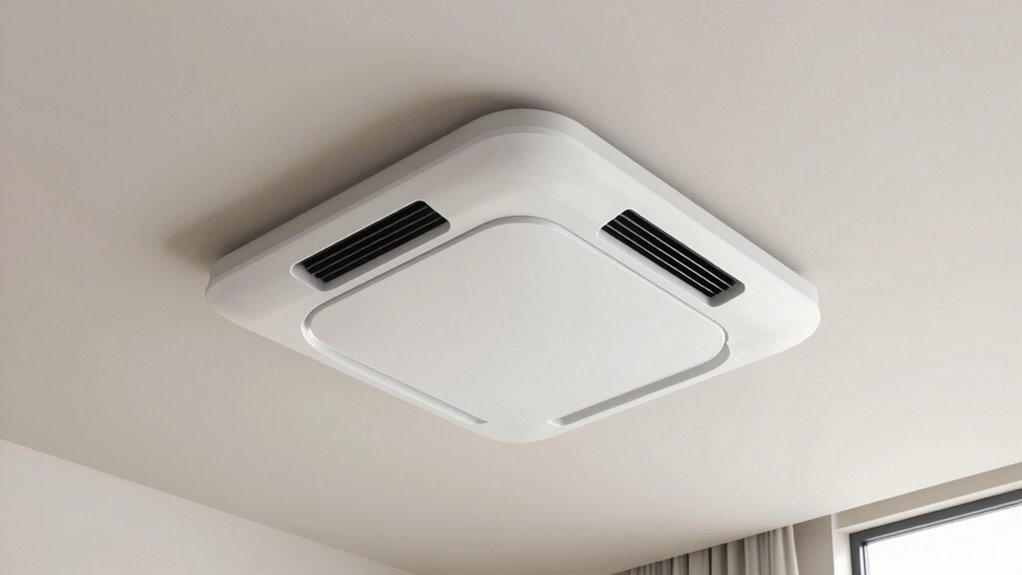

For a ceiling-mounted HRV, I would start with the Broan B230H75RT as the best overall pick for buyers who need higher-capacity heat recovery, while the Fantech VHR 150 suits simpler three-speed operation and the Broan B160E75RT stands out for its LCD controls and top ports. The main choice is between an HRV, which transfers heat, and an ERV, which also transfers some moisture; that depends on your climate and indoor humidity needs. Airflow capacity, duct connections, installation clearance, and control complexity can matter as much as the model name. Some units offer more capacity or advanced controls, while simpler designs may be easier to match to an existing layout. Continue reading for the full breakdown of all 13 options and how I would choose between them.

Get backup power and energy gear delivered free with Prime
- Fast, free delivery on millions of items
- Prime Video, Amazon Music and more included
- Member-only deals all year
Key Takeaways
- Broan’s lineup covers several distinct installation and control needs: the B160E75RT and B160E65RT have top ports and LCD screens, while the B160H65RS and B160E75RS use side-port configurations.
- Higher listed airflow does not make a unit a better match by itself: the Broan B230H75RT, Broan B210E75RT, and VENTS-US BRIG HRV 200 target larger airflow needs than the Fantech HERO 120H.
- Heat recovery and energy recovery are different priorities: the listed HRV models focus on heat transfer, while ERV models such as the Broan B160E75RT and Aprilaire V22BEC also address moisture transfer.
- Connection layout can shape installation choices: top-port options may suit one duct route, while side ports or the Fantech HERO150H’s 6-inch top duct connection may better fit another.
- Controls and motor features vary across the field: LCD-equipped Broan models and the Frigate HRV 150 EC offer different feature sets from the three-speed Fantech VHR 150, so buyers should match complexity to their needs.


| ceiling mounted hrv | Model | Airflow | Product type |
|---|---|---|---|
| Fantech VHR 150 Heat Recovery | VHR 150 | — | Heat recovery ventilator (HRV) |
| Broan B160E75RT AI 133 CFM Wal | B160E75RT | — | Energy recovery ventilator (ERV) |
| Broan AI Series 210 CFM Energy | B210E75RS | 210 CFM | Energy recovery ventilator (ERV) |
| Broan B230H75RT AI Series 230 | B230H75RT | 230 CFM | Heat recovery ventilator (HRV) |
| VENTS-US BRIG HRV 200 Heat Rec | BRIG HRV 200 | — | — |
| Fantech HERO 120H Fresh Air Ap | HERO 120H (99400) | — | — |
| VENTS-US Frigate HRV 150 EC Ve | Frigate HRV 150 EC | — | — |
| Broan B160E65RT AI 142 CFM Wal | — | 142 CFM | — |
| Broan B160H65RS AI 150 CFM Wal | — | 35–150 CFM | — |
| Broan B160E75RS 133 CFM Energy | B160E75RS | 133 CFM | — |
| Fantech HERO150H Fresh Air App | HERO150H | Up to 160 CFM | Heat recovery ventilator (HRV) |
| Broan B210E75RT AI Energy Reco | B210E75RT | 206 CFM | Energy recovery ventilator |
| Aprilaire V22BEC Energy Recove | V22BEC | 120 CFM | Energy recovery ventilator (ERV) |
More Details on Our Top Picks
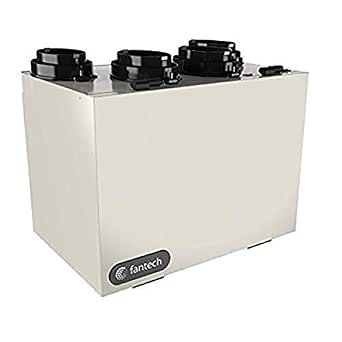
Fantech VHR 150 Heat Recovery Ventilator, 3-Speed, Supply Fan Shutdown Defrost
The Fantech VHR 150 is the straightforward pick for a two- to five-bedroom home that needs balanced ventilation without the higher airflow capacity of the Broan B230H75RT. Its output reaches 159 CFM at 0.4 in. w.g., and three speeds let a household adjust ventilation to its routine. Washable electrostatic filters help limit replacement needs, though they still need regular cleaning to keep airflow up. The supply fan shutdown defrost method is a practical cold-weather feature, while external dry contacts support compatible low-voltage controls. Compared with the VENTS-US BRIG HRV 200, the Fantech offers lower stated capacity and less detail about its recovery core and motor, so it suits buyers who prioritize a defined home-size range and simple control integration over higher airflow.
Pros:- Rated for homes with two to five bedrooms
- Three ventilation speeds allow basic airflow adjustment
- Washable electrostatic filters can be reused after cleaning
- External dry contacts support compatible remote control integration
Cons:- Its maximum airflow may fall short for larger homes or demanding duct systems
- Compatible remote controls may be a separate purchase
- Filters require regular cleaning to maintain performance
Best for: Owners of two- to five-bedroom homes who want three-speed ventilation and washable filters with compatible low-voltage control options.
Not ideal for: Owners of larger homes or high ventilation demand who may need more capacity than its 159 CFM maximum, and buyers seeking a remote control included with the unit.
- Model:VHR 150
- Product type:Heat recovery ventilator (HRV)
- Maximum airflow:159 CFM at 0.4 in. PS
- Recommended coverage:2 to 5 bedroom homes
- Ventilation speeds:3
- Defrost method:Supply fan shutdown
- Filter type:Washable electrostatic
- Control compatibility:Fantech low-voltage controls; external dry contacts
Our verdict“Choose the VHR 150 for a mid-sized home needing simple, adjustable HRV ventilation; choose a higher-capacity option such as the Broan B230H75RT for greater stated airflow.”
Broan B160E75RT AI 133 CFM Wall/Ceiling Mounted Energy Recovery Ventilator with Top Ports and LCD Screen
The Broan B160E75RT earns its place for buyers who want more guidance during setup and upkeep than the Fantech VHR 150 provides. Its integrated LCD screen supports setup, diagnostics, and maintenance, while auto-balancing helps simplify airflow adjustment. The selectable 35–133 CFM range makes it a fit for medium to large homes, though it has less stated maximum airflow than the Broan AI Series 210 CFM unit. Wall or ceiling mounting and top ports can help it fit layouts planned around overhead duct runs. Standard MERV 8 filtration captures common airborne particles, and an optional MERV 13 upgrade gives buyers a higher-filtration path at added cost. This is an ERV, so choose it for energy recovery and setup assistance rather than assuming it matches an HRV’s moisture-transfer behavior.
Pros:- LCD screen supports setup, diagnostics, and maintenance
- Auto-balancing can reduce manual airflow adjustment
- Wall or ceiling mounting with top ports offers layout flexibility
- Optional MERV 13 upgrade provides a higher-filtration option
Cons:- Maximum airflow is lower than the Broan AI Series 210 CFM unit
- MERV 13 filtration requires an optional upgrade
- Some installations may call for professional setup
Best for: Homeowners planning a wall- or ceiling-mounted ERV who value on-unit setup guidance, auto-balancing, and an optional higher-filtration upgrade.
Not ideal for: Buyers who need more than 133 CFM, want MERV 13 filtration included, or specifically need an HRV rather than an ERV.
- Model:B160E75RT
- Product type:Energy recovery ventilator (ERV)
- Airflow range:35–133 CFM
- Duct size:5 in. round
- Dimensions:21-1/2 in. H × 21 in. W × 16-3/10 in. D
- Electrical:120 V, 1.36 A, 163 W
- Filter:MERV 8; optional MERV 13 upgrade
- Mounting and ports:Wall or ceiling mounted; top ports
Our verdict“Pick this Broan ERV when setup guidance and ceiling mounting flexibility matter more than the higher airflow of the 210 CFM model.”
Broan AI Series 210 CFM Energy Recovery Ventilator with Side Ports
With 210 CFM airflow and 6-inch side ports, this Broan AI Series ERV is the higher-capacity choice in this group. It provides substantially more stated airflow than the B160E75RT, making it a better match when a home’s ventilation plan exceeds that model’s 133 CFM ceiling. Automatic airflow verification and balancing can reduce the adjustment work during installation, and the LCD reports airflow, power use, and diagnostics. A washable MERV 8 filter helps avoid routine disposable-filter replacement, but it does not offer the B160E75RT’s specified optional MERV 13 upgrade. Installation is wall-mounted or suspended, so buyers should check the available space and support before choosing it for an overhead layout. It lacks a built-in timer and humidity sensing, which limits automatic control options.
Pros:- 210 CFM capacity exceeds the B160E75RT’s 133 CFM maximum
- Automatic airflow verification and balancing simplify setup
- LCD shows airflow, power consumption, and diagnostics
- Washable MERV 8 filter can reduce replacement needs
Cons:- No built-in timer, automatic shutoff, or humidity sensing
- Side ports and suspended installation require compatible space and duct routing
- MERV 13 filtration is not listed as an available upgrade
Best for: Homeowners needing higher stated airflow and who have space for a wall-mounted or suspended unit with 6-inch side duct connections.
Not ideal for: Buyers needing ceiling mounting with top ports, humidity sensing, a built-in timer, or a specified MERV 13 filtration option.
- Model:B210E75RS
- Product type:Energy recovery ventilator (ERV)
- Airflow:210 CFM
- Ports:Side ports, 6 in.
- Filter:Washable MERV 8
- Sensible recovery efficiency:81% at 64 CFM and 32°F; 65% at 83 CFM and -13°F
- Installation:Wall-mounted or suspended
- Warranty:10-year core; 5-year parts
Our verdict“Choose this model when higher airflow and automated balancing outweigh the B160E75RT’s ceiling-mount flexibility and optional MERV 13 upgrade.”
Broan B230H75RT AI Series 230 CFM Heat Recovery Ventilator (HRV)
The Broan B230H75RT has the highest stated airflow among the HRVs in this batch at 230 CFM, giving it a clear role for residential plans that call for more capacity than the Fantech VHR 150’s 159 CFM. Because the listing provides few technical details beyond model, series, and airflow, buyers get less guidance here than with the VENTS-US BRIG HRV 200, which specifies its core, filters, defrost protection, and airflow at different static pressures. The Broan’s heat-recovery design supports balanced ventilation while limiting the energy loss associated with simple exhaust ventilation. Its intended residential use is clear, but the available data does not establish mounting style, filtration, controls, or duct connections. I would match it to a confirmed system design before choosing it for a ceiling installation.
Pros:- Highest stated HRV airflow in this batch at 230 CFM
- Heat recovery design supports balanced fresh-air exchange
- Residential ventilation is the specified application
Cons:- Available product details do not specify filters, defrost, controls, or duct connections
- Mounting options are not stated, leaving ceiling fit unconfirmed
- May require compatible ducting and professional installation
Best for: Residential buyers whose ventilation plan calls for up to 230 CFM and who can verify mounting, ducting, and control compatibility for their installation.
Not ideal for: Buyers who need confirmed ceiling-mount details, filtration specifications, or listed defrost and control features before selecting equipment.
- Brand:Broan
- Model:B230H75RT
- Series:AI Series
- Product type:Heat recovery ventilator (HRV)
- Airflow:230 CFM
- Recommended use:Residential ventilation and indoor air quality
Our verdict“Consider the B230H75RT when a residential design calls for its 230 CFM capacity, after confirming ceiling fit and system details with the product documentation.”
VENTS-US BRIG HRV 200 Heat Recovery Ventilator, Whole House Ventilation Fan, 213 CFM, Dual MERV 6 Filtration
The VENTS-US BRIG HRV 200 combines whole-home airflow with more specified operating details than the Broan B230H75RT listing. It reaches 213 CFM at 0.1 in. w.g., with up to 200 CFM at 0.2 in. w.g.; that pressure information helps buyers judge how duct resistance affects delivered airflow. Its polymer enthalpic core and electronic defrost protection address recovery and cold-weather operation, while washable dual MERV 6 filters keep routine filter replacement down. The built-in three-step control covers standby, low, and medium, but high-speed boost requires external controls. Compared with the Fantech VHR 150, this unit offers higher stated airflow and more detail on its core and motors, though its airflow ratings depend on external static pressure and the included control is basic.
Pros:- Airflow is specified at both 0.1 and 0.2 in. w.g.
- Electronic defrost protection supports cold-weather operation
- Washable dual MERV 6 filters reduce disposable-filter replacement
- Built-in three-step control covers standby, low, and medium
Cons:- Airflow decreases as external static pressure rises
- High-speed boost requires additional external controls
- MERV 6 filtration is a basic level compared with higher-grade options
Best for: Homeowners planning whole-home HRV ventilation in a cold climate who want specified airflow at two static pressures and washable dual filters.
Not ideal for: Buyers who need a built-in high-speed boost, stronger listed filtration than MERV 6, or airflow capacity unaffected by duct resistance.
- Model:BRIG HRV 200
- Maximum airflow:213 CFM at 0.1 in. w.g.
- Airflow at higher static pressure:Up to 200 CFM at 0.2 in. w.g.
- Duct connection:6 in.
- Heat recovery core:Polymer enthalpic
- Defrost protection:Electronic
- Filtration:Washable dual MERV 6 filters
- Control:Three-step side panel: standby, low, medium
- Motor features:German-made high-efficiency motors; backward-inclined impellers
Our verdict“Choose the BRIG HRV 200 for a cold-climate whole-home system when its pressure-specific airflow and electronic defrost fit your duct design.”
Fantech HERO 120H Fresh Air Appliance, 118 CFM, 120 V
The Fantech HERO 120H suits buyers who want balanced fresh-air exchange in a wall-mounted unit, with an included MERV 8 filter and heat recovery rated up to 80%. Its 118 CFM ceiling makes it a better fit for modest ventilation needs than the VENTS-US Frigate HRV 150 EC, which is rated at 186 CFM. The HERO’s top-mounted 5-inch connections can help organize duct runs, but the specified installation is wall mount, so it is not the natural choice for a ceiling-first layout. It has two speeds and supports the ECO-TOUCH programmable wall control; buyers seeking programmable operation should account for that controller compatibility. Choose it for a compact, filtered ventilation setup, and skip it if your home needs more airflow or ceiling mounting.
Pros:- Supplies fresh air while exhausting stale air
- Integrated MERV 8 filter is included
- Heat recovery is rated up to 80%
- Top-mounted 5-inch duct connections suit a compact duct layout
Cons:- 118 CFM may fall short for larger homes
- Listed as wall mount rather than ceiling mount
- Programmable control requires a compatible ECO-TOUCH wall control
Best for: Owners of smaller homes seeking a wall-mounted HRV with included MERV 8 filtration and compatible programmable control
Not ideal for: Buyers planning ceiling-only installation or needing airflow above 118 CFM
- Model:HERO 120H (99400)
- Airflow capacity:118 CFM
- Voltage:120 V
- Wattage:144 W
- Duct connections:5-inch top-mounted
- Filter:Integrated MERV 8
- Heat recovery:Up to 80%
- Mounting type:Wall mount
Our verdict“Choose the HERO 120H for a wall-mounted, filtered ventilation system in a home whose airflow needs fit within 118 CFM.”
VENTS-US Frigate HRV 150 EC Ventilation System, 186 CFM Whole House Fresh Air Intake and Humidity Exhaust with EC Motors
With a listed capacity of 186 CFM, the VENTS-US Frigate HRV 150 EC offers more airflow headroom than the Fantech HERO 120H’s 118 CFM, making it the stronger fit when a smaller unit would be undersized. Its EC motors and cross-flow polystyrene core are paired with electronic defrost, which helps the system keep operating in cold conditions while recovering heat and moisture. The tradeoff is that its description provides fewer installation and control details than the Broan B160H65RS, which specifies wall or ceiling mounting, auto-balancing, and an LCD for diagnostics. The Frigate is described as a whole-house system, but no mounting type or duct connection dimensions are supplied here. I’d shortlist it for airflow and cold-weather features, then confirm fit and controls before choosing.
Pros:- 186 CFM capacity exceeds the Fantech HERO 120H
- EC motors are specified
- Electronic defrost supports operation in low temperatures
- Steel casing has an anti-corrosion coating
Cons:- Electronic defrost may be needed in cold temperatures
- Mounting type and duct connection dimensions are not provided
- 186 CFM may be insufficient for larger ventilation demands
Best for: Homeowners who need more airflow than a 118 CFM unit provides and want electronic frost protection for cold-weather operation
Not ideal for: Buyers who need confirmed ceiling-mount dimensions, specified controls, or airflow above 186 CFM
- Model:Frigate HRV 150 EC
- Airflow capacity:186 CFM
- Motor type:EC
- Ventilation function:Fresh air intake and humidity exhaust
- Recovery core:Cross-flow polystyrene
- Frost protection:Electronic defrost
- Casing:Steel with anti-corrosion coating
- Application:Whole house
Our verdict“Consider the Frigate HRV 150 EC when you need more airflow than the HERO 120H provides and can verify the installation details for your space.”
Broan B160E65RT AI 142 CFM Wall/Ceiling Mounted Energy Recovery Ventilator with Top Ports and LCD Screen
The Broan B160E65RT AI is one of the clearest matches here for a ceiling-mounted layout: it explicitly supports wall or ceiling installation and has top ports. Its 142 CFM rating sits above the Fantech HERO 120H’s 118 CFM, though below the 150 CFM maximum of the Broan B160H65RS. An LCD screen and remote control offer accessible operation, but the supplied details do not describe the auto-balancing or selectable airflow range listed for the B160H65RS. The product is identified as an energy recovery ventilator and specifies R-410A refrigerant, while the roundup’s HRV focus may lead buyers to compare recovery type and system design closely before purchase. Ducting and electrical work may also call for professional installation. Pick it when top ports and flexible mounting are the deciding fit.
Pros:- Explicitly supports wall or ceiling mounting
- Top ports can suit overhead duct routing
- 142 CFM exceeds the Fantech HERO 120H rating
- LCD screen and remote control are specified
Cons:- Airflow is lower than the Broan B160H65RS maximum of 150 CFM
- Supplied details do not specify auto-balancing or variable airflow
- Electrical and ducting work may require professional installation
Best for: Homeowners planning a top-duct ceiling or wall installation who want an LCD screen and remote control
Not ideal for: Buyers who need a documented selectable airflow range, auto-balancing features, or verified HRV-specific recovery details
- Airflow:142 CFM
- Installation type:Wall or ceiling mounted
- Port location:Top ports
- Refrigerant:R-410A
- Voltage:120 V
- Controller:Remote control
- Display:LCD screen
Our verdict“Choose the B160E65RT AI when ceiling mounting with top ports, an LCD, and remote operation best matches your installation plan.”
Broan B160H65RS AI 150 CFM Wall or Ceiling Mounted Heat Recovery Ventilator with VIRTUO Air Technology and Side Ports
The Broan B160H65RS is the most feature-detailed ceiling-compatible HRV in this group. It supports wall or ceiling mounting, offers a selectable 35–150 CFM range, and uses VIRTUO Air Technology for monitoring and auto-balancing. That gives buyers more setup guidance than the Broan B160E75RS, whose supplied information lists 133 CFM and an LCD but no balancing features. MERV 8 filters come standard, with an optional MERV 13 upgrade for buyers seeking finer filtration. The LCD reports airflow and diagnostics, which can make commissioning and troubleshooting easier. Those added capabilities come with a limitation: the higher-grade filter is optional, and the installation still requires suitable ductwork and may call for a professional. This is the strongest choice for buyers who value adjustability and setup feedback.
Pros:- Wall or ceiling mounting supports flexible placement
- Selectable airflow range spans 35–150 CFM
- VIRTUO Air Technology provides monitoring and auto-balancing
- MERV 8 filtration and LCD diagnostics are included
Cons:- MERV 13 filtration requires an optional upgrade
- Professional installation may be needed for duct integration
- Maximum airflow is lower than the VENTS-US Frigate HRV 150 EC’s 186 CFM
Best for: Homeowners installing a ceiling-compatible HRV who want adjustable airflow, auto-balancing, and on-unit diagnostics
Not ideal for: Buyers who need MERV 13 filtration included or want a system that requires minimal ductwork planning
- Airflow:35–150 CFM
- Duct size:5-inch round
- Dimensions:19.13 in H × 23.5 in W × 16.3 in D
- Voltage:120 V
- Wattage:163 W
- Filter:MERV 8; optional MERV 13 upgrade
- Installation type:Wall or ceiling mounted
- Motor type:PMSM ECM
- Ports:Side ports
Our verdict“Choose the B160H65RS if ceiling-compatible installation, auto-balancing, and adjustable airflow matter more than maximizing capacity.”
Broan B160E75RS 133 CFM Energy Recovery Ventilator
The Broan B160E75RS provides a straightforward 133 CFM option with wall or ceiling mounting, side ports, and an LCD screen. Those details make it easier to assess for a side-duct layout than the VENTS-US Frigate HRV 150 EC, whose supplied specifications do not state port location or mounting type. Its capacity is also close to the Broan B160E65RT AI at 142 CFM, but the E65RT adds top ports and remote control, which may suit a different ceiling duct path. The E75RS’s listed information is sparse: it does not identify filtration, controls beyond the display, or recovery performance. That makes it a candidate for buyers whose plans align with its mounting and port layout, but a weaker choice when comparing technical capabilities is a priority.
Pros:- Supports wall or ceiling mounting
- Side ports suit layouts designed for side duct connections
- 133 CFM capacity is specified
- Includes an LCD screen
Cons:- Supplied specifications do not identify filter type
- Recovery performance and control functions are not detailed
- Lower listed airflow than the Broan B160E65RT AI’s 142 CFM
Best for: Homeowners whose duct plan calls for side ports and who want a ceiling- or wall-mountable unit with an LCD
Not ideal for: Buyers who need documented filtration, detailed recovery performance, top ports, or specified remote controls
- Airflow:133 CFM
- Mounting:Wall or ceiling
- Ports:Side ports
- Display:LCD screen
- Model:B160E75RS
- Ventilator type:Energy recovery ventilator
Our verdict“Choose the B160E75RS when its side ports and mounting options fit your duct plan and its limited published specifications answer your needs.”
Fantech HERO150H Fresh Air Appliance HRV, 6 in. Top Duct Connection, 160 CFM
Front access and a built-in MERV 8 filter give the Fantech HERO150H a practical edge for homeowners who want routine filter service to be simple. Its counter-flow core and airflow up to 160 CFM suit a smaller whole-house ventilation plan, while the 6-inch top connection makes sense when the ductwork can approach from above. Compared with the Broan B210E75RT, which offers 206 CFM and wall or ceiling mounting, this Fantech moves less air and has fewer stated mounting options. That lower capacity may limit its fit in larger homes, and the fixed top-port arrangement can complicate a retrofit where ducts enter from the side. I’d choose it when accessible maintenance and a clearly specified filter matter more than maximum airflow or flexible port placement.
Pros:- Provides up to 160 CFM of fresh air
- Integrated MERV 8 filter is specified
- Counter-flow core supports energy-efficient heat recovery
- Unobstructed front access simplifies maintenance
Cons:- May not provide enough airflow for larger spaces
- Top-mounted duct connection can restrict installation options
Best for: Homeowners with a modest ventilation load, overhead duct routing, and a preference for easy front-side filter access
Not ideal for: Owners of larger homes or retrofits with side-entry ductwork, since the 160 CFM limit and top connection may constrain the design
- Brand:Fantech
- Model:HERO150H
- Product type:Heat recovery ventilator (HRV)
- Airflow:Up to 160 CFM
- Duct connection:6 in., top-mounted
- Filter:Integrated MERV 8
- Core:Counter-flow
- Access:Unobstructed front access
Our verdict“Choose the HERO150H for a smaller ventilation system where accessible servicing matters more than high capacity or flexible duct routing.”
Broan B210E75RT AI Energy Recovery Ventilator, 206 CFM
The 206 CFM rating makes the Broan B210E75RT the higher-capacity choice here, with wall or ceiling mounting that can suit different equipment-room layouts. Its description identifies an HRV core and top ports, so buyers can judge it as a ceiling-mounted candidate when overhead duct routing fits the plan. Compared with the Fantech HERO150H, it offers 46 CFM more listed airflow and more mounting flexibility, but the available product details say little about filtration, controls, or service access. That thinner specification makes it harder to compare day-to-day upkeep or control features before purchase. I’d put it ahead of lower-airflow models when the design calls for more ventilation and wall mounting is useful, while buyers needing documented filter and maintenance details may prefer a more fully specified unit.
Pros:- Listed airflow reaches 206 CFM
- Supports wall or ceiling mounting
- Top-port configuration can suit overhead duct routing
- Identified as a residential ventilation unit with an HRV core
Cons:- Product information provides few details on filters and controls
- Maintenance access and service requirements are not specified
Best for: Homeowners planning a higher-airflow residential system who need the choice of wall or ceiling mounting
Not ideal for: Buyers who need detailed published information on filtration, controls, or service access before selecting equipment
- Brand:Broan
- Model:B210E75RT
- Product type:Energy recovery ventilator
- Airflow:206 CFM
- Mounting:Wall or ceiling
- Port configuration:Top ports
- Core:HRV core
- Intended use:Residential ventilation and indoor air quality
Our verdict“Choose the B210E75RT when its 206 CFM capacity and wall-or-ceiling mounting match the plan, and confirm service details before buying.”
Aprilaire V22BEC Energy Recovery Ventilator (ERV), 120 CFM Air Exchanger for Homes up to 6,000 Sq. Ft.
The Aprilaire V22BEC stands apart as the only option here with wall, ceiling, or floor mounting, which can make it easier to fit into a retrofit or a home without a clear ceiling location. Its balanced 120 CFM exchange and energy recovery core transfer heat and moisture between outgoing and incoming air, a useful distinction for maintaining indoor humidity as seasons change. Compared with the Fantech HERO150H, it lists lower airflow but more mounting choices and thermostat compatibility; the Fantech instead specifies a MERV 8 filter and front access. The Aprilaire’s smart integration depends on a compatible thermostat sold separately, and whole-house installation may call for professional work. Its 120 CFM rating may also be limiting where higher ventilation capacity is needed. I’d favor it when placement flexibility and humidity recovery carry more weight than maximum airflow.
Pros:- Can mount on a wall, ceiling, or floor
- Balanced air exchange supplies and exhausts equal volumes
- Energy recovery core transfers heat and moisture
- Compatible with select Aprilaire thermostats for optional integration
Cons:- 120 CFM may be insufficient for higher-demand ventilation plans
- Thermostat-based smart features require a compatible thermostat purchased separately
- Whole-house integration may require professional installation
Best for: Homeowners planning a retrofit or whole-house system who need flexible placement and balanced ventilation with heat and moisture recovery
Not ideal for: Buyers needing more than 120 CFM or expecting thermostat-based smart control without owning a compatible Aprilaire thermostat
- Brand:Aprilaire
- Model:V22BEC
- Product type:Energy recovery ventilator (ERV)
- Airflow:120 CFM
- Coverage area:Up to 6,000 sq. ft.
- Mounting options:Wall, ceiling, or floor
- Air exchange:Balanced; equal fresh-air supply and exhaust volumes
- Controls:Push-button controls for airflow, supply, and exhaust
- Thermostat compatibility:Aprilaire 8120X, S86NMUPR, S86WMUPR, 8920W, 8910W, 8910, and 8840
Our verdict“Choose the V22BEC when flexible mounting and humidity recovery matter more than the higher airflow listed for the Broan B210E75RT.”

How We Picked
I compared the 13 listed systems by the factors that affect a ceiling-mounted whole-home ventilation purchase: stated airflow, HRV versus ERV operation, port orientation, duct connection details, filtration, motor type, and controls. I gave weight to how clearly a model’s listed features support a particular buyer or installation, rather than assuming that a larger CFM figure alone makes it better. Since the list includes both heat and energy recovery ventilators, I treated moisture transfer as a meaningful distinction instead of ranking those designs as interchangeable.
The order favors systems with a clear combination of useful capacity, installation flexibility, and buyer-facing features, while preserving distinct roles for more focused options. The Broan B230H75RT leads for buyers prioritizing higher-capacity HRV operation; the Fantech VHR 150 remains a straightforward alternative, and Broan’s wall-or-ceiling and top-port options address fit and controls. The listed product information does not provide comparable sound levels, efficiency figures, dimensions, or installation requirements for every model, so those should be checked against the manufacturer’s documentation and a qualified installer before choosing.
| ceiling mounted hrv | Product type |
|---|---|
| Fantech VHR 150 Heat Recovery | Heat recovery ventilator (HRV) |
| Broan B160E75RT AI 133 CFM Wal | Energy recovery ventilator (ERV) |
| Broan AI Series 210 CFM Energy | Energy recovery ventilator (ERV) |
| Broan B230H75RT AI Series 230 | Heat recovery ventilator (HRV) |
| VENTS-US BRIG HRV 200 Heat Rec | — |
| Fantech HERO 120H Fresh Air Ap | — |
| VENTS-US Frigate HRV 150 EC Ve | — |
| Broan B160E65RT AI 142 CFM Wal | — |
| Broan B160H65RS AI 150 CFM Wal | — |
| Broan B160E75RS 133 CFM Energy | — |
| Fantech HERO150H Fresh Air App | Heat recovery ventilator (HRV) |
| Broan B210E75RT AI Energy Reco | Energy recovery ventilator |
| Aprilaire V22BEC Energy Recove | Energy recovery ventilator (ERV) |
Factors to Consider When Choosing Ceiling Mounted Hrv
Choosing a ceiling-mounted ventilator starts with how the home and ductwork behave, not with a model number. I would confirm the system type, airflow requirement, available ceiling and service access, and the controls you actually need before comparing individual features.
Match HRV or ERV to Your Indoor Moisture Needs
An HRV transfers heat between incoming and outgoing air, while an ERV also transfers some moisture. That difference can affect comfort in climates with very dry winters or humid seasons, but it does not replace proper humidity management in the home. Think about typical indoor humidity, local weather, and moisture sources such as cooking, showers, and a damp basement. A common mistake is to choose by the HRV label alone when moisture transfer is a major concern. I would ask an HVAC professional whether an ERV or HRV fits the home’s climate and ventilation plan. Also check whether the product’s stated recovery behavior and operating range suit your conditions.
Size Airflow for the House and Duct System
CFM is a useful starting point, but the right airflow depends on the home’s size, occupancy, ventilation target, and duct resistance. A unit’s maximum listed capacity does not tell you how much air it will deliver through a particular duct layout. Ask for a design calculation and balancing plan rather than matching the biggest number to the largest floor area. Undersizing can leave ventilation needs unmet, while oversizing may add unnecessary cost and make balancing harder. Confirm whether the quoted airflow is a maximum or a value at a stated static pressure. The system should be commissioned so supply and exhaust flows are balanced.
Plan Ceiling Clearance, Ports, and Service Access
Top and side ports can lead to very different duct routes, especially where joists, plumbing, wiring, or an existing trunk line limit space. Before ordering, measure the proposed mounting area and check the unit’s full dimensions, duct diameters, condensate needs, and filter access from the installation manual. Ceiling mounting can hide equipment, but it can also make routine filter changes awkward if the access panel is blocked. Leave room to remove filters and reach controls without dismantling nearby finishes. A frequent planning error is checking whether the cabinet fits while overlooking the space needed to connect ducts and perform service. Have the installer verify both the rough opening and the maintenance path.
Choose Controls That Fit Your Routine
Controls can range from basic speed selection to displays and more involved ventilation modes. Consider whether you need simple manual operation, timed boost after showers, humidity response, or integration with other home controls. Extra control features help only when they match the household’s habits and can be set up correctly. Ask what sensors or wall controls are included, which are optional, and whether the system can be operated without a proprietary accessory. Keep the control location accessible and explainable to everyone who will use it. For a straightforward household, a simpler interface may be easier to maintain than a feature set that never gets configured.
Compare Filter Upkeep and Replacement Access
Filtration affects both the air entering the home and the maintenance routine. Check the filter type and grade, how many filters the unit uses, whether replacements are readily available, and how often the manufacturer recommends inspection or replacement. A higher filtration rating can increase resistance to airflow, so the system’s design must account for it. Make sure filters can be removed from the installed position without tools or obstructions where possible. Ask who is responsible for routine checks and whether the control system signals a service need. The least troublesome choice is one whose maintenance schedule and parts are realistic for the household.
Look Beyond the Purchase to Installation and Operating Fit
A ventilation unit’s total fit includes duct changes, electrical work, condensate management, controls, commissioning, and ongoing filter service. Request a written scope that identifies which accessories are included and what the installer expects to supply separately. Compare the manufacturer’s data for sound, efficiency, temperature limits, and warranty terms because these details are not equally clear across the listed products. Paying more can make sense when a particular feature solves a real constraint, such as port placement or required capacity. It is harder to justify added complexity without a clear comfort or installation benefit. Choose a model that the installer can properly size, connect, balance, and service.
Frequently Asked Questions
Should I choose an HRV or an ERV for a ceiling installation?
The ceiling location itself does not determine whether an HRV or ERV is right. HRVs transfer heat, while ERVs also transfer some moisture between outgoing and incoming air. Climate, indoor humidity, and household moisture sources should guide the choice. Ask an HVAC professional to relate those conditions to the home’s ventilation plan. Confirm that the selected model’s installation and operating requirements fit the planned ceiling location.
Can I replace my current ventilator with a model that has more CFM?
Not safely by comparing CFM figures alone. The replacement must suit the home’s ventilation target and the resistance of its duct system, and a higher-capacity unit may need different ducting or controls. Ask the installer to check static pressure, duct size, and supply-to-exhaust balance. Also verify that the mounting space and electrical connection match the new model. A properly commissioned replacement matters more than choosing the highest listed airflow.
Do top-port and side-port models need different ceiling layouts?
They can, because the port direction changes how ducts turn around joists and other services. Compare the port locations and duct sizes with the actual ceiling cavity before selecting a unit. Include space for bends, insulation, condensate routing where required, and access to the service panel. A cabinet that physically fits may still be difficult to connect or maintain. Have the installer review the manufacturer’s dimensional drawing before rough-in.
Is a ceiling-mounted HRV suitable for a home without existing ventilation ducts?
It can be installed in a home without existing ventilation ducts, but a dedicated supply and exhaust duct plan may be needed. That can affect installation scope, ceiling access, and the placement of room terminals. A compact unit does not remove the need to route and balance the ducts. Ask for a layout showing where fresh air enters and stale air leaves, plus how the system will be serviced. If duct routing is impractical, compare other ventilation approaches with a qualified contractor.
Which specifications should I confirm before ordering?
Confirm airflow at the intended static pressure, port and duct dimensions, cabinet size, mounting clearances, electrical requirements, control compatibility, and filter availability. Check sound data and recovery performance under conditions relevant to your home. Ask whether accessories, wall controls, or sensors are included or sold separately. Review condensate handling and the manufacturer’s service schedule for the planned installation. Having an installer check these points against the site can prevent a mismatch after delivery.
Conclusion
For the best overall higher-capacity HRV in this group, I would start with the Broan B230H75RT. The Fantech VHR 150 is my pick for buyers who prefer clear three-speed operation, while the Broan B160E75RT suits those who want an ERV with top ports and an LCD screen. For a more compact stated airflow need, compare the Fantech HERO 120H; for buyers prioritizing EC motors and humidity exhaust, consider the VENTS-US Frigate HRV 150 EC. I would treat the Broan B160E65RT as a strong beginner-friendly candidate for its LCD interface, then confirm controls, installation clearances, sound data, and filter access with an installer before deciding. The best value depends on the installed system and included controls, so I would compare complete installation scopes rather than select by model features alone.
Columbus Day / Indigenous Peoples' Day Picks
long weekend sales
As an affiliate, we earn on qualifying purchases.