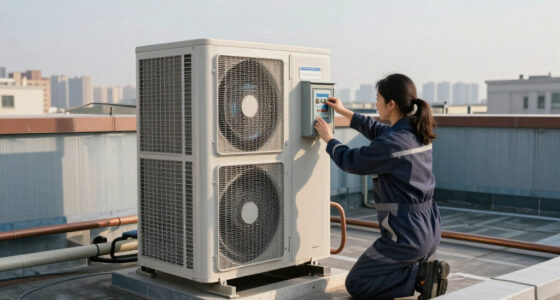
Choosing an energy recovery ventilator (ERV) for tight homes requires careful consideration of efficiency, installation complexity, and control options. The Pioneer ECOasis 150 stands out as the best overall choice, offering ductless installation ideal for limited spaces, while the Aprilaire V22BEC provides high airflow for larger homes. The Panasonic FV-12ESC1 offers premium features with advanced controls, but at a higher price point. Many options trade off between ease of installation and advanced features, so understanding your home’s size and your comfort preferences is key. Keep reading for a detailed comparison to help you find the perfect ERV for your tight home.

Get backup power and energy gear delivered free — and shop member deals
- Fast, free delivery on millions of items
- Access to Prime Big Deal Days deals on October 6–7
- Prime Video, Amazon Music and more included
Key Takeaways
- Ductless models like the Pioneer ECOasis excel in small or retrofit projects, simplifying installation in tight spaces.
- High-capacity ERVs like the Aprilaire V22BEC are better suited for larger homes up to 6,000 sq. ft., but may require more complex setup.
- Wi-Fi-enabled units such as Pioneer 50 and Panasonic Intelli-Balance Plus offer convenient control but often come at a premium price.
- Heat exchangers vary in material and efficiency; ceramic heat exchangers tend to provide better durability and performance.
- Ease of maintenance and filter access are critical factors that influence long-term satisfaction and system longevity.
| Pioneer ECOasis 150 Ductless Wall-Mounted Single-Room Wi-Fi Energy Recovery Ventilator |  | Best for Small Rooms and Smart Control | Coverage Area: up to 500 sq. ft. | Filtration: HEPA & Activated Charcoal (4-stage) | Energy Recovery Efficiency: 82% | VIEW ON AMAZON | See Our Full Breakdown |
| Broan B210E75RS AI Series 210 CFM Energy Recovery Ventilator with Side Ports |  | Best for Larger Homes and Easy Installation | Airflow: 210 CFM | Sensible recovery efficiency at 32°F: 81% | Sensible recovery efficiency at -13°F: 65% | VIEW ON AMAZON | See Our Full Breakdown |
| 6 Inch Heat Recovery Ventilator with Ceramic Heat Exchanger |  | Best for Quiet, Energy-Efficient Ventilation in Multiple Spaces | Heat Recovery Efficiency: up to 90% | Air Flow Capacity: 60 m3/h | Noise Level: 30 dB | VIEW ON AMAZON | See Our Full Breakdown |
| Wi-Fi-Enabled Pioneer 50 Single-Room Wall-Mounted Energy Recovery Ventilator |  | Best for Small Spaces with High Efficiency and Low Noise | Airflow: 11.8 to 35.3 CFM | Heat Recovery Rate: 97% | Noise Level: 32.7 dB | VIEW ON AMAZON | See Our Full Breakdown |
| Aprilaire V22BEC Energy Recovery Ventilator (ERV), 120 CFM for Homes up to 6,000 sq. ft. |  | Best for Whole-House Ventilation and Humidity Control | Airflow: 120 CFM | Suitable for Homes: up to 6,000 sq. ft. | Energy Recovery Core: Yes | VIEW ON AMAZON | See Our Full Breakdown |
| VENTS-US Frigate ERV 120s Energy Recovery Ventilator |  | Best Overall for Whole-House Ventilation in Cold Climates | Power Connector Type: 3-Pin | Voltage: 120 volts | Wattage: 94 watts | VIEW ON AMAZON | See Our Full Breakdown |
| Panasonic FV-11ES1 Intelli-Balance Elite ERV, 110 CFM |  | Best for Flexibility and Indoor Air Quality in Moderate Homes | Power Source: AC | Room Type: Bathroom | Special Features: Manual | VIEW ON AMAZON | See Our Full Breakdown |
| Panasonic WhisperComfort 60 ERV, Wall/Ceiling Mount Exhaust Fan, FV-06VE1 | 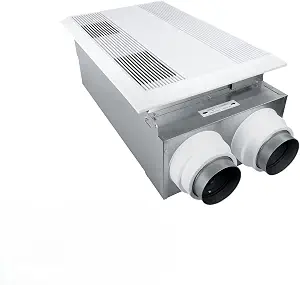 | Best Compact ERV for Small Spaces and Exhaust Ventilation | Power Source: Corded Electric | Room Type: Bathroom, Garage, Laundry Rooms | Special Features: Manual, Selectable CFM | VIEW ON AMAZON | See Our Full Breakdown |
| Panasonic FV-12ESC1 Intelli-Balance Elite Plus ERV, 120 CFM | | Best for Large Spaces and Customizable Indoor Ventilation | Power Source: AC/DC | Room Type: Bathroom | Special Features: Manual | VIEW ON AMAZON | See Our Full Breakdown |
| energy recovery ventilator for tight home | Noise Level | Air Flow Capacity |
|---|---|---|
| Pioneer ECOasis 150 Ductless W | 23-37.9 dB(A) | — |
| Broan B210E75RS AI Series 210 | — | — |
| 6 Inch Heat Recovery Ventilato | 30 dB | 60 m3/h |
| Wi-Fi-Enabled Pioneer 50 Singl | 32.7 dB | — |
| Aprilaire V22BEC Energy Recove | — | — |
| VENTS-US Frigate ERV 120s Ener | — | 162 cfm |
| Panasonic FV-11ES1 Intelli-Bal | 45 db | 110 cfm |
| Panasonic WhisperComfort 60 ER | 2.5 sones | 60 cfm |
| Panasonic FV-12ESC1 Intelli-Ba | — | 120 cfm |
More Details on Our Top Picks
Pioneer ECOasis 150 Ductless Wall-Mounted Single-Room Wi-Fi Energy Recovery Ventilator
The Pioneer ECOasis 150 stands out for its combination of advanced air purification and smart Wi-Fi features, making it ideal for maintaining healthy indoor air in rooms up to 500 sq. ft. It offers 82% energy recovery efficiency, comparable to larger units like the Aprilaire V22BEC, but is designed specifically for single rooms where space is limited. Its 4-stage filtration ensures excellent pollutant removal, while the energy-efficient heat exchanger keeps utility bills in check. The quiet operation makes it suitable for bedrooms and living spaces. However, its scope is limited to smaller areas, and installation might require professional help, especially with existing wiring or wall compatibility. Compared to the larger, more robust ERVs, this unit sacrifices capacity for convenience and tech features.
Pros:- High purification efficiency with 4-stage filtration
- Smart Wi-Fi control for remote monitoring
- Quiet operation suitable for bedrooms
Cons:- Limited to rooms up to 500 sq. ft.
- Installation may require professional assistance
Best for: Homeowners with small, individual rooms seeking remote control and high air quality.
Not ideal for: Larger homes or open-plan spaces where a bigger, whole-house ERV is needed.
- Coverage Area:up to 500 sq. ft.
- Filtration:HEPA & Activated Charcoal (4-stage)
- Energy Recovery Efficiency:82%
- Power Consumption:35W
- Noise Level:23-37.9 dB(A)
- Connectivity:Wi-Fi, remote control, touch screen
Our verdict“This pick suits small spaces with an emphasis on air quality and smart features over capacity.”
Broan B210E75RS AI Series 210 CFM Energy Recovery Ventilator with Side Ports
The Broan B210E75RS offers a substantial airflow of 210 CFM, making it well-suited for larger homes or multiple rooms. Its VIRTUO™ technology simplifies installation, and the LCD monitoring provides real-time airflow diagnostics. The durable galvanized steel core with a washable MERV 8 filter enhances air quality, and the unit boasts a 10-year core warranty for peace of mind. Compared with the Pioneer ECOasis, this model delivers much greater capacity but lacks smart Wi-Fi features and energy Star certification, making it less ideal for tech-savvy users aiming for remote control or energy savings. It’s a reliable choice for those who prioritize capacity and durability, with a clear tradeoff in complexity and control options.
Pros:- High airflow capacity suitable for large homes
- Auto-balancing VIRTUO™ technology for easy installation
- Long core warranty and durable construction
Cons:- No automatic shutoff or timer features
- Limited control options without advanced automation
- Not Energy Star certified
Best for: Larger homes or spaces requiring high airflow with straightforward installation.
Not ideal for: Small apartments or rooms where minimal noise and smart features are priorities.
- Airflow:210 CFM
- Sensible recovery efficiency at 32°F:81%
- Sensible recovery efficiency at -13°F:65%
- Core warranty:10 Years
- Control features:LCD screen, diagnostics
- Dimensions:21 x 24.8 x 20.8 inches
Our verdict“Best suited for owners of large residences needing high airflow and durable performance over smart features.”
6 Inch Heat Recovery Ventilator with Ceramic Heat Exchanger
This heat recovery ventilator with ceramic heat exchanger focuses on high heat recovery efficiency, up to 90%, making it a compelling choice for reducing heating costs in various indoor spaces like attics or basements. Its quiet operation at 30 dB ensures it won’t disturb daily activities, and Wi-Fi control adds convenience. Unlike the Pioneer or Broan models, it’s not specifically designed for small rooms but excels where continuous, energy-efficient ventilation is needed. Its multiple airflow modes and app control make it versatile, though wall mounting and electrical wiring setup are prerequisites, and it’s limited to indoor use only. Its high heat recovery makes it a smart pick for energy-conscious households with larger or multiple zones.
Pros:- Recovers up to 90% of heat energy with ceramic exchanger
- Quiet operation at 30 dB
- Wi-Fi enabled with remote control
Cons:- Requires wall mounting and electrical wiring
- Limited to indoor applications only
- Price and detailed specs are not readily available
Best for: Homes needing continuous, energy-efficient ventilation across different indoor spaces.
Not ideal for: Small rooms or spaces where simplicity and plug-and-play setup are preferred.
- Heat Recovery Efficiency:up to 90%
- Air Flow Capacity:60 m3/h
- Noise Level:30 dB
- Power Consumption:8.5 W
- Control Method:App, Remote
- Mounting Type:Wall Mount
Our verdict“Ideal for energy-savvy users wanting high heat recovery in various indoor environments with quiet operation.”
Wi-Fi-Enabled Pioneer 50 Single-Room Wall-Mounted Energy Recovery Ventilator
The Pioneer ERV-50 is designed for single rooms up to approximately 500 sq. ft., combining high efficiency with Wi-Fi control. It boasts 97% heat recovery, making it one of the most energy-efficient options for small spaces. Its silent operation—just over 32 dB—makes it suitable for bedrooms or quiet zones. The unit’s versatility with onboard, remote, and smartphone controls offers seamless operation, but installation can be complex, requiring wall space and proper wiring, which might challenge some users. Compared with the ECOasis 150, this model emphasizes energy savings and quiet operation over advanced filtration or larger coverage, making it perfect for those prioritizing minimal noise and smart control in small rooms.
Pros:- High 97% heat recovery efficiency
- Silent operation at 32.7 dB
- Wi-Fi and app control for ease of use
Cons:- Requires wall installation space
- May need multiple units for larger areas
- Complex setup might require professional help
Best for: Individuals seeking high efficiency and silent operation in small, dedicated rooms.
Not ideal for: Large or open-plan spaces where greater airflow and capacity are required.
- Airflow:11.8 to 35.3 CFM
- Heat Recovery Rate:97%
- Noise Level:32.7 dB
- Control Methods:Wi-Fi, app, onboard interface
- Dimensions:9-3/8″ x 19-5/8″ x 10-1/8″
Our verdict“This unit fits small spaces demanding quiet, energy-efficient operation with smart controls.”
Aprilaire V22BEC Energy Recovery Ventilator (ERV), 120 CFM for Homes up to 6,000 sq. ft.
The Aprilaire V22BEC ERV is tailored to larger homes, with a capacity of 120 CFM suitable for spaces up to 6,000 sq. ft. It emphasizes humidity and temperature control, making it a strong choice for maintaining comfort year-round. Its energy recovery core minimizes heating and cooling costs, and installation flexibility allows mounting on walls, ceilings, or floors. While it excels in whole-house ventilation, it’s less suited for small rooms or users seeking smart features, as it relies on push-button controls and lacks Wi-Fi connectivity. Compared to models like the Pioneer ECOasis, it offers greater capacity but at the expense of advanced automation and compact form factors.
Pros:- Suitable for very large homes up to 6,000 sq. ft.
- Reduces heating and cooling costs via heat and moisture recovery
- Multiple mounting options for flexible installation
Cons:- Installation may require professional help
- Overkill for small or single-room applications
- Lacks smart control features
Best for: Large homes needing whole-house ventilation with humidity and temperature balancing.
Not ideal for: Small spaces or users wanting app-based control and energy monitoring.
- Airflow:120 CFM
- Suitable for Homes:up to 6,000 sq. ft.
- Energy Recovery Core:Yes
- Mounting Options:Wall, ceiling, floor
- Control Type:Push-button
- Compatibility:AprilAire thermostats
Our verdict“This ERV is ideal for large residences prioritizing whole-house ventilation and humidity management over smart automation.”
VENTS-US Frigate ERV 120s Energy Recovery Ventilator
The VENTS-US Frigate ERV 120s stands out for its high airflow capacity of 162 CFM, making it ideal for larger, tight homes needing continuous ventilation. Compared to the Panasonic FV-12ESC1, this model offers greater airflow and robust freeze protection, which is essential in colder climates. Its washable MERV 6 filters ease maintenance, and energy recovery helps stabilize indoor temperature and humidity. However, installation isn’t straightforward, and its noise level of 1.9 sones might be noticeable in ultra-quiet spaces. The limited voltage and somewhat technical setup make it less suited for DIY novices. This pick is best for homeowners who prioritize reliable, high-capacity ventilation and live in colder regions, willing to handle more complex installation.
Pros:- High airflow capacity of 162 CFM covers large, tight homes efficiently
- Freeze protection ensures reliable operation in cold weather
- Washable filters simplify ongoing maintenance
- Energy recovery enhances indoor temperature stability
Cons:- Installation may require professional assistance due to technical complexity
- Limited to 120V power, restricting compatibility with some homes
- Noise level of 1.9 sones could be disruptive in very quiet rooms
Best for: Homeowners in cold climates needing high airflow and reliable operation in a whole-house system
Not ideal for: Renters or DIYers with limited technical skills who want an easy plug-and-play unit
- Power Connector Type:3-Pin
- Voltage:120 volts
- Wattage:94 watts
- Cooling Method:forced air
- Air Flow Capacity:162 cfm
- Material Type:Metal
- Filtration:Washable MERV 6 filters
- Features:Energy recovery, freeze protection, dual filtration
Our verdict“This is a robust choice for those needing high-capacity, cold-climate capable ventilation, despite installation challenges.”
Panasonic FV-11ES1 Intelli-Balance Elite ERV, 110 CFM
The Panasonic FV-11ES1 Intelli-Balance Elite ERV excels in providing adaptable ventilation with its three-speed ECM motor and high-efficiency MERV 13 filters. Unlike the VENTS-US model, it emphasizes quiet operation—around 45 dB—and flexible mounting options, making it suitable for various indoor spaces. Its advanced filtration improves indoor air quality more significantly than the Frigate ERV. However, it requires electrical wiring for installation, which may limit DIY options, and the price point isn’t transparent. This model is better suited for homeowners who want a quieter, more discreet system with strong filtration. It’s ideal for those prioritizing indoor air quality and flexible installation in moderate climates, but less so for large homes or those on a tight budget.
Pros:- Energy-efficient ECM motors adjust speed for quiet, optimized airflow
- High-quality MERV 13 filters significantly improve indoor air quality
- Flexible mounting options accommodate various indoor spaces
- Multiple speed settings for tailored ventilation
Cons:- Lack of transparent pricing complicates budget planning
- Requires electrical wiring, making installation more complex
- Limited airflow capacity (110 CFM) may be insufficient for larger spaces
Best for: Homeowners seeking quiet, high-efficiency ventilation with flexible mounting options and superior air filtration
Not ideal for: DIY beginners or those with budget constraints, as installation may require professional wiring and the price isn’t clear
- Power Source:AC
- Room Type:Bathroom
- Special Features:Manual
- Recommended Uses For Product:indoor
- Mounting Type:Wall Mount
- Number of Speeds:3
- Noise Level:45 db
- Air Flow Capacity:110 cfm
Our verdict“Ideal for homeowners who want a quiet, adaptable ERV with excellent filtration, though installation complexity and price may pose hurdles.”
Panasonic WhisperComfort 60 ERV, Wall/Ceiling Mount Exhaust Fan, FV-06VE1
The Panasonic WhisperComfort 60 offers a compact solution suited for small rooms such as bathrooms or laundry areas, with an airflow of 60 CFM. Unlike the larger models, it provides balanced exhaust and intake, improving indoor air quality without requiring extensive modification. Its multiple speed settings and simple push-button control make it easy to customize airflow. However, its limited capacity means it isn’t appropriate for larger or whole-house applications, and noise levels at 2.5 sones might be noticeable. For those seeking a straightforward, space-saving ERV for specific rooms, this unit offers a practical choice. It works well as a supplementary ventilator rather than a primary whole-house system, especially if space is tight.
Pros:- Compact size fits easily into small spaces
- Balanced ventilation with heat recovery enhances indoor air quality
- Multiple speed settings allow airflow customization
- Easy to install with simple controls
Cons:- Limited to 60 CFM, unsuitable for whole-house ventilation
- Noise level could be noticeable at 2.5 sones
- Wattage and airflow may be insufficient for larger rooms or open spaces
Best for: Homeowners needing a small, easy-to-install ERV for individual rooms like bathrooms or laundry areas
Not ideal for: Those seeking whole-house ventilation or larger airflow needs, as capacity and coverage are limited
- Power Source:Corded Electric
- Room Type:Bathroom, Garage, Laundry Rooms
- Special Features:Manual, Selectable CFM
- Recommended Uses For Product:Exhausting, Ventilating
- Mounting Type:Ceiling Mount
- Controller Type:Hardwired
- Noise Level:2.5 sones
- Air Flow Capacity:60 cfm
Our verdict“Best suited for small, specific rooms requiring balanced ventilation, not as a primary system for whole homes.”
Panasonic FV-12ESC1 Intelli-Balance Elite Plus ERV, 120 CFM
The Panasonic FV-12ESC1 Intelli-Balance Plus offers a capacity of 120 CFM, matching the VENTS-US Frigate ERV but with more advanced control options. Its smart ECM motors allow for quiet operation and precise airflow adjustment, making it suitable for larger homes or spaces with higher ventilation demands. The high-efficiency MERV 13 filters provide superior indoor air quality, surpassing the washable filters of the VENTS-US model. Installation may be more complex, requiring professional help, especially given its multiple mounting options, including ceiling and wall. Compared with the Frigate ERV, this model emphasizes customizable, quiet operation and filtration, but at a potentially higher cost and complexity. This is ideal for homeowners who want detailed control and high-quality filtration in a large, tight home.
Pros:- Adjustable airflow with multiple speed settings for tailored ventilation
- Quiet operation thanks to advanced ECM motors
- High-efficiency MERV 13 filters for superior indoor air quality
- Flexible installation options including ceiling and wall mounting
Cons:- Installation complexity may require professional help
- Cost may be higher due to advanced features and filtration
- No specific price data available to confirm affordability
Best for: Homeowners with larger or multiple rooms, seeking customizable, quiet, and high-filtration ventilation
Not ideal for: DIYers with limited technical skills or those with tight budgets, due to installation complexity and cost
- Power Source:AC/DC
- Room Type:Bathroom
- Special Features:Manual
- Recommended Uses For Product:indoor
- Mounting Type:Wall Mount, Ceiling Mount
- Number of Speeds:4
- Air Flow Capacity:120 cfm
- Warranty:Product Warranty
Our verdict“Best suited for larger or multi-room homes where detailed control and filtration are priorities, with the tradeoff of more complex setup.”

How We Picked
These products were evaluated based on several key factors: performance in tight home environments, ease of installation, build quality, energy efficiency, control options, and value for the price. We prioritized units that specifically cater to the unique needs of tight or retrofit homes, where ducting options may be limited. The ranking reflects a balance between advanced features and practical usability, ensuring that both DIY homeowners and professionals can find suitable options. We also considered user reviews and industry reputation to identify models that consistently deliver reliable performance over time.Factors to Consider When Choosing Energy Recovery Ventilator For Tight Homes
When selecting an energy recovery ventilator for tight homes, several factors influence both comfort and long-term satisfaction. Understanding these considerations helps prevent common pitfalls like over-specifying capacity or choosing models with incompatible installation requirements. The right ERV should match your home’s size, ventilation needs, and your technical comfort level. Here are the key factors to keep in mind:Proper Sizing and Capacity
Choosing an ERV with the appropriate airflow capacity is essential to maintain healthy indoor air quality without wasting energy. Oversized units can cause unnecessary energy consumption, while undersized systems won’t adequately ventilate the space. For tight homes, pay attention to the recommended CFM ratings based on your home’s square footage and occupancy levels. Many manufacturers provide sizing guides that help match your home’s needs, reducing the risk of inefficiency or discomfort.
Installation and Space Constraints
In tight homes, space limitations often restrict the type of ERV you can install. Ductless or compact models like the Pioneer ECOasis are designed for retrofit scenarios, avoiding the need for extensive ductwork. Consider whether your home can accommodate traditional ducted systems or if you need a unit that mounts on a wall or ceiling with minimal modifications. Proper placement ensures optimal performance and accessibility for maintenance.
Energy Efficiency and Heat Exchange Material
The core of an ERV is its heat exchanger, which recovers energy from the outgoing air. Ceramic heat exchangers typically offer higher durability and slightly better efficiency compared to plastic or other materials. Higher efficiency units reduce energy costs over time, especially in climates with significant temperature differences. Be wary of units with low heat recovery ratings, as they may not provide the energy savings expected.
Control Options and Connectivity
Smart controls, Wi-Fi connectivity, and user-friendly interfaces can significantly enhance your experience, especially if you want to fine-tune ventilation based on occupancy or indoor air quality. Units like the Pioneer 50 or Panasonic Intelli-Balance Plus provide remote control features, but they tend to come at a higher price. Decide how much automation and convenience matter to your lifestyle, balancing this with your budget.
Maintenance and Filter Accessibility
Regular filter replacement and system checks are vital for maintaining indoor air quality and system efficiency. Models with straightforward filter access reduce the hassle and encourage consistent upkeep. Consider the filter size, availability, and whether the unit prompts you for maintenance. Neglecting these aspects can lead to reduced performance or system failure over time.
Frequently Asked Questions
Can I install an ERV in a retrofit or existing tight home without ductwork?
Yes, ductless ERVs like the Pioneer ECOasis are designed specifically for retrofit installations where ductwork is limited or unavailable. These units mount on walls and connect directly to indoor air pathways, making them suitable for small or tight spaces. However, ensure that your home’s structure can support the unit and that it can be positioned for optimal airflow. Consulting a professional can help verify compatibility and proper placement.
How do I choose the right size ERV for my home?
Matching the ERV size to your home’s square footage and ventilation needs is critical. Use the manufacturer’s sizing charts, which typically recommend a certain CFM based on the number of rooms or total area. Larger homes or those with more occupants need higher-capacity units to maintain fresh air levels without overworking the system. Proper sizing ensures comfort, energy efficiency, and effective air exchange.
Are Wi-Fi-enabled ERVs worth the extra cost?
Wi-Fi-enabled models provide added convenience by allowing remote control and monitoring, which can be useful for adjusting settings based on occupancy or air quality. They often include smart features like scheduling and alerts for filter changes. However, this added functionality comes at a higher upfront cost, so consider whether these features align with your lifestyle and budget. For tech-savvy users, the benefits often justify the expense.
What maintenance is required for an ERV in a tight home?
Regular maintenance includes filter replacement, typically every 6 to 12 months, depending on usage and air quality. Some units feature easy-access filters, simplifying upkeep. It’s also advisable to schedule periodic system checks to ensure the heat exchanger and fans operate smoothly. Proper maintenance preserves energy efficiency, indoor air quality, and prolongs the lifespan of your ERV.
Should I prioritize energy efficiency or initial cost when buying an ERV?
While lower initial costs are attractive, investing in a more energy-efficient model often results in savings through reduced operating costs over time. Units with higher heat recovery ratings and better insulation tend to consume less energy, especially in climates with significant temperature swings. If your budget allows, choosing an efficient model can lead to better long-term value, especially in a tight home where ventilation needs are continuous.
Conclusion
For most homeowners, the Aprilaire V22BEC offers a strong balance of capacity, efficiency, and ease of installation, making it ideal as the best overall choice. Those seeking a best value may prefer the VENTS-US Frigate ERV 120s for its affordability and reliable performance. If budget isn’t a concern and you want advanced features, the Panasonic FV-12ESC1 Intelli-Balance Plus provides top-tier controls and energy efficiency. Beginners or DIY enthusiasts will appreciate the Pioneer ECOasis 150 Ductless for its straightforward installation, while larger or more complex homes should consider models like the Aprilaire V22BEC. Carefully match your home size, comfort needs, and technical comfort level to these recommendations for the best results in 2026.
Fall Picks
fall essentials
As an affiliate, we earn on qualifying purchases.