If you’re looking for the best non-condensing tankless water heaters for 2026, I recommend considering models like the Fogatti Indoor Propane, Rinnai RE199iN, Westinghouse WiFi, MIZUDO WiFi, APUS Wi-Fi, Rheem RTG-95XLP-3, and GEN II Ranein. They offer reliable hot water, energy efficiency, and safety features. Picking the right one depends on your household needs, but I’ll share more details that can help you make an informed choice.
Key Takeaways
- Prioritize models with high flow rates (GPM) and adequate BTU capacity to meet household hot water demands in 2026.
- Select units with proven energy efficiency, modulation technology, and reliable safety certifications like CSA or UL.
- Consider installation requirements, proper sizing, and compatibility with existing plumbing and gas systems for optimal performance.
- Account for maintenance needs, including descaling and safety inspections, to extend lifespan and ensure safety.
- Review customer reviews and expert ratings to identify the most reliable and best-rated non-condensing tankless water heaters for 2026.
| Fogatti Indoor Propane Tankless Water Heater (5.1 GPM) |  | Reliable Performance | Flow Rate: 5.1 GPM | BTU Capacity: 120,000 BTU | Wi-Fi/Smart Control: No | VIEW LATEST PRICE | See Our Full Breakdown |
| Rinnai RE199iN Gas Tankless Water Heater (Indoor) |  | High Capacity | Flow Rate: 7.6 GPM | BTU Capacity: 199,000 BTU | Wi-Fi/Smart Control: Yes (WiFi control not included) | VIEW LATEST PRICE | See Our Full Breakdown |
| Westinghouse Gas Tankless Water Heater WiFi Enabled |  | Smart Control | Flow Rate: 7.9 GPM | BTU Capacity: 180,000 BTU | Wi-Fi/Smart Control: Wi-Fi enabled | VIEW LATEST PRICE | See Our Full Breakdown |
| MIZUDO Tankless Water Heater WiFi 5.1 GPM CSA |  | Versatile Installation | Flow Rate: 5.1 GPM | BTU Capacity: 120,000 BTU | Wi-Fi/Smart Control: Yes | VIEW LATEST PRICE | See Our Full Breakdown |
| APUS Gas Tankless Water Heater Wi-Fi 6.8 GPM | 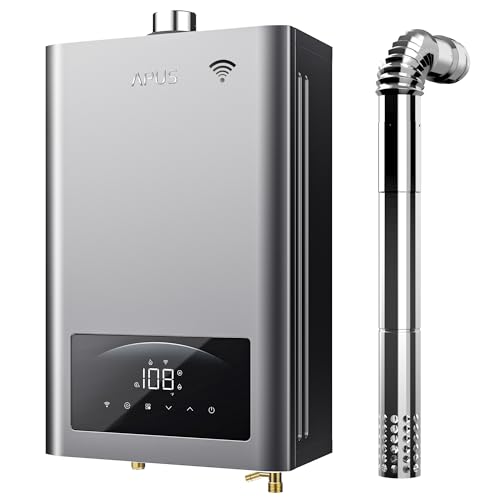 | Eco-Friendly Efficiency | Flow Rate: 6.8 GPM | BTU Capacity: 140,000 BTU | Wi-Fi/Smart Control: Yes | VIEW LATEST PRICE | See Our Full Breakdown |
| Rheem RTG-95XLP-3 Outdoor Tankless Propane Water Heater |  | Outdoor Durability | Flow Rate: 9.5 GPM | BTU Capacity: 199,900 BTU | Wi-Fi/Smart Control: No | VIEW LATEST PRICE | See Our Full Breakdown |
| GEN II Ranein Tankless Water Heater 27kW 6.5 GPM |  | Space Saver | Flow Rate: 6.5 GPM | BTU Capacity: 27 kW (approx. 92,000 BTU) | Wi-Fi/Smart Control: Yes | VIEW LATEST PRICE | See Our Full Breakdown |
More Details on Our Top Picks
-
Rinnai RE199iN Non-Condensing Natural Gas Tankless Water Heater, Up to 9.8 GPM, Indoor Installation, 199,000 BTU
Smart Design: Improved design of tankless hot water heater only heats when necessary to conserve energy; Speeds installation...
As an affiliate, we earn on qualifying purchases.
Fogatti Indoor Propane Tankless Water Heater (5.1 GPM)
Looking for a reliable propane tankless water heater that can handle multiple fixtures at once? The Fogatti Indoor Propane Tankless Water Heater offers impressive performance with 120,000 BTU and a flow rate of 5.1 GPM, providing endless hot water whenever you need it. It’s designed to support several outlets simultaneously, making it perfect for busy households. Its advanced water servo technology and precise temperature sensors keep water within ±1℉, ensuring comfort. Compact and easy to install, it features durable copper and stainless steel components, plus built-in safety features. Plus, with a solid warranty and customer support, it’s a dependable choice for consistent hot water.
- Flow Rate:5.1 GPM
- BTU Capacity:120,000 BTU
- Wi-Fi/Smart Control:No
- Certification:CSA
- Installation Flexibility:Indoor only
- Safety Features:Multiple safety features
- Additional Feature:Advanced water servo technology
- Additional Feature:Compact installation design
- Additional Feature:2-year full warranty
-
Westinghouse Natural Gas Tankless Water Heater Indoor Installation Max 7.9 GPM 180,000 BTU, WIFI Enable Temp Self Modulating Non Condensing High Efficiency for House or Commercial, APOLO Performance
【On-Demand Efficiency】 Westinghouse tankless water heater works only needed, saving energy and costs. Compact yet powerful for whole-home...
As an affiliate, we earn on qualifying purchases.
Rinnai RE199iN Gas Tankless Water Heater (Indoor)
The Rinnai RE199iN Gas Tankless Water Heater stands out as an excellent choice for homeowners seeking reliable, high-capacity hot water supply with energy-efficient operation. Its compact size, roughly the size of a small suitcase, makes installation straightforward. It heats water only when needed, saving energy, and features an LED display for easy troubleshooting. With a capacity of 7.6 GPM and a 199,000 BTU heating power, it can supply hot water to up to six fixtures simultaneously. Built for durability, it offers a 15-year warranty on the heat exchanger, ensuring long-term reliable performance.
- Flow Rate:7.6 GPM
- BTU Capacity:199,000 BTU
- Wi-Fi/Smart Control:Yes (WiFi control not included)
- Certification:15-year heat exchanger warranty
- Installation Flexibility:Indoor only
- Safety Features:Safety monitoring via LED/error codes
- Additional Feature:Remote WiFi control (optional)
- Additional Feature:15-year heat exchanger warranty
- Additional Feature:LED service/error display
-
MIZUDO Tankless Water Heater Propane, Indoor or Outdoor Convertible Installation, Max 5.1 GPM 120,000 BTU, WiFi&APP Control CSA Certified for Large Families Whole House, GEN 3
[Flexible Indoor&Outdoor Installation Solution]: Mizudo innovative propane tankless water heater offers versatile installation options to meet various home...
As an affiliate, we earn on qualifying purchases.
Westinghouse Gas Tankless Water Heater WiFi Enabled
For homeowners seeking reliable, high-capacity hot water on demand, the Westinghouse Gas Tankless Water Heater with WiFi stands out as an excellent choice. It offers a maximum flow rate of 7.9 GPM and 180,000 BTU, making it suitable for whole-home or commercial use, supporting 3-5 fixtures simultaneously. Its on-demand operation conserves energy, while an advanced water flow servo maintains water temperature within ±1°F. The WiFi feature allows remote temperature adjustments via smartphone app, adding convenience. CSA-certified for indoor use, it includes safety features like freeze protection and a durable design backed by a 2-year full warranty and 5-year heat exchange coverage.
- Flow Rate:7.9 GPM
- BTU Capacity:180,000 BTU
- Wi-Fi/Smart Control:Wi-Fi enabled
- Certification:CSA
- Installation Flexibility:Indoor only
- Safety Features:CSA certified, freeze protection
- Additional Feature:Smartphone app control
- Additional Feature:CSA-certified indoor use
- Additional Feature:Freeze protection system
MIZUDO Tankless Water Heater WiFi 5.1 GPM CSA
If you’re seeking a versatile tankless water heater that combines smart technology with robust performance, the MIZUDO model stands out. It offers flexible installation options for both indoor and outdoor use, with accessory kits available for conversion. With a 5.1 GPM flow rate and up to 120,000 BTUs, it efficiently supplies hot water for multiple fixtures simultaneously, maintaining stable temperatures within 1°F. The WiFi-enabled control allows remote management of temperature and energy monitoring via a mobile app. Built with durable, CSA-certified components, it includes safety features like freeze protection and dry burn prevention, backed by a 2-year warranty for peace of mind.
- Flow Rate:5.1 GPM
- BTU Capacity:120,000 BTU
- Wi-Fi/Smart Control:Yes
- Certification:CSA
- Installation Flexibility:Indoor/outdoor convertible
- Safety Features:Safety features including freeze protection
- Additional Feature:Indoor/outdoor conversion kits
- Additional Feature:Advanced temperature stability
- Additional Feature:5-year heat exchanger warranty
APUS Gas Tankless Water Heater Wi-Fi 6.8 GPM
Designed with busy households in mind, the APUS Gas Tankless Water Heater delivers instant hot water and seamless control through Wi-Fi connectivity. Its powerful 140,000 BTU burner and oxygen-free copper heat exchanger guarantee hot water in under a second, with a flow rate of up to 6.8 GPM for multiple outlets. Zero Cold Water Technology eliminates wait times, while the built-in booster pump boosts flow by 130%. Smart seasonal technology maintains consistent temperatures year-round, and remote control via a Tuya-compatible app allows easy adjustments. Compact and efficient, it’s perfect for whole-house use, offering safety features and energy savings with 40% reduced consumption.
- Flow Rate:6.8 GPM
- BTU Capacity:140,000 BTU
- Wi-Fi/Smart Control:Yes
- Certification:CSA
- Installation Flexibility:Indoor wall-mounted with accessories
- Safety Features:Multiple safety protections including freeze and overheat
- Additional Feature:Zero cold water tech
- Additional Feature:Turbo flow mode
- Additional Feature:Compact space-saving design
Rheem RTG-95XLP-3 Outdoor Tankless Propane Water Heater
The Rheem RTG-95XLP-3 outdoor tankless propane water heater stands out for households that demand high performance and reliable hot water delivery, especially in areas with multiple bathrooms. It delivers up to 9.5 GPM with 199,900 BTUs, making it ideal for 2–3 bathroom homes, supporting simultaneous showers and laundry. Its durable metal cabinet guarantees outdoor resilience, and it’s easy for qualified installers to mount on the wall, saving space. The hot-start programming prevents cold bursts during back-to-back showers, boosting comfort and hot water reliability during peak demand. Overall, it’s a powerful, efficient choice for demanding households.
- Flow Rate:9.5 GPM
- BTU Capacity:199,900 BTU
- Wi-Fi/Smart Control:No
- Certification:Not specified
- Installation Flexibility:Outdoor only
- Safety Features:Hot-start, weather-resistant
- Additional Feature:Hot-start programming
- Additional Feature:Weather-resistant metal cabinet
- Additional Feature:Suitable for multiple bathrooms
GEN II Ranein Tankless Water Heater 27kW 6.5 GPM
For households needing reliable, continuous hot water with high flow rates, the GEN II Ranein Tankless Water Heater stands out as an excellent choice. With 27 kW of power and a flow rate of 6.5 GPM, it can support 2–4 water points simultaneously, eliminating wait times. Its compact size, measuring just 13.8 by 3.1 by 18.7 inches, makes installation flexible, requiring three dedicated 240V circuits. It boasts 99% efficiency, reducing energy costs by about 60%, and offers precise temperature control from 86°F to 131°F. Safety features like leakage protection and overheat safeguards guarantee reliable, worry-free operation.
- Flow Rate:6.5 GPM
- BTU Capacity:27 kW (approx. 92,000 BTU)
- Wi-Fi/Smart Control:Yes
- Certification:CSA
- Installation Flexibility:Indoor wall-mounted
- Safety Features:Safety protections including leak and overheat
- Additional Feature:Near-instant hot water
- Additional Feature:Drop-tested, damp-proof
- Additional Feature:Precise temperature control
Factors to Consider When Choosing a Non-Condensing Tankless Water Heater
When choosing a non-condensing tankless water heater, I consider factors like energy efficiency, flow rate capacity, and size to make certain it fits my needs. Safety certifications and maintenance requirements also play a big role in my decision-making. These points help me find a unit that’s reliable, efficient, and easy to keep in good shape.
Energy Efficiency Benefits
Choosing a non-condensing tankless water heater can lead to notable energy savings because these units typically operate more efficiently by not losing heat through exhaust gases. Their higher efficiency ratings stem from advanced design features that maximize heat retention. Many models include modulation technology that adjusts gas flow and water temperature, reducing energy waste during low demand periods. This means you’re using only what’s necessary, which lowers your energy bills over time. Additionally, non-condensing units usually require less maintenance thanks to simpler exhaust systems, helping maintain consistent efficiency. Proper sizing and installation are vital to guarantee maximum energy use, delivering hot water on demand while minimizing waste. Overall, investing in an efficient non-condensing heater can greatly cut energy costs and improve long-term performance.
Flow Rate Capacity
Understanding the flow rate capacity of a non-condensing tankless water heater is vital because it determines how many fixtures can run simultaneously without losing hot water or experiencing temperature drops. Measured in gallons per minute (GPM), a higher flow rate means more fixtures—like showers, sinks, or appliances—can operate at once. Typical models range from 3.5 GPM to over 9 GPM, catering to different household sizes and hot water demands. Choosing a flow rate that matches your peak usage guarantees consistent performance and avoids cold water bursts. Overestimating your needs can lead to inefficiencies, while underestimating may leave you without enough hot water during busy times. Knowing your household’s hot water demand helps you select the right model for reliable, efficient performance.
Size and Installation
Selecting the right size and guaranteeing proper installation are essential steps in choosing a non-condensing tankless water heater. I recommend matching the unit’s flow rate to your household’s hot water demands, usually measured in GPM, to prevent shortages. It’s also important to check that the heater’s physical dimensions fit your available space, avoiding any installation issues. Review the unit’s installation requirements, like venting options and clearance clearances, to ensure compatibility with your home’s setup. Additionally, verify that the water pressure range matches your plumbing system’s PSI, typically between 15-150. Finally, confirm that your electrical or gas supply aligns with the heater’s specifications for safe and efficient operation. Proper sizing and installation are key to maximizing performance and longevity.
Safety and Certification
Ensuring your non-condensing tankless water heater is safe to use starts with checking for proper certifications. Look for CSA or UL marks, which confirm the unit meets recognized safety standards. These certifications guarantee the heater complies with local electrical and gas safety regulations, giving you peace of mind. Additionally, verify that the heater includes built-in safety features such as freeze protection, flame failure detection, and overheat shutoff systems. Safety mechanisms like dry burn prevention and exhaust blockage detection are essential for preventing accidents. Clear safety labeling and certification marks on the unit also help you confirm its reliability and safe operation. Prioritizing certified models with thorough safety features minimizes risks and guarantees your water heater operates safely for years to come.
Maintenance Requirements
Maintaining your non-condensing tankless water heater involves regular care to keep it operating efficiently and safely over time. I recommend descaling and flushing the unit regularly, especially if you have hard water, to prevent mineral buildup that can impair performance and reduce its lifespan. Periodic inspection of safety components like temperature sensors and gas valves is essential to guarantee safe operation and prevent failures. Keeping the venting system clean and properly maintained helps avoid dangerous gas leaks or blockages. I also suggest monitoring and cleaning water filters or strainers regularly to prevent debris from clogging the unit and affecting water flow. Finally, scheduling professional servicing to evaluate the heat exchanger and gas connections will extend the heater’s longevity and maintain peak performance.
Cost and Budget
When choosing a non-condensing tankless water heater, it’s essential to take into account the total cost beyond just the initial purchase price. While these units often cost less upfront compared to condensing models, installation costs can vary depending on complexity. Keep in mind that non-condensing units tend to have a shorter lifespan due to less efficient heat exchange, which may lead to higher replacement costs over time. Additionally, maintenance expenses can add up, as regular flushing is needed to prevent mineral buildup and corrosion. Energy costs may also be higher in colder climates, since these units operate less efficiently. To make an informed decision, consider not only the purchase price but also installation, ongoing maintenance, and potential replacement expenses across the unit’s lifespan.
Frequently Asked Questions
How Do Non-Condensing Tankless Heaters Compare to Condensing Models?
Non-condensing tankless water heaters are generally simpler and less expensive upfront, but they’re less efficient than condensing models. They waste some heat through venting gases, which means higher operating costs over time. I find that if you’re looking for a budget-friendly option and don’t mind potentially higher energy bills, non-condensing heaters work well. However, if efficiency and long-term savings matter more, condensing models are the smarter choice.
What Maintenance Is Required for Non-Condensing Tankless Water Heaters?
Think of a non-condensing tankless water heater as a finely tuned instrument that needs regular tuning to perform its best. I check the inlet filters monthly to prevent debris buildup, flush the system annually to remove mineral deposits, and inspect the venting for blockages. These simple steps keep my heater running efficiently and extend its lifespan, much like caring for a prized musical instrument.
Are Non-Condensing Units Suitable for Large Households?
Yes, non-condensing units can be suitable for large households, especially if they have a high flow rate capacity. I’ve found that choosing a model with enough gallons per minute (GPM) guarantees everyone gets hot water when needed. However, you’ll want to check the unit’s specifications to confirm it can handle multiple simultaneous uses, like showers, laundry, and dishwashing, without running out of hot water.
How Energy-Efficient Are Non-Condensing Tankless Water Heaters?
You might be surprised, but non-condensing tankless water heaters are quite energy-efficient. I’ve found they convert most of the energy into hot water with minimal waste, especially when properly maintained. Their high efficiency stems from direct heating and no standby energy loss. While they may not be as efficient as condensing models, they still save energy compared to traditional tank systems, making them a smart choice for eco-conscious homeowners.
What Is the Typical Lifespan of a Non-Condensing Tankless Water Heater?
A typical non-condensing tankless water heater lasts about 20 years with proper maintenance. I’ve found that regular flushing and inspections help extend its lifespan. These units are durable but can be affected by mineral buildup or corrosion over time. If you stay on top of servicing, you’ll enjoy reliable hot water for two decades, making it a smart investment for long-term comfort and efficiency.
Conclusion
Choosing the right non-condensing tankless water heater can feel like steering a labyrinth, but with the right info, you’ll find your way. Think of it as selecting a trusty steed for your castle—reliable, efficient, and ready to serve. Consider your needs, space, and features like WiFi or GPM. With these top picks, you’ll have a modern marvel that’s as dependable as a knight’s armor, ensuring warm water flows whenever you need it.