
If you’re looking for the best oil boilers to handle cold climates and keep your home warm, I recommend reliable, high-capacity models with durable materials like stainless steel and copper brazing. Features like temperature controls, low water cut-offs, and efficient heat exchangers guarantee safe, cost-effective operation even in freezing conditions. To find the ideal fit for your needs, stick with me—I’ll show you options that combine strength, efficiency, and long-term durability.
Key Takeaways
- Top oil boilers feature high efficiency and reliable performance in freezing temperatures, ensuring consistent warmth.
- Durable materials like stainless steel and copper brazing enhance longevity in harsh winter conditions.
- Effective insulation and sealing maximize heat retention and reduce energy costs in cold climates.
- Compatible with advanced controls and antifreeze concentrates for optimal safety and freeze protection.
- High-capacity models support large heating demands, ideal for keeping homes cozy during severe winters.

Model 3250 Fuel Smart Hydrostat (Temperature Limit, LWCO, & Boiler Reset Control) for Oil Boilers
Universal replacement for common aquastat models, Provides cold start and thankless coil operation,easy to set, dial type limit...
As an affiliate, we earn on qualifying purchases.
Model 3250 Fuel Smart Hydrostat (Temperature Limit, LWCO, & Boiler Reset Control) for Oil Boilers
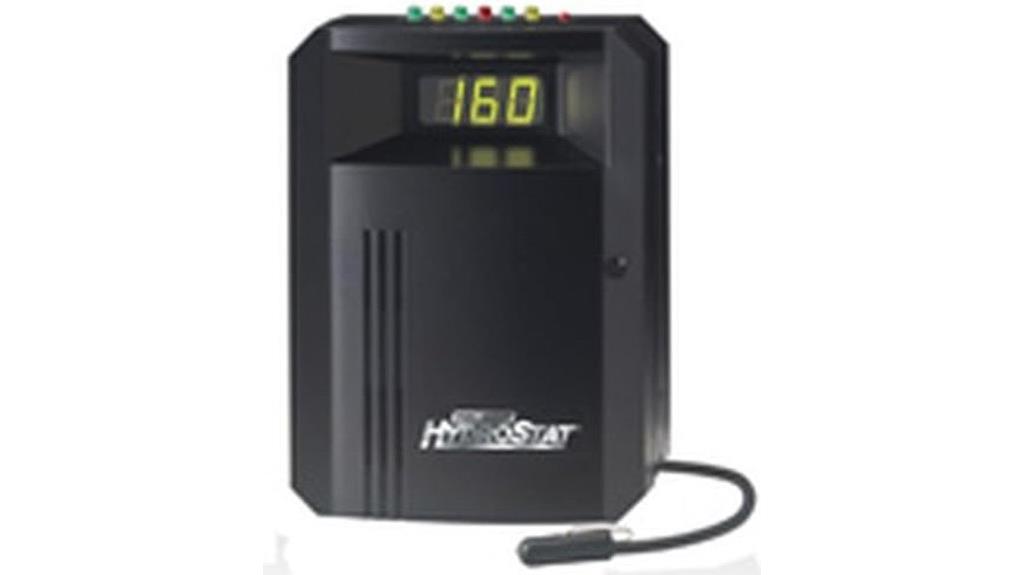
If you’re looking to upgrade your oil boiler for better efficiency and safety in cold climates, the Model 3250 Fuel Smart Hydrostat is an excellent choice. It’s a universal replacement, compatible with most boilers, and easy to install thanks to its standard wiring. The dial settings make temperature adjustments simple, allowing you to lower fuel use without sacrificing comfort. It features a low water cut-off to prevent damage from low water levels and a boiler reset control to optimize performance. Designed for reliable startup and operation, this hydrostat ensures your boiler runs efficiently and safely during the coldest months.
Best For: homeowners and HVAC professionals seeking an easy-to-install, reliable boiler control upgrade for oil boilers to improve efficiency and safety.
Pros:
- Universal compatibility simplifies installation across most boiler models
- Easy dial adjustments allow precise temperature control and fuel savings
- Built-in low water cut-off and boiler reset enhance safety and performance
Cons:
- May require basic electrical knowledge for installation
- No outdoor sensor included, limiting control in very cold climates without additional components
- Adjustments require manual dialing, which may be less convenient than digital controls
ChemWorld Boiler Antifreeze Concentrate (95% Inhibted PG Pink) - 1 Gallon
95% concentrated Propylene Glycol with 5% corrosion inhibitor
As an affiliate, we earn on qualifying purchases.
ChemWorld Boiler Antifreeze Concentrate (95% Inhibted PG Pink) – 1 Gallon

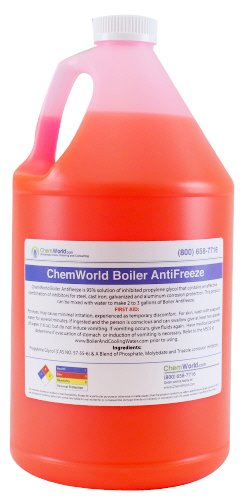
ChemWorld Boiler Antifreeze Concentrate (95% Inhibited PG Pink) is an essential pick for anyone looking to protect boiler systems in freezing climates. This concentrated solution contains 95% propylene glycol, combined with a corrosion inhibitor, ensuring your system stays safe and efficient. The pink color makes it easy to identify during mixing. When diluted to 30-50%, it provides reliable freeze protection and helps manage slush and bulk freeze temperatures. Plus, it guards against corrosion, prolonging the lifespan of your boiler components. A one-gallon container offers a practical, concentrated option for maintaining ideal performance during harsh winter months.
Best For: those seeking reliable antifreeze protection for boiler systems in cold climates to prevent freezing and corrosion.
Pros:
- Provides high concentration of propylene glycol for effective freeze protection
- Contains corrosion inhibitors to extend system lifespan
- Pink color allows easy identification during mixing
Cons:
- Requires proper dilution (30-50%) before use, which may require additional measurements
- Contains chemicals that may need careful handling and disposal
- Not suitable for applications requiring environmental or food-grade antifreeze

AB Plate Heat Exchanger, 4"x 12" 20 Plates Water To Water Heat Exchanger, Copper/SS316L Stainless Steel Brazed Plate Heat Exchanger For Floor Heating, Water Heating, Snow Melting
【Premium Quality】Our plate heat exchanger is made of high quality 316L stainless steel which are brazed together by...
As an affiliate, we earn on qualifying purchases.
AB Plate Heat Exchanger, 4″x 12″, Copper/SS316L Brazed Plate Heat Exchanger

The AB Plate Heat Exchanger, 4″ x 12″ with 20 plates, stands out as an ideal choice for those selecting heating solutions in cold climates because of its high thermal efficiency and robust construction. Made from high-quality 316L stainless steel and copper, it’s built to withstand high pressure and temperature without leaks. Its compact, lightweight design makes installation easy, and the smooth threads allow for quick, flexible hookups. Capable of producing up to 250,000 BTU per hour, it’s perfect for domestic water heating, snow melting, or hydronic systems. Plus, it operates without electricity, offering reliable, energy-efficient performance year-round.
Best For: homeowners and businesses in cold climates seeking a high-efficiency, durable, and easy-to-install heating and cooling solution.
Pros:
- High thermal efficiency up to 250,000 BTU per hour for various heating applications
- Durable construction with high-quality 316L stainless steel and copper brazing, resistant to high pressure and temperature
- Compact, lightweight design with smooth threads for quick and flexible hookups
Cons:
- May require professional installation to ensure optimal performance and safety
- Limited to applications compatible with its heat transfer capacity and size specifications
- Does not operate independently of existing heating or cooling systems, requiring integration into broader setups

Brazed Plate Heat Exchanger Stainless Steel SS316L 3"x8" 26 Plates 3/4" MPT 210,000 BTU/hr Hydronic Heating
【Premium Quality】Our plate heat exchanger is made of high quality 316L stainless steel which are brazed together by...
As an affiliate, we earn on qualifying purchases.
Brazed Plate Heat Exchanger Stainless Steel SS316L
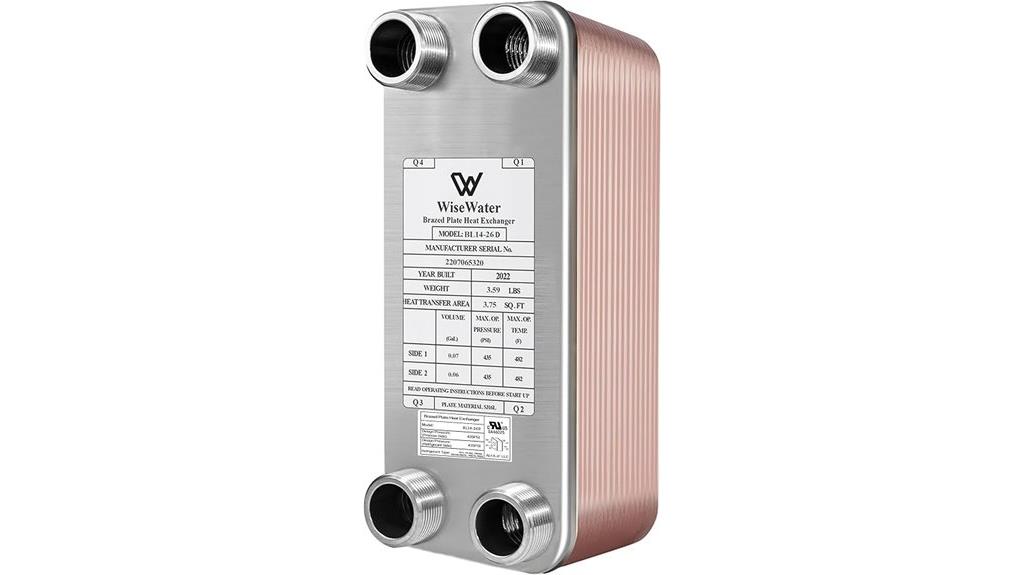
A standout feature of the Brazed Plate Heat Exchanger Stainless Steel SS316L is its robust construction from high-quality 316L stainless steel, making it ideal for those who need reliable, durable performance in demanding heating applications. Its copper brazed edges enhance durability and leak resistance, ensuring long-lasting operation. With 26 plates and a compact 3″ x 8″ size, it handles high pressures up to 482 PSI and temperatures up to 482°F. Weighing just 3.6 pounds, it’s lightweight and surface-mounted. This exchanger offers efficient heat transfer, supporting energy savings without electricity, making it perfect for domestic water heating, snow melting, and various hydronic systems.
Best For: homeowners, contractors, and heating professionals seeking a durable, high-efficiency heat exchanger for residential or commercial hydronic heating and cooling systems.
Pros:
- Made of high-quality 316L stainless steel with copper brazed edges for enhanced durability and leak resistance.
- Compact and lightweight design (3.6 pounds) allows for easy installation in tight spaces.
- Supports high pressure (up to 482 PSI) and temperature (up to 482°F) for demanding applications.
Cons:
- Limited to standard English measurement units, which may require conversions for some users.
- Does not include electric components or batteries, so additional parts may be needed for certain setups.
- Only includes a 1-year warranty, which might be shorter compared to some other industrial heat exchangers.
AB Plate Heat Exchanger, 3″x8″ 30 Plates Water to Water Heat Exchanger
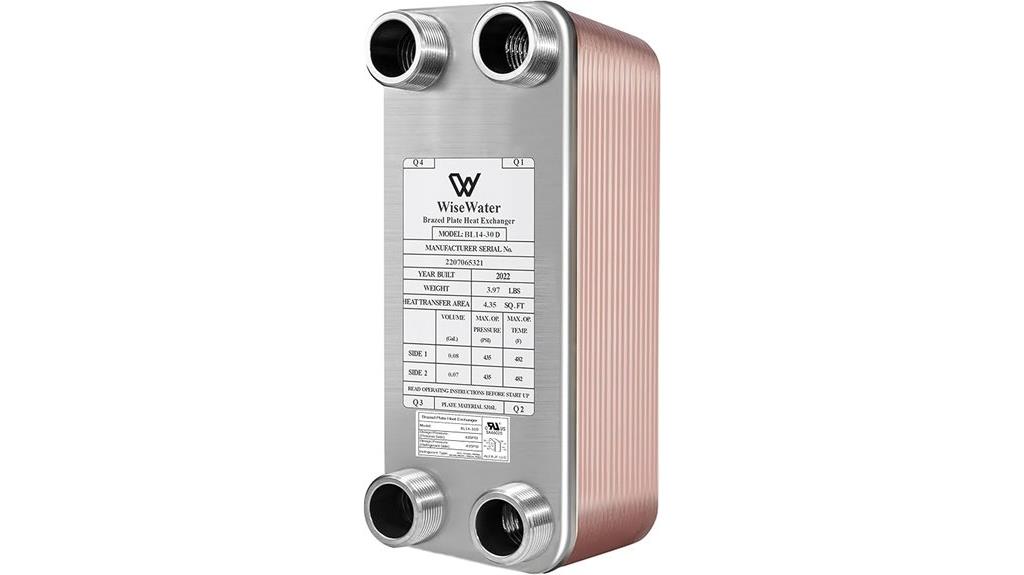
If you’re looking to maximize energy efficiency in your heating system, the AB Plate Heat Exchanger with 30 plates offers an excellent solution. Made of high-quality 316L stainless steel and brazed with copper, it’s built for durability and resistance to leaks under high pressure and temperature. Its super-thin, highly conductive plates ensure efficient heat transfer, making it suitable for a range of applications like domestic water heating, floor heating, or snow melting. Compact and lightweight, this exchanger promotes energy savings without needing electricity or oxygen. With a capacity of up to 280,000 BTU/hr, it’s a reliable, high-performance component for keeping your home warm in cold climates.
Best For: homeowners and professionals seeking an efficient, durable heat exchange solution for domestic water heating, floor heating, snow melting, or other hydronic heating applications.
Pros:
- Made of high-quality 316L stainless steel with copper brazing for enhanced durability and leak resistance
- Highly efficient with super-thin, conductive plates that maximize heat transfer
- Compact, lightweight design suitable for various heating systems without requiring electrical power
Cons:
- Limited to water-to-water heat exchange applications, not suitable for other fluids or gases
- Installation may require specific fittings and expertise due to plumbing connections
- Capacity range may not meet very high heating demands in large or complex systems
AB Plate Heat Exchanger, 4″x 12″ 40 Plates Water to Water Heat Exchanger
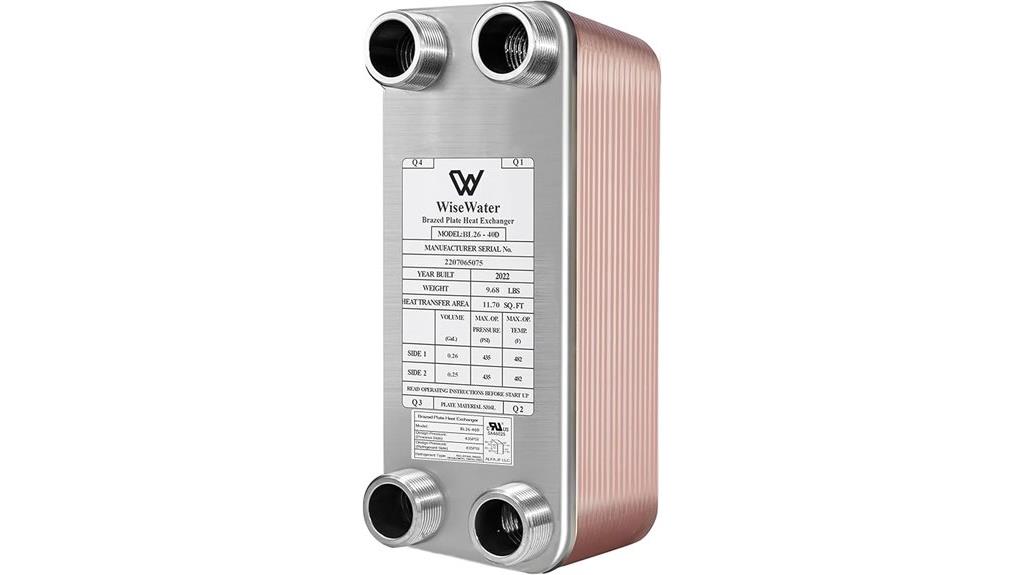
For those seeking reliable and efficient water-to-water heat exchange in harsh climates, the AB Plate Heat Exchanger, 4″ x 12″ with 40 plates, stands out as an excellent choice. Made of high-quality 316L stainless steel brazed with 99.9% copper at the edges, it offers durability and resistance to leaks. With 40 brazed plates, it can handle high pressure and temperature, delivering 350,000 to 380,000 BTU per hour. Its highly conductive, super-thin stainless steel plates ensure efficient heat transfer. Compact and lightweight, it’s easy to install with smooth threaded connections, making it ideal for various heating systems without consuming electricity or oxygen.
Best For: individuals or businesses needing reliable, high-efficiency water-to-water heat exchange solutions in demanding environments such as outdoor heating, snow melting, or industrial applications.
Pros:
- Made of durable high-quality 316L stainless steel with copper brazing for long-lasting performance and leak resistance
- Capable of handling high pressure and temperature with 40 brazed plates, ensuring efficient heat transfer
- Compact, lightweight design with quick, easy installation thanks to smooth threaded connections
Cons:
- May require professional installation to ensure proper connection and operation
- No built-in electrical components; reliant on external systems for heat source and transfer
- Limited to water-to-water applications, not suitable for other fluids without modification
AB Plate Heat Exchanger, 3″x8″ 10 Plates Water To Water Heat Exchanger
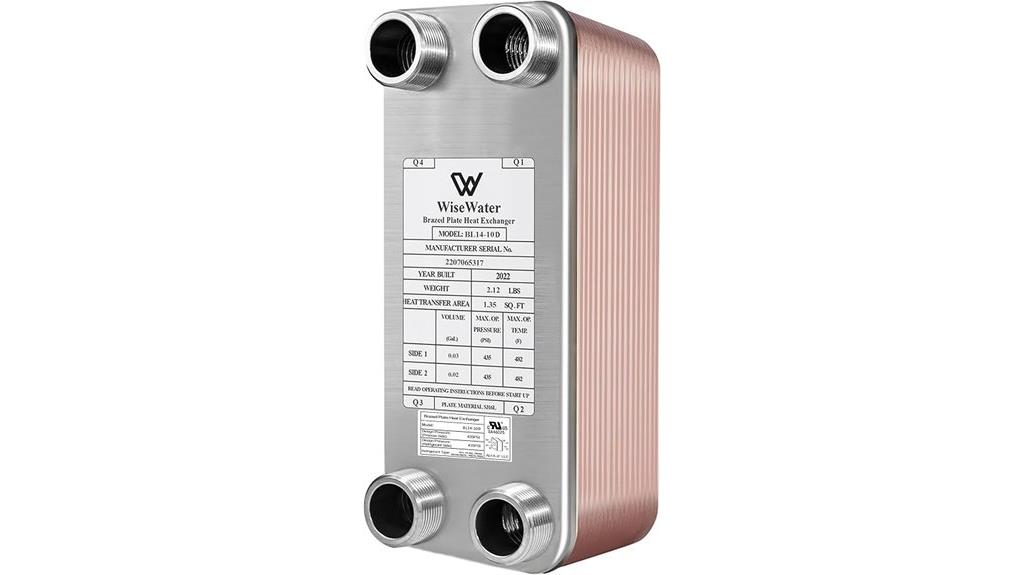
The AB Plate Heat Exchanger, 3″ x 8″ with 10 plates, stands out as an efficient and durable option for those managing water-to-water heat transfer systems in cold climates. Made of high-quality 316L stainless steel and brazed with copper, it offers exceptional durability, leak resistance, and high-pressure tolerance. Its compact, lightweight design makes installation easy indoors. With a capacity of up to 80,000 BTU/hr and a maximum temperature of 482°F, it provides reliable, high-performance heat transfer. Whether for domestic water heating, snow melting, or hydronic systems, this heat exchanger guarantees efficient thermal transfer without electricity or oxygen consumption, making it an excellent choice for harsh winter conditions.
Best For: Homeowners and professionals seeking a reliable, high-capacity water-to-water heat exchanger for indoor heating, snow melting, or hydronic systems in cold climates.
Pros:
- Made of durable 316L stainless steel and copper brazing for long-lasting, leak-resistant performance
- Compact and lightweight design for easy installation indoors
- High thermal efficiency with a capacity up to 80,000 BTU/hr and temperature tolerance up to 482°F
Cons:
- Limited to water-to-water applications, not suitable for other fluid types
- Requires careful handling to prevent damage due to high pressure and temperature limits
- May be more expensive than simpler heat exchanger options due to high-quality materials
AB Plate Heat Exchanger, 3″x8″ 50 Plates Water to Water Heat Exchanger
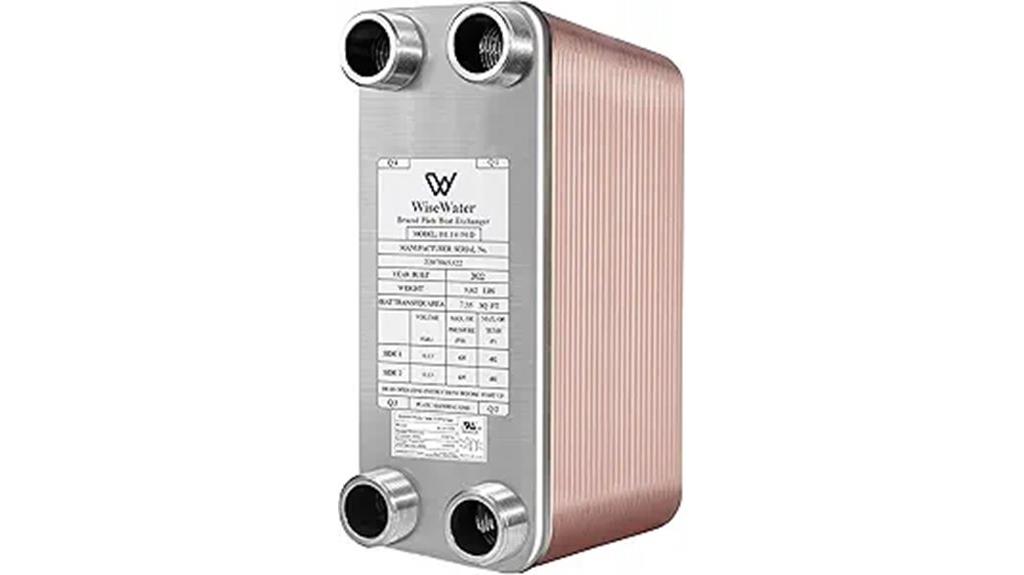
Designed for high-demand heating systems, the AB Plate Heat Exchanger with 50 plates offers exceptional efficiency and durability, making it an ideal choice for those seeking reliable water-to-water heat transfer. Constructed from high-quality 316L stainless steel and brazed with copper, it withstands high pressure and temperature, ensuring long-lasting performance. Its 50 brazed plates enable rapid heating and cooling, with a capacity up to 380,000 BTU per hour. The smooth-thread design provides quick hookup, while the highly conductive plates maximize thermal transfer. Suitable for various applications like domestic water, floor heating, or snow melting, this compact unit keeps your system running efficiently in cold climates.
Best For: homeowners and professionals seeking a durable, high-capacity water-to-water heat exchanger for heating, cooling, or thermal transfer applications in residential, commercial, or industrial settings.
Pros:
- Made of high-quality 316L stainless steel with copper brazing for superior corrosion resistance and durability
- High BTU capacity up to 380,000 BTU/hr, suitable for demanding heating and cooling systems
- Compact, lightweight design with quick hookup features enhances installation convenience and system efficiency
Cons:
- May be overqualified for small-scale or low-demand applications
- Requires proper maintenance to prevent mineral buildup and ensure optimal performance
- Price point may be higher compared to simpler or smaller heat exchangers
AB Plate Heat Exchanger, 4″ x 12″ 60 Plates Water-to-Water Heat Exchanger
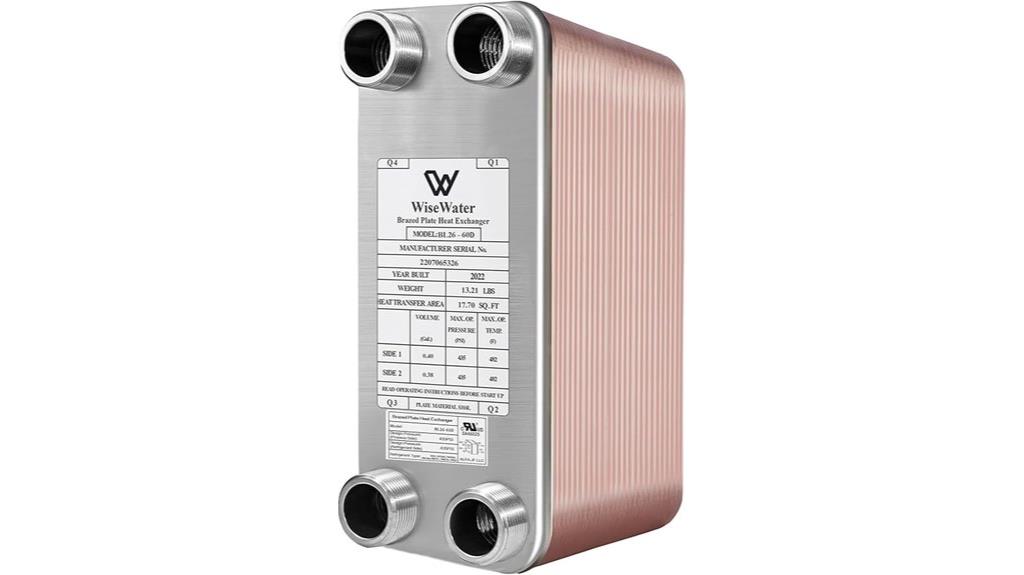
If you’re looking to optimize your heating system in cold climates, the AB Plate Heat Exchanger, 4″ x 12″ with 60 plates, offers exceptional efficiency and durability. Made of high-quality 316L stainless steel and brazed with copper at the edges, it resists leaks and withstands high pressure and temperature. Capable of producing 500,000 to 600,000 BTU per hour, it ensures fast, efficient heat transfer. Its compact design with smooth threaded connections makes installation quick and flexible. This versatile water-to-water heat exchanger is ideal for domestic, radiant, snow melting, or district heating systems, providing reliable performance year-round.
Best For: homeowners and professionals seeking a durable, high-efficiency water-to-water heat exchanger for residential or commercial heating applications in cold climates.
Pros:
- Made of high-quality 316L stainless steel with copper brazing for excellent corrosion resistance and leak prevention.
- Capable of high thermal output, producing up to 600,000 BTU/hr for fast and efficient heat transfer.
- Compact and lightweight design with easy-to-use threaded connections for quick installation.
Cons:
- May require professional installation due to its high-pressure and temperature handling capabilities.
- Limited to water-to-water applications; not suitable for other fluids or exotic systems.
- Slightly higher cost compared to basic heat exchangers, reflecting its premium materials and build quality.
AB Plate Heat Exchanger, 5″x12″ 40 Plates Water to Water Heat Exchanger
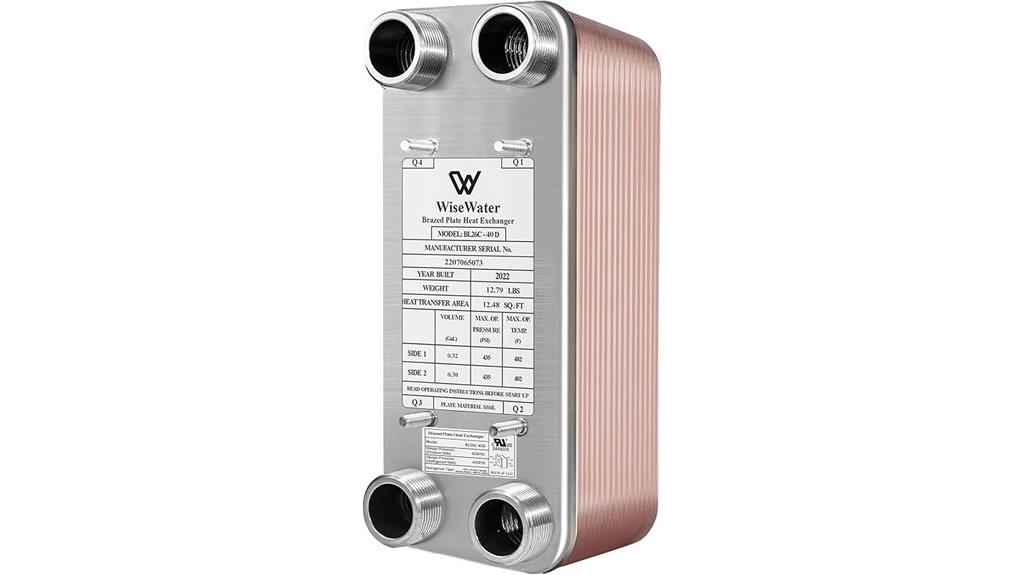
For those seeking efficient water-to-water heat exchange in demanding environments, the AB Plate Heat Exchanger, 5″ x 12″ with 40 plates, offers a reliable solution. Made from high-quality 316L stainless steel, it’s brazed with 99.9% copper at the edges, ensuring durability and leak resistance under high pressure and temperature. With a heating capacity of 380,000 to 530,000 BTU per hour, it efficiently transfers heat without electricity or oxygen. Its smooth threaded connections allow quick setup, making it versatile for residential, commercial, or industrial heating. This compact, lightweight unit is built to last, providing long-term performance in demanding applications.
Best For: residential, commercial, and industrial users seeking reliable and efficient water-to-water heat exchange solutions in demanding environments.
Pros:
- Made from high-quality 316L stainless steel with copper brazing for durability and leak resistance
- High heating capacity of 380,000 to 530,000 BTU per hour for versatile applications
- Easy installation with smooth threaded connections and lightweight, compact design
Cons:
- May require professional installation due to high-pressure operation
- Limited to water-to-water heat exchange; not suitable for other fluids without modification
- No electrical or oxygen-based heat transfer features, which may limit certain advanced system integrations
Factors to Consider When Choosing Oil Boilers for Cold Climates
When selecting an oil boiler for cold climates, I focus on several key factors to guarantee reliable and efficient performance. Things like proper insulation, the right boiler size, and fuel efficiency features really matter, especially in harsh weather. I also pay attention to cold start capabilities and water management systems to keep everything running smoothly.
Insulation and Sealing
Proper insulation and sealing are crucial factors to contemplate when selecting oil boilers for cold climates, as they directly impact efficiency and longevity. Insulating around the boiler and piping minimizes heat loss, helping your system run more efficiently during harsh winters. High-quality insulation materials with suitable R-values ensure the boiler maintains a consistent temperature and peak performance. Sealing all joints and connections prevents cold air infiltration and moisture entry, which can lead to corrosion and damage over time. Airtight seals on access panels and vents also stop drafts that could undermine your heating efficiency. Regular inspection and maintenance of insulation and seals are essential to keep everything operating smoothly during extended cold spells. Proper insulation and sealing are key to maximizing your boiler’s durability and energy efficiency.
Boiler Size Adequacy
Choosing the right oil boiler size is vital to guarantee your home stays warm during the coldest months. An appropriately sized boiler provides enough BTUs to heat your entire space efficiently. If the boiler is too large, it’ll cycle on and off frequently, which reduces efficiency and causes more wear and tear. Conversely, an undersized boiler may struggle to meet your heating demands, leaving your home uncomfortably cold. Proper sizing depends on factors like your climate, insulation levels, and the size of your house. Consulting with a heating professional can help you determine the exact capacity needed for your specific situation, ensuring your boiler keeps up during the harshest winter days without unnecessary energy costs or equipment stress.
Fuel Efficiency Features
Selecting an oil boiler with strong fuel efficiency features can make a significant difference in how well it performs during cold months. I look for models with high AFUE ratings, ideally above 85%, to maximize energy savings. Advanced combustion controls, like modulating burners, help optimize fuel burn and reduce waste, keeping costs down. Effective insulation and heat retention features are essential to minimize heat loss during operation. I also check if the boiler has integrated or compatible heat exchangers designed for efficient heat transfer, which lowers fuel consumption. Additionally, smart controls or programmable thermostats allow the boiler to adjust operation based on demand, conserving fuel during low-usage periods. These features ensure the boiler runs efficiently, saving money and keeping my home warm.
Cold Start Performance
When cold temperatures hit, the ability of an oil boiler to start reliably hinges on its ignition system and combustion efficiency. Boilers with advanced ignition systems and robust combustion chambers are better equipped for cold starts, guaranteeing quick and stable ignition even in freezing weather. Properly designed oil burners with high-quality atomization help achieve reliable ignition and consistent operation during initial startup. Insulation and preheating features are also essential—they keep fuel viscosity at its best and prevent startup issues caused by low temperatures. Additionally, a reliable low water cut-off and safety controls ensure safe operation during cold weather, preventing shutdowns or malfunctions. Overall, selecting a boiler with these features guarantees dependable performance when outside temperatures plummet.
Water Management Systems
Have you considered how water management systems impact your oil boiler’s performance in cold climates? Proper systems are vital to prevent damage and ensure efficiency. A low water cut-off (LWCO) device automatically shuts off the boiler if water levels drop too low, protecting essential components. Maintaining optimal water pH and inhibitor levels prevents corrosion and scaling, which can reduce heat transfer and cause costly repairs. Regular inspection and flushing remove sludge, mineral buildup, and contaminants, keeping the system clean and efficient. Adding water softeners or filtration systems reduces mineral content, preventing fouling and prolonging the boiler’s lifespan. Monitoring water temperature and pressure ensures safe operation, reducing risks of overheating or failure during harsh winter conditions. These water management practices are indispensable for reliable, long-lasting performance.
Maintenance and Durability
Choosing the right oil boiler for cold climates means prioritizing durability and ease of maintenance. Regular upkeep, like checking and replacing filters every 1-3 months, helps prevent system blockages and keeps everything running smoothly. Durability hinges on high-quality materials such as cast iron or stainless steel heat exchangers, which resist corrosion over time. Installing a sturdy outdoor cover protects the boiler from harsh weather, extending its lifespan. Periodic inspections of seals, gaskets, and flue components are essential to prevent leaks and maintain efficiency in extreme conditions. Additionally, selecting models with corrosion-resistant coatings and top-grade parts markedly boosts long-term durability. These measures ensure your boiler remains reliable, efficient, and capable of withstanding the demanding cold climates year after year.
Frequently Asked Questions
How Often Should Oil Boilers Be Serviced in Winter?
I recommend servicing your oil boiler at least once a year, ideally before winter starts. During the winter months, it’s a good idea to check it every few months to verify it’s running efficiently. If you notice any strange noises, leaks, or reduced heat, call a professional immediately. Regular maintenance keeps your boiler reliable, safe, and ensures your home stays warm all season long.
What Is the Average Lifespan of an Oil Boiler?
I can tell you that the average lifespan of an oil boiler is about 15 to 20 years. With careful care, consistent checking, and regular maintenance, you can prolong its life and prevent pricey repairs. I recommend scheduling annual servicing and keeping an eye on performance. Properly maintained, your boiler can work wonderfully well, warming your home comfortably for many years to come.
Are There Eco-Friendly Oil Boiler Options for Cold Climates?
Yes, there are eco-friendly oil boiler options available for cold climates. I’ve found that modern condensing oil boilers and models with low NOx emissions markedly reduce environmental impact. Some even use biofuels or blend traditional oil with renewable alternatives, making them more sustainable. While they may cost more upfront, these eco-friendly options help you stay warm while also caring for the planet. I recommend exploring brands that prioritize energy efficiency and emissions reduction.
How Does Insulation Affect Oil Boiler Efficiency?
Think of insulation as a warm blanket for your home, wrapping your house in comfort and efficiency. It markedly boosts your oil boiler’s performance by trapping heat and reducing energy loss. When your home is well-insulated, your boiler doesn’t have to work as hard to maintain warmth, cutting costs and conserving fuel. So, insulation isn’t just a cozy upgrade; it’s a smart move for maximizing your boiler’s efficiency.
Can Existing Boilers Be Upgraded for Better Winter Performance?
Yes, existing boilers can often be upgraded for better winter performance. I recommend having a professional assess your system to identify potential improvements, such as installing a new burner, upgrading the controls, or adding a smart thermostat. These upgrades can improve efficiency, guarantee quicker heating, and reduce fuel consumption during cold months. Regular maintenance and timely upgrades really help keep your home warm and cozy all winter long.
Conclusion
When choosing an oil boiler for cold climates, comfort, consistency, and confidence are key. By considering vital components like the Model 3250 Fuel Smart Hydrostat and durable heat exchangers, you guarantee your system’s strength and stability. Don’t forget the importance of proper antifreeze and efficient heat transfer. With the right choices, you’ll stay warm, worry-free, and well-prepared for even the harshest winter weather. Stay smart, stay cozy!