Fed up with persistent heat pump problems in your HVAC setup? Search no more! Our Master Guide is here to offer you the best troubleshooting strategies and tips.
Imagine this scenario: your heat pump suddenly stops turning on, leaving you in a state of discomfort and frustration. Don’t worry, we’ve got you covered! From understanding heat pump operation to diagnosing cooling problems and resolving airflow issues, our comprehensive guide will help you tackle any heat pump challenge with confidence.
Key Takeaways
- Common heat pump issues include noise, defrosting problems, inadequate heating or cooling, and thermostat issues.
- Heat pumps transfer heat between indoors and outdoors using a refrigerant and can reverse their operation for heating and cooling.
- Regular maintenance, such as cleaning or replacing air filters and checking refrigerant levels, is crucial for energy optimization and efficiency.
- Troubleshooting common issues involves checking circuit breakers, wiring, thermostat settings, compressor operation, power supply, and refrigerant levels.

Jackery Solar Generator 1000 v2 and 200W Solar Panel,1070Wh,1500W AC
- Powerful AC Output: 1500W continuous, 3000W surge
- Lightweight & Portable: 23.8 lbs with foldable handle
- Fast Charging: 0-100% in 1 hour via app
As an affiliate, we earn on qualifying purchases.
Common Heat Pump Issues
Now let’s delve into the common heat pump issues that we frequently encounter in HVAC systems.
One of the most prevalent problems is heat pump noise. This can be caused by a variety of factors, such as loose components, worn-out bearings, or a malfunctioning compressor. To address this, it’s crucial to inspect and tighten any loose parts, replace worn-out bearings, or repair or replace a faulty compressor.
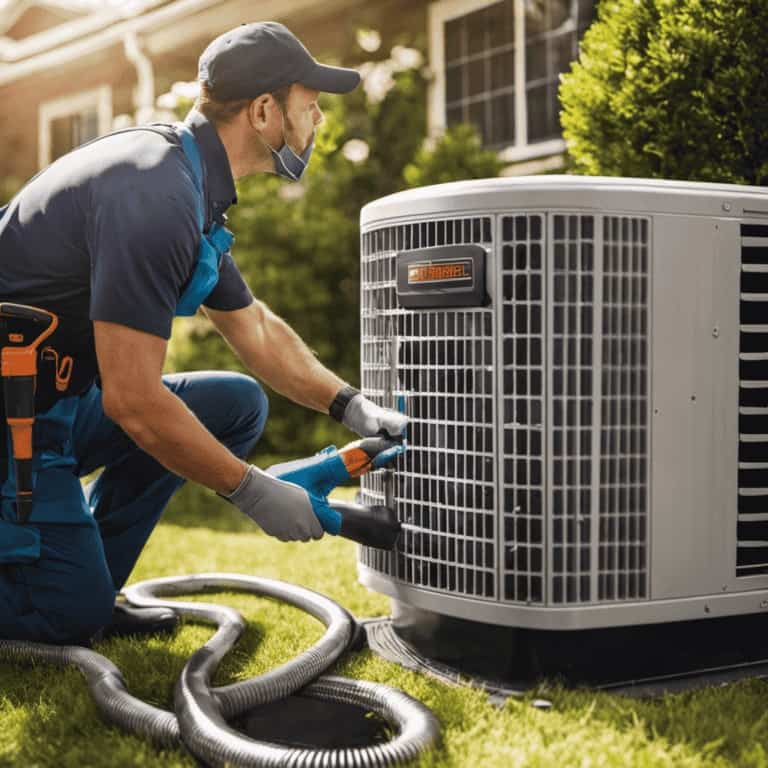
Another common issue is heat pump defrosting problems. During colder temperatures, frost can accumulate on the outdoor unit, affecting its efficiency. This can be resolved by ensuring proper airflow around the unit, checking the defrost control board for any issues, and cleaning or replacing the defrost sensor if necessary.

DELLA Econo Series 23000 BTU Mini Split Air Conditioner 17 SEER2, 230V Cools up to 1500 Sq. Ft, Works with Alexa and Wifi, Heater Ductless Inverter System with Heat Pump,16.4ft Installation Kit
- Energy Efficient Cooling: 17 SEER2 inverter heat pump system
- Large Coverage Area: Cools and heats up to 1500 sq. ft.
- Works in Cold Temperatures: Operates down to 5°F (-15°C)
As an affiliate, we earn on qualifying purchases.
Understanding Heat Pump Operation
Let’s now explore the fundamental aspects of heat pump operation.
In this section, we’ll cover the basics of how heat pumps work, including their efficiency and energy-saving capabilities.
Additionally, we’ll address common issues that may arise during heat pump operation and provide troubleshooting tips to resolve them effectively.

Understanding these key points will empower HVAC technicians to diagnose and fix heat pump problems efficiently, ensuring optimal performance and customer satisfaction.
Heat Pump Basics
We rely on heat pumps to efficiently heat and cool our homes by transferring heat between the indoors and outdoors. Understanding the basics of heat pump operation is crucial for proper heat pump installation and maintenance. Here are three key points to consider:
Heat Transfer: Heat pumps use a refrigerant to absorb heat from the air or ground outside and transfer it indoors. This process is accomplished through the evaporation and condensation of the refrigerant.
Reversible Operation: Heat pumps can reverse their operation to provide both heating and cooling. In cooling mode, the heat pump removes heat from indoors and releases it outside.
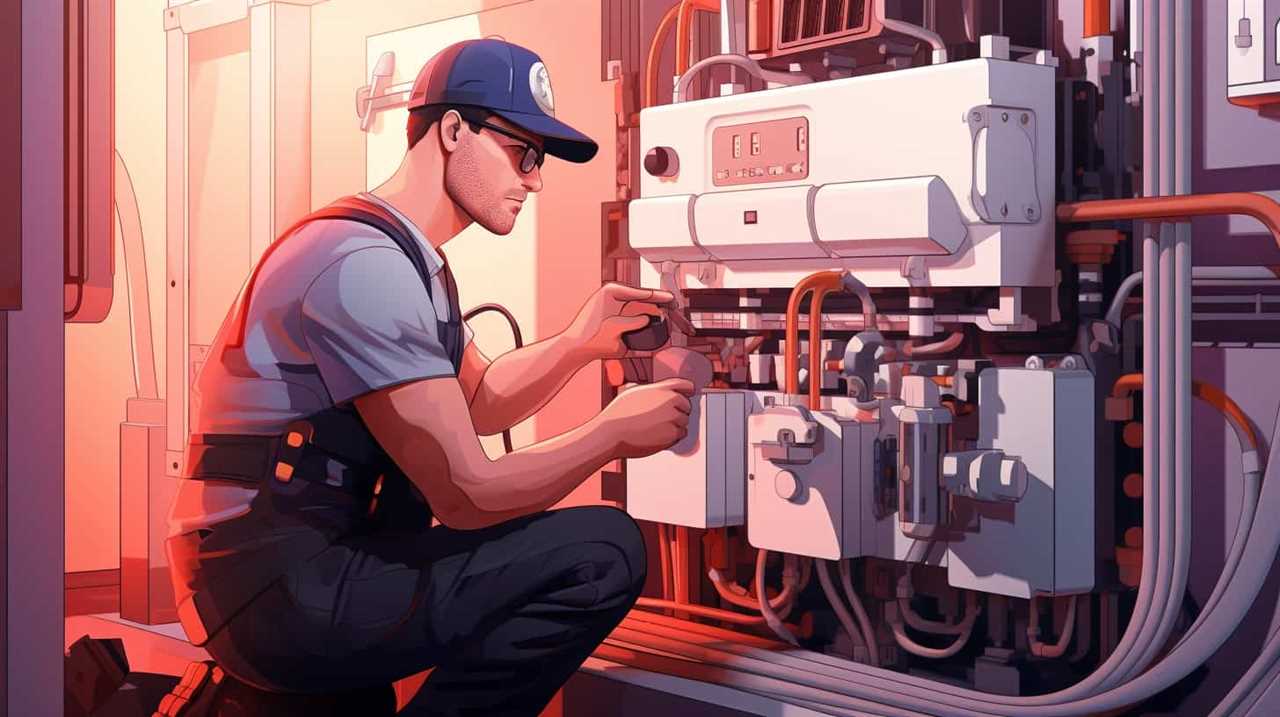
Efficiency: Heat pumps are highly efficient, as they move heat rather than generate it. They can provide up to four times the energy they consume, making them a cost-effective and environmentally friendly option for heating and cooling.
Operation and Efficiency
To understand the operation and efficiency of heat pumps, we need to examine how they transfer heat and the factors that affect their performance.
Heat pumps work by extracting heat from the air, ground, or water and transferring it into a building to provide heating. They can also reverse this process to cool a space.
The efficiency of a heat pump is measured by its coefficient of performance (COP), which is the ratio of heat output to the amount of energy input.

To optimize energy usage and maintain the efficiency of a heat pump, regular maintenance is crucial. This includes cleaning or replacing air filters, checking refrigerant levels, and inspecting the outdoor unit for debris or obstructions.
Additionally, proper insulation and sealing of ductwork can help minimize heat loss and improve efficiency.
Troubleshooting Common Issues
To troubleshoot common issues with heat pump operation, we’ll explore potential problems and their corresponding solutions. Here are three common problems that can occur with heat pumps and how to troubleshoot them:
Troubleshooting Compressor Issues: If your heat pump isn’t providing enough heating or cooling, the compressor may be malfunctioning. First, check if the compressor is running by listening for a humming sound. If it isn’t running, check the power supply and make sure it’s connected properly. If the power supply is fine, the compressor may need to be replaced.

Troubleshooting Thermostat Problems: If your heat pump isn’t responding to temperature adjustments, the thermostat may be the issue. Start by checking the thermostat settings and make sure they’re set correctly. If the settings are correct, try replacing the thermostat batteries. If the problem persists, you may need to replace the thermostat altogether.
By troubleshooting these common issues, you can ensure that your heat pump is operating efficiently. However, if your heat pump isn’t turning on at all, further troubleshooting is necessary.
[Transition:] Now let’s move on to the next section where we’ll discuss troubleshooting steps for a heat pump that isn’t turning on.
ECO-WORTHY Powermega 48V 314Ah(2 Pack) LiFePO4 Energy Storage System with Liber 10KP 10kW Hybrid Inverter, Active Balancing BMS, Battery Built-in Bluetooth&WiFi, Communication for Off-Grid&Home Backup
- Home Backup Capacity: 30kWh+ energy storage with inverter
- Communication & Monitoring: WiFi, Bluetooth, RS485, CAN, RS232
- Real-Time System Access: LCD display for voltage, SOC, cycles
As an affiliate, we earn on qualifying purchases.
Troubleshooting Heat Pump Not Turning On
First, check if the heat pump is receiving power. To troubleshoot a heat pump that isn’t turning on, you need to ensure that it’s properly connected to a power source. Start by checking the circuit breaker and make sure it’s in the ON position. If the breaker is tripped, reset it and see if the heat pump starts working. If the breaker trips again, there may be a wiring problem with the heat pump.
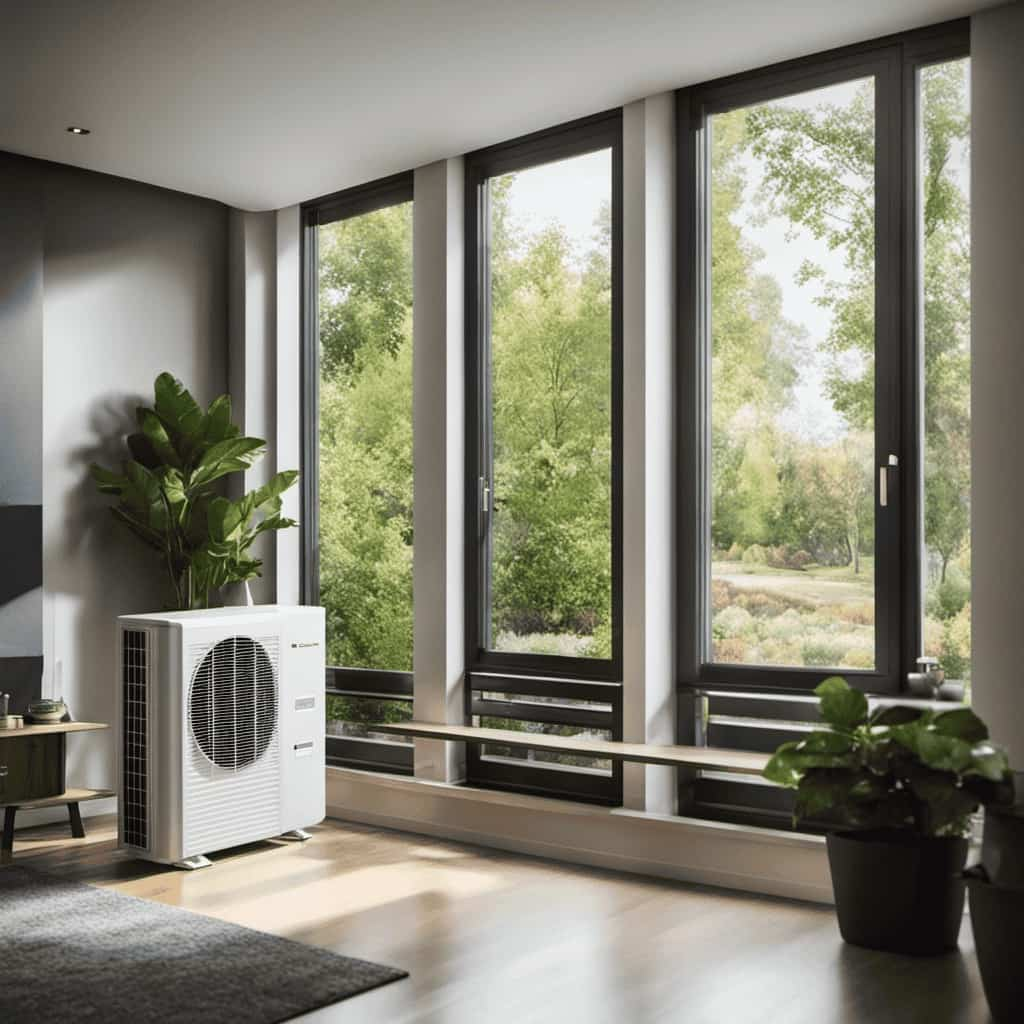
Inspect the wiring for any signs of damage or loose connections. Additionally, check the thermostat settings to ensure they’re correctly configured. Heat pump thermostat issues can prevent the unit from turning on.
If the power supply and wiring are intact, but the heat pump still won’t turn on, it’s time to move on to diagnosing heat pump cooling problems.

Renogy Inverter P2 3000W, 12V to 110V Pure Sine Wave Solar Car Power Inverter, DC to AC Converter with 16.4FT Remote Control for RV, Truck, Camping, Home Backup, Outdoor, Emergency, Off-Grid Living
- Power Output: 1000W continuous, 2000W surge
- Pure Sine Wave: Provides grid-like quality AC power
- Electronics Protection: Over-voltage, under-voltage, overload, over-temperature protection
As an affiliate, we earn on qualifying purchases.
Diagnosing Heat Pump Cooling Problems
When diagnosing heat pump cooling problems, we should first check the refrigerant levels to ensure they’re at the correct level. Insufficient refrigerant can lead to poor cooling performance and potentially cause damage to the compressor.
Here are three key steps to diagnose heat pump cooling problems:

Diagnosing heat pump refrigerant leaks: Inspect the refrigerant lines and connections for any signs of leaks, such as oil stains or hissing sounds. Use a refrigerant leak detector to identify any leaks in the system. Once the leaks are located, they can be repaired or the faulty components can be replaced.
Troubleshooting heat pump compressor issues: Check if the compressor is running by listening for any abnormal noises or vibrations. Ensure that the electrical connections to the compressor are secure and that there are no signs of damage or overheating. If the compressor isn’t functioning properly, it may need to be repaired or replaced.
Heat Pump Heating Issues
We may encounter various heat pump heating issues, but addressing them promptly can help ensure efficient heating performance in our HVAC systems. One common issue is inadequate heating, which may be caused by a dirty air filter or a malfunctioning thermostat. Regular heat pump maintenance, such as cleaning or replacing air filters, can help prevent this problem. Another issue is short cycling, where the heat pump turns on and off frequently. This can be caused by a faulty thermostat or an incorrectly sized heat pump. Heat pump defrosting issues can also occur, especially in colder climates. This is typically caused by a malfunctioning defrost thermostat, sensor, or control board. Regular maintenance and inspections can help identify and resolve these issues, ensuring optimal heating performance in our HVAC systems.
| Issue | Possible Causes | Solutions |
|---|---|---|
| Inadequate heating | Dirty air filter, faulty thermostat | Clean or replace air filter |
| Short cycling | Faulty thermostat, incorrect size | Replace faulty thermostat |
| Heat pump defrosting issues | Malfunctioning defrost thermostat, sensor, or control board | Repair or replace faulty components |
Resolving Heat Pump Airflow Problems
When troubleshooting heat pump airflow problems, there are several common issues to consider.
One of the first things to check is the air filters, as clogged filters can restrict airflow and reduce the system’s efficiency.
Another potential problem is a blocked outdoor unit, which can prevent proper air circulation.
Lastly, inadequate ductwork design can also lead to airflow issues, such as leaks or improper sizing.
Clogged Air Filters
Our first step is to check if the air filters are clogged, as this can cause airflow problems in the heat pump. Clogged air filters restrict the flow of air, reducing the efficiency of the heat pump and potentially leading to other issues.

Here are three signs that the air filters may be clogged:
Reduced Airflow: If you notice weak or insufficient airflow from the heat pump, it could be due to dirty filters. Restricted airflow can put strain on the system and result in poor heating or cooling performance.
Dirty Coils: Clogged air filters can cause dirt and debris to accumulate on the coils of the heat pump. This buildup restricts heat exchange and reduces the overall efficiency of the system.
Thermostat Malfunction: When air filters are clogged, the heat pump may struggle to reach the desired temperature set on the thermostat. This can lead to inconsistent heating or cooling in your space.

Regularly checking and replacing air filters can help maintain proper airflow and prevent potential problems with your heat pump.
Blocked Outdoor Unit
To resolve heat pump airflow problems, we recommend checking for a blocked outdoor unit and ensuring proper airflow. One common issue that can cause restricted airflow is a blocked condenser coil. Over time, dirt, debris, and vegetation can accumulate on the coil, preventing proper heat transfer and reducing the efficiency of the heat pump. Regular cleaning of the condenser coil is essential to maintain optimal performance. Another potential problem that can affect airflow is condensate drain issues. If the condensate drain line becomes clogged or blocked, it can cause water to back up and restrict airflow. Regular maintenance and cleaning of the condensate drain line can prevent this issue. Checking and addressing these potential problems will help ensure proper airflow and improve the overall efficiency of your heat pump system.
| Potential Problem | Symptoms | Solution |
|---|---|---|
| Blocked condenser coil | Reduced airflow, decreased efficiency | Clean the condenser coil regularly to remove dirt and debris |
| Condensate drain issues | Water backup, restricted airflow | Regularly maintain and clean the condensate drain line |
Inadequate Ductwork Design
We often encounter inadequate ductwork design as a root cause of heat pump airflow problems. When the ductwork isn’t properly designed, it can significantly impact the performance of the heat pump, leading to reduced efficiency and comfort.
To address this issue and improve ductwork performance, follow these steps:

Evaluate the duct sizing: Ensure that the ducts are appropriately sized to accommodate the airflow requirements of the heat pump. Undersized ducts can restrict airflow and cause the system to work harder, while oversized ducts can lead to poor air distribution.
Seal air leaks: Identify and seal any air leaks in the ductwork. Leaks can result in air loss, reducing the effectiveness of the system and wasting energy.
Insulate ducts: Properly insulate the ductwork to prevent heat gain or loss during air distribution. Insulation helps maintain the desired temperature and maximizes heat pump efficiency.
Dealing With Heat Pump Refrigerant Leaks
Identifying and addressing refrigerant leaks in heat pump systems is a crucial step in ensuring their optimal performance and efficiency. Heat pumps rely on refrigerant to transfer heat between the indoor and outdoor units. When there’s a refrigerant leak, the system’s ability to heat or cool effectively is compromised, resulting in reduced performance and higher energy consumption.

To detect refrigerant leaks, various heat pump repair techniques can be employed. One common method is using a refrigerant leak detector that detects the presence of refrigerant in the air. Another technique involves inspecting the heat pump’s components, such as the evaporator coil, suction line, and service valves, for signs of oil stains or corrosion, which can indicate a leak.
Once a leak is detected, it’s important to repair it promptly to prevent further damage to the system and to restore its efficiency.
Frequently Asked Questions
How Often Should I Clean or Replace the Air Filters in My Heat Pump?
We should clean or replace the air filters in our heat pump regularly to maintain optimal performance. The cleaning frequency depends on factors such as the environment and usage, but typically it is recommended to do so every 1-3 months.
Is It Normal for My Heat Pump to Produce a Humming Noise During Operation?
Yes, it’s normal for heat pumps to produce a humming noise during operation. However, if the noise becomes excessively loud or changes in tone, it may indicate a problem. Regular heat pump maintenance can help troubleshoot and resolve such issues.

What Should I Do if My Heat Pump Is Constantly Running but Not Heating or Cooling Effectively?
If our heat pump is constantly running but not heating or cooling effectively, we should troubleshoot heat pump noises and check for common issues with the compressor. Detailed information on these steps can be found in our Master Guide.
Can I Install a Heat Pump Myself, or Should I Hire a Professional?
We recommend hiring professionals for heat pump installation to ensure proper wiring, refrigerant charging, and system performance. DIY installation poses risks, such as incorrect installation, inadequate knowledge of electrical work, and potential damage to the system.
How Can I Improve the Energy Efficiency of My Heat Pump System?
To improve the energy efficiency of our heat pump system, we can perform regular maintenance, such as cleaning or replacing air filters, and ensuring proper insulation. These steps can help reduce energy consumption and improve performance.
Is the Definitive Timeline for Troubleshooting HVAC Heat Pumps the Same as the Master Guide for Troubleshooting Heat Pumps in HVAC Systems?
The troubleshooting hvac heat pump timeline and the master guide for troubleshooting heat pumps in HVAC systems may not be the same. While they both address troubleshooting heat pumps, the definitive timeline specifically focuses on providing a step-by-step process for resolving issues. In contrast, the master guide offers a comprehensive overview of troubleshooting techniques for heat pumps within broader HVAC systems. Each resource serves a unique purpose in guiding technicians towards effective solutions.
Conclusion
In conclusion, troubleshooting heat pumps in HVAC systems requires a thorough understanding of their operation and common issues. By diagnosing problems such as the heat pump not turning on, cooling or heating issues, airflow problems, and refrigerant leaks, you can effectively resolve any malfunction.

For example, in a recent case study, a heat pump not turning on was due to a faulty thermostat, which was quickly replaced, restoring the system’s functionality.
With proper troubleshooting techniques, you can keep your heat pump running efficiently and ensure optimal comfort in your HVAC system.