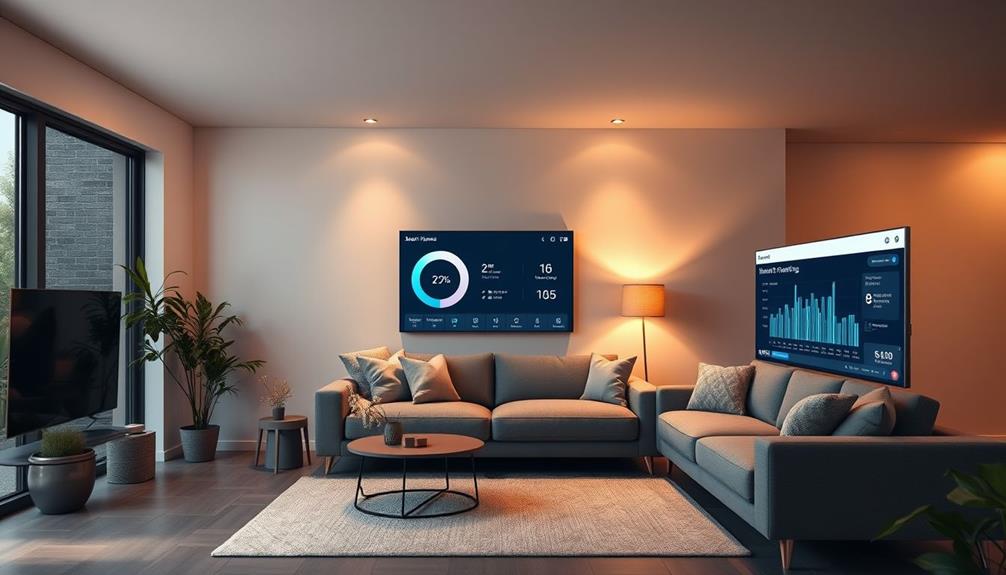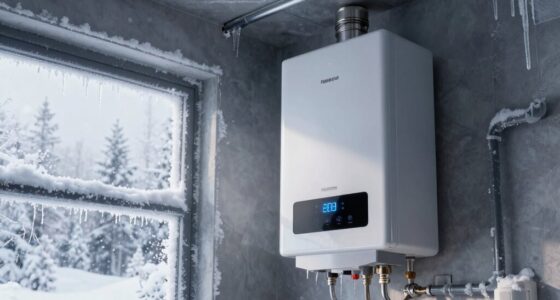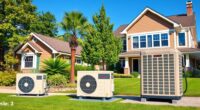
A hybrid heating system combines a heat pump with a traditional furnace, giving you flexible, energy-efficient heating tailored to outdoor temperatures. During milder weather, the heat pump handles most warmth by drawing from outside air, saving you money and reducing your environmental impact. When it gets very cold, the furnace kicks in to guarantee consistent comfort. Curious how this smart system adjusts to your needs? Keep exploring to discover all the benefits.
Key Takeaways
- Hybrid heating systems combine heat pumps and traditional furnaces for efficient, reliable warmth adaptable to outdoor temperatures.
- They automatically switch between heat sources to optimize energy use and reduce costs.
- Suitable for regions with fluctuating weather, ensuring consistent indoor comfort year-round.
- These systems enhance sustainability by lowering energy bills and decreasing carbon emissions.
- Proper installation and potential incentives make hybrid systems a cost-effective, long-term heating solution.
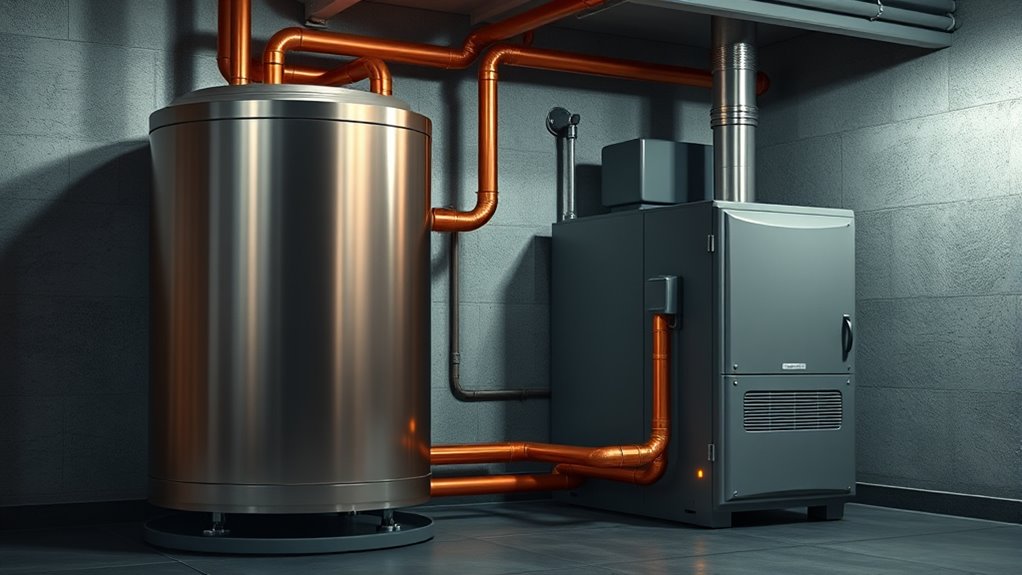
Hybrid heating systems combine different energy sources to enhance comfort and efficiency in your home. By integrating a heat pump with a traditional furnace, these systems adapt to changing weather conditions, providing reliable warmth while potentially reducing your energy bills. The core idea is to use the most efficient heating method available at any given time, switching seamlessly between the heat pump and the furnace. During milder weather, the heat pump handles most of the heating, drawing warmth from the outside air, which uses less electricity and helps you save on energy costs. When temperatures drop considerably, the furnace kicks in to ensure your home stays warm and comfortable, preventing any cold spots or discomfort. Additionally, some hybrid systems incorporate renewable energy technologies, further increasing their sustainability profile. One of the main advantages of a hybrid system is its focus on energy efficiency. Since the heat pump operates efficiently in moderate temperatures, you’ll notice lower energy consumption compared to traditional heating systems that rely solely on a furnace. This can lead to noticeable savings on your utility bills over time. Additionally, because the system intelligently switches between sources based on outdoor conditions, you maximize energy efficiency without sacrificing comfort. This adaptability not only cuts costs but also reduces your environmental impact by decreasing your carbon footprint. However, you should consider the installation costs associated with hybrid heating systems. Initially, setting up a hybrid system can be more expensive than installing a standalone furnace or heat pump. The costs include purchasing two different units, as well as the complexity of integrating them into your existing ductwork and control systems. While these upfront expenses can be higher, the long-term savings on energy bills and increased comfort often justify the investment. It’s also worth noting that some regions and utility programs offer rebates or incentives for installing energy-efficient systems like hybrids, which can help offset installation costs. When weighing the benefits and costs of installing a hybrid heating system, think about your climate and energy goals. If you live in an area with fluctuating temperatures, a hybrid system is a smart choice because it adjusts automatically, maintaining consistent warmth with optimal efficiency. Plus, the durability and modern controls of these systems mean you’ll likely enjoy reliable performance for years to come. While the initial costs might seem steep, the combination of energy savings, improved comfort, and environmental benefits makes hybrid heating a compelling option for many homeowners seeking an innovative and efficient heating solution.

Jackery Solar Generator 1000 v2 and 200W Solar Panel,1070Wh,1500W AC
- Powerful AC Output: 1500W continuous, 3000W surge
- Lightweight & Portable: 23.8 lbs with foldable handle
- Fast Charging: 0-100% in 1 hour via app
As an affiliate, we earn on qualifying purchases.
Frequently Asked Questions
How Do Hybrid Systems Impact Monthly Energy Bills?
Hybrid systems lower your monthly energy bills by boosting energy efficiency and delivering significant cost savings. When temperatures are mild, the heat pump handles heating efficiently, using less energy. During colder days, the furnace kicks in, ensuring warmth without overworking the heat pump. This seamless switch saves you money, reduces energy consumption, and keeps your home comfortable year-round, making hybrid systems an economical choice for heating.
Are Hybrid Heating Systems Suitable for All Climate Zones?
Hybrid heating systems are suitable for most climate zones because they offer great climate adaptability, switching efficiently between heat pumps and furnaces. However, you should consider installation complexity, as integrating both systems requires professional setup and space. In colder climates, the furnace supports the heat pump’s limitations, making the system more effective. Overall, their flexibility makes them a smart choice for diverse climates, but proper installation is essential for peak performance.
What Maintenance Is Required for Combined Heat Pump and Furnace Systems?
You need to perform regular maintenance on your hybrid system, balancing the heat pump and furnace. Keep an eye on system calibration to guarantee efficiency and schedule filter replacements to maintain air quality. While the furnace requires annual inspections, the heat pump benefits from periodic checks of refrigerant levels. This upkeep ensures both components work seamlessly, saving energy and extending your system’s lifespan.
How Long Do Hybrid Heating Systems Typically Last?
Your hybrid heating system typically lasts between 15 to 20 years, depending on usage and maintenance. With proper care, you can enhance its durability expectations and extend its lifespan. Regularly servicing both the heat pump and furnace helps prevent early wear and tear, ensuring your system operates efficiently for years to come. Keep an eye on performance and address issues promptly to maximize the system’s longevity.
Can Hybrid Systems Be Integrated With Smart Home Technology?
Imagine your home as a symphony, where every instrument plays in harmony. Yes, hybrid systems can be integrated with smart home technology, turning your heating into a conductor’s baton. With smart home integration and automation compatibility, you can control your hybrid heating system remotely, optimize energy use, and enjoy seamless comfort. This smart coordination guarantees your heating and cooling work together effortlessly, like a well-conducted orchestra.

DELLA Econo Series 23000 BTU Mini Split Air Conditioner 17 SEER2, 230V Cools up to 1500 Sq. Ft, Works with Alexa and Wifi, Heater Ductless Inverter System with Heat Pump,16.4ft Installation Kit
- Energy Efficient Cooling: 17 SEER2 inverter heat pump system
- Large Coverage Area: Cools and heats up to 1500 sq. ft.
- Works in Cold Temperatures: Operates down to 5°F (-15°C)
As an affiliate, we earn on qualifying purchases.
Conclusion
Hybrid heating systems are a smart way to boost efficiency and comfort in your home. By combining heat pumps and furnaces, you can save up to 30% on energy bills, making it a cost-effective choice. With this system, you’ll enjoy reliable warmth even in the coldest weather. Embrace the future of heating technology and experience the perfect balance of savings and comfort—it’s a decision you’ll appreciate every winter.

ECO-WORTHY Powermega 48V 314Ah(2 Pack) LiFePO4 Energy Storage System with Liber 10KP 10kW Hybrid Inverter, Active Balancing BMS, Battery Built-in Bluetooth&WiFi, Communication for Off-Grid&Home Backup
- Home Backup Capacity: 30kWh+ energy storage with inverter
- Communication & Monitoring: WiFi, Bluetooth, RS485, CAN, RS232
- Real-Time System Access: LCD display for voltage, SOC, cycles
As an affiliate, we earn on qualifying purchases.

Renogy Inverter P2 3000W, 12V to 110V Pure Sine Wave Solar Car Power Inverter, DC to AC Converter with 16.4FT Remote Control for RV, Truck, Camping, Home Backup, Outdoor, Emergency, Off-Grid Living
- Power Output: 1000W continuous, 2000W surge
- Pure Sine Wave: Provides grid-like quality AC power
- Electronics Protection: Over-voltage, under-voltage, overload, over-temperature protection
As an affiliate, we earn on qualifying purchases.