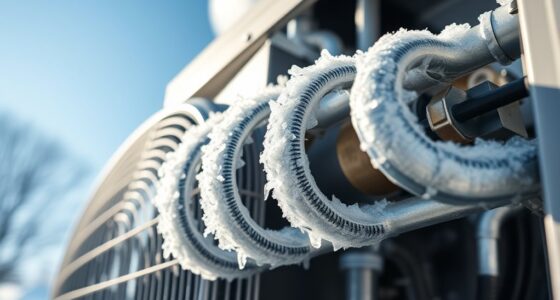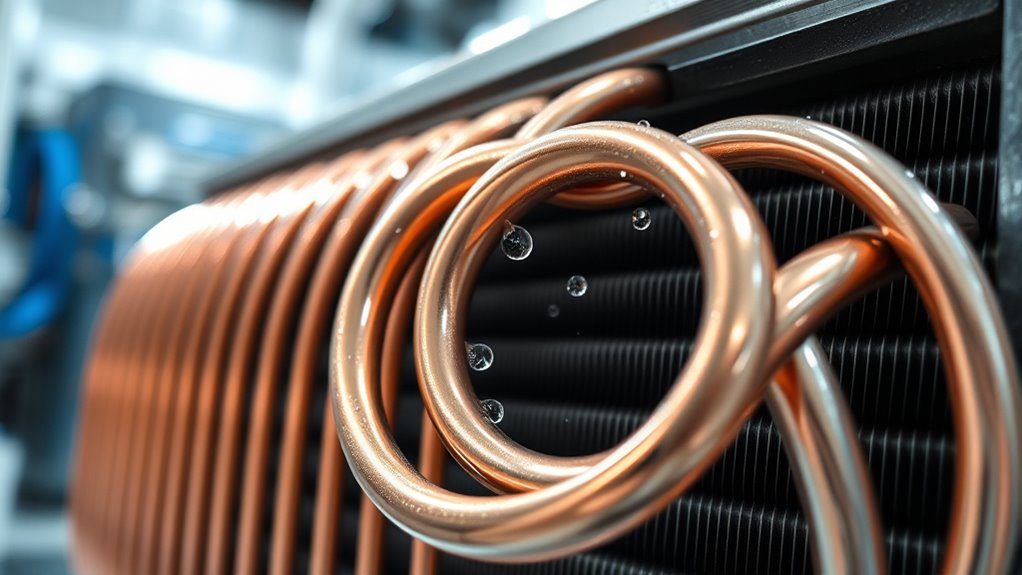

Heat exchangers in the refrigerant cycle transfer heat efficiently between the refrigerant and surrounding fluids, essential for system performance. They include components like evaporators and condensers that absorb and reject heat, ensuring proper cooling or heating. Their design—finned tubes, materials like copper or aluminum, and flow arrangements—affects effectiveness. Proper maintenance and optimized design minimize energy loss. If you keep exploring, you’ll uncover how these elements work together to keep your system running smoothly.

Get backup power and energy gear delivered free with Prime
- Fast, free delivery on millions of items
- Prime Video, Amazon Music and more included
- Member-only deals all year
Key Takeaways
- Heat exchangers enable heat transfer between refrigerant and surrounding fluids, essential for evaporator and condenser operation.
- Finned-tube designs and high-conductivity materials like copper or aluminum enhance heat exchange efficiency.
- Counter-flow configurations maximize temperature differences, improving heat transfer effectiveness.
- Regular cleaning and maintenance prevent fouling, ensuring optimal heat exchanger performance and system efficiency.
- Proper flow rate, surface area, and airflow management are critical for effective refrigerant heat absorption and rejection.
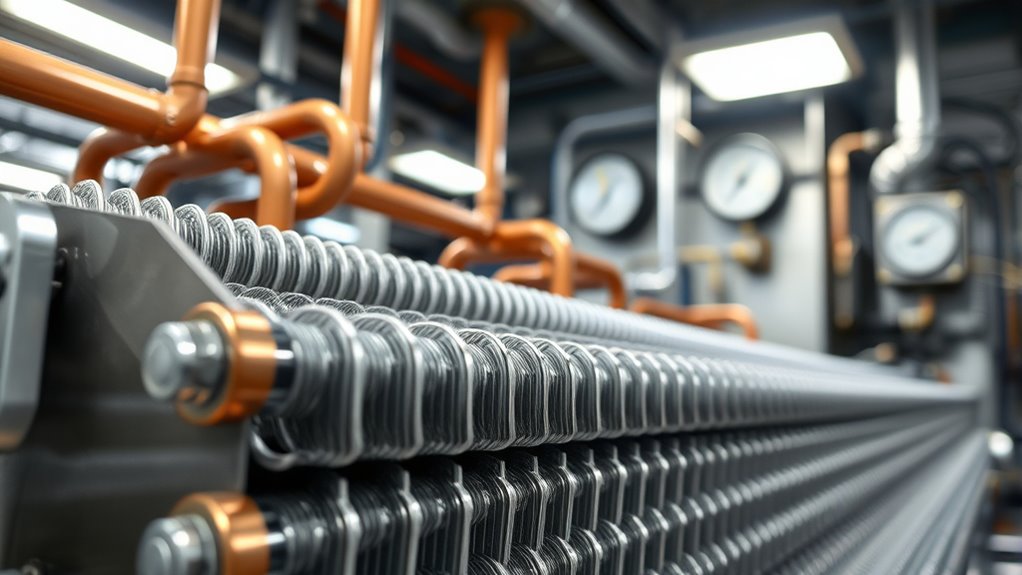
Heat exchangers are essential components in a refrigerant cycle because they facilitate the transfer of heat between different fluids, enabling efficient cooling or heating. When you understand how they operate, you’ll see how critical their design is for overall system performance. The evaporator, for example, relies heavily on maintaining high evaporator efficiency to ensure the refrigerant absorbs heat effectively from the surrounding environment. If the evaporator isn’t functioning at its best, less heat gets transferred, which decreases cooling capacity and can cause the compressor to work harder, leading to increased energy consumption and wear. To maximize evaporator efficiency, engineers focus on refining surface area, ensuring proper airflow, and reducing fouling or dirt buildup that hampers heat transfer. Additionally, proper system monitoring can help detect performance issues early and optimize operation.
Similarly, the condenser‘s performance plays a pivotal role in the refrigerant cycle. The condenser’s job is to reject heat from the refrigerant to the outside air or water, condensing it from a high-pressure vapor into a liquid. If the condenser isn’t performing well—due to fouling, insufficient airflow, or improper refrigerant charge—then the entire cycle suffers. Poor condenser performance results in higher condensing temperatures, which reduce the system’s efficiency and increase energy costs. Consequently, designing condensers with adequate surface area, smooth fins, and sufficient airflow is essential for maintaining system performance. Regular maintenance to clean and inspect the condenser helps sustain its efficiency and ensures the refrigerant cycle operates smoothly.
The design of heat exchangers directly impacts both evaporator efficiency and condenser performance. For example, using finned-tube designs increases surface area, aiding heat transfer. Incorporating materials with high thermal conductivity, like copper or aluminum, enhances heat exchange rates. Additionally, the flow arrangement—whether counter-flow or parallel-flow—affects how effectively heat is transferred. Counter-flow arrangements typically provide higher efficiency because they maximize temperature differences between the fluids, boosting heat transfer rates. You should also consider the refrigerant flow rate and pressure drops, as these influence how well heat exchangers perform. Properly designed heat exchangers ensure that both the evaporator and condenser operate with minimal energy loss, improving overall system efficiency.
As an affiliate, we earn on qualifying purchases.
Frequently Asked Questions
How Do Fouling and Scaling Affect Heat Exchanger Efficiency?
Fouling and scaling reduce heat exchanger efficiency by creating insulating layers that hinder heat transfer. You can combat this by implementing fouling prevention techniques, such as regular cleaning and using appropriate materials. Scaling removal is essential to maintain peak performance, so schedule routine maintenance to prevent buildup. When you actively manage fouling and scaling, you ensure your heat exchanger operates efficiently, saving energy and extending its lifespan.
What Materials Are Best for Corrosion Resistance in Refrigerant Heat Exchangers?
Like a knight donning armor, you should choose corrosion-resistant alloys such as titanium or stainless steel for your heat exchangers. These materials resist rust and corrosion, ensuring longevity. Additionally, applying non-metallic coatings like epoxy or polymer layers adds extra protection against aggressive refrigerants. By selecting these materials, you shield your equipment from deterioration, just as a fortress withstands assault, keeping your system efficient and reliable over time.
How Does the Size of a Heat Exchanger Impact System Performance?
You’ll find that larger heat exchangers improve heat transfer efficiency by increasing surface area, which helps maximize flow rate and enhances overall system performance. However, bigger units may also add to system size and cost. Smaller exchangers might save space but could limit flow rate and reduce efficiency. Balancing size with your system’s cooling or heating needs ensures ideal performance and effective heat transfer.
What Are Common Failure Modes of Refrigerant Heat Exchangers?
When it comes to refrigerant heat exchangers, common failure modes include leaks caused by corrosion, vibration, or thermal stress. You should regularly perform pressure testing and leak detection to catch issues early. Over time, fouling or scale buildup can also impair efficiency. If ignored, these problems can lead to refrigerant loss and system breakdown—so stay vigilant to keep your system running smoothly and avoid costly repairs.
How Is Refrigerant Compatibility Determined for Heat Exchanger Materials?
You determine refrigerant compatibility by focusing on material selection and conducting compatibility testing. First, you choose materials that resist corrosion and chemical reactions with the refrigerant. Then, you perform compatibility tests, such as immersion or accelerated aging, to guarantee the materials withstand the refrigerant’s properties over time. This process helps prevent leaks, corrosion, and failure, ensuring the heat exchanger operates efficiently and reliably.
copper aluminum heat transfer plates
As an affiliate, we earn on qualifying purchases.
As an affiliate, we earn on qualifying purchases.
Conclusion
Understanding heat exchangers in the refrigerant cycle is like mastering the heartbeat of a cooling system. They seamlessly transfer heat, making your refrigeration efficient and reliable. By designing them properly, you guarantee your system runs smoothly, much like a well-oiled machine. Remember, a good heat exchanger is the backbone of effective cooling—without it, your system’s performance would be as lost as a ship without a rudder. Keep their design sharp, and your system will stay cool under pressure.
refrigerant condenser cleaning brush
As an affiliate, we earn on qualifying purchases.
As an affiliate, we earn on qualifying purchases.
As an affiliate, we earn on qualifying purchases.
Halloween Picks
halloween
As an affiliate, we earn on qualifying purchases.