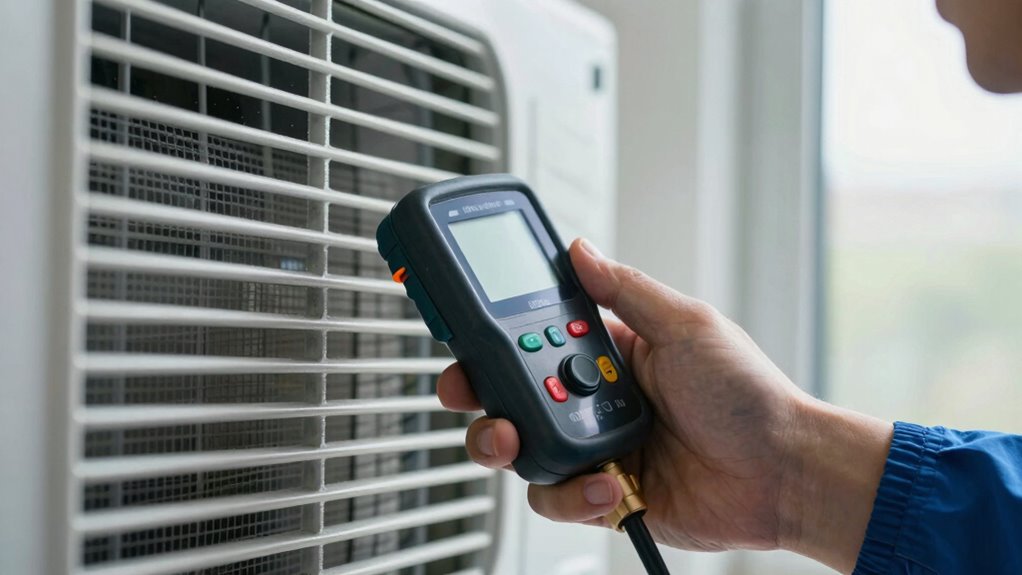
Static pressure testing can reveal hidden issues with your duct system, such as improper sizing, sharp bends, or leaks, before they cause comfort problems. It shows you how airflow is delivered and highlights areas of imbalance or restriction that could lead to uneven heating or cooling. High or low static pressure signals potential problems that might strain your system and reduce efficiency. Keep exploring to discover how addressing these issues early can keep your home comfortable and save you money.
Key Takeaways
- Detects hidden airflow imbalances that may lead to uneven heating or cooling before discomfort occurs.
- Identifies duct design flaws like undersized or poorly configured ducts causing future system inefficiencies.
- Reveals potential leaks or restrictions in the duct system that could impair airflow.
- Monitors static pressure levels to prevent strain on HVAC components and extend system lifespan.
- Provides early warning of pressure issues that could cause comfort problems, allowing proactive adjustments.

Static pressure testing often uncovers hidden comfort issues within your HVAC system that can go unnoticed during routine inspections. When you understand the results, you gain insight into how well your system is delivering air and maintaining consistent temperatures throughout your space. One essential aspect it reveals is airflow optimization. If the airflow isn’t balanced, certain areas may feel stuffy or too cool, while others remain uncomfortable. These issues often stem from problems with duct design, which can be overlooked without proper testing. By measuring static pressure, you identify whether your ducts are properly sized and configured to support efficient airflow. Poor duct design, such as overly long runs, sharp bends, or undersized ducts, causes increased static pressure, leading to uneven heating or cooling and higher energy bills. Additionally, static pressure testing can help detect airflow issues that impact overall comfort and system efficiency.
Through static pressure testing, you can detect pressure imbalances that indicate restrictions or leaks within your duct system. When static pressure is too high, it suggests that your blower motor has to work harder to push air through restricted pathways. This not only reduces comfort but also strains your HVAC components, potentially shortening their lifespan. Conversely, low static pressure might reveal leaks or disconnected sections that prevent proper airflow. Recognizing these issues early can help you avoid costly repairs or replacements later on. Moreover, understanding duct system performance** allows for targeted improvements that enhance overall HVAC efficiency. Properly diagnosing and addressing these issues can also prevent system inefficiencies that lead to higher energy consumption over time. Additionally, implementing maintenance practices** based on these findings can extend the longevity of your HVAC system and ensure consistent indoor comfort.

Manometer, Professional Air Pressure Meter, Dual-Port HVAC
- Versatile Pressure Measurement: Single or differential pressure measurement
- Suitable for HVAC and Gas Systems: Ideal for ventilation, troubleshooting, and maintenance
- Durable Construction: Made of impact-resistant ABS material
As an affiliate, we earn on qualifying purchases.
As an affiliate, we earn on qualifying purchases.
Frequently Asked Questions
How Often Should Static Pressure Testing Be Performed?
You should perform static pressure testing at least once a year to guarantee ideal airflow and equipment calibration. Regular testing helps identify potential issues early, preventing comfort problems and energy inefficiencies. If your system experiences changes, like new installations or airflow disruptions, consider testing more frequently. Consistent static pressure checks allow you to maintain proper airflow, extend equipment lifespan, and keep your indoor environment comfortable and efficient.
What Tools Are Used for Static Pressure Testing?
You use tools like manometers and airflow measurement devices for static pressure testing. These tools help with system diagnostics, revealing airflow imbalances that might seem minor but can lead to comfort issues later. When you monitor static pressure regularly, you can catch potential problems early, avoiding costly repairs. It’s a coincidence — the right tools and timely testing work together to keep your system running smoothly, ensuring comfort and efficiency.
Can Static Pressure Testing Identify Duct Leaks?
Yes, static pressure testing can identify duct leaks by measuring pressure differences within your duct system. When leaks exist, duct integrity is compromised, causing uneven airflow and reduced efficiency. By pinpointing areas with pressure drops, you can address leaks early, ensuring proper airflow balance. This proactive step helps prevent comfort issues, improves energy efficiency, and keeps your HVAC system running smoothly before noticeable problems arise.
Is Static Pressure Testing Suitable for Residential Systems?
Think of static pressure testing as a health check for your home’s breathing system. It’s perfectly suited for residential systems, helping you spot leaks that drain energy and compromise indoor air quality. With accurate duct sealing, you prevent drafts and improve airflow, creating a cozy, healthy environment. This proactive step keeps your home comfortable and guarantees your indoor air quality stays high, all before comfort problems even have a chance to arise.
How Does Static Pressure Impact Energy Efficiency?
Static pressure affects your system’s energy efficiency by impacting airflow enhancement and system balancing. When static pressure is too high, your HVAC has to work harder, wasting energy and increasing costs. Proper static pressure testing helps identify these issues early, allowing you to fine-tune airflow and balance your system. This guarantees peak performance, reduces energy consumption, and keeps your home comfortable without unnecessary strain on your equipment.

SENSYX HVAC Refrigerant and Combustible Gas Leak Detector, Rechargeable
- Rechargeable Lithium Battery: Cordless operation with USB-C charging
- Sensitive Gas Leak Detection: Japan-made heat dioxide semiconductor sensor
- Adjustable Sensitivity: High/Low sensitivity levels
As an affiliate, we earn on qualifying purchases.
As an affiliate, we earn on qualifying purchases.
Conclusion
By conducting static pressure testing early, you can spot potential comfort issues before they become as troublesome as a Victorian’s unheated parlor. Think of it as your own secret weapon—like having a modern-day wizard’s crystal ball—giving you the foresight to tweak your HVAC system. Don’t wait until your home’s comfort is as unpredictable as a foggy London morning; act now, and keep your space cozy and efficient from the get-go.

Brilluxa Digital Anemometer, Handheld Wind Meter and Airflow Tester 866B-WM, Portable Air Speed Gauge for HVAC Vent Testing, Outdoor Wind Measurement and Air Volume Inspection
- Digital Wind Measurement: Measures wind speed and temperature accurately
- Backlit LCD Display: Easy to read in low light conditions
- Maximum, Minimum, Average Functions: Tracks and compares airflow data
As an affiliate, we earn on qualifying purchases.
As an affiliate, we earn on qualifying purchases.

Teslong Articulating Borescope for Mechanic Automotive HVAC Wall Inspection
- Easy Maneuverability: Flexible, two-way articulating probe for tight spaces
- High-Quality Display: 4.5-inch IPS LCD screen with vivid visuals
- Versatile Inspection: 5FT semi-rigid gooseneck cable for precision
As an affiliate, we earn on qualifying purchases.
As an affiliate, we earn on qualifying purchases.