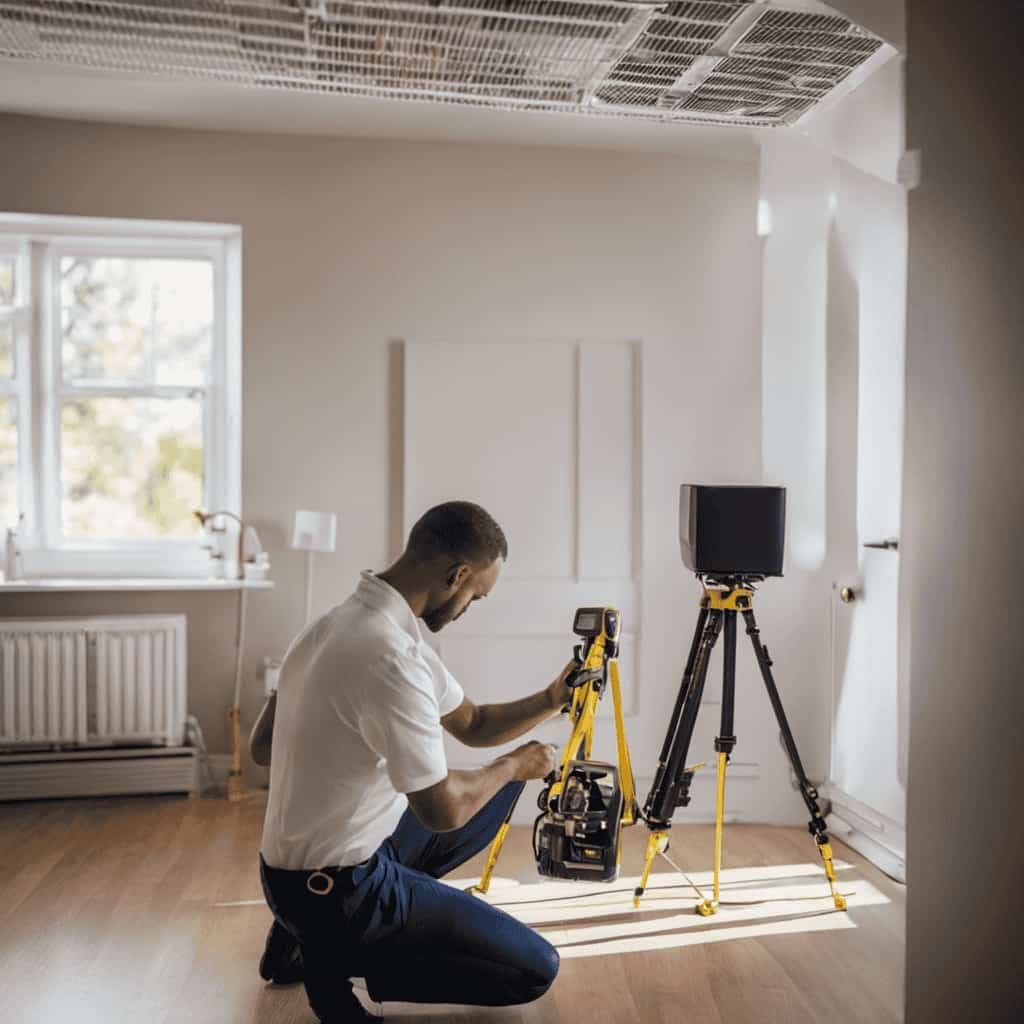
Many believe that bigger equipment heats or cools faster, but this is a myth that leads to oversized systems. You might think larger units save time, but they actually waste energy, cause frequent cycling, and wear out faster. Proper load calculations guarantee you choose equipment that fits your needs, improving efficiency and lifespan. Keep exploring, and you’ll discover how avoiding this myth can save you money and improve comfort.
Key Takeaways
- Many believe larger equipment cools or heats faster, but proper load calculations ensure correct sizing for efficiency.
- The myth that skipping load calculations saves time leads to installing oversized systems unnecessarily.
- Oversized equipment causes short cycling, reducing efficiency and increasing wear and tear.
- Proper load calculations prevent installing equipment that is larger than needed, avoiding higher energy costs.
- Underestimating the importance of load calculations results in long-term costs due to increased maintenance and reduced system lifespan.
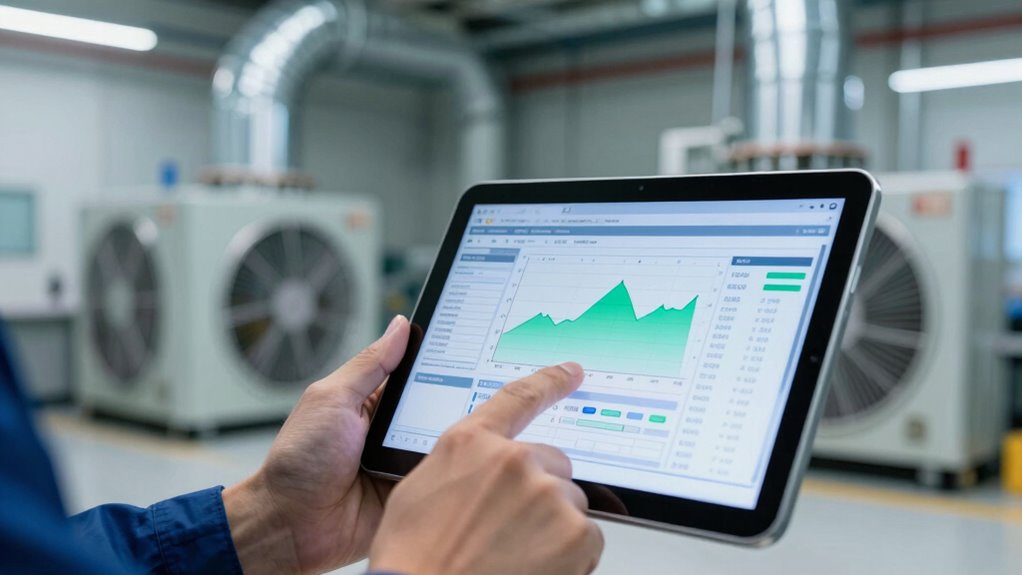
Have you ever been told that load calculations are unnecessary or overly complicated? Many believe that skipping this step saves time and effort, but in reality, it can lead to costly mistakes. When load calculations are overlooked or ignored, you risk installing oversized equipment that doesn’t match your specific needs. This mismatch can result in inefficient operation and increased wear on your system. Proper load calculation is crucial for system efficiency and ensures your equipment is correctly sized from the start. This isn’t just about fitting a bigger unit into your space; it’s about understanding how the right-sized equipment can improve energy efficiency and extend the lifespan of your system. Without accurate calculations, you might end up with a system that consumes more energy than necessary, driving up your utility bills and reducing overall efficiency.
Oversized equipment might seem like a good idea at first because it promises quick cooling or heating, but the truth is, it often works against you. When a system is too large, it cycles on and off more frequently, a process called short cycling. This constant switching puts unnecessary stress on components, leading to faster wear and tear. As a result, your equipment’s lifespan shortens, and you face higher maintenance costs and more frequent replacements. Proper load calculations ensure your system is designed to meet your actual needs, which means it operates more smoothly over time and lasts longer. Additionally, accurate load calculation helps optimize the size of your system, ensuring it operates at peak efficiency and prevents unnecessary strain on system components.
Energy efficiency is another critical factor that hinges on accurate load calculations. A correctly sized system operates at ideal capacity, using only the energy necessary to maintain comfortable conditions. Oversized units waste energy because they run at full capacity when they don’t need to, wasting fuel or electricity. Conversely, undersized units struggle to keep up, constantly running at full tilt and consuming more energy in the process. By performing precise load calculations, you ensure your system is neither too big nor too small, striking the perfect balance that minimizes energy waste and maximizes efficiency. Understanding the importance of thermal load helps you make informed decisions that lead to better system performance and energy savings.
Ultimately, skipping load calculations might seem like a shortcut, but it’s a false economy. It can lead to oversized equipment that wastes energy and wears out faster, costing you more in the long run. You’ll find that investing the time upfront to do proper load calculations pays off through improved energy efficiency, lower utility bills, and a longer-lasting system. When you understand the importance of accurate load sizing, you’re making a smart choice that benefits your comfort, your wallet, and your equipment’s longevity. Don’t fall for the myth that load calculations are unnecessary—embrace them as a crucial step toward peak system performance.

jiouxip Valve Core Remover Installer Tool and HVAC Service Wrench Set with Hex Bit Adapters, Dual Size SAE 1/4 to 5/16 Port, 5/16'', 3/8'' Refrigeration Service Wrench, 10 Valve Core
Simple to Use: Dual size SAE 1/4'' and 5/16'' port valve core removal set allows for quick and…
As an affiliate, we earn on qualifying purchases.
As an affiliate, we earn on qualifying purchases.
Frequently Asked Questions
How Do Oversized Units Affect Energy Bills Long-Term?
Oversized units increase your energy bills over the long term because they’re less energy efficient. They cycle on and off more frequently, wasting power and wearing out faster. This leads to higher operational costs and reduced comfort. By choosing correctly sized equipment based on proper load calculations, you improve energy efficiency and save money. Oversized units may seem like a quick fix, but they cost you more in the long run.
What Are Common Signs of an Oversized HVAC System?
An oversized HVAC system is like a bull in a china shop—clunky and disruptive. You’ll notice frequent cycling, which hampers system efficiency and drives up energy costs. Noise levels will spike, making your space feel louder than it should be. Additionally, uneven cooling or heating and high humidity are signs your system is working too hard and not properly balancing comfort. Addressing these issues keeps your system running smoothly and efficiently.
Can Load Calculations Be Inaccurate Due to Outdated Data?
Yes, load calculations can be inaccurate due to outdated data. If your data isn’t current, the load accuracy suffers, leading to misjudgments about your HVAC needs. This outdated information might ignore recent changes in your home’s insulation, windows, or occupancy patterns. As a result, you risk installing an oversized or undersized system, which can reduce efficiency, increase costs, and cause comfort issues. Regularly updating data guarantees your load calculations remain accurate.
How Often Should Load Calculations Be Reviewed or Updated?
You should review and update load calculations at least every 1 to 3 years, depending on your system’s maintenance frequency and any building changes. Regular updates guarantee calculation accuracy, preventing oversized or undersized equipment. If your building undergoes renovations or significant occupancy changes, it’s wise to reassess sooner. Consistent reviews help maintain efficiency, reduce energy costs, and extend equipment lifespan by keeping your load calculations current.
Do Different Climates Require Different Sizing Considerations?
Climate-specific design directly impacts sizing, demanding you consider regional energy considerations. Hotter, humid climates require systems to handle increased cooling loads, while colder regions focus on heating capacity. You must tailor your equipment to match these climate nuances, avoiding oversizing or undersizing. Recognizing regional differences guarantees your system operates efficiently, saves energy, and maintains comfort, emphasizing precise, climate-conscious calculations in your sizing strategy.

16,000 BTU Portable Air Conditioners for Rooms up to 800 Sq Ft, Drainage-Free Cooling AC Unit with Smart App & Remote, Quiet Portable AC Unit with Dehumidifier & Fan, Sleep Mode for Home Office
Fast Powerful Cooling with Drainage-Free Technology: 16000 BTU high-efficiency portable air conditioner delivers fast powerful cooling, cooling areas…
As an affiliate, we earn on qualifying purchases.
As an affiliate, we earn on qualifying purchases.
Conclusion
Don’t let this myth turn your home into a fortress of overpowered equipment! Believing that bigger is always better will skyrocket your energy bills and turn your comfort into a constant battle against giant, wasteful machinery. When you rely on accurate load calculations, you’re not just saving money—you’re preventing your system from becoming a monstrous, inefficient beast. Cut through the nonsense, get the right size, and keep your home cozy without breaking the bank—or your sanity!

MEPTY 12000BTU Mini Split AC/Heating System, 19 SEER2 Energy Efficient Mini Split Air Conditioner with Heat Pump, 110V Cools Up to 750sq.ft, Ductless Inverter AC Unit with Pre-Charged Condenser
⭐Advanced Energy Saving: Advanced inverter technology with leading 19 SEER2 rating delivers superior performance through ensuring that the…
As an affiliate, we earn on qualifying purchases.
As an affiliate, we earn on qualifying purchases.

Everwell Delay on Break Timer DOB-072 0.1-10 Min 18-240V AC-DC 50/60Hz 1.5-15Amp
Delay on Break Timer DOB-072
As an affiliate, we earn on qualifying purchases.
As an affiliate, we earn on qualifying purchases.