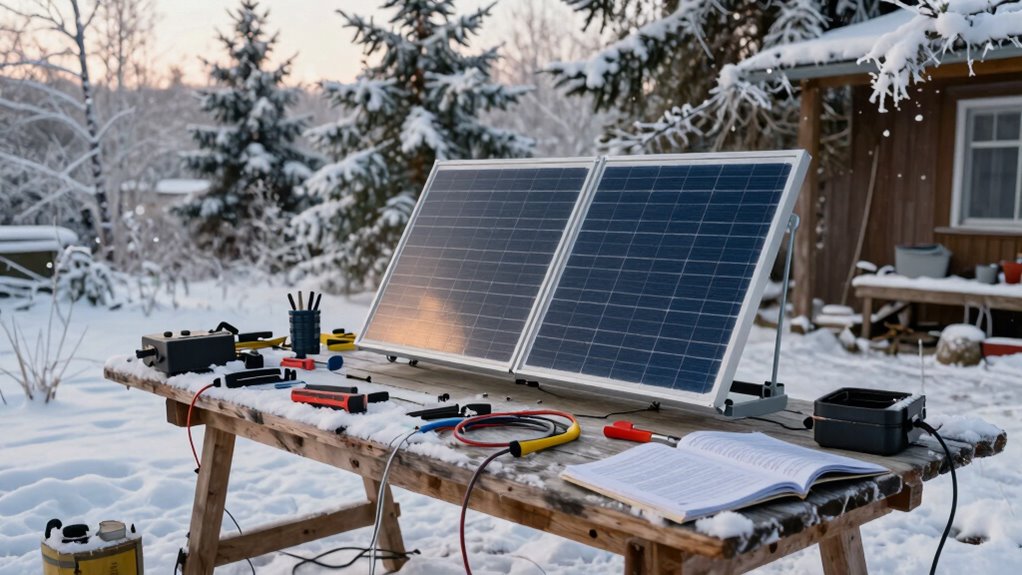

Most solar kit buyers miss how winter drastically reduces energy production. Shorter days and lower sun angles mean less sunlight hits your panels, while cold temperatures impair their efficiency. Snow and ice buildup can block sunlight and damage batteries, further lowering your system’s output. These environmental factors add up, causing unexpected power shortages just when you need reliable energy most. Stay tuned to discover how to better prepare your system for winter challenges.

Get backup power and energy gear delivered free with Prime
- Fast, free delivery on millions of items
- Prime Video, Amazon Music and more included
- Member-only deals all year
Key Takeaways
- Reduced sunlight hours and lower sun angles significantly decrease solar power generation in winter.
- Cold temperatures impair solar panel efficiency and internal components, lowering energy output.
- Battery capacity diminishes in cold weather, limiting stored energy during winter months.
- Snow and ice buildup physically block panels and batteries, further reducing energy production.
- Many buyers underestimate winter’s impact, leading to unexpected power shortages and shortages.
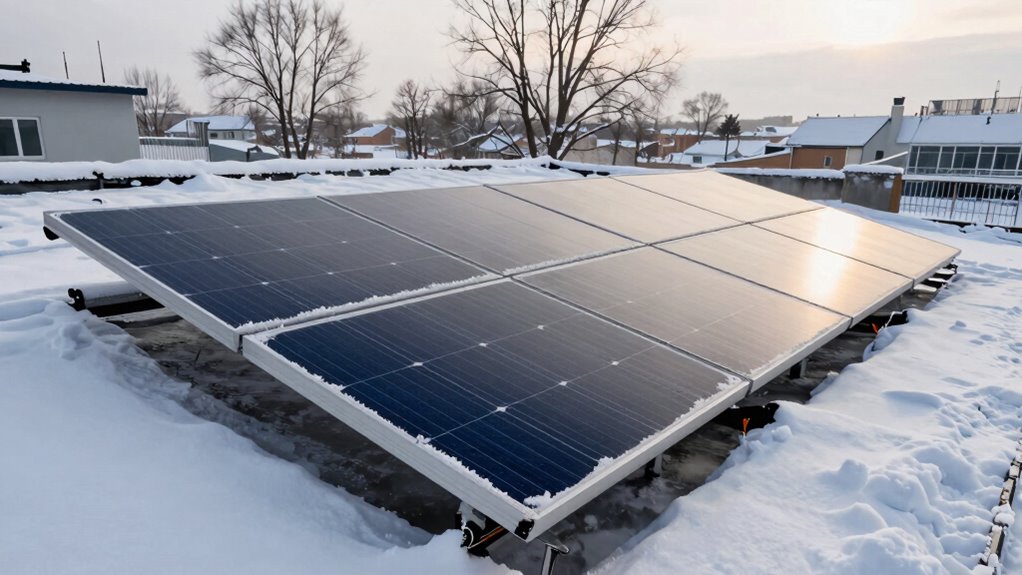
During winter, solar kits often face significant production challenges due to reduced sunlight and colder temperatures. You might assume that solar power remains reliable year-round, but winter’s lower sun angles and shorter days can dramatically decrease solar panel efficiency. As sunlight becomes less intense and days grow shorter, your solar panels generate less electricity, making it harder to meet energy demands. This reduced output can catch many buyers off guard, leading to unexpected shortages or the need for supplemental power sources during the colder months. You may have invested in a solar kit expecting steady performance, but winter’s environmental factors can undermine those expectations.
Winter reduces sunlight and lowers solar panel efficiency, often leading to unexpected power shortages.
One of the biggest issues is how colder temperatures affect solar panel efficiency. While solar panels are generally designed to perform well in various conditions, extreme cold can have a negative impact on their ability to convert sunlight into electricity. When panels get too cold, their internal components can become less efficient, reducing overall energy output. This inefficiency is compounded by the fact that the sun’s rays strike the panels at a lower angle, further diminishing their productivity. As a result, even if you have a well-sized solar kit, you might find that it’s not producing enough power to cover your needs.
Another critical factor that many overlook is battery storage limitations during winter. Your solar kit relies heavily on batteries to store excess energy generated during sunnier days, but cold weather can impair battery performance. Batteries tend to lose capacity in low temperatures, meaning they can’t hold as much charge or deliver power as efficiently as they do in warmer conditions. This limitation can cause your stored energy to deplete faster, leaving you without power during cloudy or overcast days. When combined with reduced solar panel efficiency, these battery storage limitations can create a significant gap between energy production and consumption. Additionally, battery performance can be further compromised by snow and ice buildup, which can physically block access or reduce heat transfer, worsening cold effects. To make matters worse, many batteries are not designed with optimal cold weather performance, which amplifies these issues. Recognizing the importance of solar panel efficiency and battery durability in winter conditions is crucial for maintaining a reliable energy supply.
solar panel winter weather cover
As an affiliate, we earn on qualifying purchases.
As an affiliate, we earn on qualifying purchases.
Frequently Asked Questions
How Can I Prevent Snow Buildup on My Solar Panels?
To prevent snow buildup on your solar panels, regularly perform snow removal using a soft brush or a squeegee, working gently to avoid damage. After snow melts, do panel cleaning to remove dirt and debris that can reduce efficiency. Consider installing a snow guard or heating system to minimize accumulation. Consistent maintenance guarantees your panels stay clear, maximizing energy production during winter months.
Does Temperature Affect Solar Panel Efficiency During Winter?
Yes, temperature affects your solar panel efficiency during winter. Colder temperatures can actually boost efficiency, but snow buildup and snow-induced shading cause winter energy loss. Over time, solar panel degradation may reduce output regardless of temperature, but during winter, the primary issue is snow accumulation and shading, not temperature alone. Keep panels clear of snow to minimize winter energy loss and maintain peak performance despite colder conditions.
What’s the Best Way to Store Unused Solar Kits in Winter?
To store unused solar kits in winter, start with proper battery maintenance by keeping batteries charged and in a temperature-controlled environment. If your kits are roof-mounted, carefully disconnect and cover the panels to prevent snow buildup and damage. Store the components in a dry, cool place, avoiding extreme temperatures. Regularly check and maintain the batteries and panels, ensuring they’re clean and in good condition for when you need to use them again.
Are There Specific Solar Panel Types Better for Winter Conditions?
You should opt for monocrystalline solar panels, as their high efficiency performs well in winter conditions. Look for panels with durable solar panel materials designed to withstand snow and cold temperatures. When doing a winter-specific installation, make sure panels are tilted at an angle that promotes snow runoff and maximizes sunlight exposure. These choices help maintain ideal energy production during winter months, even in challenging weather.
How Often Should I Inspect My Solar System in Winter?
You should inspect your solar system at least once every month during winter to guarantee peak performance. Follow a winter inspection schedule that includes checking for snow or ice buildup, debris, and any potential damage. Regular solar system maintenance helps you catch issues early, like shading or dirt, and keeps your panels working efficiently, even in colder months. Consistent inspections maximize energy production and extend your system’s lifespan.
solar battery heater for cold weather
As an affiliate, we earn on qualifying purchases.
As an affiliate, we earn on qualifying purchases.
Conclusion
Don’t let winter catch you off guard—your solar kit’s performance can drop more than a rollercoaster during a storm. By understanding the winter production problem, you can stay ahead of the game and keep your energy flowing smoothly, no matter how cold it gets. Remember, ignoring this issue is like missing out on enough power to light up a small city. Stay informed, stay prepared, and keep your solar system running at full throttle all winter long.
As an affiliate, we earn on qualifying purchases.
As an affiliate, we earn on qualifying purchases.
Halloween Picks
halloween
As an affiliate, we earn on qualifying purchases.