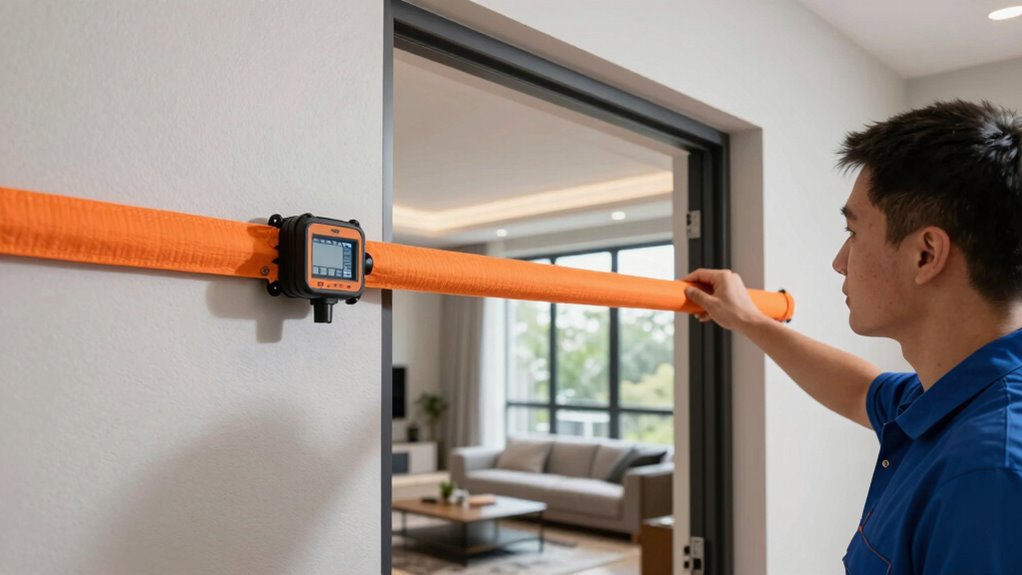
If your blower door test shows a high air leakage rate, it’s a clear sign to refocus your upgrade plan on sealing gaps and cracks around windows, doors, and penetrations. Addressing these leaks first can considerably improve energy efficiency and comfort. It prevents your other upgrades from being undermined and maximizes your investment. Continuing will help you understand how to prioritize sealing efforts effectively for the best results.
Key Takeaways
- A high ACH indicates significant air leakage, warranting immediate focus on air sealing in your upgrade plan.
- Identifying specific leakage areas from blower door data ensures targeted and effective sealing efforts.
- Lowering ACH through sealing enhances the efficiency of insulation and HVAC upgrades.
- Reducing excessive air leakage prevents undermining other energy efficiency improvements.
- Adjusting your plan based on blower door results maximizes energy savings and home comfort.
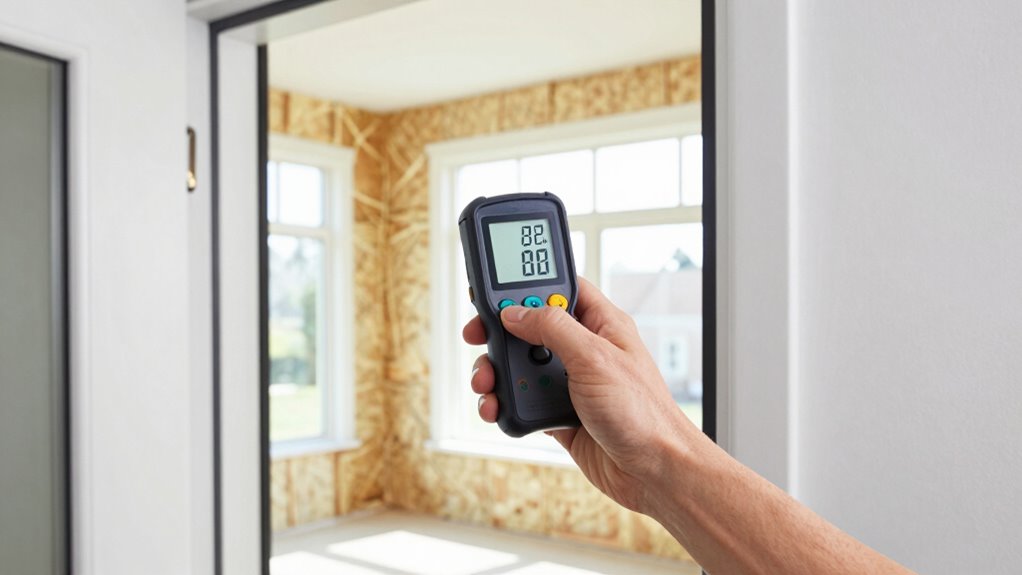
Before you move forward with your upgrade plan, it is crucial to review the blower door test results. These results reveal important details about your home’s air leakage, which directly impacts your energy efficiency. Air leakage occurs when gaps, cracks, or holes in your building envelope allow outside air to infiltrate or conditioned air to escape. If your blower door test shows high air leakage rates, it means your home isn’t sealing properly, and this inefficiency can significantly increase your heating and cooling costs.
Pay close attention to the blower door reading, usually expressed in air changes per hour (ACH) at a specific pressure. A higher ACH indicates more air leakage, meaning your home is losing conditioned air and letting in unconditioned air. This not only makes your HVAC system work harder but also leads to uneven temperatures and potential comfort issues. If your test results suggest substantial air leakage, you should consider prioritizing air sealing as a core part of your upgrade plan. Additionally, understanding your blower door results can help you target the most impactful improvements.
High ACH indicates more air leakage, increasing energy costs and comfort issues—prioritize air sealing in your upgrade plan.
Addressing air leakage is often the most cost-effective way to improve energy efficiency. Sealing leaks around windows, doors, vents, and other penetrations helps create a tighter building envelope. It can dramatically reduce drafts and improve indoor comfort, all while lowering your energy bills. Many homeowners overlook this step, but the blower door test makes it clear where to focus your efforts. Once you identify the major sources of air leakage, you can target those areas with weatherstripping, caulking, or foam sealants. Incorporating air leakage data into your planning ensures you focus on the most critical areas first.
Neglecting to address air leakage can undermine other upgrade efforts, like installing high-efficiency HVAC systems or adding insulation. Without sealing, these upgrades won’t perform as well as they should because leaks will continue to let in outside air or let conditioned air escape. A building envelope that is properly sealed maximizes the benefits of other energy improvements. By reducing air leakage first, you maximize the effectiveness of your investment, making your home more energy-efficient and comfortable. Additionally, understanding your blower door results helps you prioritize the most impactful improvements for your specific home.
air sealing weatherstripping for windows and doors
As an affiliate, we earn on qualifying purchases.
As an affiliate, we earn on qualifying purchases.
Frequently Asked Questions
How Accurate Is a Blower Door Test?
A blower door test is quite accurate when it comes to detecting leak detection and measuring air infiltration. It quantifies how much outside air enters your home through leaks, helping you pinpoint problem areas. While minor inaccuracies can occur due to weather or testing procedures, overall, it provides reliable data. You can trust the results to guide effective upgrades that improve energy efficiency and indoor comfort.
Can Blower Door Results Predict Energy Savings?
Yes, blower door results can predict energy savings because they reveal your home’s air leakage levels. By identifying leaks, you can target improvements that reduce energy loss. To guarantee accurate predictions, make sure the test is well-calibrated, as improper calibration can skew results. When you address air leakage based on these findings, you’ll likely see significant energy savings, making your upgrades more effective and cost-efficient.
What Factors Influence Blower Door Test Outcomes?
Air leakage and the integrity of your building envelope primarily influence blower door test outcomes. When your building has gaps, cracks, or poorly sealed joints, air escapes easily, resulting in higher leakage readings. Conversely, a well-sealed building envelope minimizes air leakage, lowering test results. Factors like insulation quality, window and door seals, and ventilation systems also play a role, all affecting how airtight your home truly is during the test.
How Often Should Blower Door Tests Be Conducted?
You should conduct blower door tests at least once every few years, or whenever significant changes happen to your home’s ventilation strategies or building envelope. Think of it as an essential health check for your house’s air tightness—preventing leaks from sneaking in and out. Regular testing ensures your ventilation strategies stay effective, keeps your energy bills in check, and maintains a comfortable, healthy living environment over time.
Do Blower Door Results Vary by Season?
Yes, blower door results can vary by season due to seasonal variations and weather impact. During colder months, you might see higher air leakage numbers because of increased heating demands and potential gaps in insulation. Conversely, in milder weather, results tend to be more stable. Keep in mind that weather conditions, such as wind and temperature, can influence the test outcomes, so consider testing during consistent, calm conditions for accurate results.
caulking and foam sealant for home leaks
As an affiliate, we earn on qualifying purchases.
As an affiliate, we earn on qualifying purchases.
Conclusion
Imagine your blower door test results as the key to opening a fortress—once you see those numbers, you realize your home’s leaks are like giant, invisible holes draining your energy and wallet. Fixing them isn’t just an upgrade; it’s like turning your house into a sealed vault of comfort and savings. So, don’t ignore those results—they’re your ticket to transforming your home into an impenetrable, energy-efficient fortress.

Minneapolis Blower Doors DUCT-KIT-001 Duct Blaster® System (with DG-1000)
- System Type: Series B 110V System with DG-1000
- Pressure and Flow Gauge: Includes DG-1000 gauge
- Air Flow Range: 10-1,500 CFM
As an affiliate, we earn on qualifying purchases.
As an affiliate, we earn on qualifying purchases.
energy efficiency home sealing kit
As an affiliate, we earn on qualifying purchases.
As an affiliate, we earn on qualifying purchases.