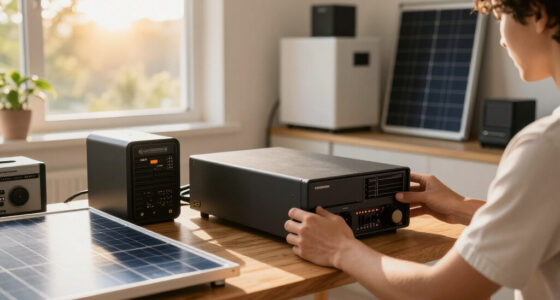

We have uncovered the key to maximizing HVAC system efficiency: heat pumps. These amazing devices will transform your perspective on saving energy.

Get backup power and energy gear delivered free with Prime
- Fast, free delivery on millions of items
- Prime Video, Amazon Music and more included
- Member-only deals all year
With their cutting-edge technology, heat pumps maximize efficiency and minimize waste. Say goodbye to high energy bills and hello to a more sustainable future.
Get ready to liberate yourself from the chains of inefficiency and embrace the power of heat pumps. It’s time to elevate your HVAC system to new heights of efficiency.
Key Takeaways
- Heat pumps offer a sustainable and energy-efficient alternative to traditional HVAC systems.
- They provide both heating and cooling capabilities in a single unit, eliminating the need for separate systems.
- Heat pumps save up to 30-40% on heating costs compared to traditional systems.
- They are environmentally friendly, reducing harm to the environment and contributing to a more sustainable future.
energy efficient heat pump for home
As an affiliate, we earn on qualifying purchases.
As an affiliate, we earn on qualifying purchases.
The Role of Heat Pumps in HVAC System Efficiency
As HVAC experts, we understand the crucial role that heat pumps play in elevating the efficiency of the overall HVAC system. Heat pumps have revolutionized the way residential HVAC systems operate, offering a more sustainable and energy-efficient alternative to traditional heating and cooling methods.

These innovative devices use advanced technology to transfer heat from one area to another, allowing them to both cool and heat your home effectively. Heat pump applications in residential HVAC systems have become increasingly popular due to their ability to provide both heating and cooling capabilities in a single unit, eliminating the need for separate systems. This not only saves space but also reduces energy consumption.
With ongoing advancements in heat pump technology, we can expect further improvements in energy efficiency, leading to even greater cost savings and reduced environmental impact.
dual function heat pump HVAC system
As an affiliate, we earn on qualifying purchases.
As an affiliate, we earn on qualifying purchases.
Benefits of Heat Pumps for High Efficiency HVAC Systems
We, as HVAC experts, can highlight the benefits of heat pumps for high efficiency HVAC systems. Heat pumps provide several advantages over traditional HVAC systems, including significant cost savings and improved energy efficiency.
One of the main benefits of heat pumps is their ability to transfer heat from one place to another, rather than generating heat through combustion or electrical resistance. This makes them more energy efficient and environmentally friendly. Heat pumps can save up to 30-40% on heating costs compared to traditional systems, and they can also provide cooling in the summer months.

To help you understand the advantages of heat pumps, here is a table comparing heat pumps to traditional HVAC systems:
| Heat Pumps | Traditional HVAC Systems |
|---|---|
| Higher energy efficiency | Lower energy efficiency |
| Lower operating costs | Higher operating costs |
| Environmentally friendly | More harmful to the environment |
| Can provide both heating and cooling | Separate systems required for heating and cooling |
| Longer lifespan | Shorter lifespan |
As you can see, heat pumps offer a range of benefits that make them a superior choice for high efficiency HVAC systems. The cost savings from heat pump technology, along with their energy efficiency, make them a wise investment for homeowners and businesses alike.
best heat pump for heating and cooling
As an affiliate, we earn on qualifying purchases.
As an affiliate, we earn on qualifying purchases.
Maximizing Energy Savings With Heat Pump Technology
To achieve maximum energy savings with heat pump technology, we must optimize system performance through regular maintenance and proper usage.
One way to maximize energy savings is by improving insulation in our homes. By ensuring that our homes are well-insulated, we can prevent heat loss or gain, allowing our heat pumps to work more efficiently.
Another way to increase energy savings is by reducing carbon emissions. Heat pumps are known for their low carbon footprint as they transfer heat rather than generate it, resulting in reduced greenhouse gas emissions.
sustainable residential heat pump
As an affiliate, we earn on qualifying purchases.
As an affiliate, we earn on qualifying purchases.
Key Factors for Optimizing HVAC Efficiency With Heat Pumps
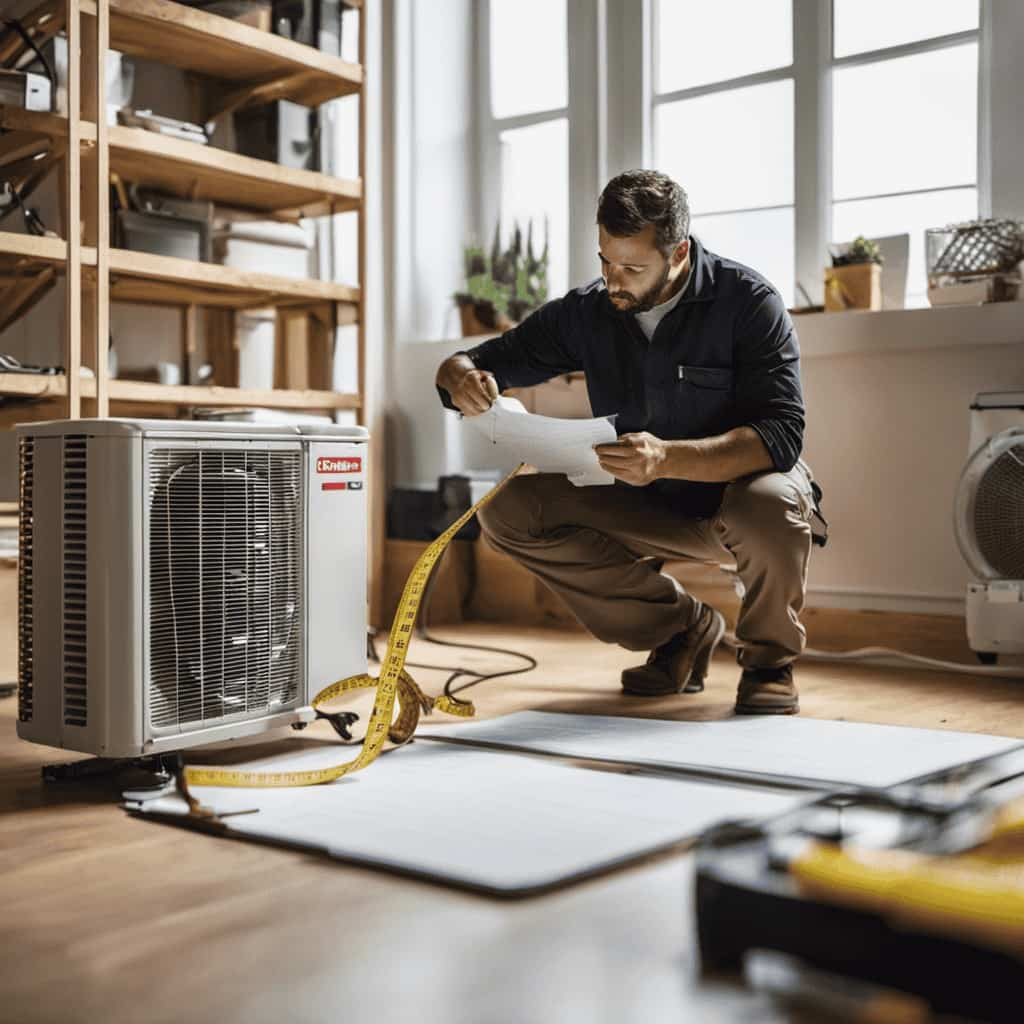
For optimal HVAC efficiency with heat pumps, we need to focus on key factors such as proper sizing, regular maintenance, and efficient air distribution. When it comes to heat pump installation, it’s crucial to ensure that the unit is sized correctly for the space it will be servicing. A unit that’s too small will struggle to meet the heating and cooling demands, while an oversized unit will cycle on and off frequently, leading to energy waste.
Regular maintenance is also essential to keep the system running smoothly and efficiently. This includes cleaning or replacing filters, checking refrigerant levels, and inspecting the ductwork for any leaks or obstructions.
Finally, efficient air distribution is vital for maximizing the heat pump’s performance. Properly sealed and insulated ductwork will prevent air leakage and ensure that conditioned air reaches all areas of the building.

By focusing on these key factors, we can optimize the HVAC efficiency with heat pumps.
Transitioning into the next section about ‘heat pumps: the future of energy-efficient HVAC systems,’ it’s clear that heat pump technology holds great promise in revolutionizing the way we heat and cool our buildings.
Heat Pumps: The Future of Energy-Efficient HVAC Systems
The future of energy-efficient HVAC systems lies in the widespread adoption and advancement of heat pumps. Heat pump technology advancements are revolutionizing the way we cool and heat our homes and buildings.
These innovative systems utilize the principles of thermodynamics to transfer heat from one location to another, providing both heating and cooling capabilities. Heat pumps are highly efficient, as they can deliver up to three times more heating or cooling energy than the electrical energy they consume.

By harnessing renewable energy sources, such as solar power or geothermal energy, heat pumps can further reduce their carbon footprint and contribute to a more sustainable future. The impact of heat pumps on carbon footprint reduction can’t be overstated, as they offer an environmentally friendly alternative to traditional HVAC systems, significantly reducing greenhouse gas emissions and promoting energy conservation.
With continuous research and development, heat pumps will continue to evolve, providing even greater energy efficiency and further reducing our reliance on fossil fuels.
Frequently Asked Questions
What Is the Average Lifespan of a Heat Pump?
The average lifespan of a heat pump depends on various factors, including maintenance requirements. Regular maintenance and proper care can significantly extend the lifespan of a heat pump, ensuring optimal performance and efficiency.
Are Heat Pumps Suitable for All Climates?
Heat pumps are an energy-efficient option for all climates, although they may not perform as efficiently in extreme temperatures. They help reduce environmental impact by using renewable energy sources, making them a viable choice.
How Much Noise Do Heat Pumps Typically Make?
Heat pumps typically produce moderate noise levels, which can vary depending on the specific model and installation. It is important to consider noise reduction features and proper maintenance to minimize any potential disturbances.
Can a Heat Pump Be Used as a Standalone Heating or Cooling System?
Yes, a heat pump can be used as a standalone heating or cooling system. It is a versatile and energy-efficient solution for various applications, providing both heating and cooling capabilities in a single system.
Are There Any Government Incentives or Tax Credits Available for Installing a Heat Pump?
There are government incentives and tax credits available for installing a heat pump. These incentives and credits can help offset the cost of installation and make it more affordable for homeowners.
Conclusion
In conclusion, heat pumps play a crucial role in elevating the efficiency of HVAC systems. With their ability to transfer heat rather than generate it, heat pumps offer numerous benefits such as energy savings and improved indoor air quality.

Interestingly, studies have shown that heat pumps can reduce energy consumption by up to 50% compared to traditional HVAC systems. This statistic highlights the significant impact heat pumps can have in creating a more sustainable and cost-effective future for energy-efficient HVAC systems.
Fall Picks
fall essentials
As an affiliate, we earn on qualifying purchases.