TL;DR

Get backup power and energy gear delivered free with Prime
- Fast, free delivery on millions of items
- Prime Video, Amazon Music and more included
- Member-only deals all year
Rep. Rob Menendez introduced the Socket Full of Sunshine Act, the first federal bill aimed at enabling plug-in balcony solar systems. It would direct state public utility commissions to consider rules for the technology and establish a program to help lower-income households afford systems. The bill’s prospects, funding and implementation details are not yet clear.
U.S. Rep. Rob Menendez, a New Jersey Democrat, introduced the Socket Full of Sunshine Act on Monday, the first federal bill aimed at enabling Americans to use plug-in solar panels. The proposal would require state public utility commissions to consider rules for the systems and create a program to help lower-income households afford them.
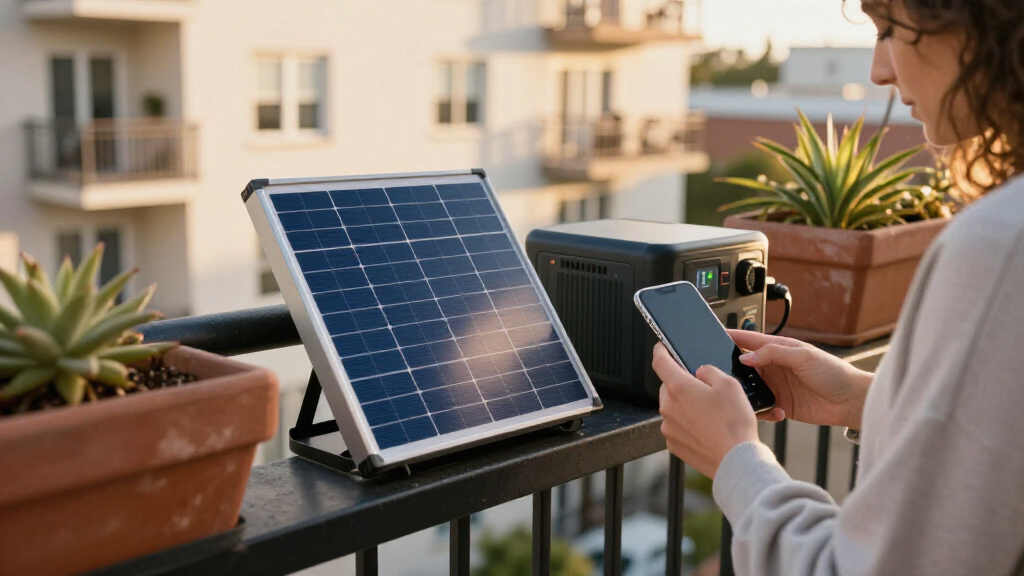
The legislation focuses on small solar systems that connect to a regular 120-volt wall outlet, rather than larger rooftop installations. A typical setup uses one to four panels on a balcony or in a backyard. When sunlight is available, the panels generate electricity for a home, which can offset some power drawn from the utility grid.
The bill would require all state public utility commissions to consider rules that would enable the technology. It would also establish an assistance program for lower-income households. The report does not describe a specific national safety standard or say that the bill would automatically legalize systems nationwide; its stated approach is to have state regulators consider rules.
Menendez said the measure is intended to address electricity costs and barriers to using the systems. In a statement, he said plug-in solar could help families cut bills, while describing existing rules and fees as obstacles. Those are the sponsor’s reasons for the legislation, not a finding in the source report about how much a household would save.
How Federal Rules Could Affect Households
The proposal could give state regulators a federal prompt to address a technology that is currently governed by a patchwork of state rules. For households without a suitable roof, including many renters, a small system may offer another way to generate some of their own electricity. That makes the bill relevant beyond homeowners considering conventional rooftop solar.
The potential household savings vary by system, sunlight, electricity prices and local rules. The report says plug-in solar can, in some cases, have a payback period as short as 2.5 years, compared with more than 10 years for a larger rooftop array, and may save households hundreds of dollars annually after payback. Those figures are not guarantees for every installation. The bill’s proposed assistance program could also matter for households that cannot afford upfront equipment costs, though details of that program were not provided.
Federal legislation could bring more attention to common safety and regulatory questions, but the proposal itself does not establish that systems are currently authorized everywhere or that a uniform technical standard is in place. Its impact depends on the bill’s progress and on decisions by state regulators.
As an affiliate, we earn on qualifying purchases.
States Set Different Plug-In Solar Rules
The United States does not have a single standard allowing the safe use of plug-in solar, according to the source report. Instead, states have taken different approaches. Utah passed the first state law to legalize the technology last year. This year, 10 additional states, including California, Colorado, Maryland and Virginia, passed laws, according to the report, and are awaiting plug-in solar kits certified as safe by a nationally recognized testing laboratory such as UL Solutions.
Lawmakers in more than 20 other states introduced bills this year but did not get them across the finish line, the report said. Menendez’s proposal would bring the issue to Congress for the first time, while placing much of the regulatory consideration with state public utility commissions rather than describing a single federal authorization process.
Balcony solar has drawn increasing interest in the United States this year, but the systems produce less electricity than a full rooftop array. The report says they can supply some household loads, such as a laptop, refrigerator or small appliances, depending on conditions and use. Their limited output is part of why they may suit renters or households seeking a smaller installation, but it also limits how much of a home’s electricity demand they can cover.
“Families are getting squeezed by electric bills that keep going up.”
— Rep. Rob Menendez, in a statement
As an affiliate, we earn on qualifying purchases.
Bill Details and Safety Standards
The available report does not give the bill’s full text, its legislative status after introduction, or whether it has additional sponsors. It also does not specify a timetable for committee action, a funding amount for the proposed household assistance program, or eligibility requirements.
It remains unclear how the measure would address technical requirements, interconnection procedures or safety certification beyond directing state utility commissions to consider enabling rules. The report says states that passed laws are awaiting kits certified by nationally recognized testing laboratories; it does not say when those products will be available or whether the bill would set a common federal standard. No savings figure should be treated as universal: costs and output depend on local conditions and electricity rates.
As an affiliate, we earn on qualifying purchases.
Congressional Review and State Decisions
The next steps depend on how Congress handles the bill. The source report does not identify a committee referral, hearing date or vote schedule, so no specific legislative milestone is confirmed. If the proposal advances, lawmakers would need to consider its details, including the design and funding of the lower-income assistance program.
Separately, state public utility commissions would be responsible for considering rules under the bill’s proposed approach. Their decisions, along with the availability of appropriately certified systems, would shape whether and how households could use plug-in solar. Until those developments are known, the bill remains a proposal rather than a nationwide change in the rules.
As an affiliate, we earn on qualifying purchases.
Key Questions
What does the Socket Full of Sunshine Act propose?
It would require state public utility commissions to consider rules enabling plug-in solar and create a program to help lower-income households afford systems. The report does not provide further program details.
What is balcony solar?
It typically consists of one to four solar panels that connect to a standard 120-volt outlet. A system can generate electricity for some household uses when sunlight is available, but it produces less power than a typical rooftop array.
Would the bill immediately legalize plug-in solar across the country?
The source report describes a requirement for state utility commissions to consider rules; it does not say the bill would automatically legalize systems nationwide. Its effect would depend on the bill’s progress and state-level decisions.
Which states have acted on balcony solar?
The report says Utah passed the first state law last year, followed by 10 states this year, including California, Colorado, Maryland and Virginia. It says those states are awaiting kits certified by a nationally recognized testing laboratory.
How much could a household save?
Savings are not guaranteed and depend on factors such as electricity rates, sunlight and system costs. The report says some systems can pay back in as little as 2.5 years and may save hundreds of dollars a year afterward, but it does not present those figures as applying to every household.
Source: rss
Fall Picks
fall essentials
As an affiliate, we earn on qualifying purchases.