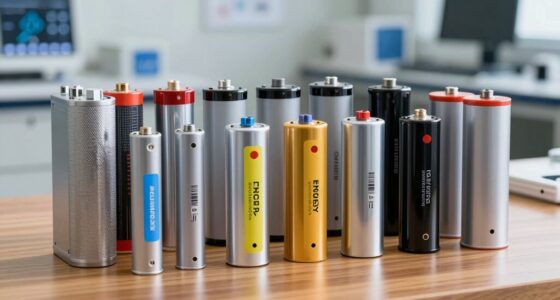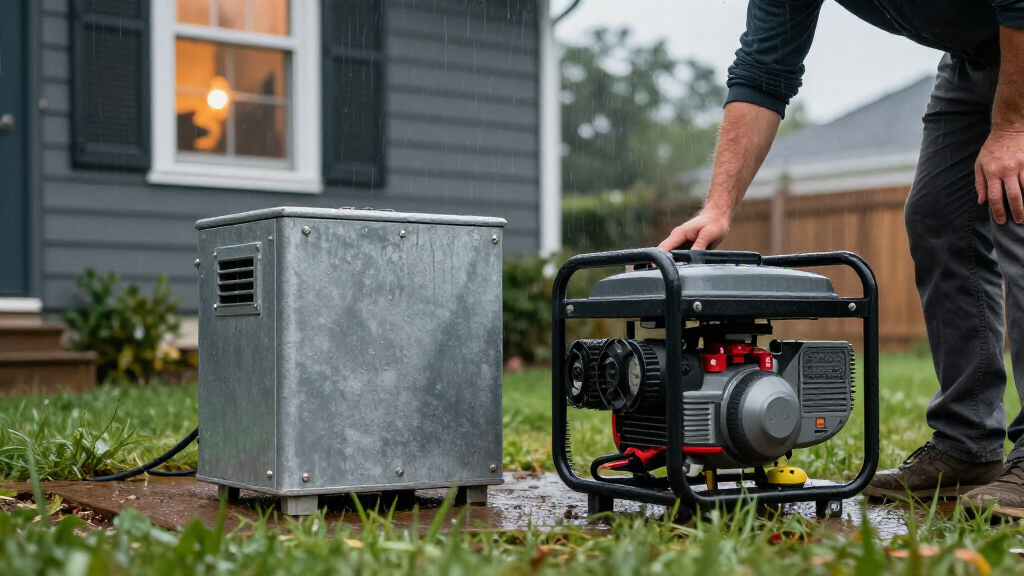

Among these home backup generators, I name the Westinghouse WGen11500DFc the best overall for buyers who want high output, dual-fuel flexibility, and a carbon monoxide sensor. The Westinghouse WGen11500TFc adds tri-fuel choice for households that can use natural gas, while the Anker SOLIX S2000 offers quiet, fume-free power for smaller loads. The main tradeoff is between a fuel-powered generator’s longer, higher-output capability and a battery station’s quiet operation and simpler indoor placement. Output, runtime, fuel access, noise, and safe connection to household circuits all shape the right choice. Read on for the full breakdown and a guide to matching a generator to your outage needs.

Get backup power and energy gear delivered free with Prime
- Fast, free delivery on millions of items
- Prime Video, Amazon Music and more included
- Member-only deals all year
Complete the kit


Key Takeaways
- High-output dual-fuel units lead for broad backup coverage: The Westinghouse WGen11500DFc combines substantial rated output with gasoline and propane options, making it the most balanced pick in this lineup.
- Tri-fuel is useful only when the extra fuel source is practical: The Westinghouse WGen11500TFc and Champion 13,500-Watt Tri-Fuel offer natural-gas capability, but buyers need an available connection and must check output on each fuel.
- Generator type matters as much as wattage: The Anker SOLIX S2000 and PowerMax 3600 PE avoid engine exhaust and refueling, but their limited continuous output and stored energy suit selected loads rather than whole-home backup.
- Small inverter models serve a different job from large open-frame generators: The Oxseryn 4400-Watt units and GENMAX GM1200i prioritize portability and lower-noise use, with less capacity for simultaneous household loads.
- Two nearly identical Oxseryn listings make model verification important: The roundup includes the same 4400-watt gas inverter generator twice, so shoppers should compare the exact listing and specifications rather than treat them as distinct performance options.
| WEN DF475T 4,750-Watt Dual-Fuel Portable Generator with Electric Start and Wheel Kit |  | Best for Smaller Backup Loads | Fuel types: Gasoline and propane | Running output: 3,800 W gasoline; 3,500 W propane | Surge output: 4,750 W gasoline; 4,350 W propane | VIEW LATEST PRICE | See Our Full Breakdown |
| DuroStar DS13000MX 13,000-Watt Dual-Fuel Portable Generator |  | Best for High-Load Backup | Fuel type: Gasoline and propane | Peak wattage: 13,000 W | Running wattage: 10,500 W | VIEW LATEST PRICE | See Our Full Breakdown |
| Westinghouse 6500-Watt Dual-Fuel Portable Generator |  | Best Midrange Balance | Fuel types: Gasoline and propane | Running output: 5,300 W gasoline; 4,800 W propane | Peak output: 6,500 W gasoline; 5,800 W propane | VIEW LATEST PRICE | See Our Full Breakdown |
| Westinghouse WGen9500DF Dual-Fuel Portable Generator |  | Best for Remote Starting | Fuel type: Gasoline or propane | Running wattage: 9,500 W gasoline; 8,500 W propane | Peak wattage: 12,500 W gasoline; 11,200 W propane | VIEW LATEST PRICE | See Our Full Breakdown |
| Westinghouse WGen10500DFc Dual Fuel Portable Generator with Remote Start |  | Best for Extended Fuel Runs | Fuel type: Gasoline and propane | Peak output: 13,500 W | Running output: 10,500 W gasoline; 9,500 W propane | VIEW LATEST PRICE | See Our Full Breakdown |
| Champion 11,500-Watt Electric Start Dual-Fuel Portable Generator |  | Best Dual-Fuel Balance | Starting watts, gasoline: 11,500 | Running watts, gasoline: 9,200 | Starting watts, propane: 10,350 | VIEW LATEST PRICE | See Our Full Breakdown |
| Oxseryn 4400-Watt Gas-Powered Inverter Generator |  | Best Compact Gas Backup | Peak output: 4,400 watts | Running output: 3,400 watts | Fuel type: Gasoline | VIEW LATEST PRICE | See Our Full Breakdown |
| Anker SOLIX S2000 Portable Power Station, 2,010Wh, 1,500W |  | Best Quiet, Fume-Free Backup | Battery capacity: 2,010Wh | Battery type: LiFePO4 | Battery cycle life: Up to 10,000 cycles | VIEW LATEST PRICE | See Our Full Breakdown |
| Westinghouse WGen11500TFc Tri-Fuel Portable Generator with CO Sensor |  | Best Flexible-Fuel Home Backup | Fuel types: Gasoline, propane, and natural gas | Running watts: 11,500 gasoline; 10,500 propane; 9,500 natural gas | Peak watts: 14,500 gasoline; 13,500 propane; 12,000 natural gas | VIEW LATEST PRICE | See Our Full Breakdown |
| Champion 13,500-Watt Tri-Fuel Portable Generator with Electric Start |  | Best for Maximum Output | Starting watts: 16,875 gasoline; 15,000 propane; 13,750 natural gas | Running watts: 13,500 gasoline; 12,000 propane; 11,000 natural gas | Fuel types: Gasoline, propane, and natural gas | VIEW LATEST PRICE | See Our Full Breakdown |
| Westinghouse WGen11500DFc Dual Fuel Portable Generator with CO Sensor | 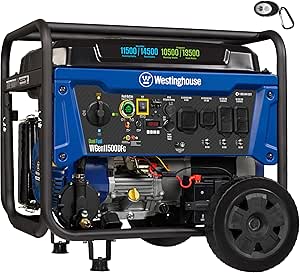 | Best for High-Output Home Backup | Peak wattage: 14,500 watts | Running wattage: 11,500 watts on gasoline; 10,500 watts on propane | Fuel types: Gasoline, propane, natural gas | VIEW LATEST PRICE | See Our Full Breakdown |
| GENMAX GM1200i Portable Generator |  | Best Compact Generator for Essential Loads | Starting wattage: 1,200 watts | Running wattage: 1,000 watts | Engine: 57cc 4-stroke OHV | VIEW LATEST PRICE | See Our Full Breakdown |
| Oxseryn 4400-Watt Gas-Powered Inverter Generator |  | Best Mid-Range Inverter for Backup and RV Use | Peak power: 4,400 watts | Running power: 3,400 watts | Fuel type: Gasoline | VIEW LATEST PRICE | See Our Full Breakdown |
| PowerMax 3600 PE Portable Power Station with Two 200W Solar Panels |  | Best Fuel-Free Backup for Quiet Indoor Use | Battery capacity: 2,016Wh | Peak output: 7,200W | Battery type: LiFePO4 | VIEW LATEST PRICE | See Our Full Breakdown |
| home backup generator | Engine | Fuel tank capacity | Warranty | Runtime |
|---|---|---|---|---|
| WEN DF475T 4,750-Watt Dual-Fue | 224cc 4-stroke OHV | 4 gallons | 2 years | Up to 11 hours at half load |
| DuroStar DS13000MX 13,000-Watt | 500cc 4-stroke OHV | 8.3 gallons | — | 17 hours; load conditions not specified |
| Westinghouse 6500-Watt Dual-Fu | 274cc 4-stroke OHV | 4.7 gallons | 3-year limited service, labor, and parts coverage | Up to 14.5 hours |
| Westinghouse WGen9500DF Dual-F | 457cc 4-stroke OHV | 6.6 gallons | 3-year limited warranty | Up to 12 hours |
| Westinghouse WGen10500DFc Dual | 500cc 4-stroke OHV | 9.5 gallons | — | — |
| Champion 11,500-Watt Electric | — | — | 3-year limited | — |
| Oxseryn 4400-Watt Gas-Powered | — | 2 gallons | 1 year | Up to 14 hours at 25% load |
| Anker SOLIX S2000 Portable Pow | — | — | 5 years | — |
| Westinghouse WGen11500TFc Tri- | 550cc 4-stroke OHV | — | 3-year limited | — |
| Champion 13,500-Watt Tri-Fuel | 739cc Milwaukee Series V-Twin | — | 3-year limited | — |
| Westinghouse WGen11500DFc Dual | 550cc 4-stroke OHV | — | — | — |
| GENMAX GM1200i Portable Genera | 57cc 4-stroke OHV | 0.66 gallons | — | Up to 6.5 hours at 50% load |
| Oxseryn 4400-Watt Gas-Powered | 208cc 4-stroke | 2 gallons | — | Up to 14 hours at 25% load with ECO mode |
| PowerMax 3600 PE Portable Powe | — | — | — | — |
More Details on Our Top Picks
WEN DF475T 4,750-Watt Dual-Fuel Portable Generator with Electric Start and Wheel Kit
The WEN DF475T is a practical fit for buyers who want fuel flexibility and transfer-switch-compatible output without stepping up to a much larger machine. It runs on gasoline or propane, and its 120V/240V output gives it a connection option for compatible home circuits. Compared with the Westinghouse 6500-Watt Dual-Fuel Portable Generator, it offers less running power, so I’d reserve it for selected essentials rather than expecting broad household coverage. The electric start and included wheel kit reduce setup friction, while the four-gallon tank is easier to handle than the larger tanks on the high-output models. Its main tradeoff is capacity: running output tops out at 3,800 watts on gasoline and drops to 3,500 on propane. The stated 11-hour runtime is at half load, not a promise for heavier backup use.
Pros:- Gasoline and propane operation gives owners a choice of available fuel.
- 120V/240V output and an L14-30R outlet support compatible transfer-switch setups.
- Electric start avoids relying solely on recoil starting.
- Wheel and handle kit plus LPG hose are included.
Cons:- Running output is modest for whole-home backup or multiple large appliances.
- Propane running output is lower than gasoline output.
- The stated runtime is specified at half load, so heavier-load endurance is unclear.
Best for: Households planning to power selected essentials and compatible 120V/240V circuits with a portable, dual-fuel generator.
Not ideal for: Buyers who need to run several high-demand appliances at once or want the larger household load capacity of the DuroStar DS13000MX.
- Fuel types:Gasoline and propane
- Running output:3,800 W gasoline; 3,500 W propane
- Surge output:4,750 W gasoline; 4,350 W propane
- Voltage:120V/240V
- Engine:224cc 4-stroke OHV
- Fuel tank capacity:4 gallons
- Runtime:Up to 11 hours at half load
- Starting system:Electric start
- Warranty:2 years
Our verdict“Choose the WEN DF475T for selected home backup loads and dual-fuel flexibility, not for high-demand whole-house coverage.”
DuroStar DS13000MX 13,000-Watt Dual-Fuel Portable Generator
For homes where backup power needs extend beyond a few essentials, the DuroStar DS13000MX brings a higher output ceiling than the WEN DF475T or Westinghouse 6500-Watt model. Its 10,500 running watts on gasoline and 50-amp outlet make it better suited to compatible transfer-switch setups and larger combined loads. The gasoline-or-propane choice also gives owners a second fuel option, though the supplied data does not list separate output figures for propane. Electric start and a front-facing fuel selector simplify operation, and automatic CO and low-oil shutdown add useful safeguards. In exchange for that capacity, this is a substantial fuel-powered machine: it has an 8.3-gallon tank and requires gasoline or propane rather than offering battery-based backup. The listed 17-hour runtime has no stated load condition, so I would not use it to predict performance under a heavy home load.
Pros:- 10,500 running watts on gasoline provide substantially more capacity than the WEN DF475T.
- Gasoline and propane fuel options offer flexibility.
- 50-amp outlet supports compatible transfer-switch connection.
- Electric start, CO shutdown, and low-oil shutdown add operating convenience and protection.
Cons:- Fuel-powered operation requires storing and replenishing gasoline or propane.
- The stated 17-hour runtime does not identify the load conditions.
- Its large tank and high-output format make it less suited to buyers prioritizing a smaller, easier-to-store generator.
Best for: Homeowners with a compatible transfer switch who need higher output for several substantial backup loads.
Not ideal for: Buyers seeking a compact, low-maintenance backup option or a clearly specified runtime at a defined load.
- Fuel type:Gasoline and propane
- Peak wattage:13,000 W
- Running wattage:10,500 W
- Engine:500cc 4-stroke OHV
- Voltage:240V
- Fuel tank capacity:8.3 gallons
- Runtime:17 hours; load conditions not specified
- Starting system:Electric start
- Safety features:CO sensor with automatic shutdown; low-oil shutdown
Our verdict“Pick the DS13000MX when high portable output and a 50-amp transfer-switch connection matter more than compact size or clearly defined runtime expectations.”
Westinghouse 6500-Watt Dual-Fuel Portable Generator
The Westinghouse 6500-Watt Dual-Fuel Portable Generator occupies a useful middle ground: more running capacity than the WEN DF475T, but less size and output emphasis than the DuroStar DS13000MX. Its gasoline rating is 5,300 running watts, with output falling to 4,800 watts on propane, which makes it a better match for selected household circuits than for large combined loads. The 120/240V selectable output and L14-30R connection support compatible transfer-switch setups; the TT-30R also gives it an RV-use angle that the DuroStar’s listed outlet details do not highlight. Low-oil and CO shutdowns, covered outlets, and a supplied wheel kit add practical value. The tradeoffs are moderate capacity and a need for minimal assembly. Its 14.5-hour runtime is specified only as an upper limit, without a stated load condition.
Pros:- Gasoline and propane operation allow fuel choice.
- 120/240V selectable output and L14-30R support compatible home backup connections.
- TT-30R outlet adds an RV-ready connection alongside home-use outlets.
- CO and low-oil shutdowns, covered outlets, and a wheel kit are included.
Cons:- Running output is not suited to the largest combined household loads.
- Propane running output is lower than gasoline output.
- Minimal assembly is required, and runtime conditions are not specified.
Best for: Households seeking a mid-capacity dual-fuel generator for selected circuits, with both transfer-switch and RV-ready outlet options.
Not ideal for: Buyers who need the higher running output of the DuroStar DS13000MX or want a generator requiring no assembly.
- Fuel types:Gasoline and propane
- Running output:5,300 W gasoline; 4,800 W propane
- Peak output:6,500 W gasoline; 5,800 W propane
- Voltage:120/240V selectable
- Engine:274cc 4-stroke OHV
- Fuel tank capacity:4.7 gallons
- Runtime:Up to 14.5 hours
- Safety features:Low-oil and carbon monoxide shutdown
- Warranty:3-year limited service, labor, and parts coverage
Our verdict“Choose this Westinghouse for midrange backup capacity and versatile connections, but step up to the DuroStar if your planned load needs more output.”
Westinghouse WGen9500DF Dual-Fuel Portable Generator
The Westinghouse WGen9500DF makes a strong case for buyers who want substantial backup output with more ways to start the generator. Its remote, electric, and recoil starting gives more flexibility than the WEN DF475T’s electric-start setup, especially when reaching the machine is inconvenient. Gasoline running output is 9,500 watts, while propane output is 8,500 watts—enough to place it well above the Westinghouse 6500-Watt model, though below the DuroStar DS13000MX’s stated gasoline running output. A fuel gauge, digital hour meter, VFT display, low-oil shutdown, and 120/240V output make operation easier to monitor. The tradeoff is portability: wheels help, but the heavy-duty format may still take effort to move. Runtime is up to 12 hours from a 6.6-gallon tank, and gasoline output exceeds propane output.
Pros:- Remote, electric, and recoil starting provide several ways to start the generator.
- 9,500 W gasoline running output exceeds the Westinghouse 6500-Watt model.
- Gasoline and propane operation offer fuel flexibility.
- Fuel gauge, digital hour meter, VFT display, and low-oil shutdown aid monitoring and operation.
Cons:- Heavy-duty size can make moving it difficult despite the wheels.
- Propane running output is lower than gasoline output.
- Runtime is listed as up to 12 hours without a specified load condition.
Best for: Homeowners who want high backup output and the convenience of remote starting, with gasoline and propane as fuel options.
Not ideal for: Buyers who need a lighter generator to move frequently or want the greater listed gasoline output of the DuroStar DS13000MX.
- Fuel type:Gasoline or propane
- Running wattage:9,500 W gasoline; 8,500 W propane
- Peak wattage:12,500 W gasoline; 11,200 W propane
- Engine:457cc 4-stroke OHV
- Fuel tank capacity:6.6 gallons
- Runtime:Up to 12 hours
- Voltage:120/240V
- Starting methods:Remote, electric, and recoil
- Warranty:3-year limited warranty
Our verdict“Choose the WGen9500DF for substantial home backup and remote-start convenience if you can accommodate its weight and lower propane output.”
Westinghouse WGen10500DFc Dual Fuel Portable Generator with Remote Start
With 10,500 running watts on gasoline and a stated maximum runtime of 19 hours, the Westinghouse WGen10500DFc is the strongest match here for buyers prioritizing high output alongside fewer refueling stops. Its 9.5-gallon tank is larger than the WGen9500DF’s 6.6-gallon tank, while remote, electric, and recoil starting give it more starting options than the WEN DF475T. On propane, running output falls to 9,500 watts, so fuel choice affects available capacity. The CO sensor and automatic low-oil shutdown add safeguards, and the digital data display helps track operation. Compared with the DuroStar DS13000MX, it offers a longer stated maximum runtime and remote start, but the supplied outlet information is less detailed: it lists four outlets without naming their types. Its runtime figure also lacks a stated load condition, and the heavy-duty format may be difficult to move.
Pros:- 10,500 W gasoline running output suits higher-demand backup needs.
- Gasoline and propane support, with 9,500 W running output on propane.
- Remote, electric, and recoil starting add convenience and backup starting options.
- A 9.5-gallon tank and stated maximum runtime of 19 hours support longer operating intervals.
Cons:- Heavy-duty size may be difficult to move despite the wheels.
- The 19-hour maximum runtime has no stated load condition.
- The supplied data lists four outlets but does not identify their types.
Best for: Homeowners who need high backup output, remote starting, and a large fuel tank for longer operating intervals.
Not ideal for: Buyers who need outlet types confirmed before choosing a transfer-switch setup or who need a lightweight generator to move often.
- Fuel type:Gasoline and propane
- Peak output:13,500 W
- Running output:10,500 W gasoline; 9,500 W propane
- Engine:500cc 4-stroke OHV
- Fuel tank capacity:9.5 gallons
- Maximum runtime:Up to 19 hours
- Voltage:240V
- Starting system:Remote, electric, and recoil start
- Safety features:CO sensor and automatic low-oil shutdown
Our verdict“Pick the WGen10500DFc for high output and longer stated fuel runs, but confirm its outlet configuration suits your planned home connection.”
Champion 11,500-Watt Electric Start Dual-Fuel Portable Generator
I’d choose this Champion when home backup calls for substantial gasoline output but I also want propane as a second fuel option. Its 9,200 running watts on gasoline can support more household loads than the smaller Oxseryn 4400, while the dual-fuel setup gives me flexibility if gasoline is hard to obtain. Electric start avoids a pull-start routine, and CO Shield shuts the engine off when it detects unsafe carbon monoxide levels. The 7.7-gallon tank runs for up to 10 hours at half load, a useful stretch between refills. The tradeoff is noise: 74 dBA at 23 feet is not a quiet-neighborhood solution, and propane runtime is listed as five hours with a 20-pound tank. I’d pick the Westinghouse WGen11500TFc instead if natural-gas operation or greater output matters more than this model’s simpler fuel choice.
Pros:- Gasoline and propane operation offers a practical choice of backup fuels.
- 9,200 running watts on gasoline can serve more household loads than compact models such as the Oxseryn 4400.
- Electric start and CO Shield add convenience and an automatic response to unsafe CO levels.
- Intelligauge monitors voltage and runtime.
Cons:- At 74 dBA from 23 feet, it can be disruptive near homes and neighbors.
- Propane runtime is up to five hours with a 20-pound tank.
- It must operate outdoors, away from occupied buildings.
Best for: Households seeking high-output portable backup with gasoline and propane flexibility, electric start, and CO shutoff protection.
Not ideal for: Buyers who need natural-gas compatibility, quieter operation, or a generator that can run indoors.
- Starting watts, gasoline:11,500
- Running watts, gasoline:9,200
- Starting watts, propane:10,350
- Running watts, propane:8,280
- Fuel types:Gasoline and propane
- Gasoline tank capacity:7.7 gallons
- Runtime at 50% load:Up to 10 hours on gasoline; up to 5 hours on propane with a 20-pound tank
- Noise level:74 dBA at 23 feet
- Warranty:3-year limited
Our verdict“Choose this Champion if you want strong dual-fuel home backup without needing the natural-gas option or extra output of the Westinghouse WGen11500TFc.”
Oxseryn 4400-Watt Gas-Powered Inverter Generator
The Oxseryn is the lighter-duty choice here: its 3,400 running watts suit a focused set of essentials rather than broad whole-home backup. At 57 pounds, it is far easier to position than the large Westinghouse WGen11500TFc or either high-output Champion, which matters when storage space and portability are priorities. The 14-hour claimed runtime at 25% load helps stretch its small two-gallon tank during modest demand, though heavier loads will bring more frequent refueling. AC, RV, and 12V DC outlets make it useful for mixed household and recreational needs. Unlike the battery-powered Anker SOLIX S2000, it needs gasoline and produces engine noise and exhaust; unlike the larger gas generators, it cannot carry as many simultaneous loads. I’d select it for targeted backup, not as a substitute for a high-capacity household generator.
Pros:- 57-pound weight makes it more manageable to move than the high-output Westinghouse and Champion generators.
- 3,400 running watts provide more capacity than a small camping generator.
- AC, 30A RV, and 12V DC outlets support several types of equipment.
- Up to 14 hours of runtime at 25% load can reduce refueling during light use.
Cons:- The two-gallon tank can require frequent refills under heavier demand.
- Gasoline operation produces exhaust, so it must be used outdoors.
- One-year warranty is shorter than the three-year coverage listed for the Champion generators.
Best for: Buyers who need a relatively portable gasoline generator for a few essential household devices, an RV, or occasional outage use.
Not ideal for: Households aiming to power many major appliances at once or anyone who wants fuel-free, indoor-usable battery backup.
- Peak output:4,400 watts
- Running output:3,400 watts
- Fuel type:Gasoline
- Fuel tank capacity:2 gallons
- Runtime:Up to 14 hours at 25% load
- Outlets:2 x 120V AC, 1 x 30A RV, 1 x 12V DC
- Weight:57 pounds
- Dimensions:19.4 x 15.2 x 19.2 inches
- Warranty:1 year
Our verdict“Pick the Oxseryn for portable, limited-load backup, but choose a higher-output model such as the Champion 11,500-Watt if you need to run more household equipment.”
Anker SOLIX S2000 Portable Power Station, 2,010Wh, 1,500W
For backup that avoids engine noise and exhaust, I’d put the Anker SOLIX S2000 in a different category from the gasoline generators in this roundup. Its 2,010Wh LiFePO4 battery and 1,500W continuous output can support selected electronics and smaller appliances, while the 3,000W peak rating allows brief higher draws. That makes it better suited to targeted essentials than the Champion 11,500-Watt, which delivers far more sustained power for household loads. The Anker can recharge from AC or solar, with up to 400W of solar input, so it offers a replenishment path that does not depend solely on stored fuel. Its claimed refrigerator runtime of up to 35 hours varies with the appliance and conditions, so I would not treat that as a fixed outage guarantee. The missing 12V DC port also limits some uses.
Pros:- Battery operation avoids generator exhaust and engine noise during use.
- 2,010Wh LiFePO4 capacity and a stated lifespan of up to 10,000 cycles support repeated use.
- AC and solar charging options reduce reliance on gasoline during extended outages.
- Eight outlets and a 3,000W peak rating accommodate multiple devices and brief surges.
Cons:- 1,500W continuous output is far below the household-scale capacity of the Champion 11,500-Watt.
- No 12V DC port limits compatibility with some equipment.
- Actual refrigerator runtime depends on the appliance, usage, and ambient temperature.
Best for: Apartment dwellers and households needing quiet, fume-free backup for phones, networking gear, lights, and selected lower-wattage appliances.
Not ideal for: Buyers who need sustained power for large appliances, many circuits, or long outages without access to charging.
- Battery capacity:2,010Wh
- Battery type:LiFePO4
- Battery cycle life:Up to 10,000 cycles
- Continuous output:1,500W
- Peak output:3,000W
- Total outlets:8
- Maximum solar input:400W
- Weight:35.7 pounds
- Warranty:5 years
Our verdict“Choose the Anker for quiet, indoor-friendly power for selected essentials, not for the broad household loads a fuel-powered generator can support.”
Westinghouse WGen11500TFc Tri-Fuel Portable Generator with CO Sensor
The WGen11500TFc earns its place for buyers who want substantial output and the widest fuel choice in this group. It runs on gasoline, propane, or natural gas, so a home with a suitable natural-gas connection can avoid storing gasoline for some outage scenarios. On gasoline, its 11,500 running watts exceed the Champion 11,500-Watt’s 9,200, while its less-than-5% THD is a useful specification for households powering sensitive electronics. Remote and push-button electric start also make startup easier than relying on a pull cord. The tradeoff is a heavy-duty portable frame that may be difficult to move, and propane runtime is listed as up to seven hours with a 20-pound tank. It offers less gasoline runtime than the stated 19 hours of the larger-tank Champion 13,500-Watt at its listed operating condition, so I’d compare expected loads and fuel plans before choosing.
Pros:- Three fuel options give households more ways to keep backup power available.
- 11,500 gasoline running watts provide more output than the Champion 11,500-Watt.
- Less-than-5% THD is suited to powering sensitive electronics.
- Remote start, electric start, and up to 19 hours of gasoline runtime add convenience between refills.
Cons:- Heavy-duty portable construction can make moving and positioning it difficult.
- Propane runtime is up to seven hours with a 20-pound tank.
- Like other combustion generators, it must operate outdoors, away from occupied buildings.
Best for: Homeowners seeking high-output backup with gasoline, propane, and natural-gas options, plus remote starting and low-THD output.
Not ideal for: Buyers who need a lightweight generator, quiet operation, or extended propane runtime from a single 20-pound tank.
- Fuel types:Gasoline, propane, and natural gas
- Running watts:11,500 gasoline; 10,500 propane; 9,500 natural gas
- Peak watts:14,500 gasoline; 13,500 propane; 12,000 natural gas
- Engine:550cc 4-stroke OHV
- Gasoline tank capacity:9.5 gallons
- Gasoline runtime:Up to 19 hours
- Voltage:240 volts
- Total harmonic distortion:Less than 5%
- Warranty:3-year limited
Our verdict“Choose the Westinghouse if three-fuel flexibility, remote start, and strong output matter more than easy portability.”
Champion 13,500-Watt Tri-Fuel Portable Generator with Electric Start
This Champion is the output-first option in the group, with 13,500 running watts on gasoline and three fuel choices for homes that need substantial backup capacity. It exceeds the Westinghouse WGen11500TFc’s gasoline running output and adds natural-gas compatibility, making it a strong fit for large loads when properly connected and managed. The included electric start, CO Shield, low-oil shutoff, and Volt Guard address startup, carbon monoxide, and electrical protection needs; mobility features help with positioning, though they do not make a generator of this class easy to move. Its 79 dBA noise level is the clearest compromise, and the stated eight-hour gasoline runtime is at 50% load. Propane is less appealing for extended use: a 20-pound tank lasts three hours at 50% load. The manual transfer switch is not included, so buyers must plan the connection separately.
Pros:- 13,500 gasoline running watts provide more output than the Westinghouse WGen11500TFc.
- Gasoline, propane, and natural-gas operation offer flexibility across fuel plans.
- Electric start, CO Shield, low-oil shutoff, and Volt Guard add useful operating and safety features.
- Included natural-gas and propane hoses reduce the need to source those connections separately.
Cons:- 79 dBA at 23 feet makes it a loud option for residential settings.
- A 20-pound propane tank provides only three hours of runtime at 50% load.
- Manual transfer switch is not included.
Best for: Homeowners with high backup loads who want tri-fuel flexibility, electric start, and strong gasoline output for a properly configured home connection.
Not ideal for: Buyers prioritizing low noise, easy movement, long propane runtime, or a package that includes a manual transfer switch.
- Starting watts:16,875 gasoline; 15,000 propane; 13,750 natural gas
- Running watts:13,500 gasoline; 12,000 propane; 11,000 natural gas
- Fuel types:Gasoline, propane, and natural gas
- Engine:739cc Milwaukee Series V-Twin
- Gasoline tank capacity:11 gallons
- Gasoline runtime:Up to 8 hours at 50% load
- Noise level:79 dBA at 23 feet
- Safety features:CO Shield auto shutoff, low-oil shutoff, and Volt Guard surge protector
- Warranty:3-year limited
Our verdict“Choose this Champion when maximum listed output and three-fuel operation outweigh noise, propane endurance, and the need to arrange a transfer switch separately.”
Westinghouse WGen11500DFc Dual Fuel Portable Generator with CO Sensor
I’d put the WGen11500DFc near the top for households that need a portable generator capable of supporting several major circuits. Its 11,500 running watts on gasoline and 240-volt, transfer-switch-ready outlets suit broader backup needs than the smaller Oxseryn 4400, which is better for a limited load. Fuel flexibility is another advantage: it accepts gasoline, propane, or natural gas, giving owners options when one supply is hard to access. Remote electric start and low-THD output also make operation and electronics compatibility less of a compromise. The tradeoff is physical scale: this high-output unit and its 9.5-gallon tank are not an easy carry, and propane runtime is listed at up to seven hours on a 20-pound tank. I’d choose it for capacity, not portability.
Pros:- 11,500 running watts on gasoline can support a larger set of household loads than compact inverter options.
- Runs on gasoline, propane, or natural gas for added fuel flexibility.
- Remote electric start and 30A and 50A outlets simplify operation and home connection planning.
- Less than 5% THD is suited to powering sensitive electronics.
Cons:- High output and a 9.5-gallon tank make it bulky to handle and store.
- Runtime on a 20-pound propane tank is listed at up to seven hours.
- Its capacity may be excessive for households that only need to keep a few small devices running.
Best for: Homeowners who want substantial 240-volt backup capacity, multiple fuel choices, and transfer-switch-ready connections.
Not ideal for: Buyers who need a light, frequently moved generator or expect long runtimes from a single 20-pound propane tank.
- Peak wattage:14,500 watts
- Running wattage:11,500 watts on gasoline; 10,500 watts on propane
- Fuel types:Gasoline, propane, natural gas
- Gas tank capacity:9.5 gallons
- Gasoline runtime:Up to 19 hours
- Engine:550cc 4-stroke OHV
- THD:Less than 5%
- Starting:Electric start with remote key fob
- Outlets:L14-30R 30A and 14-50R 50A
Our verdict“Choose the WGen11500DFc if you need high-output, multi-fuel home backup and can accommodate a large portable generator.”
GENMAX GM1200i Portable Generator
The GENMAX GM1200i fills a different role from the large Westinghouse WGen11500DFc: it is a light, quiet source for a few essentials, not a whole-home backup machine. At 25.3 pounds, it is much easier to carry or store than the 56-pound Oxseryn 4400, while its inverter output has less than 3% THD for small electronics. The modest 1,000 running watts can cover items such as lights, a fan, a TV, or device charging, but it will not run several demanding household appliances together. Its 0.66-gallon tank and stated runtime of up to 6.5 hours at 50% load favor economical, limited use over long stretches without refueling. I’d pick it for portability and small backup loads, not as the main answer to a prolonged outage.
Pros:- Weighs 25.3 pounds, making it far easier to carry than the Oxseryn 4400.
- Inverter output under 3% THD suits sensitive small electronics.
- Eco mode and a stated runtime of up to 6.5 hours at 50% load help conserve fuel.
- CO shutdown sensor, low-oil alarm, and overload alarm add useful operating safeguards.
Cons:- Only 1,000 running watts limits it to a small set of low-power loads.
- The 0.66-gallon tank requires more frequent refueling than larger backup generators.
- It provides 120-volt output rather than the 240-volt connection available on the WGen11500DFc.
Best for: Campers, apartment residents, and homeowners who want a lightweight generator for charging devices and running a few low-draw essentials.
Not ideal for: Households seeking refrigerator-plus-appliance backup or 240-volt output; its 1,000 running watts and 120-volt outlets limit what it can power.
- Starting wattage:1,200 watts
- Running wattage:1,000 watts
- Engine:57cc 4-stroke OHV
- Fuel tank capacity:0.66 gallons
- Runtime:Up to 6.5 hours at 50% load
- THD:Less than 3%
- Weight:25.3 pounds
- Noise level:As low as 58 dBA at 25% load from 23 feet
- Outlets:120V/20A outlets and two 5V USB outlets
Our verdict“Pick the GM1200i for portable, low-load backup and skip it if you need to power major household equipment.”
Oxseryn 4400-Watt Gas-Powered Inverter Generator
With 3,400 running watts, the Oxseryn 4400 sits between the very small GENMAX GM1200i and high-output units such as the Westinghouse WGen11500DFc. That middle ground can suit buyers who want to keep a refrigerator and selected essentials going, or need an inverter generator for RV use, without stepping up to a much larger machine. Its ECO mode runtime of up to 14 hours at 25% load can stretch a two-gallon tank when demand is light, while the 56-pound weight remains more manageable than the WGen11500DFc’s high-capacity format. Still, this is gasoline-only, and the runtime figure applies at a quarter load rather than heavy household demand. Noise is listed under 72 dBA at 23 feet, so I wouldn’t choose it for buyers prioritizing a quieter setup.
Pros:- 3,400 running watts offer substantially more capacity than the GENMAX GM1200i.
- ECO mode runtime is listed at up to 14 hours at 25% load.
- Inverter format and RV outlet make it useful for both home essentials and recreational-vehicle use.
- Low-oil shutdown and overload protection provide basic operating safeguards.
Cons:- Gasoline-only operation gives less fuel flexibility than the Westinghouse WGen11500DFc.
- The two-gallon tank is small for sustained, higher-load outage use.
- Noise is listed under 72 dBA at 23 feet, which may be intrusive near living areas.
Best for: RV owners and households wanting inverter-style power for a refrigerator and selected essentials, with a generator they can move occasionally.
Not ideal for: Buyers who need multi-fuel operation, quiet nighttime use, or enough capacity to back up a broad set of household circuits.
- Peak power:4,400 watts
- Running power:3,400 watts
- Fuel type:Gasoline
- Fuel tank capacity:2 gallons
- Runtime:Up to 14 hours at 25% load with ECO mode
- Engine:208cc 4-stroke
- Weight:56 pounds
- Noise level:Under 72 dBA at 23 feet
- Outlets:Two 120V AC, one 12V DC, and one RV outlet
Our verdict“Choose the Oxseryn 4400 for moderate essential-load backup and RV flexibility, but look to a larger multi-fuel model for broader home coverage.”
PowerMax 3600 PE Portable Power Station with Two 200W Solar Panels
The PowerMax 3600 PE is the only option here that stores energy in a LiFePO4 battery instead of generating power with a combustion engine. That makes it a better fit than the gasoline-powered Oxseryn 4400 for quiet, fume-free backup inside a home, and its under-10-millisecond EPS switching can support connected equipment during a brief interruption. The 3,600W rated output is substantial for a portable power station, while solar, AC, and car charging offer several ways to replenish it. But battery capacity is finite: 2,016Wh does not provide unlimited outage runtime, especially for high-draw appliances. At 52 pounds, it is also not a lightweight carry, and solar collection depends on conditions. I’d favor it for indoor essentials and automatic short interruptions, not as a substitute for a fuel generator during an extended outage.
Pros:- LiFePO4 battery avoids combustion exhaust and engine noise during use.
- 3,600W rated output and 2,016Wh capacity support a range of portable backup needs.
- Under-10ms EPS switching can keep connected equipment supplied through brief power interruptions.
- AC, solar, and car charging provide multiple recharging options.
Cons:- Stored energy is limited to 2,016Wh, so high-draw loads can shorten runtime quickly.
- At 52 pounds, it is heavy to carry despite its portable format.
- Solar charging depends on sunlight and conditions, so it cannot guarantee rapid replenishment.
Best for: Homeowners who want quiet, fume-free backup for indoor electronics and essential devices, plus solar recharging options.
Not ideal for: Buyers who need long-duration power for high-draw appliances or prefer a lighter unit; battery runtime depends on load and recharging access.
- Battery capacity:2,016Wh
- Peak output:7,200W
- Battery type:LiFePO4
- Battery cycle life:Over 6,000 cycles
- AC charging:1,500W; full charge in 1.5 hours
- Maximum solar input:1,600W
- EPS switchover:Under 10ms
- Weight:52 pounds
Our verdict“Choose the PowerMax for quiet indoor backup and flexible recharging, but rely on a fuel generator for longer outages with sustained heavy loads.”

How We Picked
I ranked these options by how well they address real home-outage needs: usable running output, ability to handle startup surges, fuel flexibility, practical runtime planning, and the connection options needed to power selected household circuits. I also weighed ease of starting and moving, safety features such as carbon monoxide sensing, noise and exhaust implications, and the maintenance burden of engine-powered models. Battery stations were judged on a different use case: quiet, indoor-safe operation for modest loads, with stored energy and recharge options rather than sustained engine output.
The order favors broad, dependable backup potential over portability alone, while keeping specialized picks for smaller loads and quiet operation. A larger wattage figure does not automatically make a unit a better choice: fuel-dependent output, generator type, and the home’s transfer equipment affect what it can safely run. The two Oxseryn entries describe the same model, so I treat them as one distinct option rather than assigning the duplicate a separate role. Product specifications and included equipment can vary by listing; buyers should confirm the exact configuration before purchase.
Factors to Consider When Choosing Home Backup Generators
Before choosing from this lineup, I would start with the circuits and appliances that must stay on—not the largest wattage number in a product name. The points below help avoid common mismatches between a generator’s advertised capability and the way a household actually uses backup power.
Size for Running Loads and Startup Surges
Write down the running watts of the devices you expect to power at the same time, then account for the brief surge some motors need when starting. Refrigerators, sump pumps, well pumps, and air conditioners can draw far more at startup than during steady operation. A generator that covers the combined running load may still trip when two motor-driven appliances start together. Avoid adding every appliance in the house unless you truly plan to operate them simultaneously; staggering loads can make a smaller unit workable. If a central air conditioner is a priority, check its starting requirements and whether compatible soft-start equipment is available before choosing by headline wattage. Leave a margin for unplanned loads rather than running the generator continuously at its limit.
Choose Fuel Around Your Outage Plan
Gasoline, propane, and natural gas solve different supply problems, so fuel choice should follow your likely outage conditions. Gasoline is widely used but requires safe storage and periodic replacement; propane stores longer but needs correctly sized cylinders and can have different generator output. Natural gas can reduce the need to store fuel, yet it depends on a functioning gas supply and a properly installed connection. Dual-fuel and tri-fuel labels do not mean identical power on every fuel, so check each rating and plan around the lowest output you expect to use. A common mistake is buying a multi-fuel generator without securing the adapters, fuel supply, or installation needed to use the alternate fuel. Choose the fuel arrangement you can maintain and access during a prolonged outage, not just the one with the most options.
Decide Between Engine Power and Stored Battery Energy
An engine generator can keep supplying power as long as it has fuel and receives maintenance, which suits longer outages and heavier loads. A battery power station avoids exhaust, engine noise, and routine engine servicing, but it is limited by stored watt-hours and its maximum output. That makes a battery appealing for communications, lights, laptops, and selected small appliances, not automatically a replacement for a high-output generator. Solar panels can replenish a compatible station when conditions allow, but clouds, season, panel placement, and daylight hours affect how much energy returns. Some households benefit from using a battery for quiet overnight essentials and an engine generator for larger daytime loads. Compare expected daily energy use as well as peak watts before deciding that a battery’s capacity is sufficient.
Plan the Connection Before an Outage
A portable generator does not connect to a home’s wiring safely through an ordinary wall outlet. For selected household circuits, a transfer switch or an approved interlock setup must be installed and used according to local electrical rules. Directly powering appliances with extension cords may work for a limited set of loads, but cord length, wire gauge, weather protection, and total load all matter. Have a qualified electrician confirm whether the generator’s output and receptacles match the planned connection. Buyers sometimes focus on generator capacity and discover later that they lack the equipment to use that capacity conveniently at home. Build the connection cost and installation time into the plan before an outage, rather than treating them as accessories to sort out later.
Treat Exhaust, Placement, and Noise as Core Requirements
Fuel-burning generators produce carbon monoxide and must run outdoors, well away from doors, windows, vents, and attached garages, following the manufacturer’s placement instructions. A carbon monoxide sensor is a useful safety feature, but it does not make indoor or unsafe placement acceptable. Battery stations avoid engine exhaust during use, which can make them easier to place indoors, though charging and electrical instructions still apply. Noise can also affect where and when a generator is practical, especially in dense neighborhoods or overnight. Check local rules and manufacturer guidance for required clearances, grounding, weather protection, and sound restrictions. Choose a safe operating location before buying; a long extension cord is not a substitute for proper siting.
Account for Maintenance, Storage, and Handling
Engine generators need periodic maintenance, clean fuel management, and storage that protects the unit while keeping it accessible for an outage. Electric start reduces the effort of starting but still depends on a charged starting battery and does not remove engine upkeep. Large portable models can be heavy and awkward to move, so wheel kits, storage space, and a clear route to the operating spot matter more than they may seem in a product listing. Compact inverters and battery stations are easier to handle but give up output or endurance. Before choosing a large unit, check who will move it, where it will run, and how it will be secured from weather and theft. Include test runs and a maintenance schedule in your backup plan so a stored generator is ready when needed.
Frequently Asked Questions
Can a portable generator power my whole house?
Some high-output portable models can support several household circuits, but that does not mean every appliance can run at once. The answer depends on total running demand, startup surges, the generator’s output on your chosen fuel, and the home’s connection setup. A transfer switch or approved interlock is needed to connect selected circuits safely; never feed household wiring through a standard outlet. Ask an electrician to calculate loads and confirm compatible equipment before buying. If whole-house coverage is the goal, compare the generator’s actual rated output with your largest simultaneous load rather than relying on its peak wattage.
Is a tri-fuel generator worth choosing over a dual-fuel model?
Tri-fuel is useful when natural gas is available at the property and you value having another supply option during an extended outage. It can reduce dependence on stored gasoline or propane, but the natural-gas connection needs to be properly installed and the generator may produce less power on that fuel. If you do not have a practical gas connection, the extra capability may add complexity without helping your backup plan. Compare output ratings across all fuels, not just the highest advertised figure. For many buyers, a dual-fuel unit is the simpler fit when gasoline and propane already cover their needs.
Should I buy a battery power station instead of a gas generator?
A battery station makes sense for quiet, fume-free power for modest loads such as lights, phones, networking equipment, and some small appliances. Its limit is stored energy: once the battery is depleted, continued use depends on recharging, and solar replenishment varies with conditions. A fuel-powered generator is generally a better match for long outages or loads that need sustained, higher output, provided it can be operated outdoors safely. Some households use both, keeping essentials quiet at night and using an engine generator for heavier loads or battery recharging. Choose based on the devices you need to run and how many hours per day they must stay powered.
What should I check before connecting a generator to household circuits?
First, identify the circuits you want to power and have an electrician confirm the generator’s output, receptacles, and transfer equipment are compatible. A transfer switch or approved interlock helps prevent dangerous backfeed into utility lines; a household outlet is not a safe substitute. Ask about circuit limits, grounding requirements, extension-cord ratings, and local permitting rules. Also plan where the generator will sit outdoors so the connection route does not place cords near doors, windows, or wet areas. Set up and test the system before an outage, following the generator and connection-equipment instructions.
How much generator capacity do I need for a refrigerator and a sump pump?
There is no single wattage that fits every refrigerator and sump pump because motor size and startup demand vary. Find each appliance’s running and starting requirements on its label or in its manual, then account for whether both could start at the same time. Add other devices you expect to use concurrently, such as lights or a modem, and leave headroom rather than operating at the generator’s limit. A qualified electrician or generator supplier can help verify the calculation if the labels are unclear. For a pump that protects a basement from flooding, test the complete setup before storm season rather than assuming a generator’s headline wattage is enough.
Conclusion
For the broadest mix of household backup capability and fuel choice, I recommend the Westinghouse WGen11500DFc as best overall; choose the Westinghouse WGen11500TFc as best premium fit if natural-gas operation is useful and its installation requirements suit your home. Buyers seeking a more modest engine-powered option can look at the Westinghouse 6500-Watt Dual-Fuel as a value-oriented choice, while the GENMAX GM1200i is best for beginners who want a lightweight generator for a small set of essentials and understand its limited output. For quiet, indoor-use power for selected devices, the Anker SOLIX S2000 is the clearest battery pick; the PowerMax station with solar panels suits buyers who specifically want a panel-equipped setup. If portability and inverter-style operation matter more than broad household coverage, compare the Oxseryn 4400-Watt model with the WEN DF475T, and note that Oxseryn appears twice in this roundup as the same model. Before settling on any pick, match its fuel-specific output to your loads and confirm a safe outdoor location and household connection plan.