Whole house solar generators range from portable power stations for essential circuits to large battery systems designed to connect with home electrical equipment. My best overall pick is the EcoFlow DELTA Pro Ultra X with Smart Home Panel 3, which pairs 12,288Wh of storage with a home integration panel. The ECO-WORTHY 10 kW Off-Grid Solar Kit stands out for buyers building a fixed off-grid system, while the Jackery Explorer 5000 Plus offers a more portable starting point. The main tradeoff is between storage and home integration on one hand, and portability and simpler setup on the other. Read on for the full breakdown and guidance on matching a system to your home.

Get backup power and energy gear delivered free with Prime
- Fast, free delivery on millions of items
- Prime Video, Amazon Music and more included
- Member-only deals all year
Complete the kit


Key Takeaways
- Home integration sets the leading EcoFlow apart: the DELTA Pro Ultra X bundle includes Smart Home Panel 3, while the standalone Ultra X listing does not specify that panel.
- The ECO-WORTHY kit is a different kind of purchase: its 2,950W of panels and 16.1kWh battery are aimed at a fixed off-grid setup, rather than portable backup.
- Two Jackery 5000 Plus listings serve different buying plans: one is the power station alone and the other bundles two 200W panels, so solar hardware in the box matters.
- Several portable options cluster around 3.6kWh: the EcoFlow DELTA Pro and Jackery HomePower 3600 Plus are more focused on essential loads than whole-home runtime.
- Panel bundles do not automatically mean fast recharging: the BLUETTI Elite 300 and Jackery Solar Generator 5000 Plus both include two 200W panels, so buyers should compare panel output with their expected daily use.
| Jackery Explorer 5000 Plus Portable Power Station, 5040Wh |  | Best Portable 120V/240V Backup | Battery capacity: 5,040Wh | Expandable capacity: Up to 60kWh | Surge power: 14,400W | VIEW LATEST PRICE | See Our Full Breakdown |
| ECO-WORTHY 10 kW Off-Grid Solar Kit with 2,950 W Panels and 16.1 kWh Battery |  | Best Integrated Off-Grid Kit | System type: Off-grid solar kit | Inverter continuous output: 10,000W | Inverter peak output: 20,000W | VIEW LATEST PRICE | See Our Full Breakdown |
| Jackery Solar Generator 5000 Plus with Two 200W Solar Panels, 5040Wh |  | Best Portable Bundle with Panels | Battery capacity: 5,040Wh | Expandable capacity: Up to 60kWh | Surge output: 14,400W | VIEW LATEST PRICE | See Our Full Breakdown |
| EcoFlow DELTA Pro Ultra X with Smart Home Panel 3, 12288Wh Power Station |  | Best Premium Whole-Home System | Starting capacity: 12,288Wh | Expandable capacity: Up to 180kWh | Output: 12,000W, scalable to 36kW | VIEW LATEST PRICE | See Our Full Breakdown |
| EF EcoFlow TITAN 5000 Classic Power Station, 5017Wh, 4000W AC Output |  | Best Quiet Essential-Loads Backup | Battery capacity: 5,017Wh | Expandable capacity: About 5–30kWh | AC output: 4,000W | VIEW LATEST PRICE | See Our Full Breakdown |
| EF ECOFLOW DELTA Pro Portable Power Station, 3600Wh, 3600W AC Output | 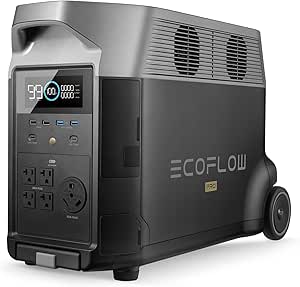 | Best Expandable Portable Backup | Battery capacity: 3,600Wh | Battery type: LFP | AC output: 3,600W | VIEW LATEST PRICE | See Our Full Breakdown |
| BLUETTI Elite 300 Solar Generator with Two 200W Solar Panels |  | Best Solar-Ready RV Backup Kit | Battery capacity: 3,014Wh | Battery chemistry: LiFePO4 | Battery cycle life: 6,000+ cycles | VIEW LATEST PRICE | See Our Full Breakdown |
| Jackery HomePower 3600 Plus Portable Power Station, 3584Wh, 3600W |  | Best for Easier Moving Around the Home | Battery capacity: 3,584Wh | Battery type: LFP | Output wattage: 3,600W | VIEW LATEST PRICE | See Our Full Breakdown |
| EF ECOFLOW DELTA Pro Ultra X Portable Power Station, 12,288 Wh |  | Best for Serious Whole-Home Backup | Capacity: 12,288Wh | Expandable capacity: 12–180kWh | Output power: 12,000W | VIEW LATEST PRICE | See Our Full Breakdown |
| whole house solar generator | Expandable capacity | Battery chemistry | Battery capacity | Weight |
|---|---|---|---|---|
| Jackery Explorer 5000 Plus Por | Up to 60kWh | LiFePO₄ | 5,040Wh | 134.5lb |
| ECO-WORTHY 10 kW Off-Grid Sola | — | LiFePO₄ | — | — |
| Jackery Solar Generator 5000 P | Up to 60kWh | LiFePO₄ | 5,040Wh | — |
| EcoFlow DELTA Pro Ultra X with | Up to 180kWh | LiFePO₄ | — | — |
| EF EcoFlow TITAN 5000 Classic | About 5–30kWh | LiFePO₄ | 5,017Wh | 102.5lb |
| EF ECOFLOW DELTA Pro Portable | Up to 25kWh | — | 3,600Wh | 99 lb |
| BLUETTI Elite 300 Solar Genera | — | LiFePO4 | 3,014Wh | — |
| Jackery HomePower 3600 Plus Po | Up to 21kWh per unit or 43kWh with multiple units | — | 3,584Wh | 77.2 lb |
| EF ECOFLOW DELTA Pro Ultra X P | 12–180kWh | LiFePO4 | — | 350 lb |
More Details on Our Top Picks
Jackery Explorer 5000 Plus Portable Power Station, 5040Wh
The Jackery Explorer 5000 Plus is the strongest fit here for buyers who want substantial home backup without starting with a permanently installed solar kit. Its 7,200W rated output, 120V/240V support, and 5,040Wh battery can serve larger appliances and selected circuits when paired with a compatible transfer switch. Compared with the EcoFlow DELTA Pro Ultra X, it has a much lower stated expansion ceiling, but its portable-station format is a more straightforward starting point for backup that may also travel to an RV or other site.
The battery can expand to 60kWh, and solar input reaches 4,000W, leaving room to build a more capable system over time. The tradeoff is physical: at 134.5 pounds, this is not an easy unit to reposition, and solar panels are sold separately. I’d choose it for flexible, high-output backup—not for a ready-to-install whole-home system out of the box.
Pros:- 7,200W rated output with 120V/240V support can handle a broader mix of household loads.
- Expandable battery capacity up to 60kWh allows backup duration to grow.
- Supports up to 4,000W of solar input for substantial recharge capability with compatible panels.
- LiFePO₄ battery chemistry and a stated five-year warranty support long-term ownership planning.
Cons:- At 134.5 pounds, it is difficult to move without help.
- Solar panels are not included, so solar charging requires a separate purchase.
- A compatible transfer switch is needed to supply selected home circuits.
Best for: Homeowners who want 120V/240V backup for selected circuits and may also use the station for RV power.
Not ideal for: Buyers seeking an included solar array, a lightweight portable battery, or the highest whole-home expansion ceiling in this group.
- Battery capacity:5,040Wh
- Expandable capacity:Up to 60kWh
- Surge power:14,400W
- Output voltage:120V/240V
- Battery chemistry:LiFePO₄
- Maximum solar input:4,000W
- Weight:134.5lb
- Warranty:5 years
Our verdict“Choose the Explorer 5000 Plus if you want a portable-format system with strong 120V/240V output and substantial expansion, and can source panels and circuit integration separately.”
ECO-WORTHY 10 kW Off-Grid Solar Kit with 2,950 W Panels and 16.1 kWh Battery
The ECO-WORTHY 10 kW Off-Grid Solar Kit is the most installation-oriented option in this group: it arrives with a split-phase inverter, a substantial LiFePO₄ battery, and five bifacial panels. Its 10,000W continuous output and 120V/240V support are aimed at running multiple household loads, while the 16.076kWh battery gives it a larger starting reserve than the 5kWh-class Jackery and EcoFlow stations. That makes it a better starting point for an off-grid power system than a portable station alone.
The main mismatch is between the inverter and included array: 2,950W of panels cannot continuously match the inverter’s full output, so actual solar recovery depends on sunlight and consumption. Unlike the Jackery Explorer 5000 Plus, this is not a grab-and-go backup unit; it ships by freight and professional installation is strongly recommended. The battery can scale by parallel connection, but this kit suits buyers ready to plan a fixed system, not those seeking a simple plug-in backup.
Pros:- 10,000W continuous inverter output with 120V/240V split-phase support.
- Includes a 16.076kWh LiFePO₄ battery, providing more starting storage than the 5kWh-class stations here.
- Five 590W bifacial panels provide a bundled 2,950W solar array.
- Battery setup supports parallel expansion, with a stated maximum of 15 units.
Cons:- The included 2,950W PV array is well below the inverter’s 10,000W continuous output.
- Professional installation is strongly recommended, adding planning and setup demands.
- Freight delivery and a fixed-system layout make it less convenient than portable power stations.
Best for: Rural homeowners and off-grid property owners who want a bundled split-phase inverter, battery, and solar array and can arrange professional installation.
Not ideal for: Renters, buyers needing a quickly movable backup station, or households expecting the included panels to sustain the inverter at its full output.
- System type:Off-grid solar kit
- Inverter continuous output:10,000W
- Inverter peak output:20,000W
- Output voltage:120V or 120V/240V split-phase
- Solar array:Five panels; 2,950W total
- Battery energy capacity:16.076kWh
- Battery chemistry:LiFePO₄
- Battery parallel capacity:Up to 15 units
- Certifications:TÜV and CSA
Our verdict“Pick this kit for a planned off-grid installation with a large battery and split-phase inverter, not for portable or low-effort home backup.”
Jackery Solar Generator 5000 Plus with Two 200W Solar Panels, 5040Wh
This Jackery Solar Generator 5000 Plus bundle pairs the same 5,040Wh, 7,200W Explorer platform as the standalone Explorer 5000 Plus with two 200W solar panels. That makes it easier to begin solar charging without assembling a panel package separately, though the included 400W total is only a small portion of the station’s 4,000W maximum solar input. For home backup, it offers 120V/240V support and capacity expansion up to 60kWh, while also retaining the option of RV or camping use.
Compared with the standalone Jackery Explorer 5000 Plus, the key difference is the included panels, not higher output or battery capacity. The bundle still needs more solar equipment for faster replenishment, and its 134.5-pound station is cumbersome to move. It also does not equal the ECO-WORTHY kit’s included 16.076kWh battery or fixed split-phase system. I’d choose this package when a portable station and a modest solar starting point matter more than turnkey whole-house integration.
Pros:- Includes two 200W solar panels, unlike the standalone Explorer 5000 Plus listing.
- 7,200W rated output and 120V/240V support cover a range of household and RV loads.
- Battery capacity can expand up to 60kWh.
- Accepts up to 4,000W of solar input as the panel setup grows.
Cons:- The included panels total just 400W, far below the station’s 4,000W maximum solar input.
- The 134.5-pound power station is difficult to reposition.
- The station and panels ship separately, complicating delivery and initial setup.
Best for: Buyers who want a high-output portable backup station with starter solar panels included for occasional recharging.
Not ideal for: Households needing a large included solar array, a ready-made whole-home circuit connection, or easy one-person portability.
- Battery capacity:5,040Wh
- Expandable capacity:Up to 60kWh
- Surge output:14,400W
- Voltage:120V/240V
- Included solar panels:Two 200W panels
- Maximum solar input:4,000W
- Battery chemistry:LiFePO₄
- Warranty:5 years
Our verdict“Choose this bundle over the standalone Jackery if included starter panels matter, but plan to add more solar capacity for serious home-backup recharging.”
EcoFlow DELTA Pro Ultra X with Smart Home Panel 3, 12288Wh Power Station
The EcoFlow DELTA Pro Ultra X with Smart Home Panel 3 is the most capable whole-home choice in this batch for buyers who want expandable storage and automatic management between grid, battery, and solar. It starts at 12,288Wh and scales up to 180kWh, with output listed at 12,000W and scalable to 36kW. That gives it a larger system ceiling than the Jackery Explorer 5000 Plus, which tops out at 60kWh, and makes it better suited to sustained household or commercial loads.
The Smart Home Panel 3 handles automatic switching in under 20 milliseconds, helping reduce interruptions for connected equipment. Its flexible setup avoids permanent hardwiring, but that should not be mistaken for effortless installation: professional installation is required, and components arrive in separate packages. This is also far beyond what a buyer needs for a few essential circuits. I’d rank it first for broad whole-home ambitions, while the smaller Jackery or EcoFlow TITAN makes more sense when capacity and system scale can stay modest.
Pros:- 12,288Wh starting capacity can expand up to 180kWh.
- Output scales from 12kW to 36kW for larger household or commercial demand.
- Smart Home Panel 3 automatically manages grid, battery, and solar power.
- Under-20ms transfer time helps limit interruptions during outages.
Cons:- The Smart Home Panel 3 requires professional installation.
- Separate component shipments require coordination before the full system is ready.
- Its scale may be unnecessary for buyers backing up only a few essential loads.
Best for: Owners of large homes or small commercial sites who want automated energy management, fast backup switching, and room to scale storage and output.
Not ideal for: Buyers seeking a compact backup for a few appliances or a simple self-installed station without a Smart Home Panel installation.
- Starting capacity:12,288Wh
- Expandable capacity:Up to 180kWh
- Output:12,000W, scalable to 36kW
- Voltage:120V/240V
- Battery chemistry:LiFePO₄
- Transfer time:Under 20ms
- Power sources:Solar, grid, and battery
- Smart panel:Smart Home Panel 3
- Dimensions:26.6 × 18.7 × 9.06in
Our verdict“Choose the DELTA Pro Ultra X for expandable, automatically managed whole-home backup when you can plan for professional panel installation.”
EF EcoFlow TITAN 5000 Classic Power Station, 5017Wh, 4000W AC Output
The EcoFlow TITAN 5000 Classic is a better match for essential-load backup than for powering an entire large home at once. Its 5,017Wh battery and 4,000W output can support a considered set of appliances, while operation under 30dB is a useful advantage for indoor or overnight placement. Compared with the Jackery Explorer 5000 Plus, it has lower output and a smaller stated expansion ceiling, but weighs less and is specified for quiet operation.
Capacity can grow from about 5kWh to 30kWh, and pairing it with the Smart Home Panel 10 enables automatic backup switching in under 20 milliseconds. That panel is required for the switchover feature, so the station alone is not an automatic whole-home backup setup. Its listed 120V output also makes it less flexible for 240V loads than the Jackery or the EcoFlow DELTA Pro Ultra X. I’d favor it for quiet, expandable backup of selected circuits, not for buyers whose plan depends on high-power 240V appliances.
Pros:- Under-30dB operation suits indoor and overnight use better than a louder backup setup.
- 4,000W AC output serves a planned group of essential appliances.
- Expandable capacity from about 5kWh to 30kWh supports longer backup as needs grow.
- LiFePO₄ battery and stated UL 9540 and UL 1741 credentials add useful system specifications.
Cons:- Automatic switchover under 20ms requires the compatible Smart Home Panel 10.
- Listed 120V output does not provide the 120V/240V flexibility of the Jackery and DELTA Pro Ultra X.
- At 102.5 pounds, it remains difficult to move regularly.
Best for: Households prioritizing quiet indoor backup for essential 120V appliances, with the option to expand storage and add a Smart Home Panel 10.
Not ideal for: Buyers who need 240V output, more than 30kWh of stated expansion, or automatic circuit backup without a compatible panel.
- Battery capacity:5,017Wh
- Expandable capacity:About 5–30kWh
- AC output:4,000W
- Output voltage:120V
- Battery chemistry:LiFePO₄
- Noise level:Under 30dB
- Automatic switchover:Under 20ms with Smart Home Panel 10
- Weight:102.5lb
- Warranty:5 years
Our verdict“Pick the TITAN 5000 Classic for quieter essential-load backup with moderate expansion, but choose a 120V/240V system for 240V household appliances.”
EF ECOFLOW DELTA Pro Portable Power Station, 3600Wh, 3600W AC Output
The DELTA Pro balances substantial storage with a portable-station format: its 3,600Wh LFP battery and 3,600W output can support several household essentials, while compatible equipment can raise capacity to 25kWh. That makes it a more flexible starting point than the BLUETTI Elite 300, whose listed capacity is 3,014Wh and whose output is 2,400W. Five charging methods, including solar and EV stations, give owners more ways to replenish it when grid power is unavailable. The tradeoff is that this is still a 99-pound unit, not an easy lift, and its fastest stated charging times rely on high-power input or multiple panels. It suits buyers building backup in stages, but whole-house ambitions require compatible expansion equipment and a clear plan for critical loads.
Pros:- 3,600Wh LFP battery with expansion potential up to 25kWh
- 3,600W AC output and 15 output connections support multiple loads
- Five charging methods include solar and EV station charging
- Wi-Fi and Bluetooth app control allow remote monitoring and settings changes
Cons:- At 99 lb, it is difficult for one person to move regularly
- Fastest listed recharge times depend on high-power outlets or multiple solar panels
- Whole-house backup at greater capacity requires compatible add-on equipment
Best for: Homeowners who want a high-capacity portable station now and the option to expand storage with compatible batteries or smart generators.
Not ideal for: Anyone expecting a single compact unit to power an entire home for extended outages, or buyers who need something easy to carry up stairs.
- Battery capacity:3,600Wh
- Battery type:LFP
- AC output:3,600W
- Maximum output with X-Boost:4,500W
- Expandable capacity:Up to 25kWh
- Output connections:15
- Charging methods:EV station, solar, wall outlet, smart generator, car outlet
- Weight:99 lb
Our verdict“Choose the DELTA Pro if you want a capable portable backup base that can grow, rather than a turnkey whole-home system.”
BLUETTI Elite 300 Solar Generator with Two 200W Solar Panels
The BLUETTI Elite 300 kit is the most ready-to-use solar bundle in this group: it pairs a 3,014Wh LiFePO4 station with two 200W panels and adds a TT-30 RV outlet plus a 12V/30A DC port. Those connections make it a more natural fit for RV owners than the EF ECOFLOW DELTA Pro, which offers more battery capacity and AC output but does not list the same RV-specific outlet. For home backup, 2,400W can cover selected appliances, but it is a step below the 3,600W DELTA Pro and Jackery HomePower 3600 Plus. The included panels provide a solar starting point, though the listed recharge window is about 7–15 hours and the panels ship separately. I’d treat it as an RV-and-essentials option, not a whole-house power source.
Pros:- 3,014Wh LiFePO4 battery with a stated life of more than 6,000 cycles
- Includes two 200W solar panels for a ready-made solar setup
- TT-30 RV outlet and 12V/30A DC port suit recreational vehicle loads
- Supports solar, AC, car, lead-acid, and generator charging
Cons:- 2,400W AC output is lower than the DELTA Pro and HomePower 3600 Plus
- Solar recharge is listed at about 7–15 hours, depending on conditions
- Panels ship separately from the power station
Best for: RV owners and off-grid users who want a large battery, a dedicated TT-30 connection, and solar panels included in the kit.
Not ideal for: Households seeking high-output whole-home backup or a quick solar refill, since its output is lower than the 3,600W alternatives and panel charging is listed at 7–15 hours.
- Battery capacity:3,014Wh
- Battery chemistry:LiFePO4
- Battery cycle life:6,000+ cycles
- AC output:2,400W
- Surge power:4,800W
- Included solar panels:2 × 200W
- RV outlet:TT-30
- Solar recharge time:About 7–15 hours with included panels
Our verdict“Pick the Elite 300 kit for RV-oriented backup with included solar panels, not for running a broad set of household circuits.”
Jackery HomePower 3600 Plus Portable Power Station, 3584Wh, 3600W
Among the portable stations here, the Jackery HomePower 3600 Plus is the easiest to reposition: wheels and a telescoping handle help with its 77.2-pound weight, which is notably less than the 99-pound EF ECOFLOW DELTA Pro. Its 3,584Wh LFP battery and 3,600W output put it in a similar class for single-unit backup, while parallel operation can provide 240V and 7,200W. That can suit buyers planning a larger system, but 240V requires another connected unit; it is not a feature a single station delivers by itself. Capacity expansion is listed up to 21kWh per unit, and solar panels are optional. I’d rank it for practical home mobility rather than complete whole-house coverage: the system can scale, but doing so takes extra equipment and planning.
Pros:- 3,584Wh LFP battery and 3,600W output support substantial essential-load backup
- Wheels and telescoping handle make it easier to move than the 99-pound DELTA Pro
- Parallel operation supports up to 7,200W and 240V
- Hybrid AC+DC charging and solar, AC, or gas-generator input offer charging flexibility
Cons:- 240V operation requires units connected in parallel
- Solar panels are optional, adding equipment for solar charging
- At 77.2 lb, it remains heavy even with wheels and a handle
Best for: Homeowners who need a high-capacity station they can roll between storage and living areas, with the option to add units for larger backup needs.
Not ideal for: Buyers who need 240V from one unit, want solar panels included, or expect a fully outfitted whole-house system without add-ons.
- Battery capacity:3,584Wh
- Battery type:LFP
- Output wattage:3,600W
- Parallel output:7,200W
- Expandable capacity:Up to 21kWh per unit or 43kWh with multiple units
- Voltage:120V; 240V in parallel
- Charging options:Hybrid AC+DC, AC, solar, gas generator
- Weight:77.2 lb
Our verdict“Choose the HomePower 3600 Plus if rolling a capable backup station around the home matters more than getting a complete whole-house setup in one package.”
EF ECOFLOW DELTA Pro Ultra X Portable Power Station, 12,288 Wh
The DELTA Pro Ultra X is the clear scale-up choice for buyers whose goal is more than keeping a few appliances running. It starts at 12,288Wh and 12,000W output, with expansion listed up to 180kWh and 36kW; that puts it in a different class from the 3,600W portable DELTA Pro and Jackery HomePower 3600 Plus. Its under-20-millisecond transfer time is designed to keep connected loads powered through an outage, and the system can manage solar, battery, and off-peak grid power. No hardwiring is required, though the 350-pound listed weight and separately shipped components make setup and placement a serious project. The three listed outlets also mean buyers should check their intended connection and distribution plan before choosing it. This is the strongest fit here for substantial home backup, not casual portability.
Pros:- 12,288Wh starting capacity and 12,000W output are suited to larger backup loads
- Expandable to 180kWh capacity and 36kW output
- Designed to switch between power sources with an under-20-millisecond transfer time
- LiFePO4 batteries, dual battery management systems, and no-hardwiring installation
Cons:- Listed weight of 350 lb makes placement and movement difficult
- Inverter and extra battery ship in separate packages
- Three listed outlets may require additional planning for household circuit distribution
Best for: Homeowners planning high-output, expandable backup for multiple household loads and prepared to manage a large, heavy system and its installation layout.
Not ideal for: Renters, buyers needing a lightweight portable station, or households looking for a simple plug-in setup with minimal space and connection planning.
- Capacity:12,288Wh
- Expandable capacity:12–180kWh
- Output power:12,000W
- Expandable output:12–36kW
- Battery chemistry:LiFePO4
- Transfer time:Under 20 milliseconds
- Installation:No hardwiring required
- Weight:350 lb
Our verdict“Choose the DELTA Pro Ultra X when scalable, high-output household backup matters more than portability or a small footprint.”
How We Picked
I ranked these options by how well their stated specifications and included equipment support the job implied by whole house solar generator. Capacity, AC output, solar panel wattage, and stated home integration all matter, but they answer different questions: how long a system may run, which loads it can support, how it can recharge, and whether it is set up to connect with household circuits. I gave more weight to products with larger storage or clearly described home integration for whole-home backup, while accounting for the added installation and planning a fixed system can require.
I also separated complete bundles from standalone power stations and off-grid kits, since the equipment included changes the amount of planning a buyer must do. That is why the EcoFlow DELTA Pro Ultra X with Smart Home Panel 3 ranks ahead of the standalone Ultra X listing, and why the ECO-WORTHY kit earns a distinct role despite being less portable. Portable models with roughly 3.6kWh to 5kWh of storage can suit essential circuits or staged backup, but their smaller capacity makes them less convincing for running an entire home for an extended outage. Product details provided here do not establish runtime, installation requirements, or compatibility for every home, so I treat those as items buyers must verify for their intended setup.
| whole house solar generator | Battery chemistry |
|---|---|
| Jackery Explorer 5000 Plus Por | LiFePO₄ |
| ECO-WORTHY 10 kW Off-Grid Sola | LiFePO₄ |
| Jackery Solar Generator 5000 P | LiFePO₄ |
| EcoFlow DELTA Pro Ultra X with | LiFePO₄ |
| EF EcoFlow TITAN 5000 Classic | LiFePO₄ |
| EF ECOFLOW DELTA Pro Portable | — |
| BLUETTI Elite 300 Solar Genera | LiFePO4 |
| Jackery HomePower 3600 Plus Po | — |
| EF ECOFLOW DELTA Pro Ultra X P | LiFePO4 |
Factors to Consider When Choosing Whole House Solar Generators
Choosing a system starts with the loads you need to support and the way you expect to recharge it. The product names can make a portable power station, a panel bundle, and a home-connected battery system sound interchangeable; their roles differ once you plan a real backup setup.
Decide Which Circuits Count as Whole-Home Backup
“Whole house” can mean keeping a few selected circuits running or powering nearly every circuit, and those are very different jobs. List the appliances you would keep on during an outage, then note their running and startup demands where available. A refrigerator, lights, and communications gear create a different load profile from electric heating, cooking, or central air conditioning. A large battery may extend runtime, but it does not by itself prove that the system can start every appliance or feed every circuit. Check the output limits and the intended connection method before treating a portable unit as whole-home backup. If your needs include high-demand appliances, get a qualified installer to check the home’s electrical setup and the system’s compatibility.
Size Storage for Outage Length, Not Just Appliance Count
Battery capacity is only one part of the runtime question: energy use and how long you need backup matter just as much. Estimate daily consumption for the circuits you plan to use, then decide whether you are planning for overnight coverage, several days, or repeated outages. Include conversion losses and changing loads in your planning rather than assuming the full stated capacity will reach appliances. A larger system can reduce rationing, but it also takes up more space and may be harder to move or install. Avoid sizing around a best-case scenario where every appliance runs briefly and no extra energy is needed. If the estimate is uncertain, prioritize essential circuits and leave room to expand later.
Match Solar Input to Your Daily Energy Use
Solar panels can replenish a battery during an outage, but panel wattage alone cannot predict how much energy you will collect each day. Sun exposure, season, roof or ground placement, shading, and panel angle all affect production. A bundle with two 200W panels can provide a useful entry point, yet it may recharge slowly relative to a large battery or heavy household use. For a fixed off-grid system, compare the panel array’s expected daily generation with both ordinary consumption and the energy you want to store. Check the power station’s supported solar input and connector requirements before buying extra panels. Keep a backup charging plan for cloudy stretches when solar output falls short.
Check Home Connection and Installation Requirements Early
A power station that has substantial AC output is not automatically ready to power a home’s circuits through a panel. Some setups require a compatible transfer switch or smart home panel, electrical work, and permits depending on the equipment and local rules. Ask whether the named package includes the connection hardware, or whether the listing describes a standalone unit. Have an electrician review your service panel, grounding, and intended circuits before purchase when you plan a fixed connection. This can reveal compatibility issues before you commit to a system that may otherwise be well sized. Portable backup through individual outlets is simpler, but it can mean managing appliances one at a time.
Weigh Portability Against Capacity and Expansion
Portable units make sense when you may move the system between rooms, take it on trips, or store it between outages. Larger batteries and home panels favor a more permanent setup, with less emphasis on carrying the unit around. Think about where the system will sit, how it will be moved, and whether cables and panels can reach a suitable operating location. Expansion can be useful if your needs may grow, but compatibility across batteries, inverters, and panels needs confirmation from the manufacturer. Do not assume similarly named products share expansion hardware or accessories. Choose the form factor that fits the space and the way you will actually use backup power.
Compare the Complete System, Not the Headline Unit
A product listing may refer to a power station alone, a generator bundle with panels, or an off-grid kit with batteries and installation components. Write down what is included: battery, inverter, panels, cabling, home connection equipment, and any components needed for mounting or protection. The lowest-complexity purchase may not be the one with the most components if it still leaves compatibility questions unresolved. Conversely, a broad kit can require more planning and skilled installation than a portable bundle. Confirm warranties, service availability, and replacement part support for the full system. This comparison prevents a power station’s specifications from being mistaken for a complete home backup installation.
Frequently Asked Questions
Can a portable solar generator power every circuit in my home?
Not by default. A portable power station can supply appliances through its outlets, while feeding selected or multiple home circuits usually depends on compatible connection equipment and installation. Its output limits also determine which loads can run together, especially appliances with high startup demands. Have an electrician check the system and your panel before planning a whole-home connection. For portable models in this roundup, treat essential-circuit backup as the more realistic starting point unless the manufacturer specifies a compatible home integration path.
How much battery capacity do I need to get through an outage?
There is no useful capacity target without knowing which loads you will run and for how long. Add up estimated daily energy use for your chosen circuits, then account for conversion losses and the possibility that some appliances run longer than expected. A roughly 3.6kWh unit may suit a limited set of essentials, while a 12,288Wh system provides more stored energy but still has output and recharge limits. Solar can extend operation when conditions allow, though cloudy days can reduce replenishment. Build your estimate around a specific outage plan instead of the phrase “whole house.”
Are solar panels included with every generator in this roundup?
No. Some entries are standalone power stations, while others bundle panels or describe a larger off-grid kit. The Jackery Solar Generator 5000 Plus and BLUETTI Elite 300 listings include two 200W panels, and the ECO-WORTHY kit specifies a 2,950W array. The Jackery Explorer 5000 Plus listing is for the power station, so it is not the same package as the Jackery panel bundle. Verify the box contents and required cables before comparing systems or planning recharge time.
Do I need a Smart Home Panel or transfer switch?
You generally need a suitable, approved way to connect a backup system to home circuits if you want those circuits powered from the panel. The EcoFlow DELTA Pro Ultra X bundle in this roundup includes Smart Home Panel 3; the standalone Ultra X listing does not specify that accessory. Other models may need separate equipment, and compatibility depends on the exact unit and your electrical panel. Never assume that a high AC output rating means a station can connect directly to household wiring. Ask the manufacturer and a qualified electrician to confirm the required equipment and installation.
Should I choose a panel bundle or buy panels separately?
A bundle can simplify matching panels to a power station, especially when it clearly lists compatible equipment and necessary connections. Buying panels separately may give you more flexibility to select an array suited to your roof, available space, and recharge goals. In either case, confirm the station’s supported solar input, voltage range, connector type, and expansion limits before purchase. Two 200W panels are a different scale from the ECO-WORTHY kit’s stated 2,950W array, but actual daily production will depend on conditions. Choose based on expected energy collection and compatibility, not the panel count alone.
Conclusion
For the strongest whole-home setup in this lineup, I would start with the EcoFlow DELTA Pro Ultra X with Smart Home Panel 3, the best overall pick for its large stated capacity and included home integration panel. The ECO-WORTHY 10 kW Off-Grid Solar Kit is my best value for buyers planning a fixed off-grid system with a substantial panel array and battery, though it calls for more installation planning. For a premium battery-first option, the standalone EcoFlow DELTA Pro Ultra X offers the same stated 12,288Wh capacity without the specified panel bundle. Beginners who want a portable starting point can look at the Jackery Explorer 5000 Plus, while recognizing that home connection hardware and solar panels may need separate planning. For buyers focused on essential loads and portability, the Jackery HomePower 3600 Plus or EcoFlow DELTA Pro is a better fit than a large home system. Match the choice to your circuits, outage duration, and installation plan before deciding.