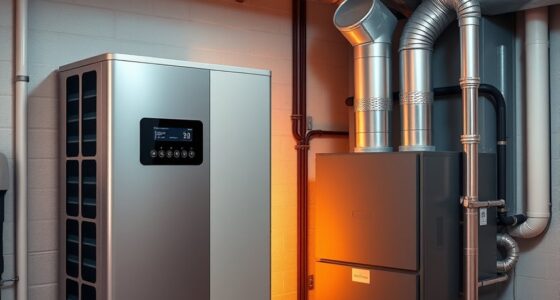
TL;DR
Electric wall heaters can take up less room than baseboard units and offer options such as fan-assisted convection and infrared heat. They still need clear airflow, may provide more focused warmth, and some types have moving parts that can shorten their lifespan.
Electric wall heaters can free up floor space that would otherwise be occupied by long baseboard units, while offering fan-assisted or radiant heating options, according to a home-heating report. The change can help in rooms where furniture placement is difficult, but wall heaters still require open airflow and may not distribute warmth as broadly as baseboards.

Get backup power and energy gear delivered free with Prime
- Fast, free delivery on millions of items
- Prime Video, Amazon Music and more included
- Member-only deals all year
Many electric wall heaters use resistive coils to warm air. In convection models, heated air rises out of the unit while cooler air is drawn in below. Some units add a fan to push warm air into the room; models with fans may include controls for adjusting fan speed. The report says this can shorten the time needed to warm a room compared with relying on natural circulation alone.
Wall heaters are available as plug-in units mounted on a wall or as models designed to be recessed and hardwired. Both arrangements occupy a limited section of wall rather than extending for several feet along the base of a room. The report gives 1,500 watts as a typical electricity demand, while noting that some models have lower-power eco settings. Actual consumption depends on the selected unit and how it is operated.
Other designs use infrared radiation, either from a bulb or heating element, or combine radiant and convective heat. Micathermic panels use a heated mica cover to emit infrared energy, while convection warms the surrounding air. The report says these units operate without a fan, reducing fan noise and avoiding the fan-related effect of lowering indoor humidity.
Wall heaters free up floor space with room-by-room trade-offs
Electric wall heaters can replace long baseboard units along the floor. Their coverage, airflow needs and installation depend on the model and room.
Choose how heat moves
Wall heaters use different methods to warm a room.
Move warm air
A fan pushes heated air into the room; moving parts may shorten lifespan.
Warm surfaces directly
Radiant heat focuses on people and surfaces in its path.
Heat without a fan
A heated mica cover emits infrared energy while warming surrounding air.
Compare placement and coverage
The space saved near the floor comes with airflow and room-size considerations.
- Run along the wall near the floor
- Can limit furniture placement
- Warm air rises through natural circulation
- Use a limited section of wall
- Need unobstructed airflow
- May provide more focused warmth
Check before choosing
Match the unit to the room and its installation requirements.
- Compare rated output, controls and mounting method.
- Check whether the model plugs in or requires hardwiring.
- Keep the heater clear; the report advises about three feet of side clearance.
- For hardwired installation, use a licensed electrician and follow local requirements.
More Floor Space, Different Heat
For households using supplemental electric heat, the main practical difference is where the heater occupies space. A baseboard unit runs along a wall near the floor, limiting furniture arrangements and requiring care around curtains. A wall-mounted heater can leave more of that floor-level area available, although the unit itself still needs an unobstructed zone.
The choice also affects how warmth reaches people in a room. Fan-assisted models move heated air, while infrared designs directly warm surfaces and people within their path. The report describes wall-heater warmth as more focused than baseboard heat, so one unit may not be enough for a large room. Buyers weighing the space benefit against heating coverage should check a product’s specifications and assess the room rather than assume a wall unit will replace every existing heater.
These distinctions matter where electric heaters serve as a primary system or supplement a central furnace. Wall units can offer flexible placement and control, but their output, operating cost and coverage depend on the model, room and use. The report does not provide comparative cost or performance testing, so its description should not be read as proof that wall heaters are more efficient or less expensive to run.
Products Worth Considering

Levoit Core 300S-P Smart Wi-Fi Air Purifier

eufy Security SoloCam S340 3K Dual-Lens Solar Security Camera

LEVOIT Vital 200S-P Smart Air Purifier for Large Rooms, White
As an affiliate, we earn on qualifying purchases.
How Wall and Baseboard Heat Differ
Baseboard heaters and many wall heaters rely on electric resistance: electricity passes through a heating element, which then warms the air. Baseboards typically depend on air movement created as warm air rises. That arrangement is why furniture or curtains placed over or directly in front of a unit can obstruct circulation and create a safety concern.
Wall heaters address the floor-space issue, but they are not intended to be covered or blocked. The report advises leaving about three feet of clearance to the side and keeping furniture from obstructing airflow. It also says heater housings generally enclose the heating coils, but that does not remove the need to follow the manufacturer’s placement and safety instructions.
There are trade-offs within the wall-heater category. Fan-assisted models have moving parts and, according to the report, tend to have shorter lifetimes than baseboard heaters. Fan-free micathermic panels avoid that noise and mechanism, but the report does not give lifespan figures or establish how performance varies across products.
Coverage and Costs Vary by Room
The available information does not identify specific heater models, provide independent tests, or compare purchase and installation costs. It also does not establish how much electricity a particular household would use: the 1,500-watt figure is presented as typical, not as a universal rating or an estimate of a home’s bill.
It remains unclear how many wall heaters a given room would need, how much faster a fan model would warm it under particular conditions, or how long different designs last in regular use. Those results depend on factors such as room size, insulation, heater capacity and operating habits. The report’s clearance guidance is general; product instructions and applicable electrical requirements should govern installation and placement.
Check Ratings Before Installing
Homeowners considering a wall unit can compare its rated output, controls, mounting method and clearance requirements with the needs of the room. They should confirm whether a model plugs into an outlet or requires hardwiring, and follow its installation instructions. For hardwired work, use a licensed electrician and comply with local electrical codes and permit requirements. Keep the heater unobstructed and maintain the clearances specified by its manufacturer.
Before replacing a baseboard heater, assess whether the wall unit can heat the whole space or is better suited to supplemental use. A larger room may need more than one unit, while a fan-free radiant panel may suit someone prioritizing quiet operation. The next practical step is a model-by-model comparison; no specific product recommendation or performance finding is provided here.
Source: rss
Key Questions
Do wall heaters save more electricity than baseboard heaters?
Not necessarily. The report says many wall heaters use about 1,500 watts, similar to common electric baseboard heaters, and does not provide evidence that wall heaters use less electricity overall. Some models have lower-power eco settings.
Can furniture be placed in front of a wall heater?
No. Furniture can block airflow, so the heater should remain unobstructed. The report also advises allowing about three feet of clearance to the side, subject to the specific unit’s instructions.
Do all wall heaters use fans?
No. Some use fan-assisted convection, while others heat through infrared radiation or combine radiant and convective heat. Micathermic panels operate without a fan.
Are wall heaters suitable for large rooms?
They may be, but the report says wall-heater warmth can be more focused and that a large room may need more than one unit. Capacity and room conditions should be checked before choosing a model.
Do wall heaters need professional installation?
Some units plug into an outlet; others are designed to be recessed and hardwired. Hardwired installation should be handled by a licensed electrician in line with local codes, permits and the manufacturer’s instructions.
Source: hunker.com