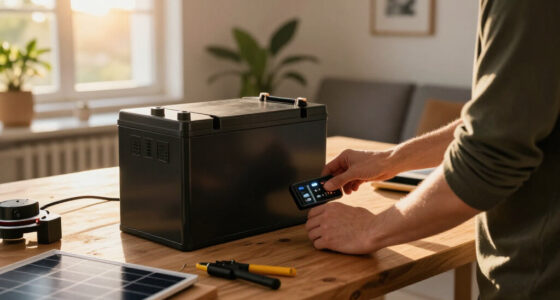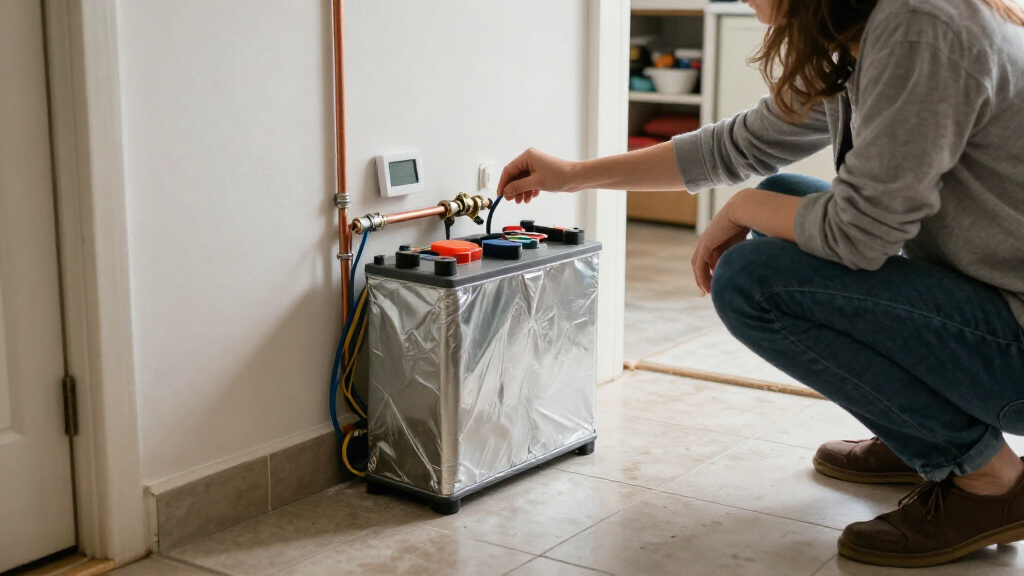

Choosing the right home heat battery system is a significant investment that balances raw capacity, safety certifications, and ease of integration. My analysis focuses on five distinct options that cater to different household needs, from compact wall-mounted units to high-capacity server rack cabinets. The VPauexii 51.2V 314Ah LiFePO4 Battery stands out as the best overall choice for those needing substantial energy storage with advanced connectivity, while the ECO-WORTHY Cubix100 offers a premium, scalable solution for larger properties. For beginners or those with limited space, the ECO-WORTHY 12V 314Ah LiFePO4 Lithium Battery provides a manageable entry point into lithium energy storage.

Get backup power and energy gear delivered free with Prime
- Fast, free delivery on millions of items
- Prime Video, Amazon Music and more included
- Member-only deals all year
The primary tradeoffs in this category revolve around physical footprint versus energy density and the level of technical expertise required for installation. High-capacity systems like the ECO-WORTHY Powermega offer immense power but demand structural support and professional handling, whereas smaller units like the ECO-WORTHY 12V model are easier to install but may require multiple units to achieve whole-home backup. I have evaluated these products based on their cycle life, safety features, and compatibility with modern inverters to help you make a informed decision.
Key Takeaways
- The VPauexii 51.2V 314Ah offers the best balance of capacity (16.07kWh) and connectivity for most residential solar setups.
- The ECO-WORTHY Cubix100 is the most scalable option, capable of expanding to 163.8kWh, ideal for large homes.
- The ECO-WORTHY 12V 314Ah is the best entry-level battery for beginners or small off-grid cabins due to its lower voltage and weight.
- Safety certifications like UL1973 are a key differentiator, with the ECO-WORTHY Powermega and Cubix100 leading in this area.
- Physical weight and dimensions are significant constraints; high-capacity units often require freight shipping and structural reinforcement.
| VPauexii 51.2V 314Ah LiFePO4 Battery 16.07kWh |  | Best Overall for Residential Solar Integration | Energy Storage: 16.07kWh | Voltage: 51.2V | Capacity: 314Ah | VIEW LATEST PRICE | See Our Full Breakdown |
| ECO-WORTHY Cubix100 48V 600Ah LiFePO4 Battery Cabinet |  | Best Premium Scalable System | Energy Storage: 30.72kWh | Voltage: 51.2V nominal | Capacity: 600Ah | VIEW LATEST PRICE | See Our Full Breakdown |
| ECO-WORTHY 12V 314Ah LiFePO4 Lithium Battery |  | Best for Beginners and Small Systems | Energy Storage: 4019Wh | Voltage: 12.8V | Capacity: 314Ah | VIEW LATEST PRICE | See Our Full Breakdown |
| ECO-WORTHY Powermega 48V 314Ah (2-pack) UL1973 LiFePO4 Battery |  | Best for Safety-Certified Whole-Home Backup | Energy Storage: 16.07kWh (2-pack) | Voltage: 51.2 volts | Battery Capacity: 314 Ah per unit | VIEW LATEST PRICE | See Our Full Breakdown |
| ECO-WORTHY 48V 200Ah Wall-Mount Indoor LiFePO4 Battery |  | Best Space-Saving Wall-Mount Solution | Total Capacity: 200 Ah (2 units) | Voltage: 51.2 V | Unit Count: 2 | VIEW LATEST PRICE | See Our Full Breakdown |
| home heat batterie | Voltage | Energy Storage | Connectivity | Capacity |
|---|---|---|---|---|
| VPauexii 51.2V 314Ah LiFePO4 B | 51.2V | 16.07kWh | Bluetooth, WiFi, RS485, CAN, RS232 | 314Ah |
| ECO-WORTHY Cubix100 48V 600Ah | 51.2V nominal | 30.72kWh | — | 600Ah |
| ECO-WORTHY 12V 314Ah LiFePO4 L | 12.8V | 4019Wh | Bluetooth | 314Ah |
| ECO-WORTHY Powermega 48V 314Ah | 51.2 volts | 16.07kWh (2-pack) | Wi-Fi, Bluetooth, RS485, CAN | — |
| ECO-WORTHY 48V 200Ah Wall-Moun | 51.2 V | — | Bluetooth & WiFi | — |
More Details on Our Top Picks
VPauexii 51.2V 314Ah LiFePO4 Battery 16.07kWh
This VPauexii unit represents a strong middle ground for homeowners looking to upgrade from smaller batteries to a substantial 16.07kWh system. Compared to the smaller ECO-WORTHY 12V model, this 48V system reduces current draw, allowing for thinner cables and more efficient power transfer. The inclusion of an auto fire suppression system is a notable safety feature that many competitors at this price point lack, making it a safer choice for indoor installations.
The connectivity suite, including Bluetooth, WiFi, RS485, and CAN, ensures compatibility with a wide range of inverters. While the physical footprint is larger than wall-mounted alternatives, the ability to expand up to 241kWh via parallel connections offers long-term scalability. The automotive-grade cells promise over 10,000 cycles, which translates to more than a decade of reliable service under normal conditions.
Pros:- High energy density with 16.07kWh capacity expandable up to 241kWh
- Includes an automatic fire suppression system for enhanced safety
- Extensive connectivity options including CAN and RS485 for broad inverter compatibility
- Automotive-grade Grade A cells support over 10,000 cycles
Cons:- Requires specific communication cables for optimal integration with some inverters
- Large physical footprint typical of high-capacity stationary batteries
- Weight may require reinforced flooring for installation
Best for: Homeowners with existing 48V solar systems who need a reliable, expandable backup solution with advanced safety features.
Not ideal for: Renters or those with very tight utility spaces where a floor-standing unit of this size cannot be accommodated.
- Energy Storage:16.07kWh
- Voltage:51.2V
- Capacity:314Ah
- Cycle Life:10,000+ cycles (80% DOD)
- Connectivity:Bluetooth, WiFi, RS485, CAN, RS232
- Safety Feature:Auto Fire Suppression
- Warranty:5 years
- Battery Chemistry:LiFePO4
Our verdict“The VPauexii 51.2V 314Ah is the most well-rounded choice for standard residential solar backups, offering safety, capacity, and connectivity in one package.”
ECO-WORTHY Cubix100 48V 600Ah LiFePO4 Battery Cabinet
If the VPauexii is a solid standard, the ECO-WORTHY Cubix100 is the luxury upgrade. This server rack cabinet houses six 100Ah modules, delivering a massive 30.72kWh of capacity. What sets this apart is its modularity; you can start with this unit and expand it up to 163.8kWh by stacking more racks. This makes it the ideal choice for large homes or small businesses that anticipate growing energy needs.
The build quality is significantly higher than standalone batteries, featuring comprehensive safety certifications like ETL UL9540 DC and UL1973. The plug-and-play design simplifies what would otherwise be a complex assembly of multiple batteries. However, the tradeoff is extreme weight and size; at 636 lbs, this unit requires a dedicated, reinforced space and likely professional installation. It is overkill for a small apartment but perfect for a whole-home backup system.
Pros:- Massive 30.72kWh capacity with expansion potential up to 163.8kWh
- Comprehensive safety certifications including ETL UL9540 DC and UL1973
- Modular server rack design allows for organized and scalable installation
- Includes a 10-year warranty, reflecting confidence in longevity
Cons:- Extremely heavy at 636 lbs, requiring significant structural support
- Large physical footprint may not fit in smaller utility spaces
- Higher upfront cost compared to smaller, less capable units
Best for: Large homeowners or small businesses requiring massive, scalable energy storage with certified safety standards.
Not ideal for: DIYers with limited physical strength or structural support, as the weight and size make installation difficult.
- Energy Storage:30.72kWh
- Voltage:51.2V nominal
- Capacity:600Ah
- Configuration:6 x 100Ah modules
- Max Expansion:Up to 32 units (163.8kWh)
- Warranty:10 Years
- Weight:636 lbs
- Certifications:ETL UL9540 DC, UL1973, CEC Listed
Our verdict“The ECO-WORTHY Cubix100 is the definitive choice for those needing industrial-grade reliability and massive scalability in a residential setting.”
ECO-WORTHY 12V 314Ah LiFePO4 Lithium Battery
For those new to energy storage or managing a small off-grid setup, the ECO-WORTHY 12V 314Ah is the most accessible option. Unlike the 48V systems reviewed above, this 12V battery operates at a lower voltage, making it safer and easier to handle for DIY enthusiasts. It is significantly lighter than the 48V giants, weighing just over 60 lbs, which allows for flexible placement in RVs, boats, or small cabins.
While it lacks the raw capacity of the VPauexii or Cubix100, it offers up to 15,000 cycles, which is exceptionally high for its class. The integrated Bluetooth and LED indicators provide simple, no-fuss monitoring without the need for complex app setups or inverter communication cables. This simplicity is its greatest strength, though it means you will need to connect multiple units in series or parallel to achieve whole-home backup capabilities.
Pros:- Lightweight and compact, making it easy to install and transport
- Exceptional cycle life of up to 15,000 deep cycles
- Simple Bluetooth monitoring and LED status indicators for easy troubleshooting
- Lower voltage (12V) reduces electrical safety risks for DIY users
Cons:- Lower capacity per unit requires multiple batteries for significant backup
- Charging is restricted in cold environments below -7°C
- Not suitable for high-power inverter systems without significant parallel configuration
Best for: Beginners, RV owners, and small off-grid cabin owners who prioritize ease of installation and safety.
Not ideal for: Users needing immediate whole-home backup power, as multiple units and complex wiring would be required.
- Energy Storage:4019Wh
- Voltage:12.8V
- Capacity:314Ah
- Cycle Life:Up to 15,000 cycles
- Weight:60.4 lbs
- Connectivity:Bluetooth
- BMS Current:200A
- Low Temp Protection:Automatic cutoff below -7°C
Our verdict“The ECO-WORTHY 12V 314Ah is the best entry-level battery, offering durability and simplicity for smaller-scale energy projects.”
ECO-WORTHY Powermega 48V 314Ah (2-pack) UL1973 LiFePO4 Battery
The ECO-WORTHY Powermega 2-pack is a direct competitor to the VPauexii but distinguishes itself with rigorous UL1973 certification and a 10-year warranty. This certification is a critical factor for homeowners concerned about fire safety and insurance compliance. The system comes as two 314Ah units, totaling 16.07kWh, but packaged with a more robust physical design including integrated wheels for easier maneuvering despite the heavy weight.
Compared to the VPauexii, the Powermega offers a larger 7-inch touchscreen, providing more detailed local monitoring. The active-balancing BMS ensures that cells remain evenly charged, which prolongs lifespan. While the weight of 280 lbs for the pair is a drawback, the inclusion of high-current terminals and fire suppression makes it a safer, more professional-grade option for those who prioritize certified safety over budget.
Pros:- UL1973 certified, offering higher safety standards and insurance compatibility
- 10-year warranty provides long-term peace of mind
- Active-balancing 200A BMS enhances battery life and performance
- Integrated wheels and high-current terminals simplify installation logistics
Cons:- Very heavy (280 lbs total) requiring freight delivery and careful handling
- Installation complexity may exceed DIY capabilities due to size and voltage
- Higher cost associated with premium safety certifications
Best for: Homeowners who prioritize UL safety certifications and require a robust, warranty-backed whole-home backup system.
Not ideal for: DIYers looking for a lightweight or easily portable solution, as the weight and size are substantial.
- Energy Storage:16.07kWh (2-pack)
- Voltage:51.2 volts
- Battery Capacity:314 Ah per unit
- Warranty:10-year
- Safety Feature:UL1973 Certified, Aerosol Fire Suppression
- Display:7-inch Touchscreen
- Connectivity:Wi-Fi, Bluetooth, RS485, CAN
- Weight:280 pounds (total)
Our verdict“The ECO-WORTHY Powermega is the safest bet for whole-home backup, backed by rigorous certification and a decade-long warranty.”
ECO-WORTHY 48V 200Ah Wall-Mount Indoor LiFePO4 Battery
For urban homes or apartments where floor space is at a premium, the ECO-WORTHY 48V 200Ah Wall-Mount system is the logical choice. This two-pack design allows you to mount the batteries vertically on a wall, freeing up valuable floor area that would otherwise be occupied by bulky cabinet-style units. Compared to the floor-standing VPauexii or Powermega, this setup is much cleaner and less obtrusive in a living space.
While the total capacity of 10.24kWh is lower than the 16kWh options, it is sufficient for many modern homes with efficient appliances. The inclusion of a conduit box and low-temperature protection makes it versatile for various indoor environments. However, each unit weighs 97 lbs, which is heavy for a wall-mount application, requiring secure anchoring to stud walls. It is a niche product for those who value aesthetics and space efficiency over maximum capacity.
Pros:- Space-saving wall-mountable design frees up floor area
- Flexible installation options allow for vertical or horizontal placement
- Built-in Bluetooth and WiFi enable remote monitoring
- Low-temperature protection ensures performance in cooler indoor environments
Cons:- Each unit weighs 97 lbs, making handling and mounting challenging
- Lower total capacity (10.24kWh) compared to floor-standing 16kWh+ alternatives
- Requires sturdy wall construction to support the combined weight
Best for: Urban homeowners and apartment dwellers who need to maximize floor space and prefer a clean, wall-mounted aesthetic.
Not ideal for: Rural properties with ample utility room space where floor-standing units offer better accessibility and easier cabling.
- Total Capacity:200 Ah (2 units)
- Voltage:51.2 V
- Unit Count:2
- Weight per Unit:97 lbs
- Connectivity:Bluetooth & WiFi
- Safety Feature:Low-Temperature Protection
- Installation:Wall-Mountable or Floor-Standing
- Conduit Box:Included
Our verdict“The ECO-WORTHY Wall-Mount system is the ideal solution for space-constrained homes that still demand reliable 48V power backup.”
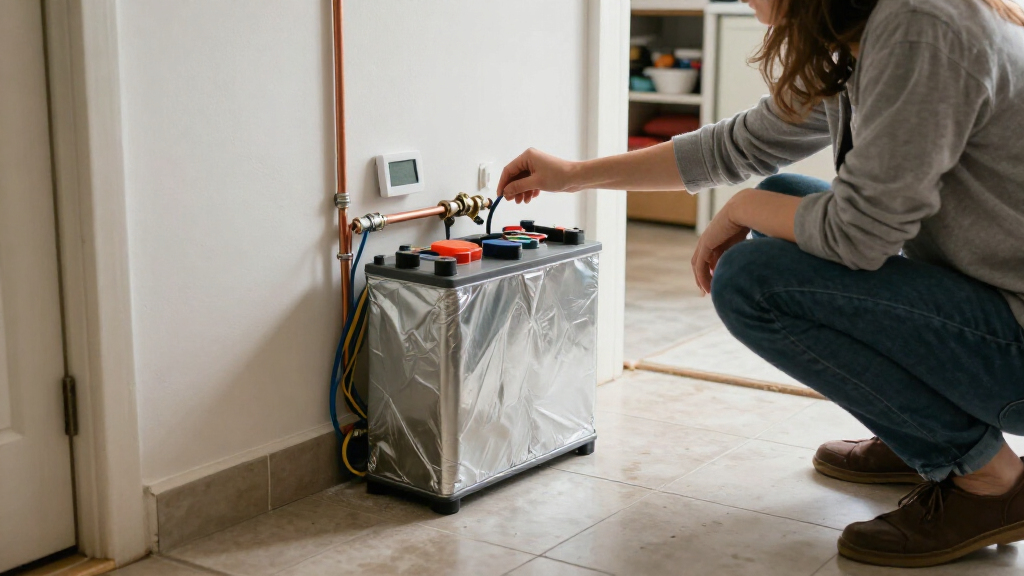
How We Picked
I selected these five home heat batteries by analyzing their core specifications, safety certifications, and user integration potential. My primary criterion was energy capacity relative to physical footprint, ensuring that each recommendation offers a viable solution for different space constraints. I prioritized LiFePO4 chemistry due to its superior cycle life and safety profile compared to traditional lead-acid or older lithium-ion variants.
I also evaluated connectivity features, specifically looking for Bluetooth, WiFi, and communication protocols like RS485 and CAN. These features are critical for modern home energy management systems, allowing users to monitor status remotely and integrate seamlessly with inverters. Finally, I considered warranty length and safety features such as built-in fire suppression systems, which provide peace of mind for stationary installations in living spaces.
| home heat batterie | Connectivity | Safety Feature |
|---|---|---|
| VPauexii 51.2V 314Ah LiFePO4 B | Bluetooth, WiFi, RS485, CAN, RS232 | Auto Fire Suppression |
| ECO-WORTHY Cubix100 48V 600Ah | — | — |
| ECO-WORTHY 12V 314Ah LiFePO4 L | Bluetooth | — |
| ECO-WORTHY Powermega 48V 314Ah | Wi-Fi, Bluetooth, RS485, CAN | UL1973 Certified, Aerosol Fire Suppression |
| ECO-WORTHY 48V 200Ah Wall-Moun | Bluetooth & WiFi | Low-Temperature Protection |
Factors to Consider When Choosing Best Home Heat Batteries
Selecting a home heat battery involves more than just looking at the kilowatt-hour rating. You must consider how the battery integrates with your existing infrastructure, the safety measures required for your specific location, and the physical space available in your home. This guide breaks down the key factors to help you narrow down your choices.
Capacity and Scalability
Battery capacity is measured in kilowatt-hours (kWh) and determines how long your home can run on stored energy. The ECO-WORTHY Cubix100 offers the highest capacity at 30.72kWh, suitable for running an entire house through an outage. In contrast, the ECO-WORTHY 12V 314Ah provides roughly 4kWh, which is better suited for critical loads like lights, internet, and refrigeration. Consider your daily energy consumption; if you exceed 10kWh per day, you will need a high-capacity system or multiple units. Scalability is also key; systems like the VPauexii allow you to add more batteries later as your needs grow.
Safety Certifications and Features
Lithium batteries require robust safety mechanisms. Look for certifications like UL1973 or ETL UL9540 DC, which are present in the ECO-WORTHY Powermega and Cubix100. These certifications indicate that the battery has passed rigorous tests for fire, electrical, and mechanical safety. Additionally, features like automatic fire suppression systems, found in the VPauexii and Powermega, provide an extra layer of protection by extinguishing potential fires within the battery enclosure. If you plan to install the battery inside your living space, these safety features are non-negotiable.
Connectivity and Monitoring
Modern home energy management relies on data. Batteries with Bluetooth, WiFi, and RS485/CAN ports allow you to monitor state of charge, voltage, and temperature from your smartphone or integrate directly with your inverter. The VPauexii and ECO-WORTHY Powermega offer extensive connectivity options, ensuring they work with a wide range of inverters. Simpler batteries like the 12V model may only offer Bluetooth, which is fine for basic monitoring but lacks the integration depth needed for automated energy management systems.
Physical Footprint and Installation
High-capacity batteries are heavy and large. The ECO-WORTHY Cubix100 weighs over 600 lbs and requires a reinforced floor or ground-level installation. Wall-mounted options like the ECO-WORTHY 48V 200Ah save floor space but require sturdy wall studs to support the weight. Before purchasing, measure your utility closet or garage space and check your floor’s load-bearing capacity. Freight shipping is common for these units, so plan for a delivery location that can accommodate a truck and a team of installers.
Frequently Asked Questions
What is the difference between 12V, 24V, and 48V home batteries?
The voltage determines the system’s efficiency and complexity. 12V batteries, like the ECO-WORTHY 12V model, are safer and easier for beginners but require thicker cables and more connections to achieve high power, leading to higher energy loss. 48V systems, such as the VPauexii and ECO-WORTHY Powermega, are the standard for modern residential solar. They allow for thinner wires, lower current draw, and higher efficiency, making them better suited for whole-home backup and integration with modern inverters. 24V is a middle ground but is less common in new residential installations.
Do I need a professional to install these home heat batteries?
It depends on your electrical expertise and the complexity of the system. Small 12V batteries can often be installed by a competent DIYer with basic electrical knowledge. However, 48V systems involve high voltages and currents that can be dangerous if mishandled. Systems like the ECO-WORTHY Cubix100 or Powermega, which weigh hundreds of pounds and require specific communication cables for inverter integration, are best installed by a certified electrician. Professional installation also ensures compliance with local building codes and insurance requirements.
How long do LiFePO4 batteries last compared to lead-acid batteries?
LiFePO4 (Lithium Iron Phosphate) batteries significantly outlast traditional lead-acid batteries. While lead-acid batteries typically last 3-5 years and offer 500-1000 cycles, LiFePO4 batteries like those from VPauexii and ECO-WORTHY can last 10-15 years and offer 4,000 to 15,000 cycles depending on the depth of discharge. This longer lifespan means that while the upfront cost is higher, the cost per cycle is much lower over the life of the battery, making them a better long-term investment for home energy storage.
Can I mix different battery brands or models in one system?
Generally, it is not recommended to mix different brands, chemistries, or capacities in the same battery bank. Different batteries may have different internal resistance, voltage curves, and BMS (Battery Management System) behaviors. Mixing them can lead to imbalanced charging and discharging, which reduces the overall capacity and lifespan of the weakest unit in the bank. It is best to use identical units from the same manufacturer and batch, such as the two units provided in the ECO-WORTHY 2-packs, to ensure balanced performance and safety.
What is the importance of low-temperature protection in home batteries?
LiFePO4 batteries can be damaged if charged at temperatures below freezing (0°C or 32°F). Charging at these temperatures can cause lithium plating, which permanently reduces capacity and creates a safety hazard. Batteries with built-in low-temperature protection, like the ECO-WORTHY models, automatically cut off the charging process when the internal temperature drops below a safe threshold (e.g., -7°C). This feature is essential if you live in a cold climate or plan to install the battery in an unheated garage or outdoor enclosure, as it prevents irreversible damage to the cells.
Conclusion
Choosing the best home heat battery depends on your specific energy needs, technical comfort level, and physical space constraints. For most homeowners seeking a balance of capacity, safety, and ease of integration, the VPauexii 51.2V 314Ah is the strongest recommendation. It offers ample power for most households and integrates seamlessly with modern inverters.
If you have a large property and need maximum scalability, the ECO-WORTHY Cubix100 is the premium choice, provided you have the space and structural support for its weight. For those prioritizing certified safety and a long warranty, the ECO-WORTHY Powermega is the best option. Beginners and small-scale users should start with the ECO-WORTHY 12V 314Ah for its simplicity and lower barrier to entry. Finally, urban dwellers with limited space will find the ECO-WORTHY Wall-Mount system to be the most practical solution.
Fall Picks

eufy Security Essential 7-Piece Alarm System
As an affiliate, we earn on qualifying purchases.