TL;DR
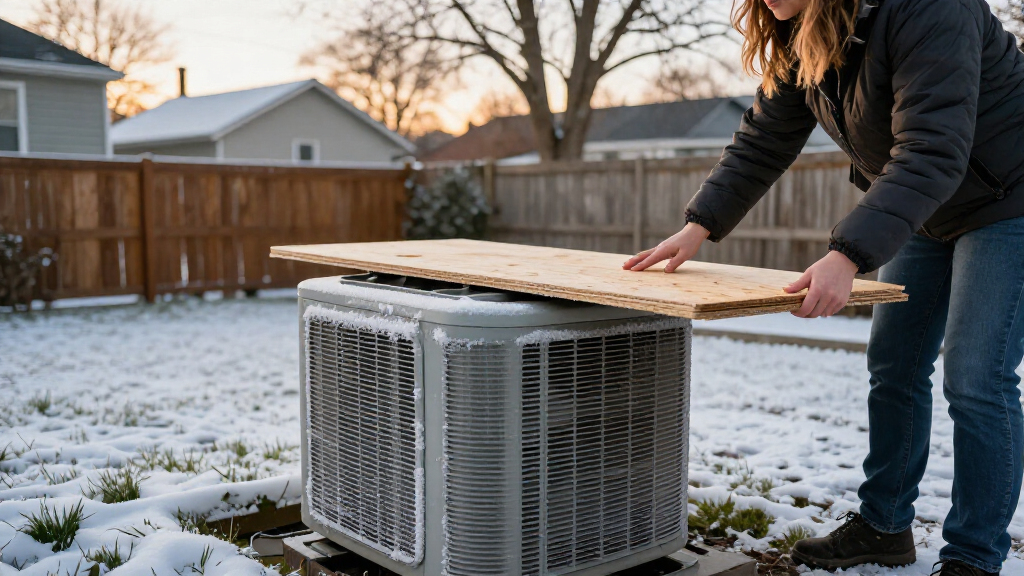
A piece of plywood placed over an outdoor air conditioner condenser can shield its top from snow, icicles and falling debris without wrapping the unit. The sides remain exposed, and homeowners should remove the board and clean the unit before restarting the system; manufacturers may have model-specific guidance.
Homeowners with an outdoor air conditioner condenser can use a piece of plywood placed over the unit to deflect snow and falling debris, according to seasonal home-maintenance guidance. Unlike a full cover, the board leaves the sides open, but it does not eliminate the need for spring cleaning or checking the equipment maker’s instructions.

Get backup power and energy gear delivered free with Prime
- Fast, free delivery on millions of items
- Prime Video, Amazon Music and more included
- Member-only deals all year
The guidance applies to outdoor units for central air conditioners and heat pumps. A system used only for cooling may have a condenser that does not operate in winter, but it remains exposed to weather and nearby hazards. Plywood is presented as an optional shield, particularly for homes in areas with heavy snowfall or units positioned beneath a tree or roof eave.
To use the approach, place a piece of plywood large enough to cover the unit’s top on the condenser. The guidance says it may be held in place with a brick or bungee cords if needed. The board is meant to block snow and objects from above; it does not cover the side grilles. Snow and ice can still collect around those openings, and leaves, pine needles or road salt may blow through them.
That limitation makes spring maintenance part of the advice: remove the plywood and clean the equipment before turning the system on. The condenser needs airflow when operating, and leaving an obstruction on top at startup could interfere with normal use. The guidance does not specify a particular plywood thickness, fastening method for every model, or a universal inspection procedure.
Shield Your Outdoor AC From Snow and Ice
A plywood panel can protect the condenser’s top while leaving its sides open. Whether it helps depends on local weather, nearby hazards and the equipment’s instructions.
How the shield works
Use plywood large enough to cover the unit’s top; a brick or bungee cords may help hold it in place.
The board can deflect snow, icicles and falling debris from above.
Side grilles remain exposed, so snow, leaves and road salt may still reach the unit.
Take off the board and clean the equipment before restarting the system.
Plywood versus a tarp
The guidance favors shielding the top without enclosing the condenser.
- Covers the top
- Leaves side grilles open
- Can restrict airflow
- Can hold moisture against equipment
When protection may help
Consider local conditions and the condenser’s location.
Added top protection
A panel may help where snowfall is substantial.
Under trees or eaves
The board may deflect icicles, branches and other falling debris.
May be unnecessary
The guidance describes plywood as optional when snow is rare and falling hazards are absent.
A Shield Without Sealing the Condenser
The practical distinction is between covering the top and enclosing the whole unit. A plastic tarp can restrict air circulation and trap winter moisture, conditions that the guidance says may contribute to rust and mold. A breathable cover made for the equipment may avoid some moisture concerns, but a full cover can also give rodents and other animals a sheltered place to nest.
Animals taking shelter around a condenser can leave debris and may chew wires or other components, according to the guidance. Plywood does not make the unit immune to damage, but it leaves the sides open rather than creating a closed shelter. For homeowners weighing winter protection against moisture and pest concerns, that is the main reason the limited shield may be preferable to an improvised tarp.
The advice is not that every outdoor unit needs winter protection. A condenser is built for outdoor conditions, and the guidance says a board may be unnecessary where winter snow is rare and the unit is not exposed to falling branches or similar hazards. The choice depends on local weather and the unit’s location, rather than a single rule for all homes.
Products Worth Considering

Levoit Vital 100S-P Air Purifier with Washable Pre-Filter

Philips Hue Play Floor Lamp, RGBWWIC LED, 53 Inch, Black

Dyson V15 Detect Cordless Stick Vacuum
As an affiliate, we earn on qualifying purchases.
When Winter Protection May Help
Outdoor equipment is designed to sit outside, so the suggested plywood measure is described as added protection rather than a requirement. In areas with substantial snowfall, the board can keep snow from resting directly on the top of the unit. It may also deflect icicles, branches and other debris when a condenser sits below an eave or near a tree.
The guidance distinguishes cooling-only systems from heat pumps: an outdoor unit that serves only an air conditioner may be inactive through winter, while a heat pump can operate in cold weather. It does not provide model-specific instructions for heat pumps or say that the same covering practice is suitable during operation. Homeowners should follow the equipment manufacturer’s directions and avoid placing anything on a unit that is running.
A tarp is not presented as an equivalent substitute. Plastic can limit airflow and hold moisture against the equipment, while even a purpose-made breathable cover may provide shelter for wildlife. The plywood method addresses only the top surface, leaving the grille openings exposed so air can circulate around the unit while it is idle.
Limits and Model-Specific Advice
The guidance does not cite a manufacturer, technician or independent test, and it does not establish that plywood is appropriate for every condenser. It gives no measurements for how far the board should extend, how to secure it safely in different weather, or how much snow a particular unit can tolerate. Equipment-specific instructions may differ, so the general suggestion should not replace the manual or professional advice.
It also does not quantify how often moisture, corrosion or animal damage occurs, or compare repair costs between covered and uncovered units. The stated risks are possibilities, not proof that a full cover will damage every system. Side grilles remain open under the plywood, so the board cannot prevent all snow, ice, salt or debris from reaching the equipment.
Whether the measure is useful depends on snowfall, nearby trees and eaves, the unit’s design, and whether it operates during winter. The guidance does not address local building rules or warranty terms. Those details should be checked before homeowners modify or cover equipment.
Remove the Board Before Startup
Homeowners who use plywood should treat its removal as part of spring AC maintenance. Before switching on a cooling-only system, take the board off, clear leaves and other debris from around the unit, and check that the side grilles are unobstructed. If the unit appears damaged or the owner is unsure how to clean it, a qualified HVAC professional can inspect it.
Before winter, check the equipment manual for any manufacturer guidance on covers or seasonal shutdown. If using a board, make sure it is stable without damaging the condenser, and do not place it over equipment that is operating. The next practical milestone is the seasonal restart: the unit should be uncovered and clear before it is used.
Key Questions
Should every outdoor AC unit be covered for winter?
No. The guidance describes plywood as optional, especially useful where snowfall is heavy or the condenser is beneath a tree or eave. Local conditions and the equipment manual should guide the decision.
Why use plywood instead of a tarp?
A plywood panel covers the top while leaving the sides open. The guidance warns that plastic tarps can restrict air circulation and hold moisture, which may contribute to rust or mold.
How do you place the plywood?
Use a piece large enough to cover the unit’s top and place it on the condenser. The guidance suggests a brick or bungee cords if needed to hold it in place, but does not give model-specific fastening instructions. Check the unit’s manual before proceeding.
Can snow or debris still reach the condenser?
Yes. Plywood leaves the side grilles exposed, so snow, ice, leaves, pine needles and road salt may still reach parts of the unit. Clean the condenser before restarting it in spring.
When should the plywood come off?
Remove it before operating the air conditioner. The unit needs to be uncovered and clear for normal airflow, and spring cleaning can help remove debris collected around the grilles.
Source: hunker.com